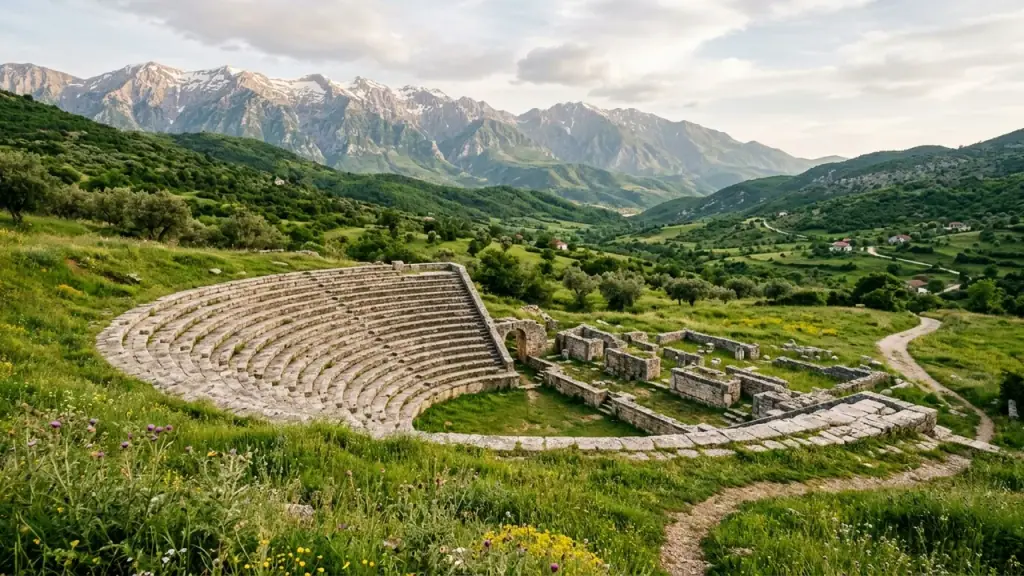
Hadrianopolis is the rare ancient site that reads instantly even without a guide: a compact Roman theatre, stone seating intact enough that you can sit where audiences sat 1,800 years ago, set in a quiet green field in the Drino valley. Founded in the 2nd century AD and named for the emperor Hadrian, it's one of southern Albania's most accessible and underrated archaeological stops, a short drive from Gjirokastër, free to wander, and almost always empty. If you like your history legible and your sites uncrowded, Hadrianopolis delivers both.
The history
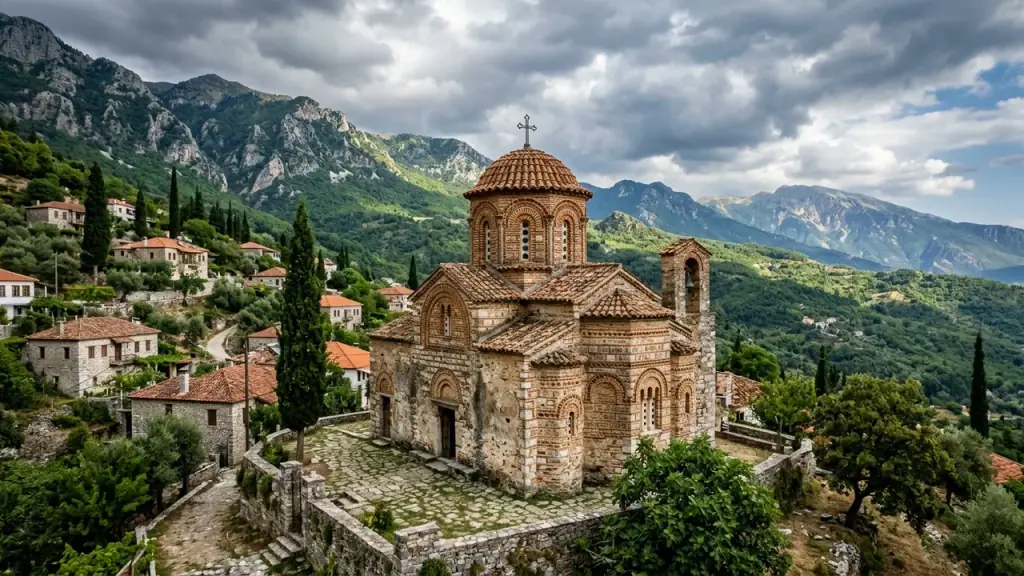
Hadrianopolis was a Roman city founded in the 2nd century AD, associated with Emperor Hadrian, in the fertile Drino valley near the modern village of Sofratikë. Its centrepiece is the theatre. Centuries later, the city was refurbished and expanded in the Byzantine era under Emperor Justinian (r. 527–565) and renamed Justiniapolis. Remarkably, residents of that period built a church inside the old theatre, a vivid layering of Roman and Byzantine history in one structure.
What to see
| Feature | Detail |
|---|---|
| The Roman theatre | Compact, semi-excavated, with surviving stone seating |
| Byzantine layer | Evidence of the later Justiniapolis refurbishment |
| Setting | A green Drino-valley field near Sofratikë |
| Access | Open site, short drive from Gjirokastër |
The theatre is the draw, small enough to take in at a glance and complete enough to feel real. Unlike sprawling sites you have to decode, Hadrianopolis is immediately understandable, which makes it a great stop for travelers who want antiquity without a full archaeological slog.
How to visit
| Detail | Info |
|---|---|
| From Gjirokastër | ~14 km / ~20–25 min by car |
| From Saranda | ~1.5 hr via the Drino valley |
| Cost | Free / minimal |
| Pair with | Antigonea, Gjirokastër, Libohovë |
A car is the easiest way to reach the site near Sofratikë. Hadrianopolis pairs well with the hilltop city of Antigonea, Roman theatre plus Hellenistic city in one Drino-valley day, and with Gjirokastër as a base. Guided tours are on GetYourGuide. It's a natural stop on the Inland South Albania Road Trip.
FAQ
What is Hadrianopolis in Albania?
Hadrianopolis is a Roman city founded in the 2nd century AD, named for Emperor Hadrian, in the Drino valley near Sofratikë, south of Gjirokastër. Its best-preserved feature is a compact Roman theatre with surviving stone seating. It was later refurbished under Justinian and renamed Justiniapolis.
Can you visit the Hadrianopolis theatre?
Yes. It's an open site near the village of Sofratikë, free to wander, about 14 km from Gjirokastër. The theatre's surviving stone seating makes it instantly legible. There are minimal facilities, so bring water and sun protection, and combine it with the nearby Antigonea ruins.
How is Hadrianopolis different from Antigonea?
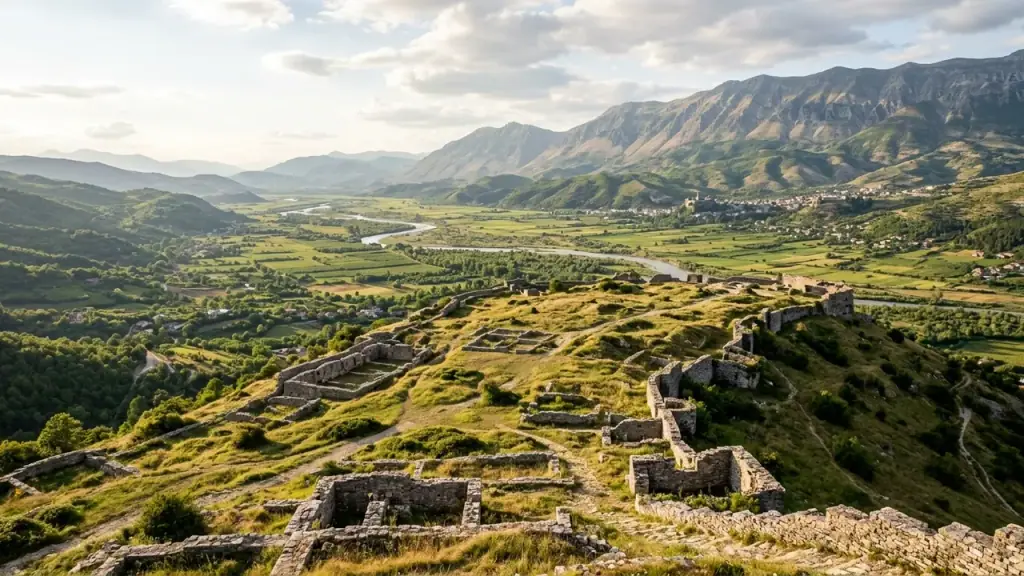
Hadrianopolis is a Roman site centred on a small, well-preserved theatre in the valley floor; Antigonea is an older Hellenistic hilltop city (founded by Pyrrhus) read mostly from its foundations and walls. Together they give you both the Roman and Greek layers of the Drino valley in a single day.
Bottom line
Hadrianopolis is the most legible ancient stop in the Drino valley, a Roman theatre you can sit in, layered with Byzantine history, free and uncrowded near Gjirokastër. Pair it with Antigonea for a Greek-and-Roman double bill. Bring water, and enjoy having an 1,800-year-old theatre almost entirely to yourself.