Libohovë is the kind of quiet southern-Albania town that rewards travelers willing to leave the obvious trail. Perched on the eastern side of the Drino valley across from Gjirokastër. It has two genuine draws most visitors never reach: a hilltop Ottoman castle that Ali Pasha built as a wedding gift for his sister, and a colossal 560-year-old plane tree in the town square so large its canopy spreads over a thousand square metres. Add a setting of Drino-valley views and walking routes to a Byzantine church and a Bektashi tekke nearby, and Libohovë makes an excellent half-day off the Gjirokastër axis.
Why visit Libohovë
| Draw | What it is |
|---|---|
| Libohovë Castle | Ottoman fort built 1796–98 by Ali Pasha for his sister Shanisha |
| The Plane Tree | ~560 years old, ~7 m trunk diameter, canopy over 1,100 m² |
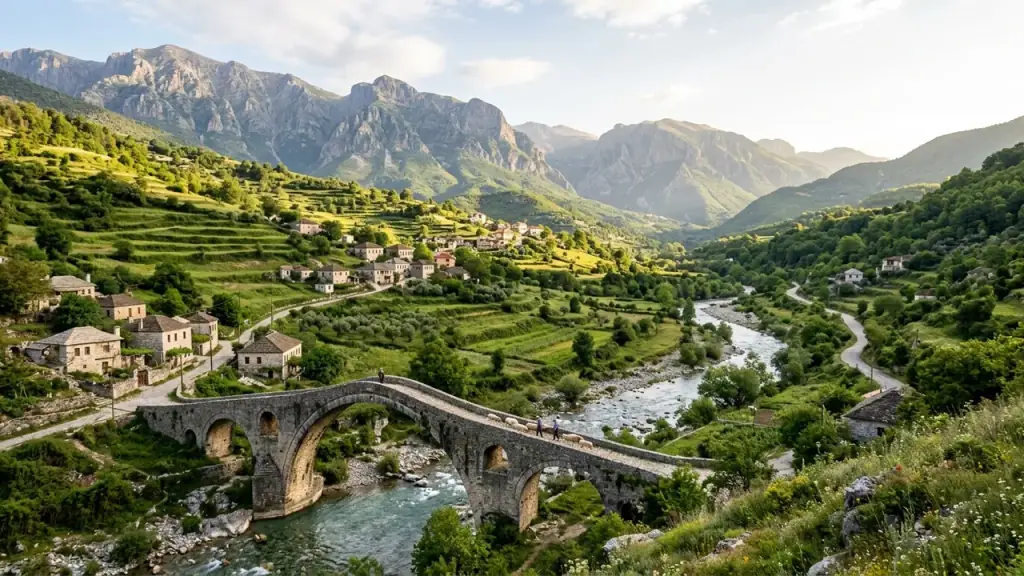
| Drino valley views | Across the valley to Gjirokastër and the mountains |
| Hiking base | To Labovë e Kryqit church & the Melan tekke |
It's a half-day trip, easily paired with Gjirokastër, and one of the better off-the-beaten-track stops in the south.
Libohovë Castle
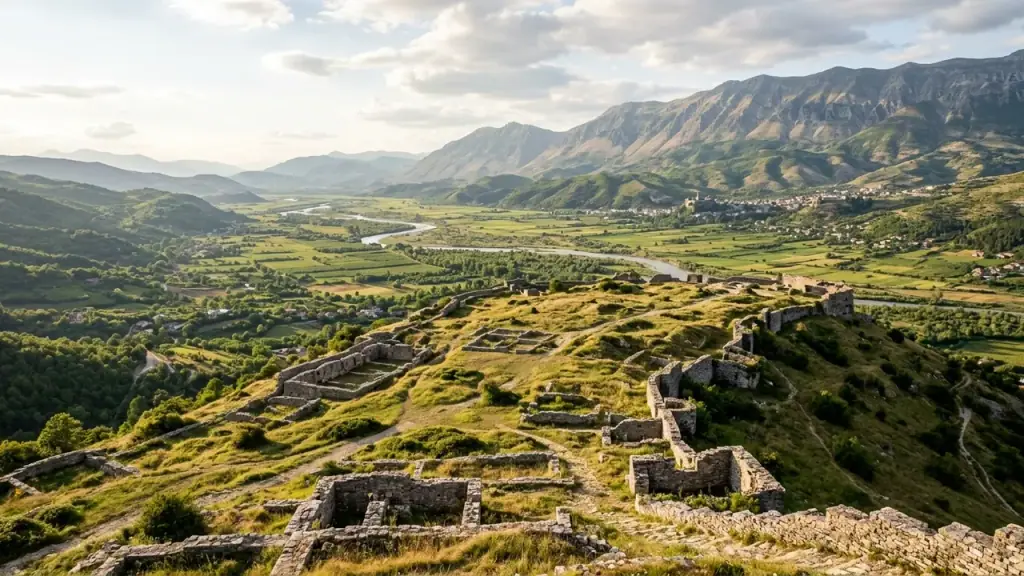
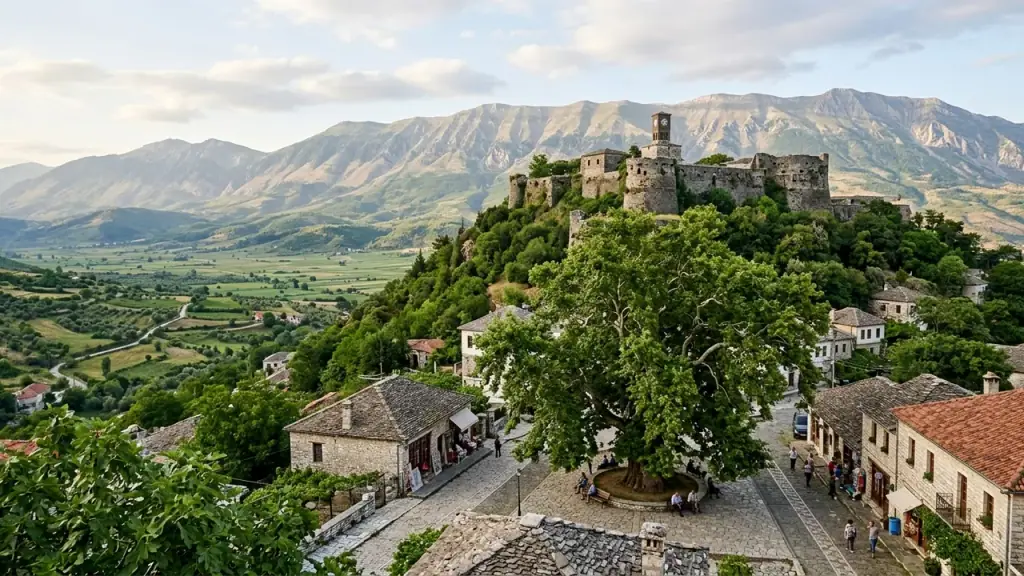
The castle was built between 1796 and 1798 by Ali Pasha of Ioannina, and tradition says it was a wedding gift for his sister Shanisha, on the ruins of an earlier fortification. Its circular towers and walls survive, and the position gives sweeping views over the Drino valley toward Gjirokastër. It anchors the Ali Pasha trail that runs across the region, from Tepelena to Porto Palermo on the coast.
The 560-year-old plane tree
In the heart of town stands one of Albania's most remarkable natural monuments: a plane tree (rrapi) roughly 560 years old, with a trunk around 7 metres in diameter and a canopy spreading over 1,100 square metres. Sitting in its shade, the town's social heart for centuries, is reason enough to make the detour. It's free, and it's genuinely awe-inspiring up close.
Walks: Labovë e Kryqit & Melan
Libohovë is the launch point for two cultural walks into the surrounding hills:
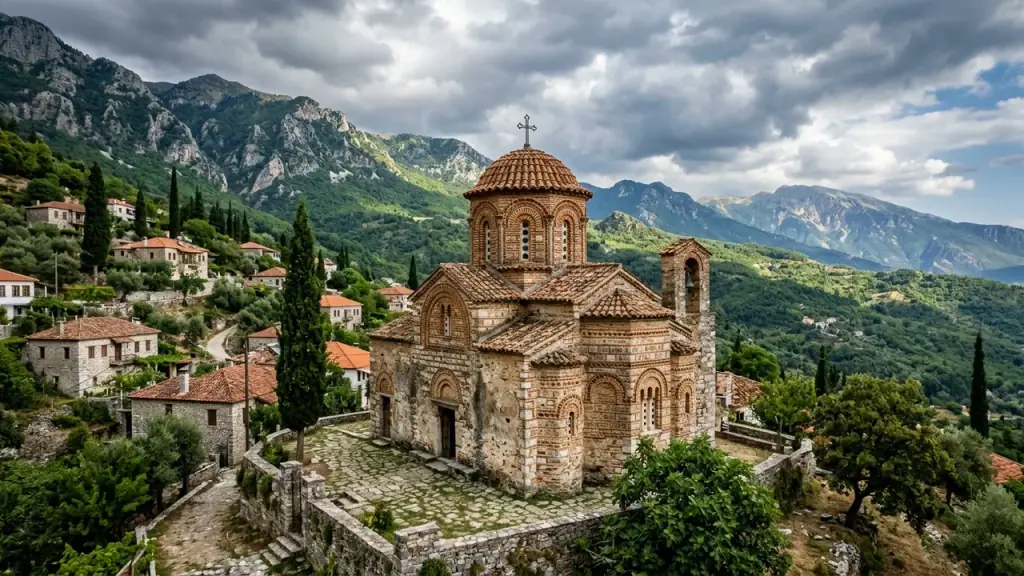
- Labovë e Kryqit: one of Albania's oldest Byzantine churches, a short drive or hike from town.
- Melan Tekke: a Bektashi monastery, reachable on a roughly 6 km hike from Libohovë.
Both are quiet, historic, and rarely visited. They're the kind of stops that make an inland day feel like discovery rather than a checklist.
How to get there
Libohovë sits in the Drino valley, just off the SH4 south of Gjirokastër.
| From | Distance / time | Notes |
|---|---|---|
| Gjirokastër | ~20 km / 25 min | The natural pairing; see the Gjirokastër guide |
| Saranda | ~1 hr | Via the SH4 / Drino valley |
| Himara | ~2.5 hr | Inland excursion |
A car makes Libohovë and its surrounding sites far easier. It's most often visited as a half-day from Gjirokastër or as a stop on the Inland South Albania Road Trip.
Most travelers base in Gjirokastër and day-trip to Libohovë; the town itself has only modest accommodation.
FAQ
What is Libohovë known for?
Libohovë is known for its Ottoman castle, built by Ali Pasha around 1796–98, reputedly as a wedding gift for his sister, and for a roughly 560-year-old plane tree in the town square with a canopy over 1,100 m². It's also the starting point for walks to the Labovë e Kryqit church and the Melan tekke.
How old is the plane tree in Libohovë?
The plane tree (rrapi) in the centre of Libohovë is approximately 560 years old, with a trunk around 7 metres in diameter and a canopy spreading over 1,100 square metres. It's one of Albania's most impressive natural monuments and the social heart of the town.
Is Libohovë worth visiting?
Yes, as a half-day from Gjirokastër, for the hilltop castle, the giant plane tree, the Drino valley views, and the walks to the Labovë church and Melan tekke. It's an authentic, off-the-beaten-track stop that pairs well with Gjirokastër and the wider inland route.
Bottom line
Libohovë is a rewarding Drino-valley detour: Ali Pasha's sister's castle, an extraordinary 560-year-old plane tree, and quiet walks to a Byzantine church and a tekke, all a short hop from Gjirokastër. Make it a half-day, bring a car, sit under the great tree, and follow the Ali Pasha trail into the hills. It's the kind of place that makes inland southern Albania worth the time.