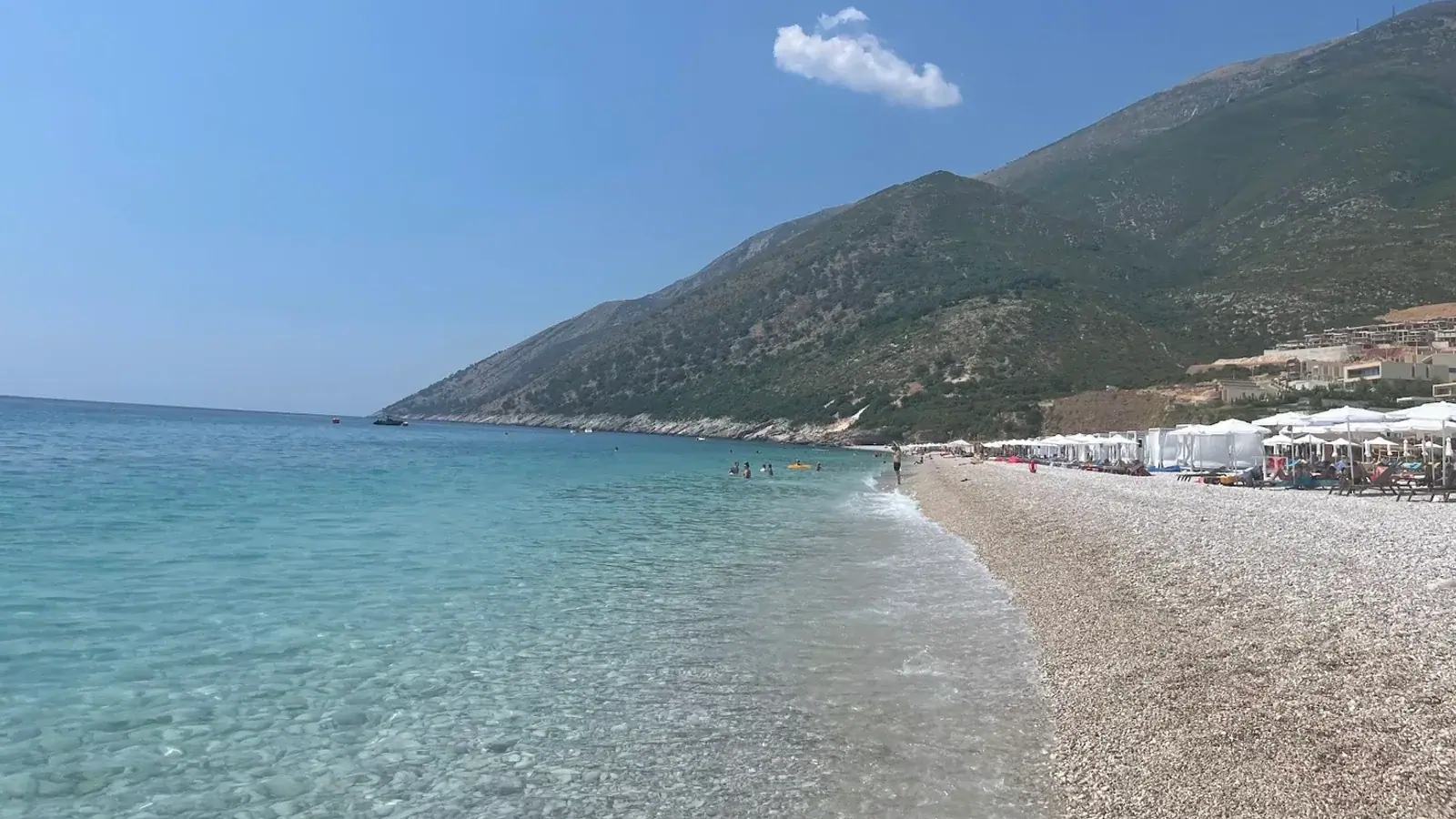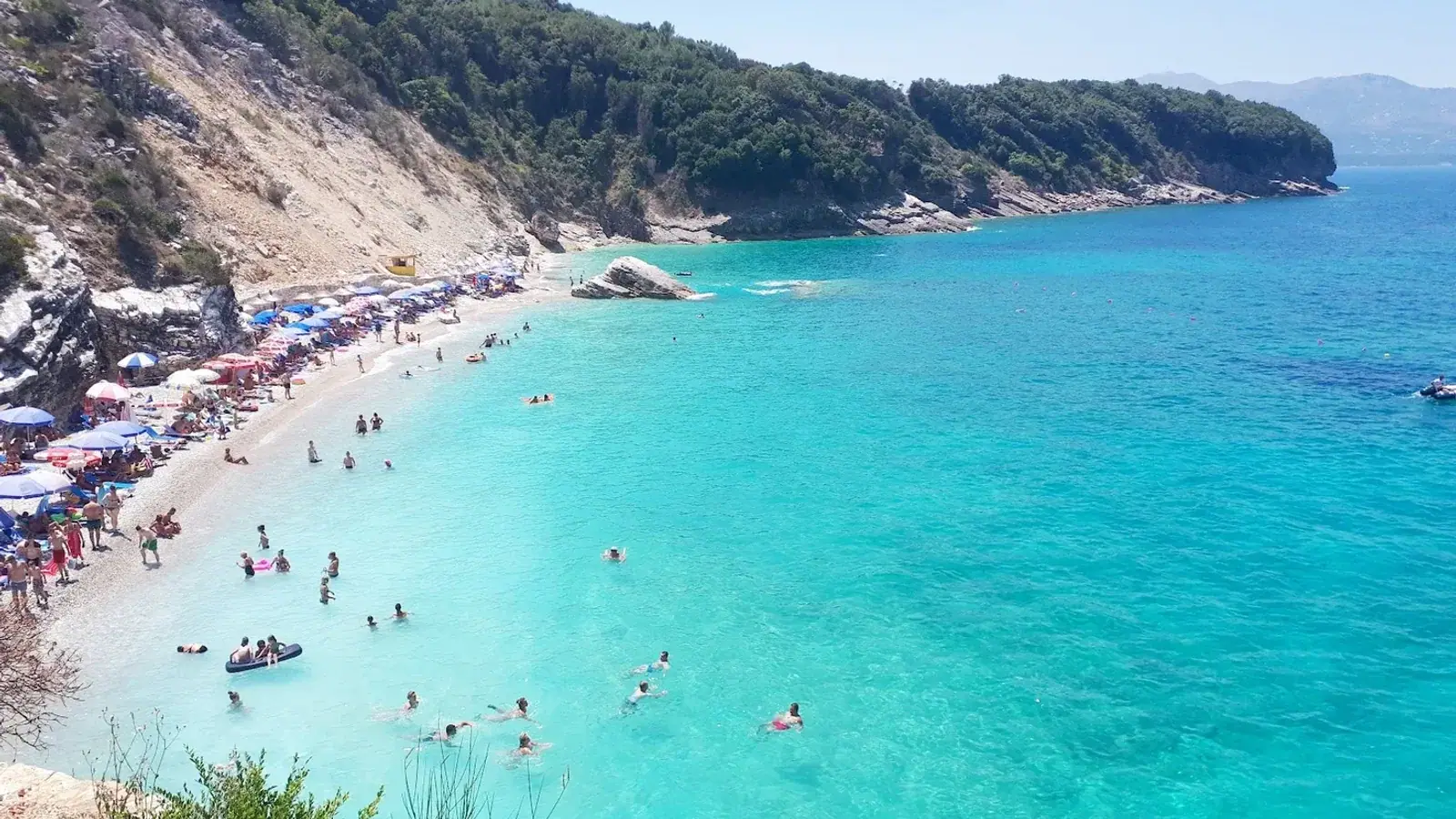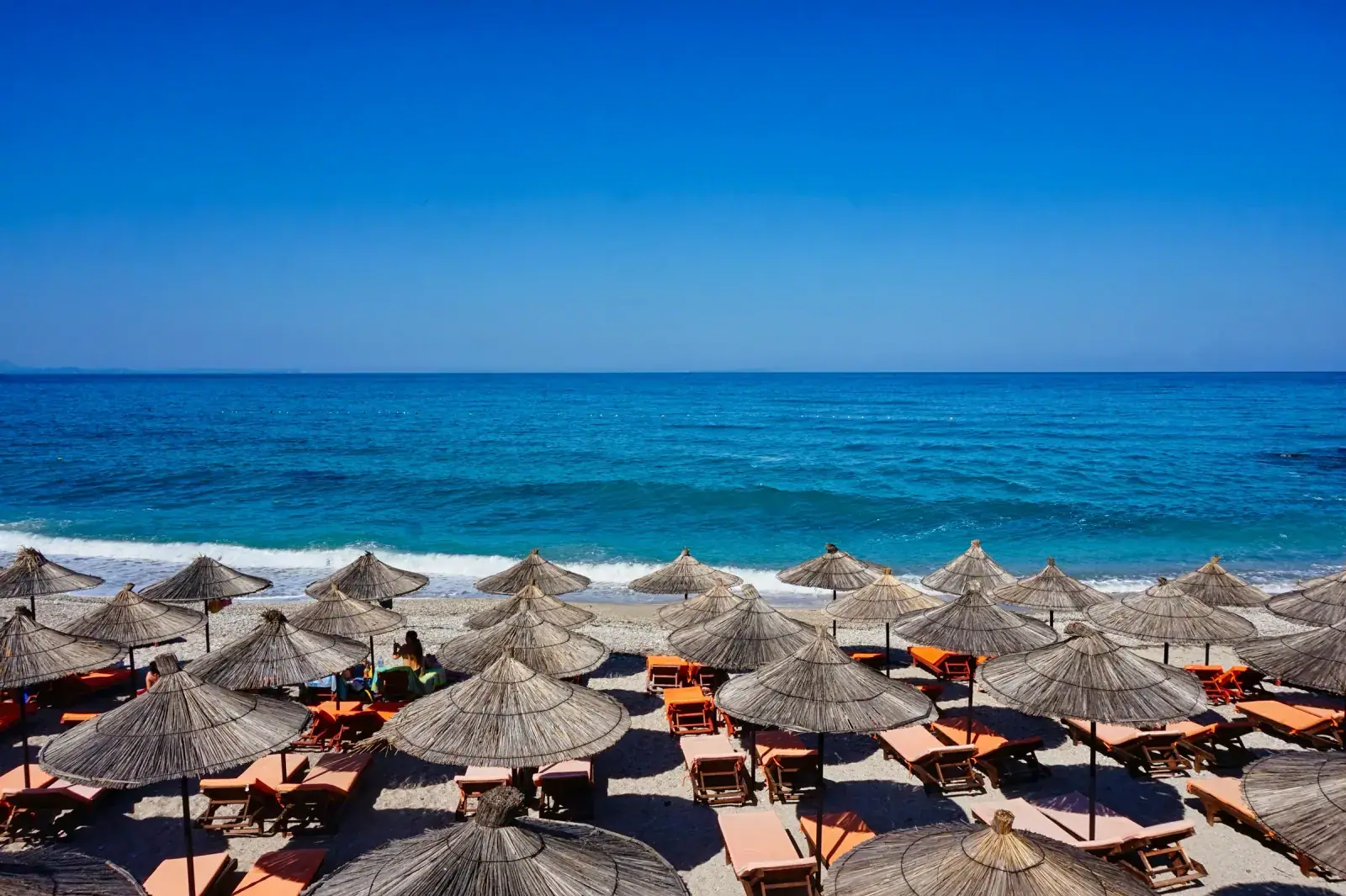
Qeparo is the rare beach on this coast that is pebble on top and sand underneath. The shingle you walk across gives way to a soft seabed a few metres out, the slope stays gradual rather than dropping off, and behind it runs a stone promenade with old-style lanterns and enough tavernas to make an evening of it. The catch sits in the first three or four metres of water, and it is worth knowing about before you walk in barefoot.
The beach in one table
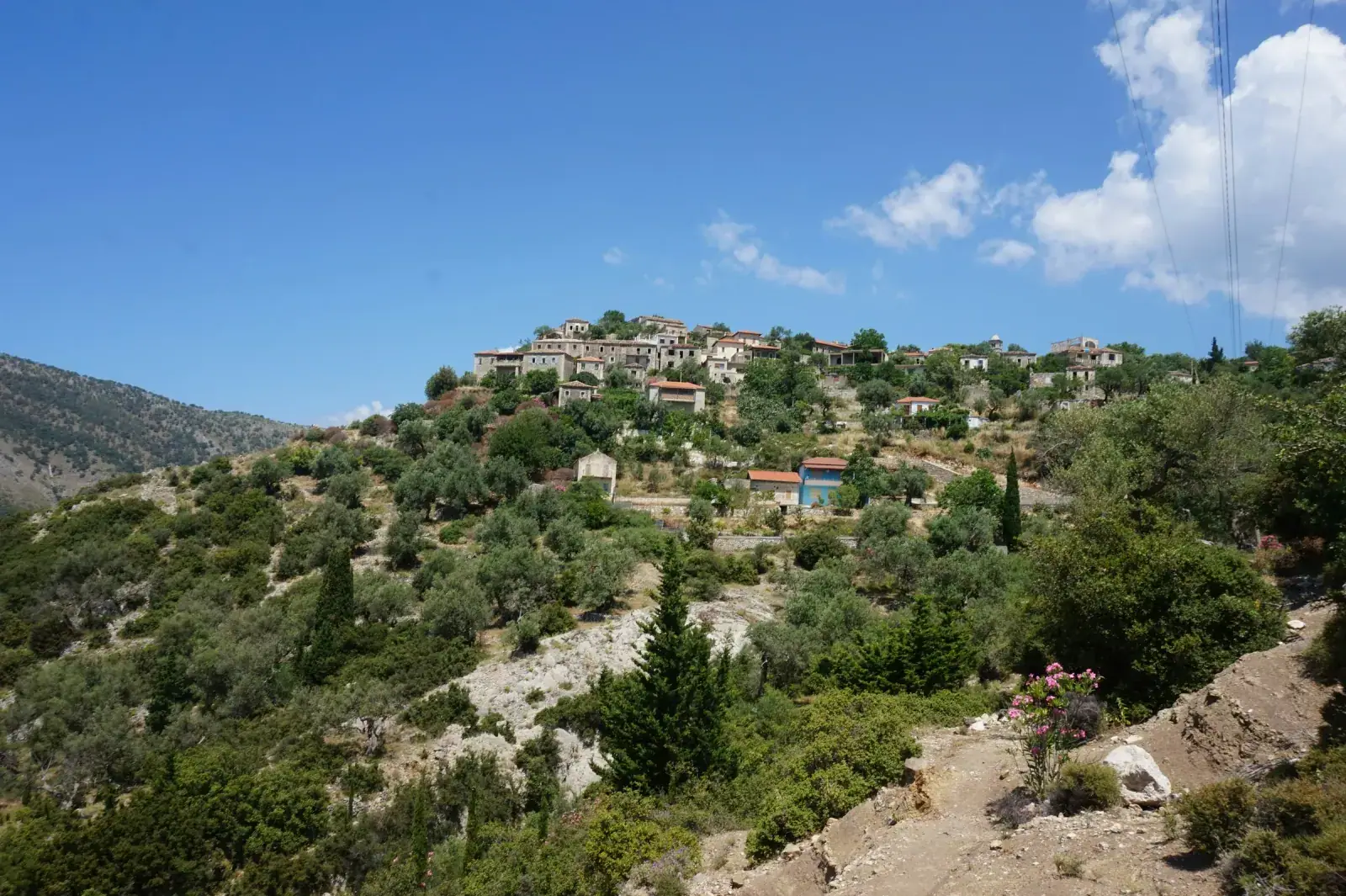
Qeparo Beach fronts the lower, modern village, not the stone settlement of Qeparo i Sipërm on the hill above it. That is a separate trip entirely.
| Detail | Qeparo Beach |
|---|---|
| Type | Pebble shore over a sandy seabed |
| Depth | Gradual slope, suited to children and less confident swimmers |
| Water | Clear |
| Facilities | Promenade of restaurants, bars and cafés; some sun loungers available |
| Crowds | Low-key even in high season; quietest in the morning and late afternoon |
| Access | By car off the SH8, on well-developed paved roads into the village |
| Coordinates | 40.0529, 19.8253 |
The distinguishing feature is not the sand or the water but the promenade: stone-tiled, lantern-lined, and running directly behind the shingle. It is the reason a Qeparo beach day tends to turn into a Qeparo evening.
Compare hotels, apartments, and Vrbo rentals on the map. Powered by Stay22.
Getting there
The village sits about 12 km south of Himara, and unlike almost every other beach on this stretch the approach is sealed road the whole way. The record calls the access into Qeparo well-developed and paved, which rules out the gravel-track problem that governs the coves further south.
Published drive times for those 12 km disagree: the beach record gives 15 minutes, the Qeparo travel guide gives 25. Budget the longer figure in August and you will not be caught out.
Without a car, the Himara–Borsh minibus stops in Qeparo, running roughly every one to two hours through summer, and the walk from the highway stop down to the sand takes five to ten minutes. The Himara to Borsh transport guide has the route in full, since Qeparo sits on that line rather than having a service of its own.
Walking into the water
Here is the part the photographs hide. A strip of larger boulders sits at the waterline, about three to four metres deep, and crossing it barefoot is unpleasant. Past it the bottom turns soft and sandy, which is where the beach's reputation for gentle swimming comes from.
The practical read: water shoes solve the entire problem, and you only need them for a few steps. Once you are through, the gradual slope and sandy seabed make this one of the easier swims on the southern Riviera for children, closer to the shallow far-south beaches than to the deep-water coves around Himara town.
Sea temperature peaks around 25.5°C in August by the site's climate data, holding near 24°C through September, so the shoulder month gives up very little warmth for a noticeably emptier promenade.
Eating behind the sand
The promenade carries the food, and there is more of it than a village this size suggests: the travel guide counts roughly eight to twelve restaurants operating in season, with Greek-leaning menus reflecting the Greek-minority heritage across the Himara municipality. Bars and cafés fill the gaps between them.
The walk from towel to table is short enough to be irrelevant. This is a beach where lunch does not require moving the car. Note that the promenade itself is recent; the travel guide records the paved rebuild as finished in summer 2025, a date the site's fact-check log has flagged for re-confirmation.
Two of the properties in the site's hotel data sit directly on this arrangement: Hotel Qeparo is a two-minute walk from the sand, and Valta Hotel sits in the bay steps from it. Neither requires a drive to reach the beach.
When it is quiet
The beach record's crowd note is unusually specific: low-key even in high season, and quietest in the mornings and late afternoons. That is a different claim from "undiscovered". Qeparo does get busy, it just does so mildly and predictably.
Two structural reasons hold that in place. The shore is pebble, not sand, which routes the sand-seeking crowd further south. And the headline cultural attraction is 450 metres up the hill in the old village, a 4 km switchback drive or a 40-to-50-minute climb from the coast, which filters out most casual day-trippers before they ever commit. The Old Qeparo village guide covers that half of the trip.
Frequently asked questions
Is Qeparo Beach sandy or pebble?
Both, in sequence. The shore itself is pebble, but the seabed turns to soft sand a few metres out, and the slope is gradual rather than sharp. A three-to-four-metre band of larger boulders sits right at the waterline, which is what makes water shoes worth packing.
Is Qeparo Beach good for kids?
Yes. The gentle slope and sandy seabed suit children and less confident swimmers, and the beach stays low-key even in high season. Get them across the boulder strip at the waterline in water shoes and the rest of the swim is straightforward.
How do you get to Qeparo Beach without a car?
Take the Himara–Borsh minibus, which stops at Qeparo roughly every one to two hours in summer. From the highway stop, the walk down to the beach takes five to ten minutes. Qeparo has no dedicated service, so timings follow the Borsh line.
What is there to eat at Qeparo Beach?
The stone promenade directly behind the beach carries somewhere between eight and twelve restaurants in season, plus bars and cafés, with Greek-leaning menus common across the Himara municipality. Everything is within a short walk of the shingle, so lunch requires no driving.
How far is Qeparo Beach from Himara?
About 12 km south on the SH8, at coordinates 40.0529, 19.8253. The access road into the village is paved throughout. Published drive times vary between 15 and 25 minutes, so allow the longer estimate during August traffic.