Mattina Centro storico e castelli
Castelli e monasteri sulle colline sopra la costa.
Luoghi d'interesseHimara è una cittadina costiera della Riviera albanese, tra i Monti Acrocerauni e il Mar Ionio. Una località di lingua greca con spiagge di ciottoli, calette raggiungibili solo dal mare e un castello in cima alla collina.
Cinque momenti di una giornata a Himara. Ognuno porta alla sua sezione più in basso.
Castelli e monasteri sulle colline sopra la costa.
Luoghi d'interesse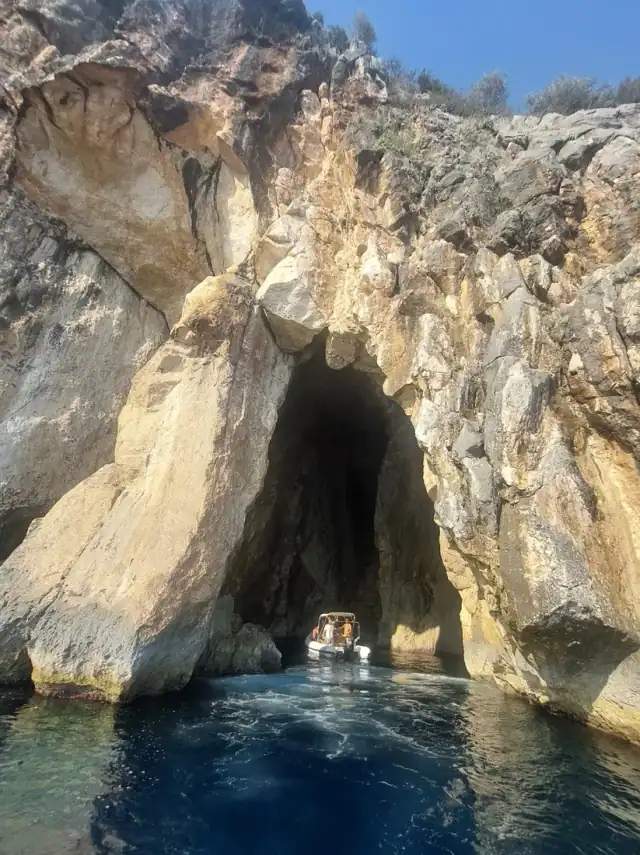
Grotte, baie e calette raggiungibili solo via mare.
Gite in barca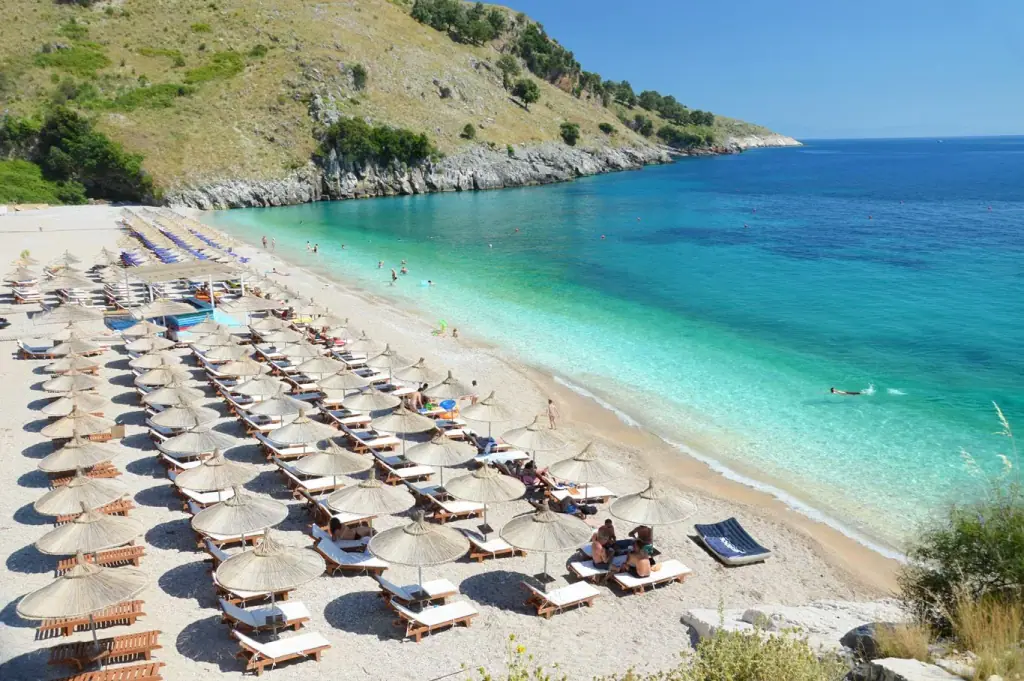
Esplora grotte marine, antiche iscrizioni e baie di ciottoli bianchi raggiungibili da Himara solo via mare.
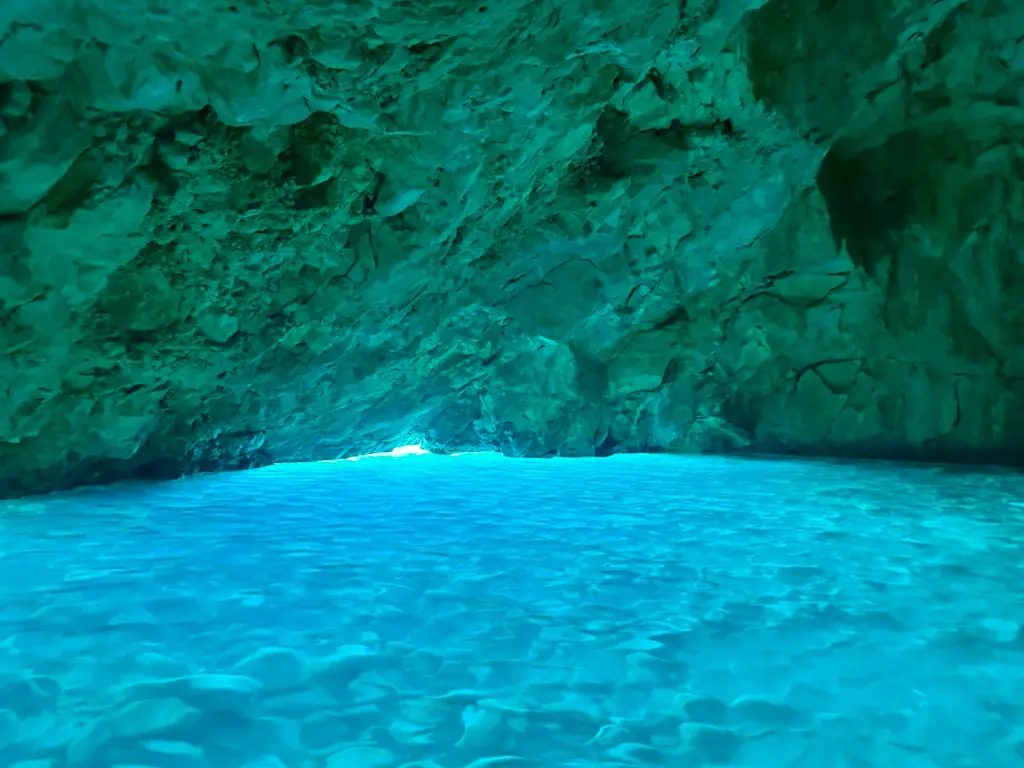
Sulla penisola di Karaburun, raggiungibile solo in barca da Himara o Vlorë. €60-€96 a persona, 5-8 ore. Deep, exceptionally clear; interior glows blue from refracted sunlight.
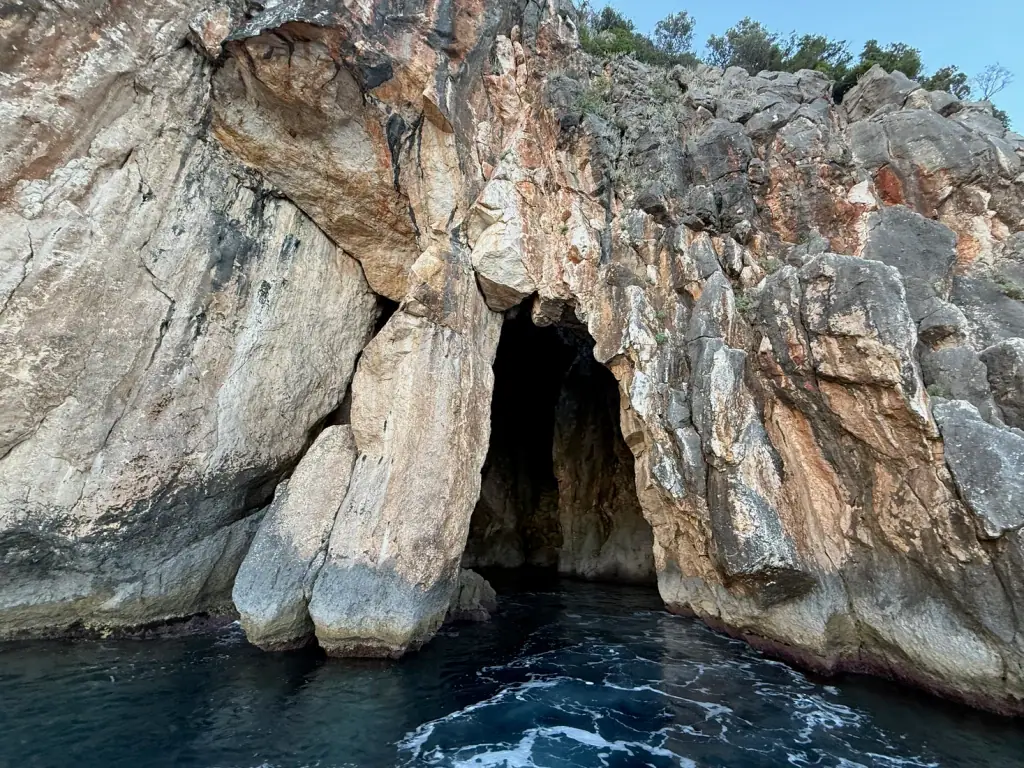
La Grotta dei Pirati comprende due grotte marine carsiche a 200 m e 800 m a sud della spiaggia di Dhërmi, illuminate di blu-verde dalla luce rifratta. La tappa centrale di ogni tour breve.
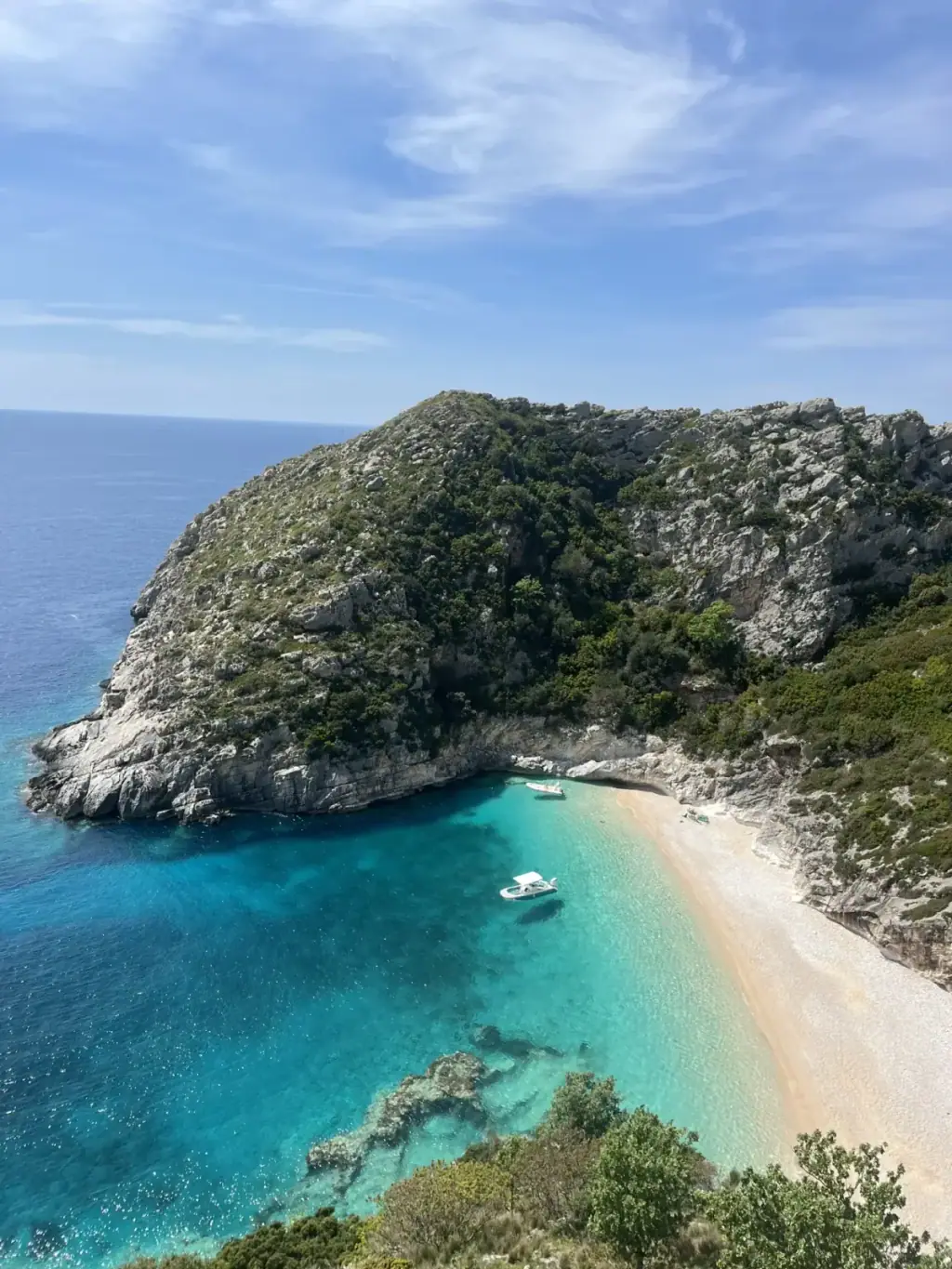
La Baia di Grama è la tappa di punta di Karaburun nei tour in barca a lungo raggio da Himara: ~1.500 antiche iscrizioni lungo 18 secoli, nel primo parco marino d'Albania.
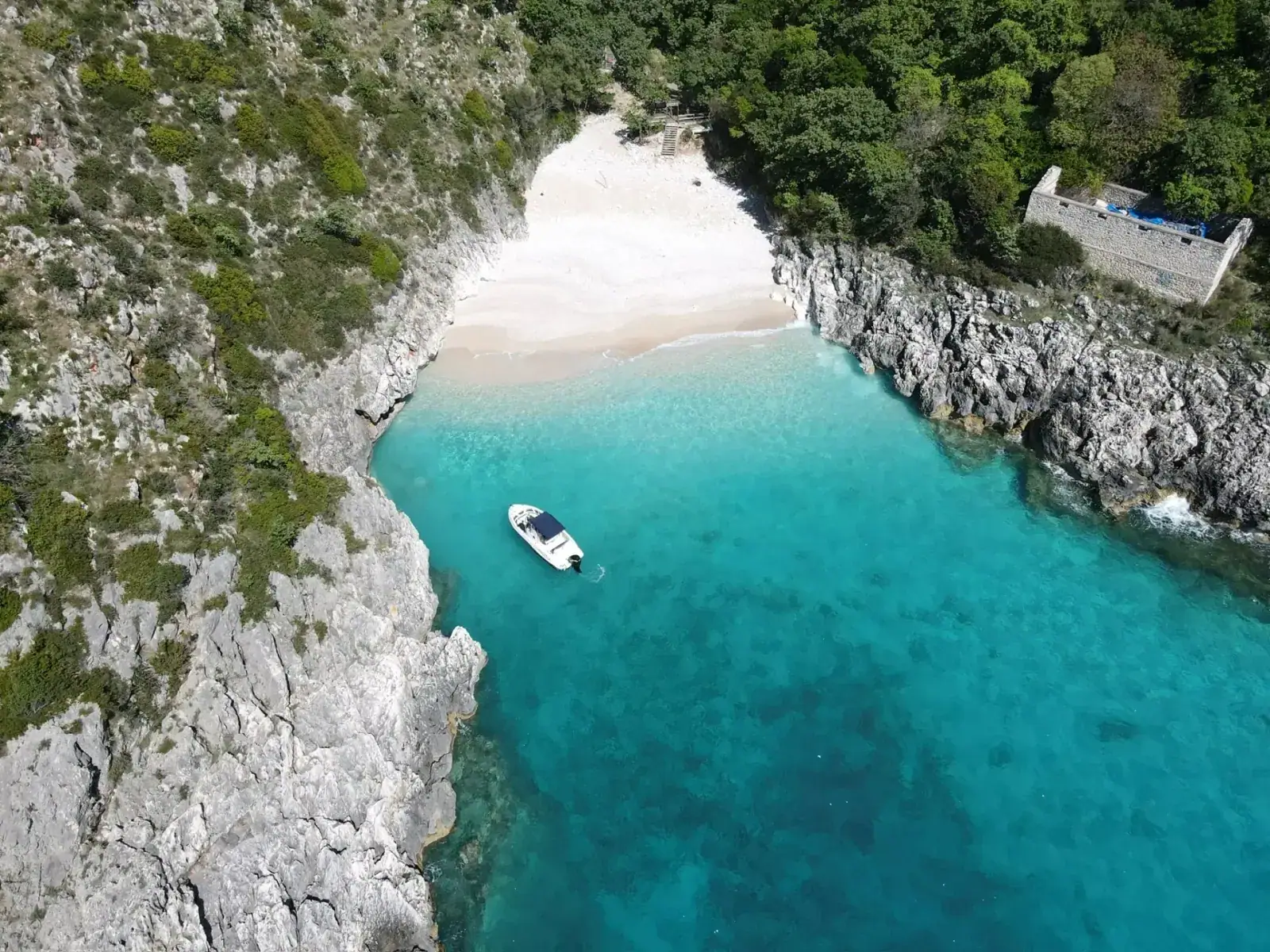
La Baia di Sant'Andrea è una caletta di ciottoli bianchi lunga 50 metri sulla costa di Karaburun. Accessibile solo via mare e racchiusa tra le scogliere, è una sosta bagno di mezz'ora nei tour per la Baia di Grama.
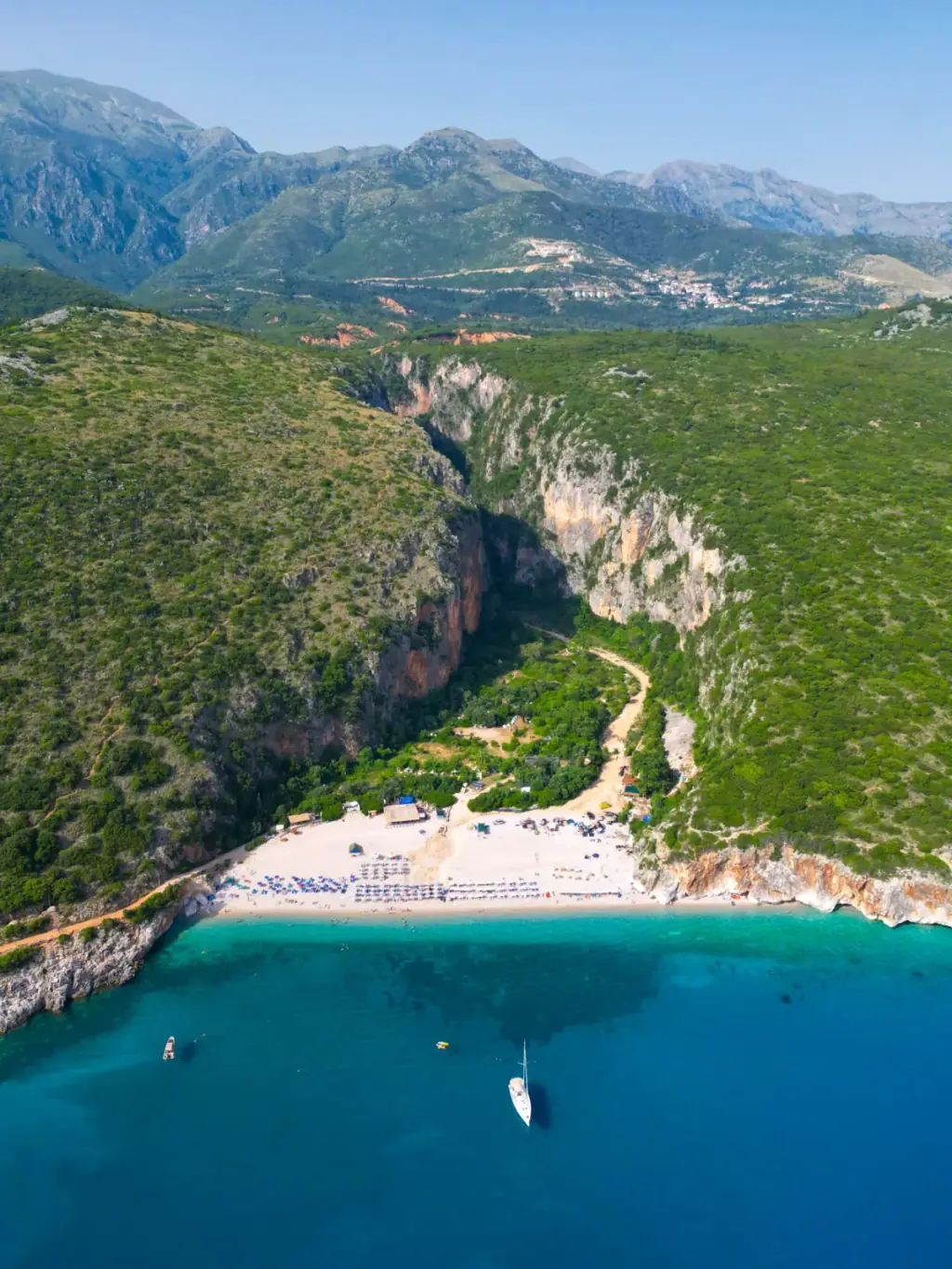
Il Canyon di Gjipe è la gola calcarea che incontra il mare tra Dhërmi e Vuno, fotografabile al meglio dal basso in barca. Lo sfondo spettacolare della Spiaggia di Gjipe.
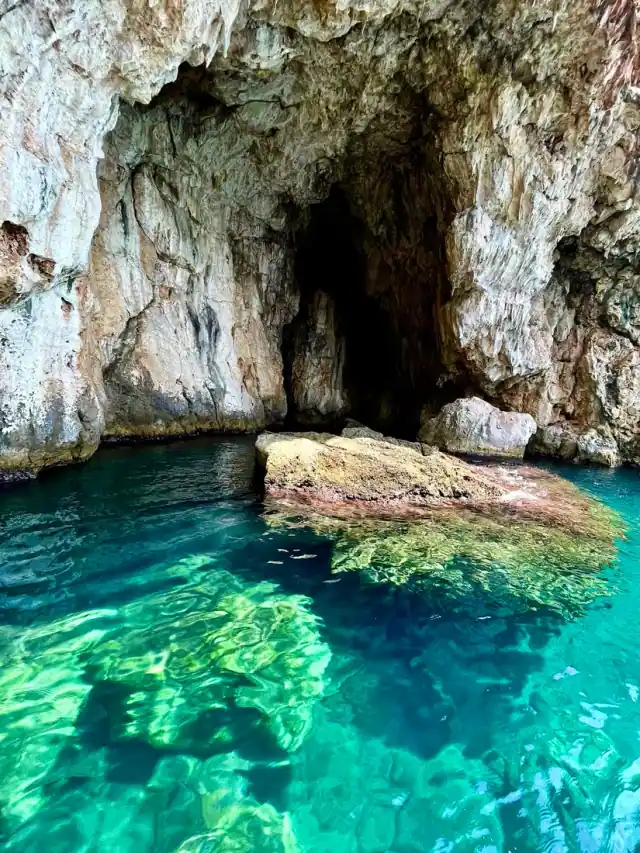
La Grotta del Tuono è la tappa acustica più spettacolare del tour a lungo raggio da Himara alla Baia di Grama: le onde che si infrangono nella scogliera creano echi fragorosi. Una sosta breve.
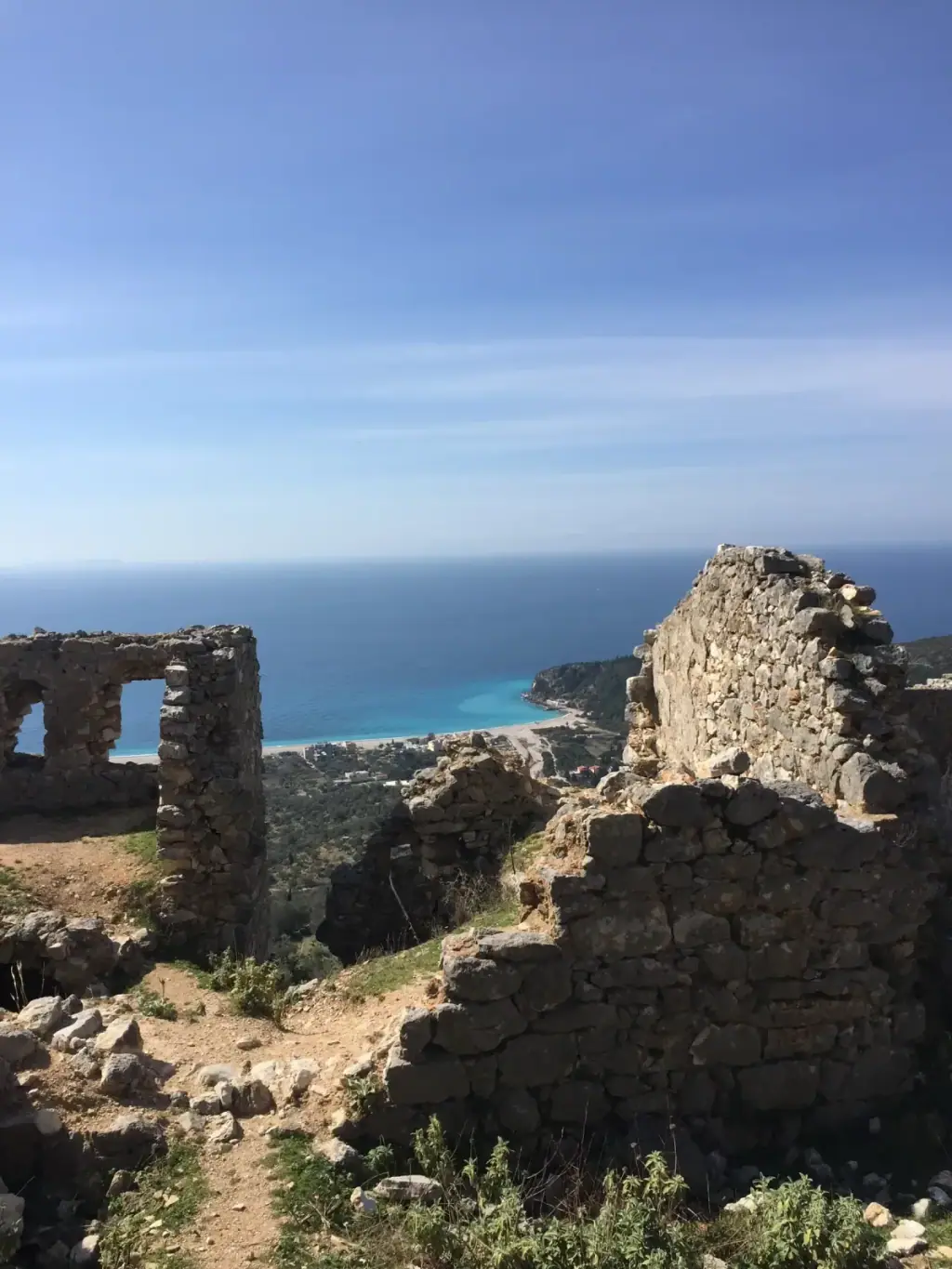
Castelli, monasteri e siti della Guerra Fredda, dal centro storico sopra Spile alle colline sopra Dhërmi e Borsh.
Porto Palermo Castle is a triangular Ottoman fortress with three round bastions, built on a narrow peninsula in one of the most photogenic bays on the Albanian Riviera.
The Porto Palermo Submarine Tunnel is the Cold War submarine base of Porto Palermo Bay: a 650-meter tunnel carved straight through the peninsula at the northern end of Porto Palermo Bay.
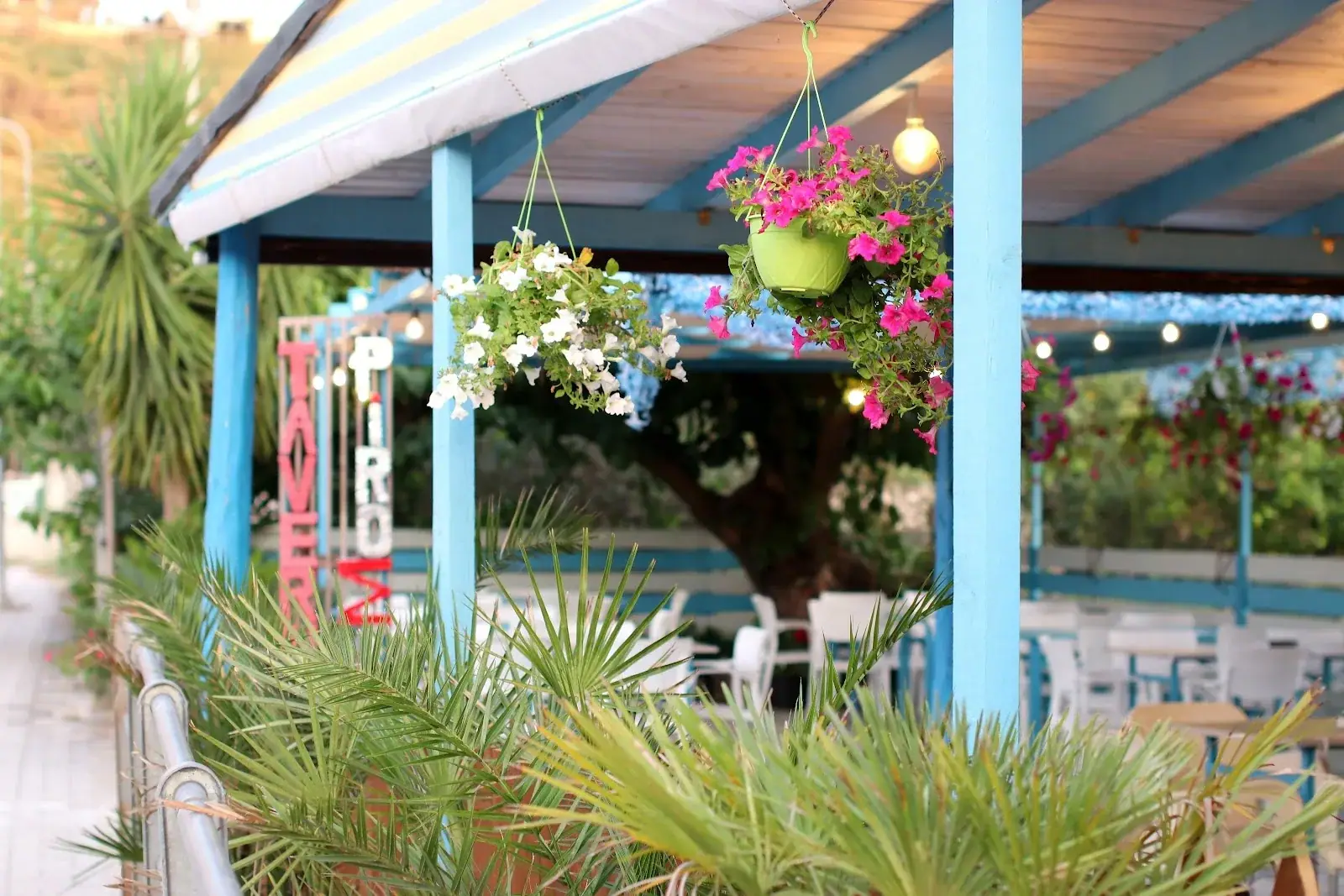
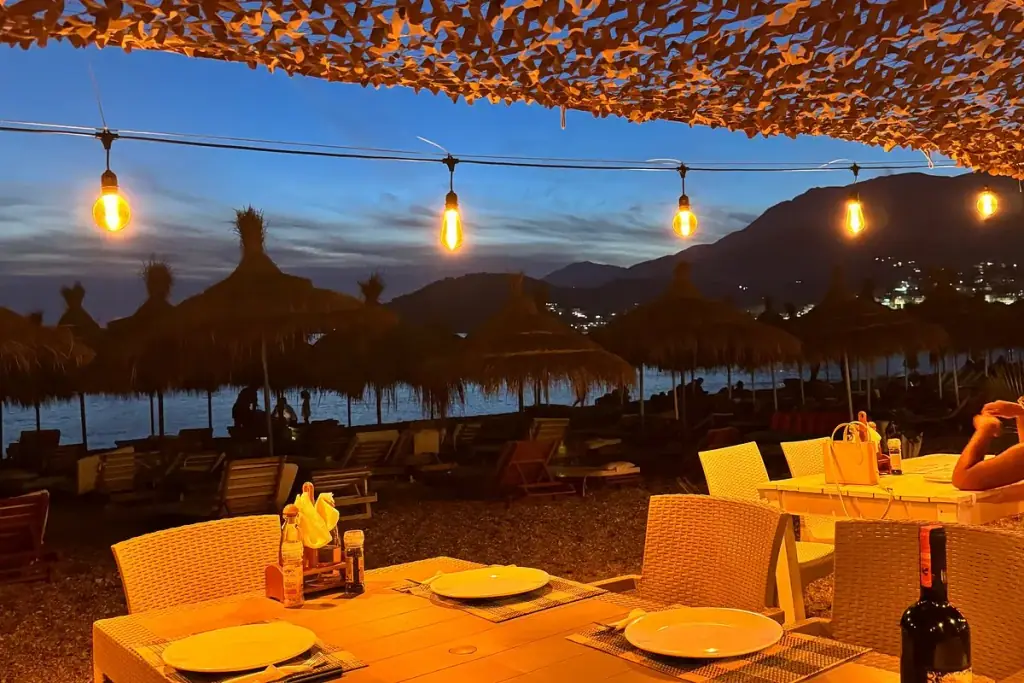
Bar in terrazza sopra Spile, terrazze per cocktail affacciate sulla baia e beach bar sulla sabbia a Livadh e Jalë.
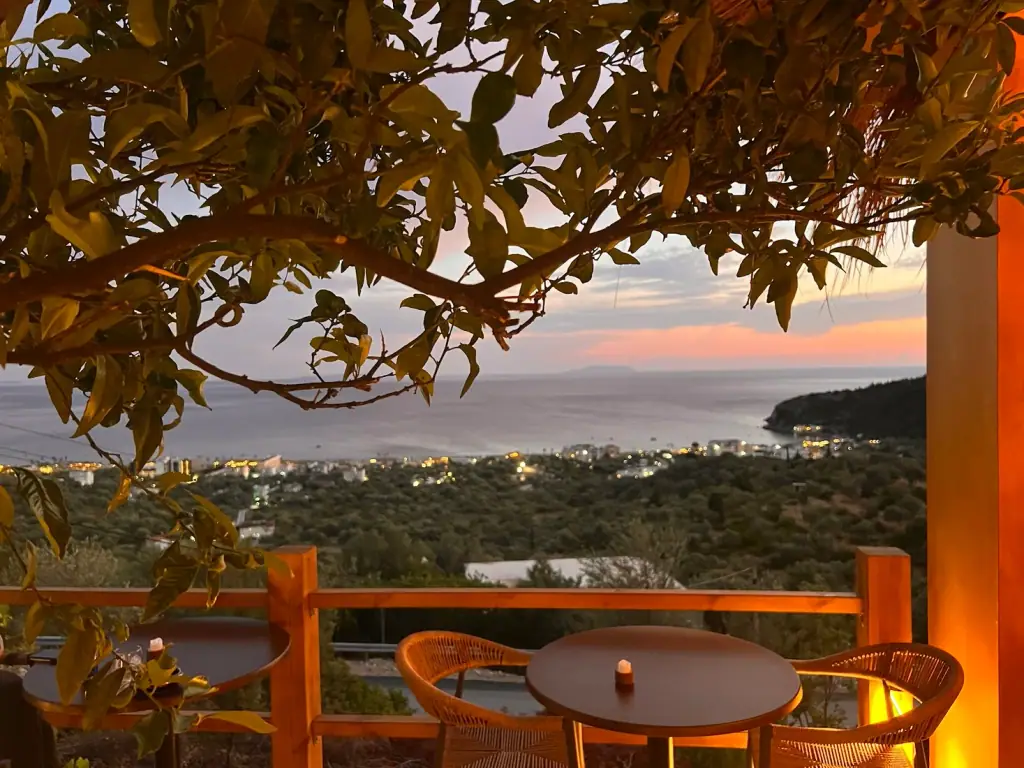
Craft cocktails on a terrace over Himara bay
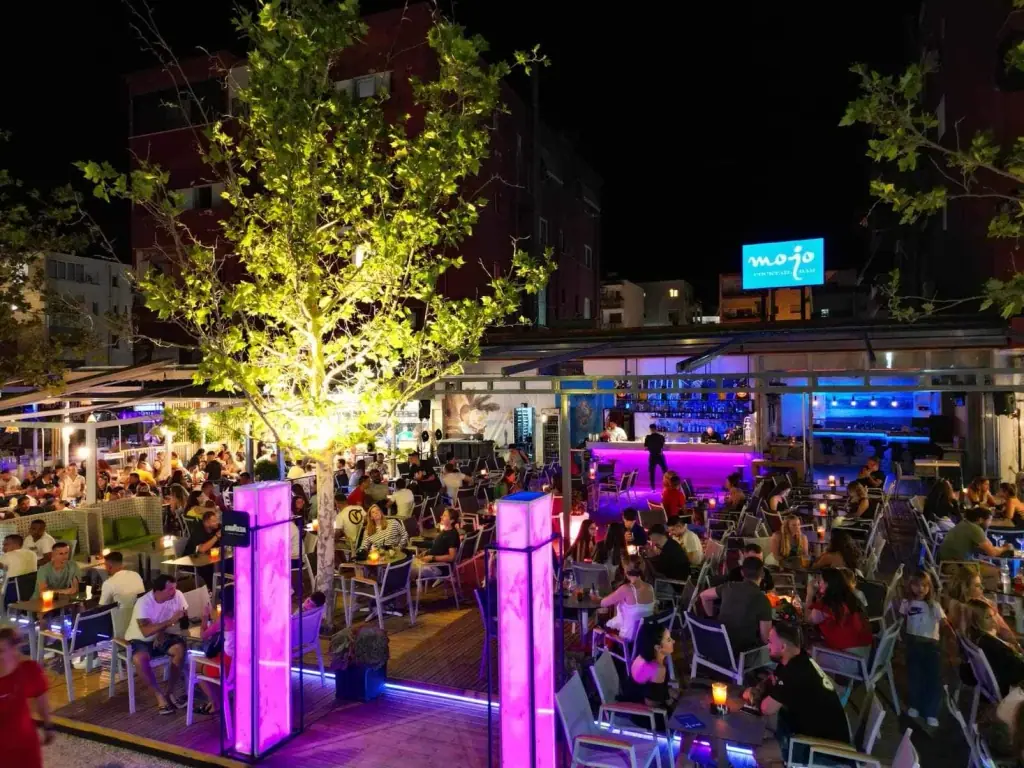
Sea views and cocktails on the Spile promenade
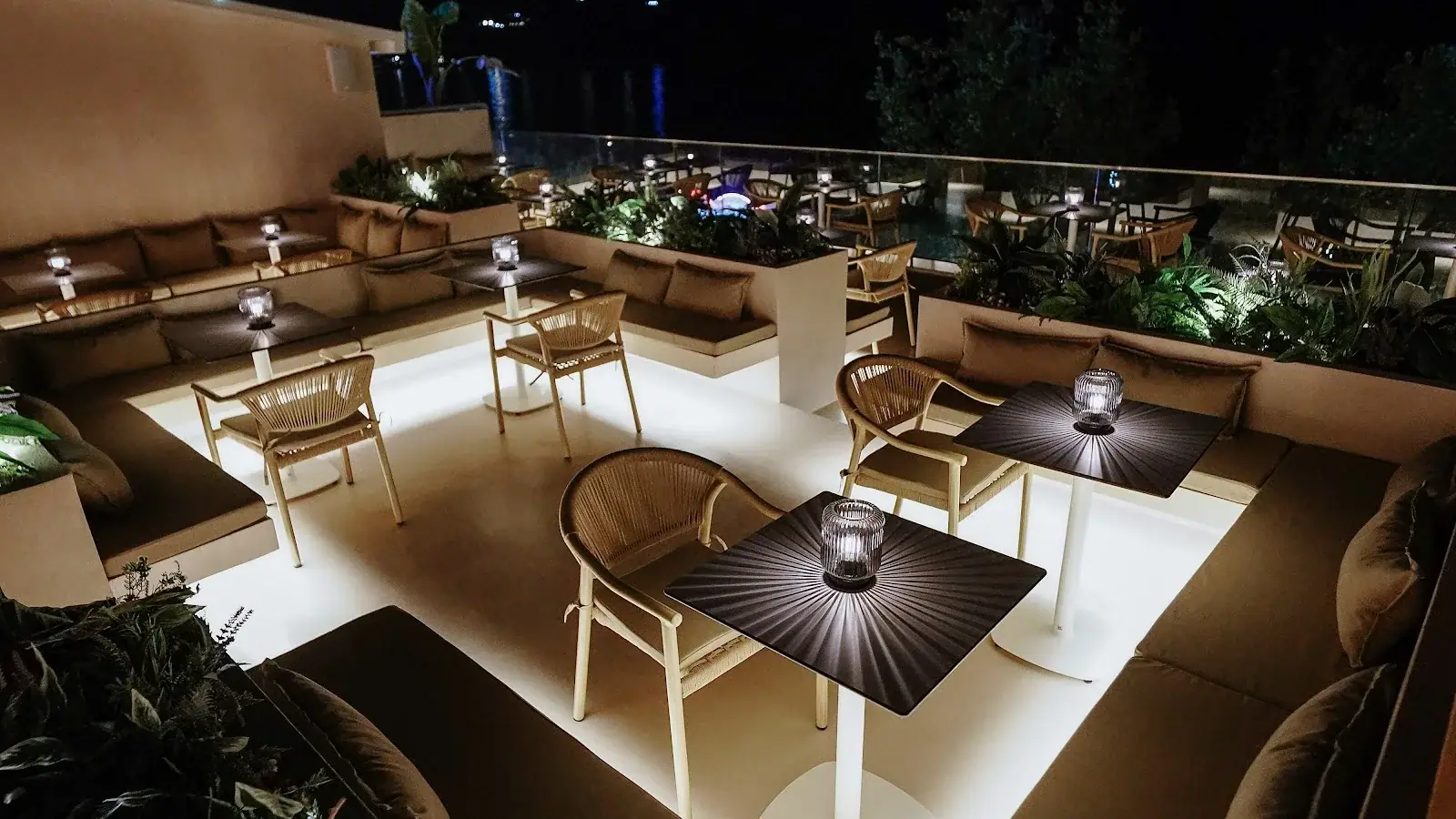
One of few bars open until 3AM; sunset-facing view
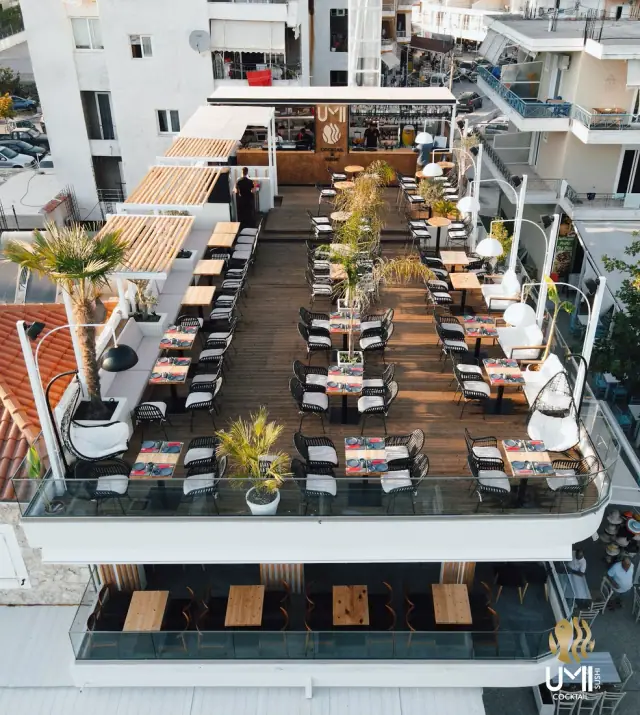
Rooftop sushi bar above the streets of Himarë
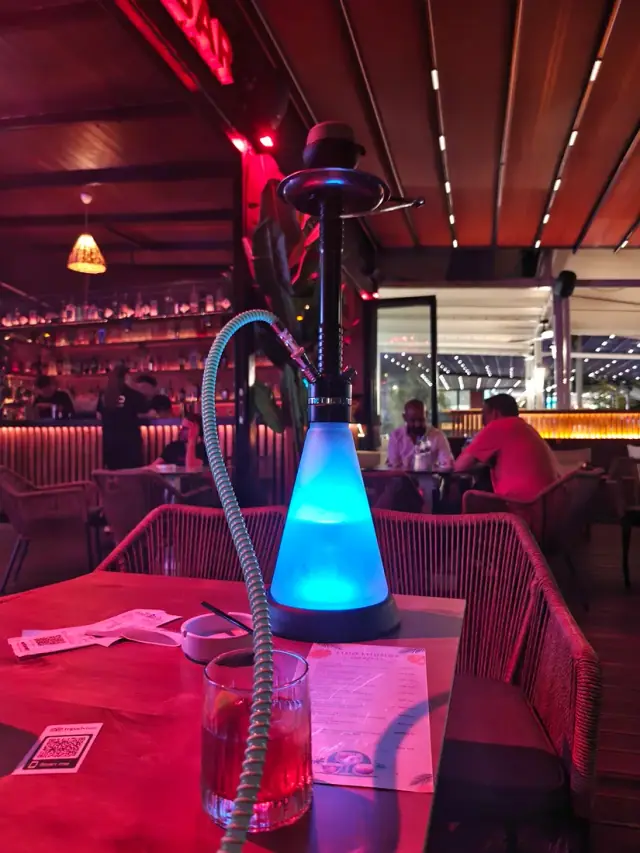
Happy hour 1-8PM; cocktails and tapas
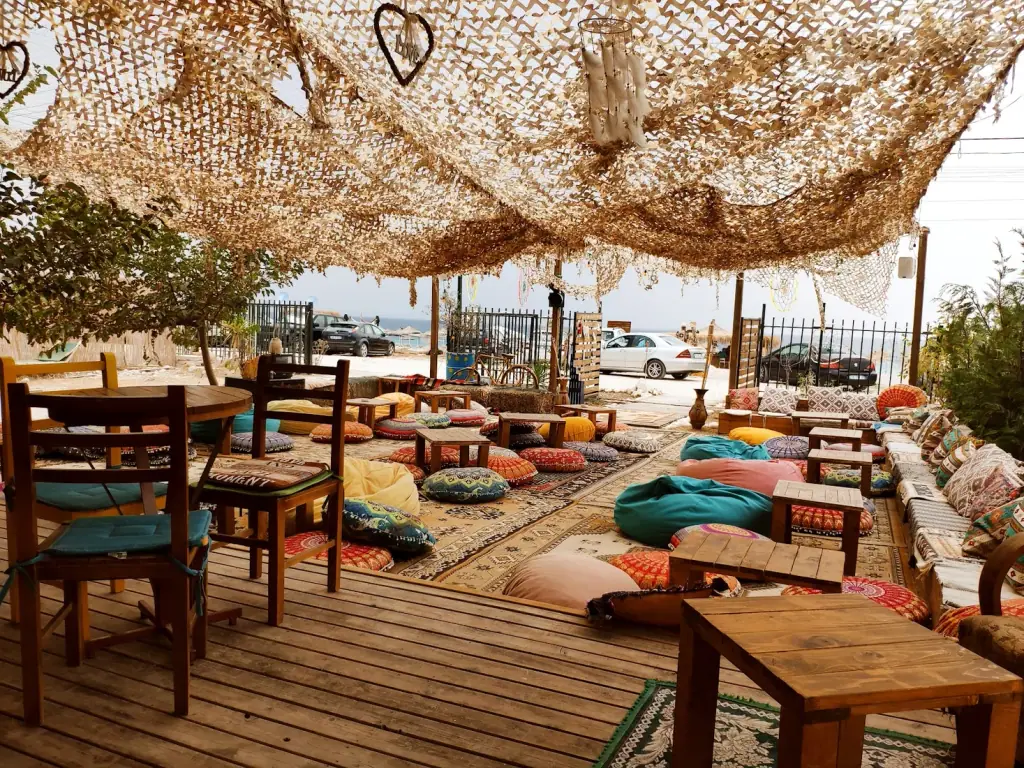
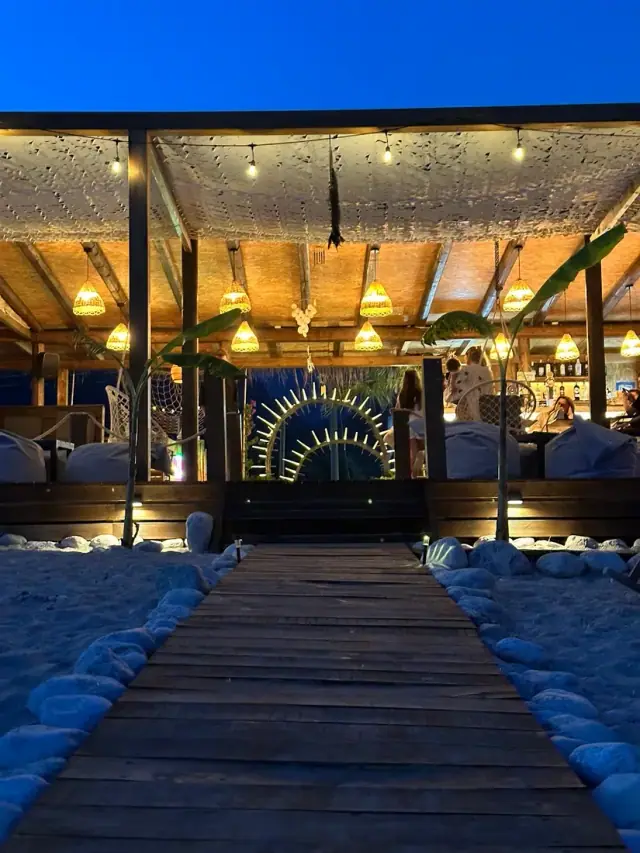
Floor cushions and a net canopy on the sand; live music after dark
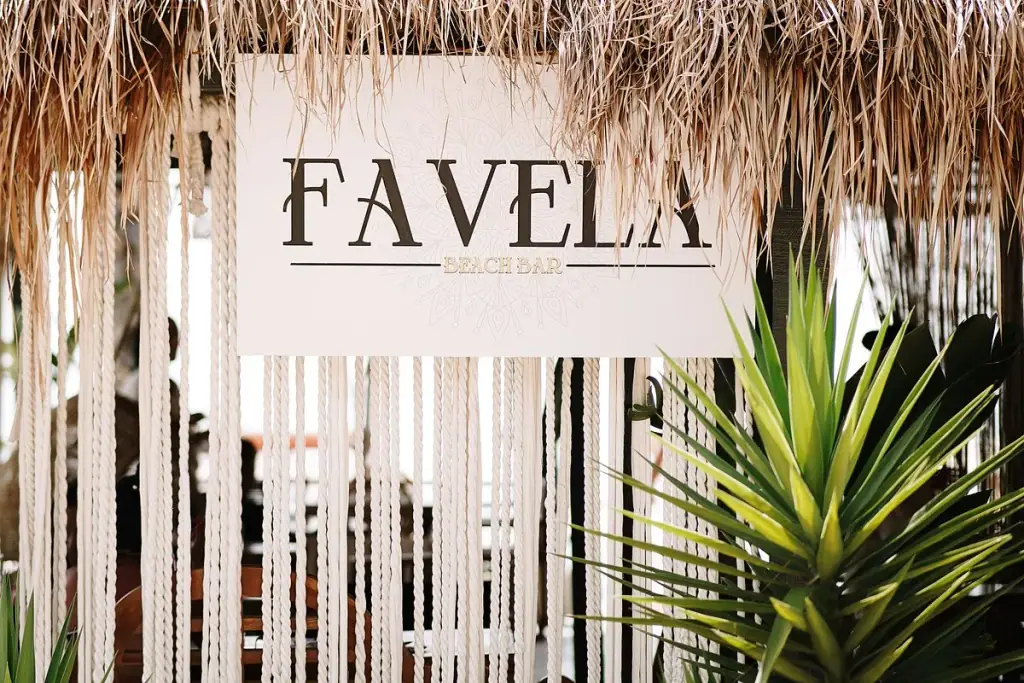
Tropical party vibe; weekend DJs; Mediterranean fusion food
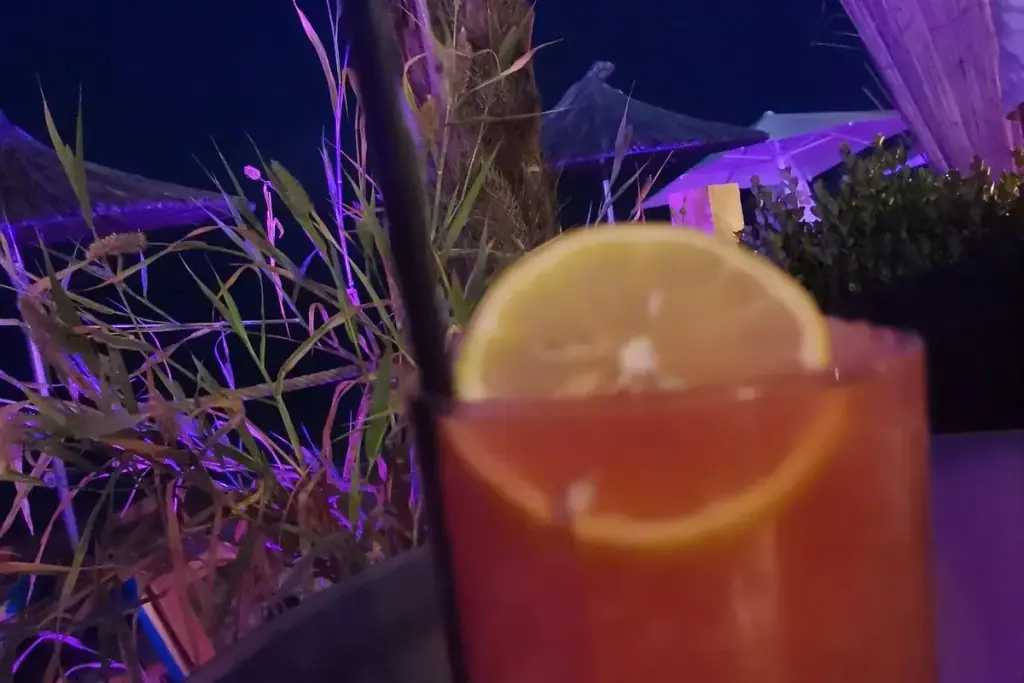
Beach cocktail bar and dance club on the sand
Resort di lusso sulla spiaggia, hotel boutique e pensioni accoglienti per il tuo soggiorno a Himara.
guesthouse
Small guesthouse in the Argileos neighbourhood of Himara, about a 25-minute walk from Spile Beach, with kitchenette rooms and a garden bar-restaurant.
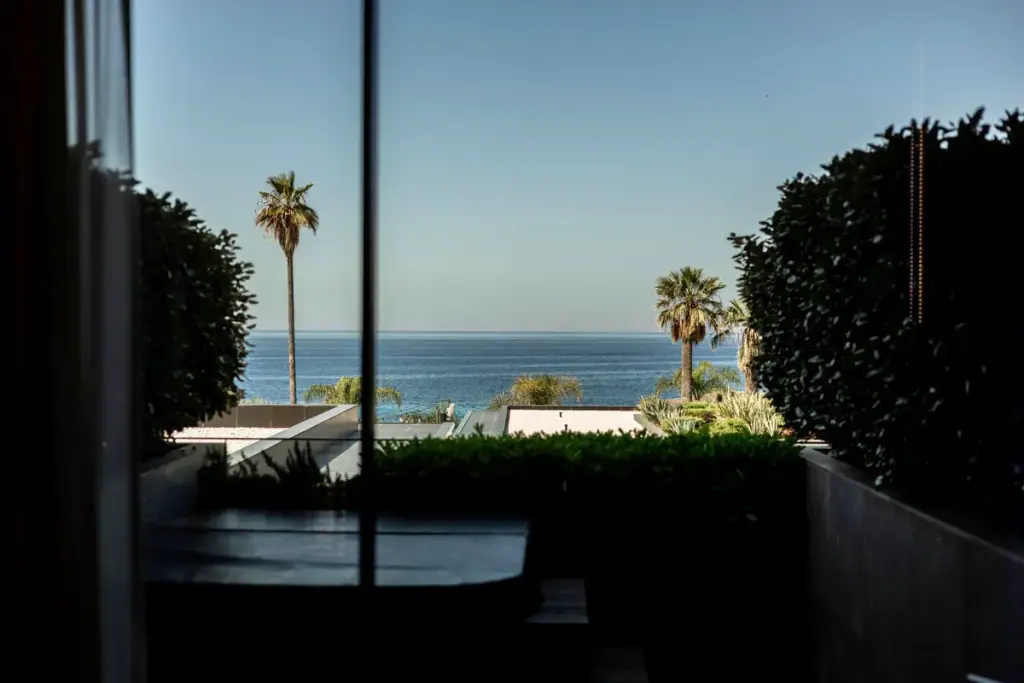
luxury
A five-star resort above Livadhi Beach with an infinity pool over the Ionian, a full-service spa, and an on-site Mediterranean restaurant.
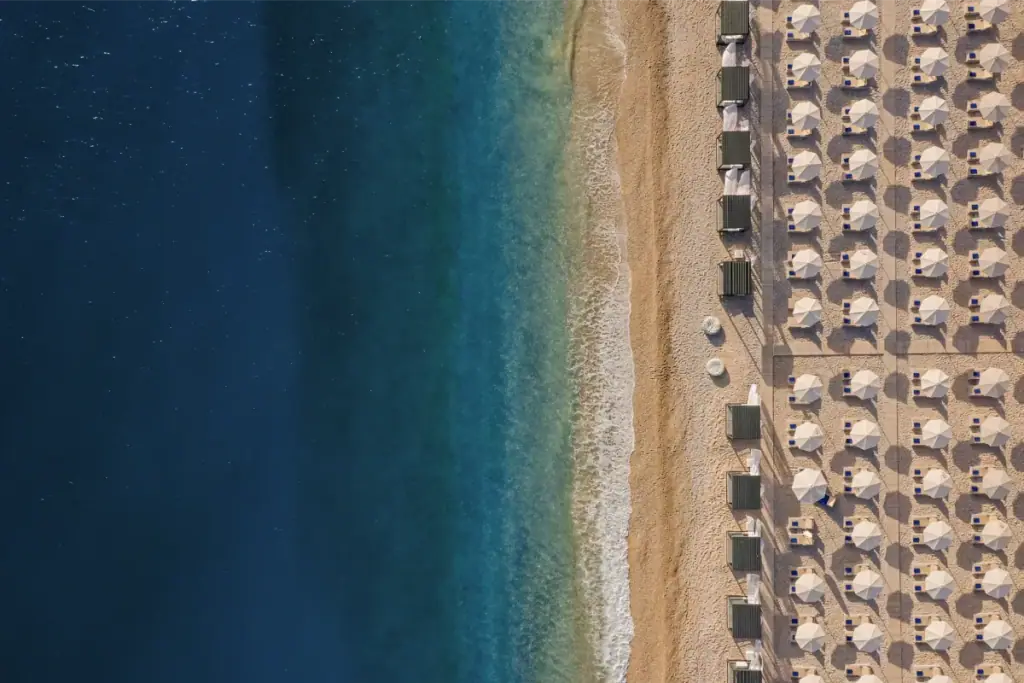
luxury
A five-star hotel on Livadhi Beach with a spa, several swimming pools, and a rooftop fitness center over the coastline.
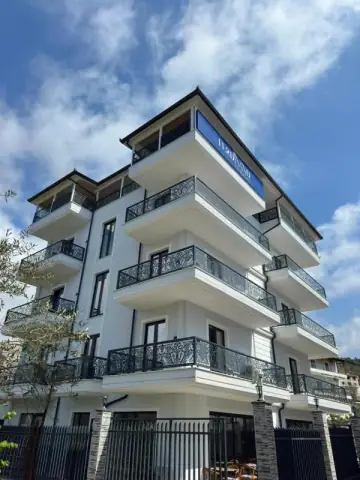
mid-range
A four-star residence in central Himara with a consistently strong guest-review record.
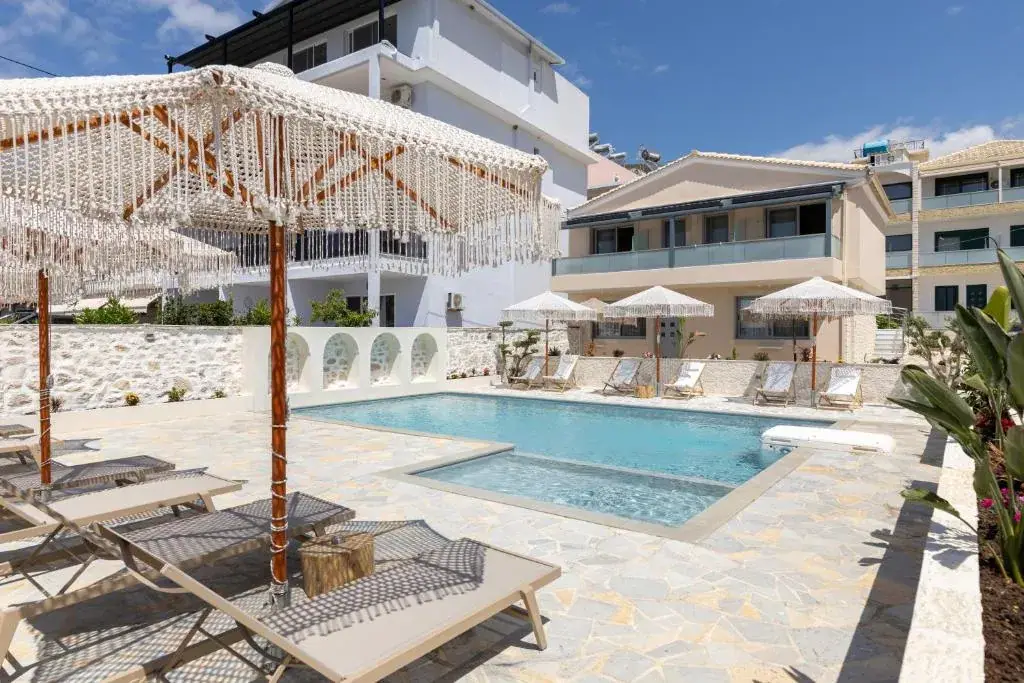
mid-range
An 18-room family-run hotel that punches well above its two-star rating, with a seasonal outdoor pool, direct access to Livadhi Beach's quieter north end, an on-site Greek/Italian restaurant, and a 9.4 Booking score across 560+ reviews.
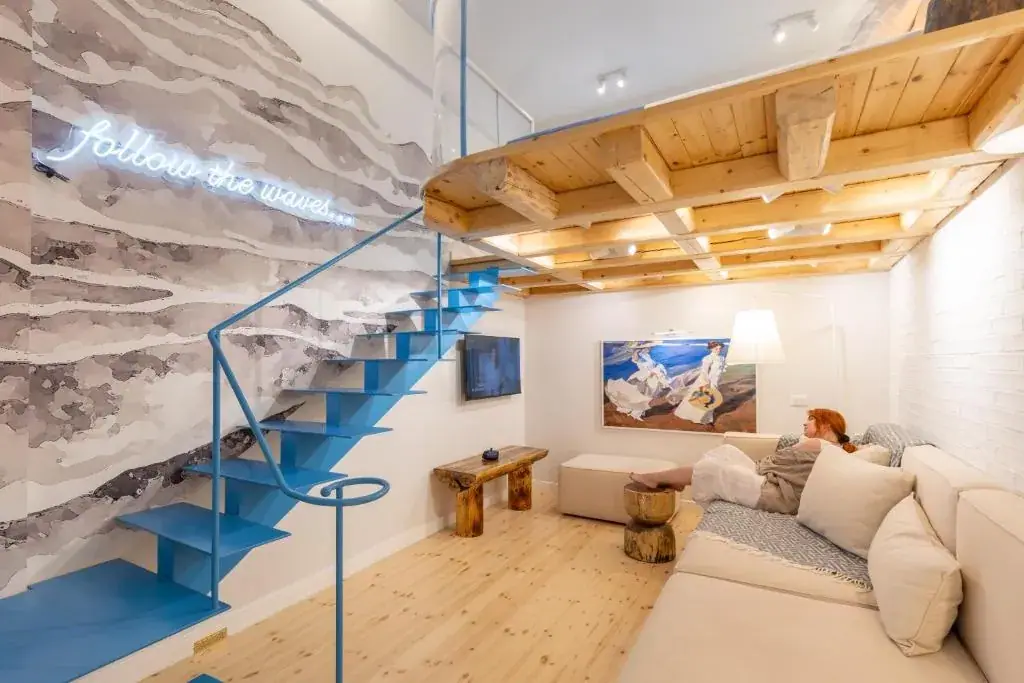
guesthouse
A guesthouse repeat guests rate among the best in Albania, with Greek-Albanian hosts, spotless rooms and home-cooked breakfasts near Himara's center.
Confronta in tempo reale la disponibilità di hotel, appartamenti e case Vrbo su un'unica mappa.
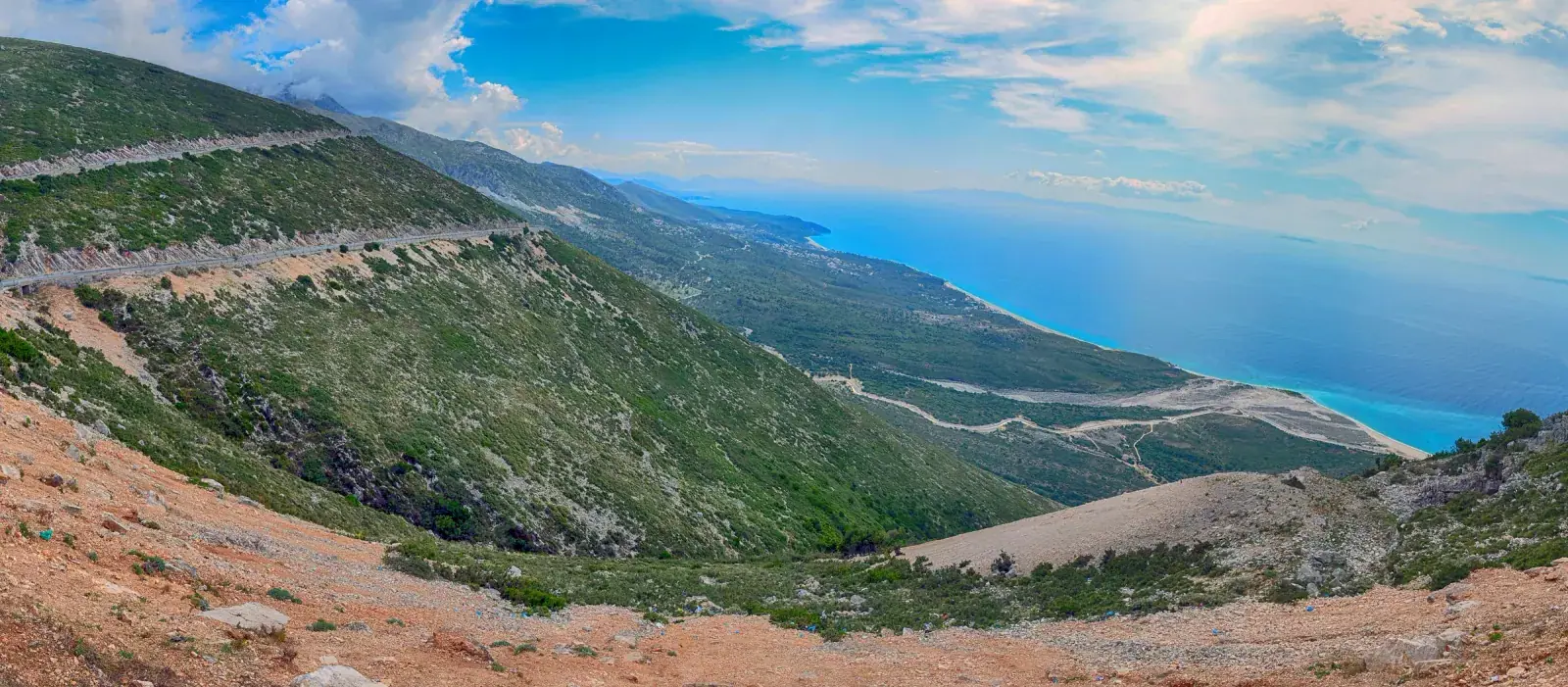
Spiagge di ciottoli e acque ioniche cristalline, con la catena degli Acrocerauni subito dietro la riva.
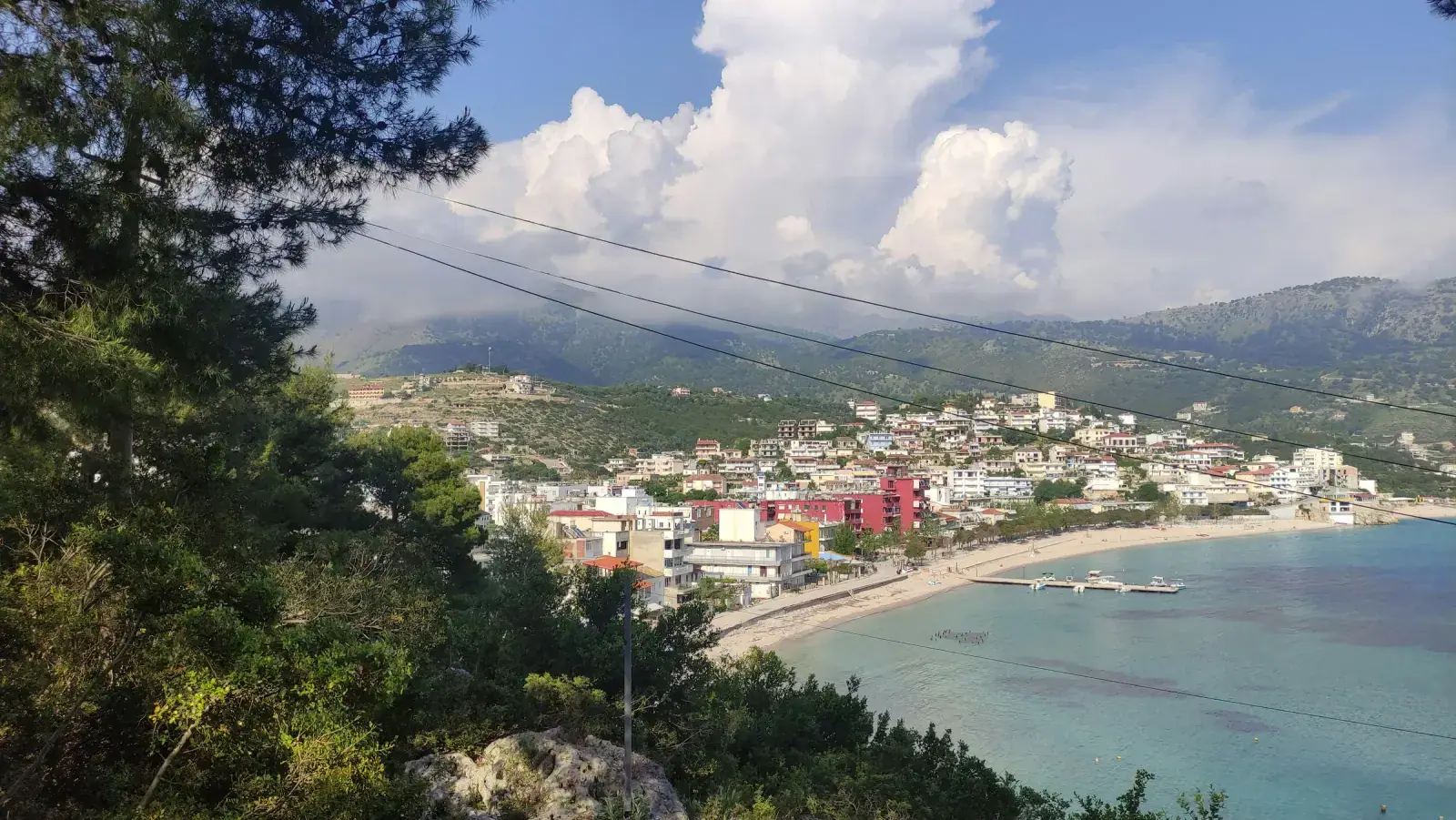
Spile Beach is the main beach of Himara, stretching roughly 500 meters along the town promenade. Its soft pebbles and occasional sandy patches make it the most comfortable beach in the center, and the water is clear enough for swimming and light snorkelling. The lively promenade behind the beach is lined with restaurants, cafes, and bars, so it stays busy and social all summer.
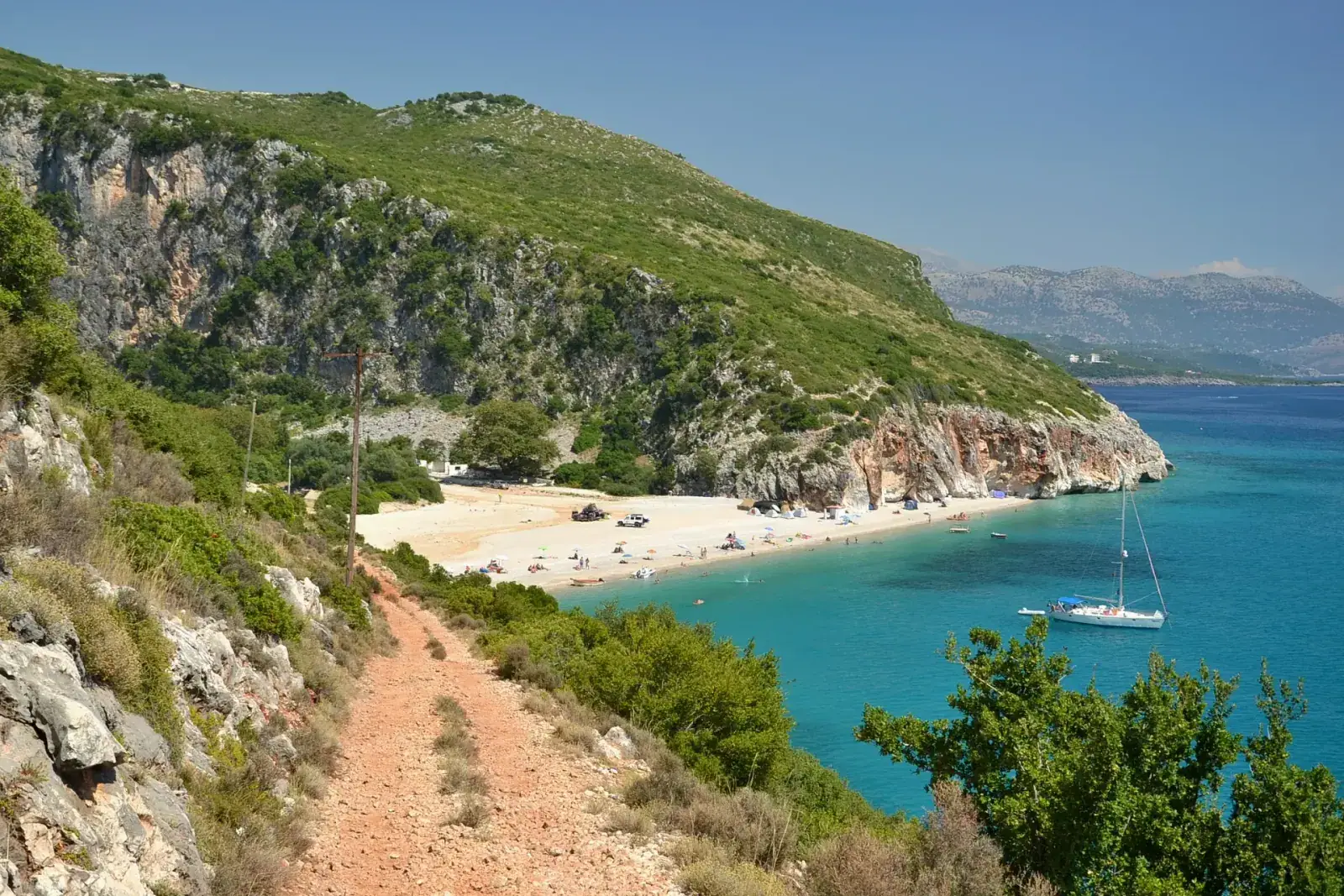
Gjipe Beach in Albania sits at the mouth of a canyon 15 km north of Himara, a pebble and sand cove walled in by cliffs. You can't drive to the sand: park at the clifftop lot (300-500 ALL in summer) and walk 20-30 minutes down, or arrive by boat from Himara. The water is clear blue, small caves open up at low tide, and the canyon walls keep it from feeling packed even in August. Seasonal huts sell drinks and rent umbrellas and loungers, and camping is allowed.
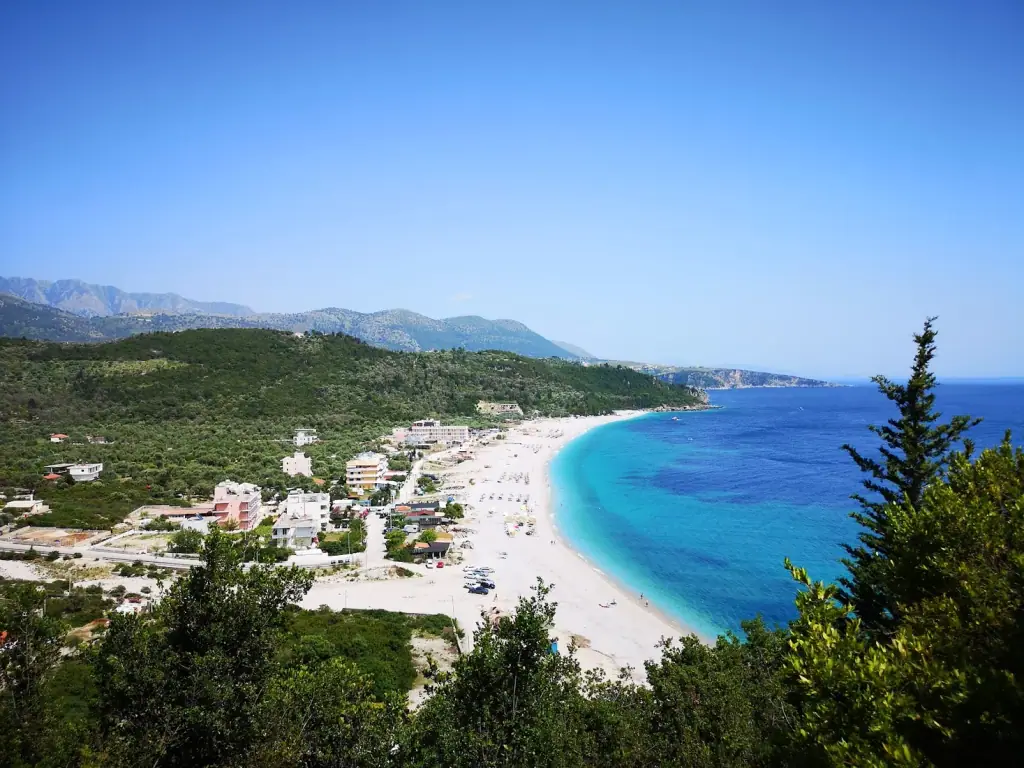
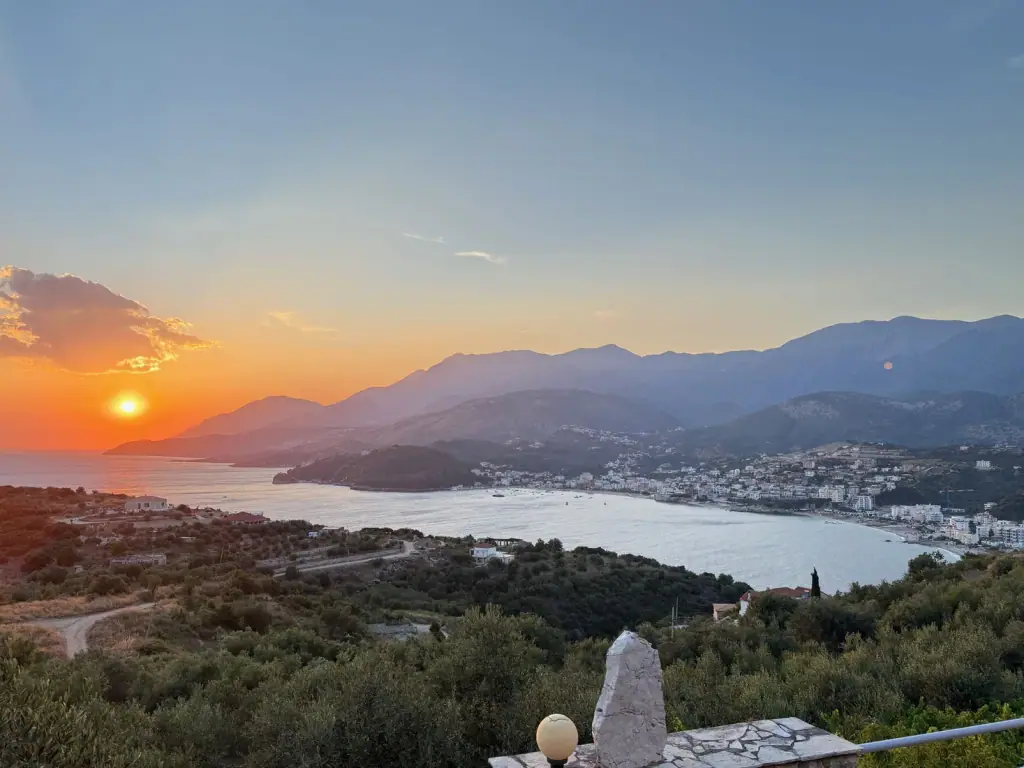
Livadhi Beach (Plazhi i Livadhit), just outside Himara town, is the everyday beach: 1.5 km of pebble shoreline between two rocky headlands, with shallow water that deepens gradually for a good 20-30 meters out, pine trees for natural shade at the quieter south end, and the silhouette of Himara's old castle on the hill above. The north end is livelier, restaurants, sun loungers, and the BOHO beach bar cluster there, while the south end stays calmer and is where families with younger kids tend to settle. At 1.5 km it's long enough to never feel cramped, even at peak season, which is the main thing that separates it from smaller coves nearby. Livadhi faces west, so it also doubles as a good sunset spot, the sun drops straight into the Ionian Sea in front of you.
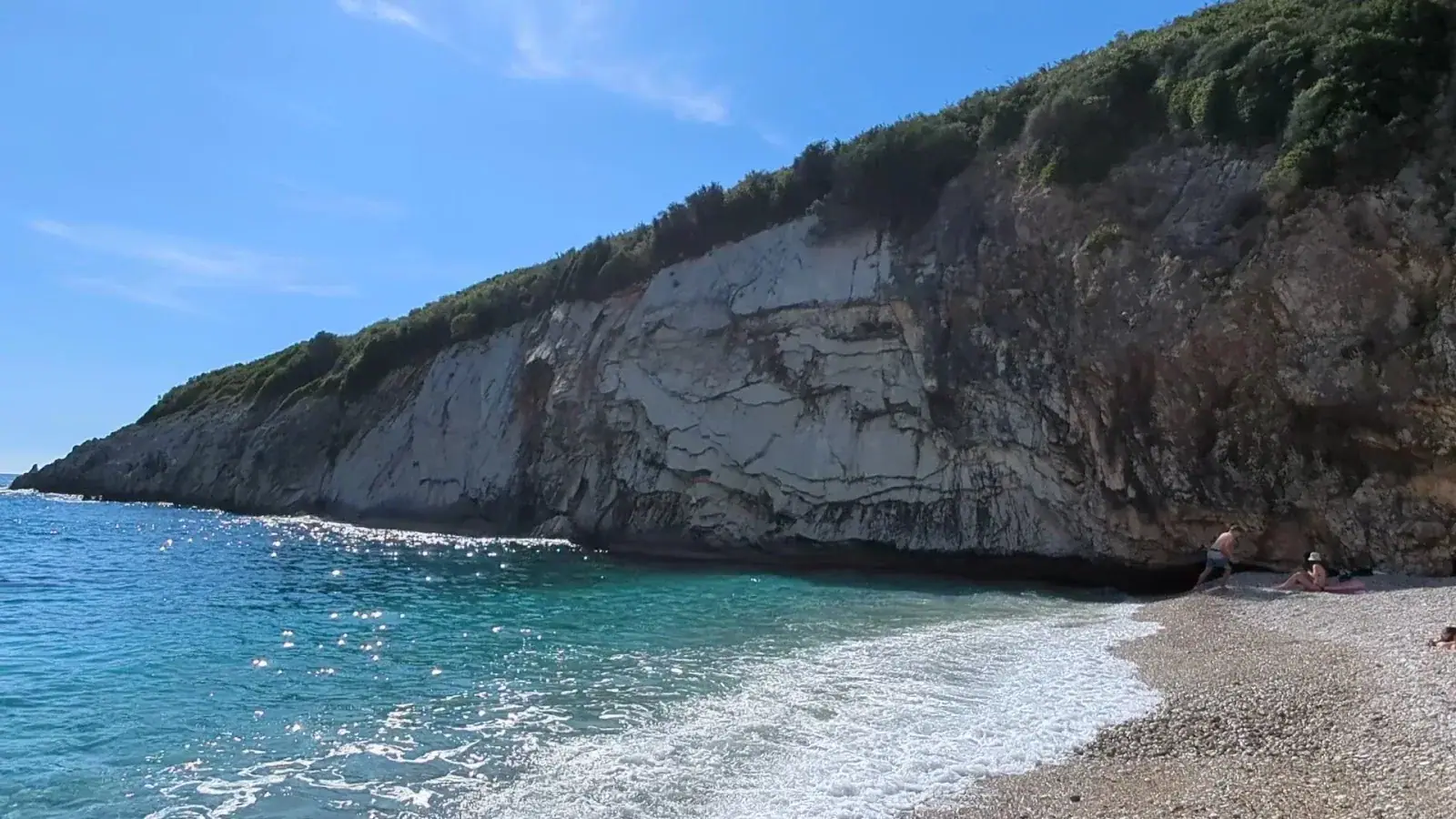
Filikuri Beach sits below high limestone cliffs between Himara town and Llamani Beach, sealed off from casual drop-in traffic by its own terrain. There's no road to the shoreline, you reach it on foot, by kayak, or by boat, and that access filter is exactly why it stays one of the most unspoiled coves on the Riviera. What you get for the effort: a small pebble strip, rock walls on both sides, and transparent Ionian water that usually looks better in person than in photos. The seabed drops away faster than at family beaches, so this suits confident swimmers and snorkelers more than young kids. With no permanent cafes, bars, or sunbeds, Filikuri rewards travelers who want a genuinely off-grid few hours rather than a serviced beach-club afternoon.
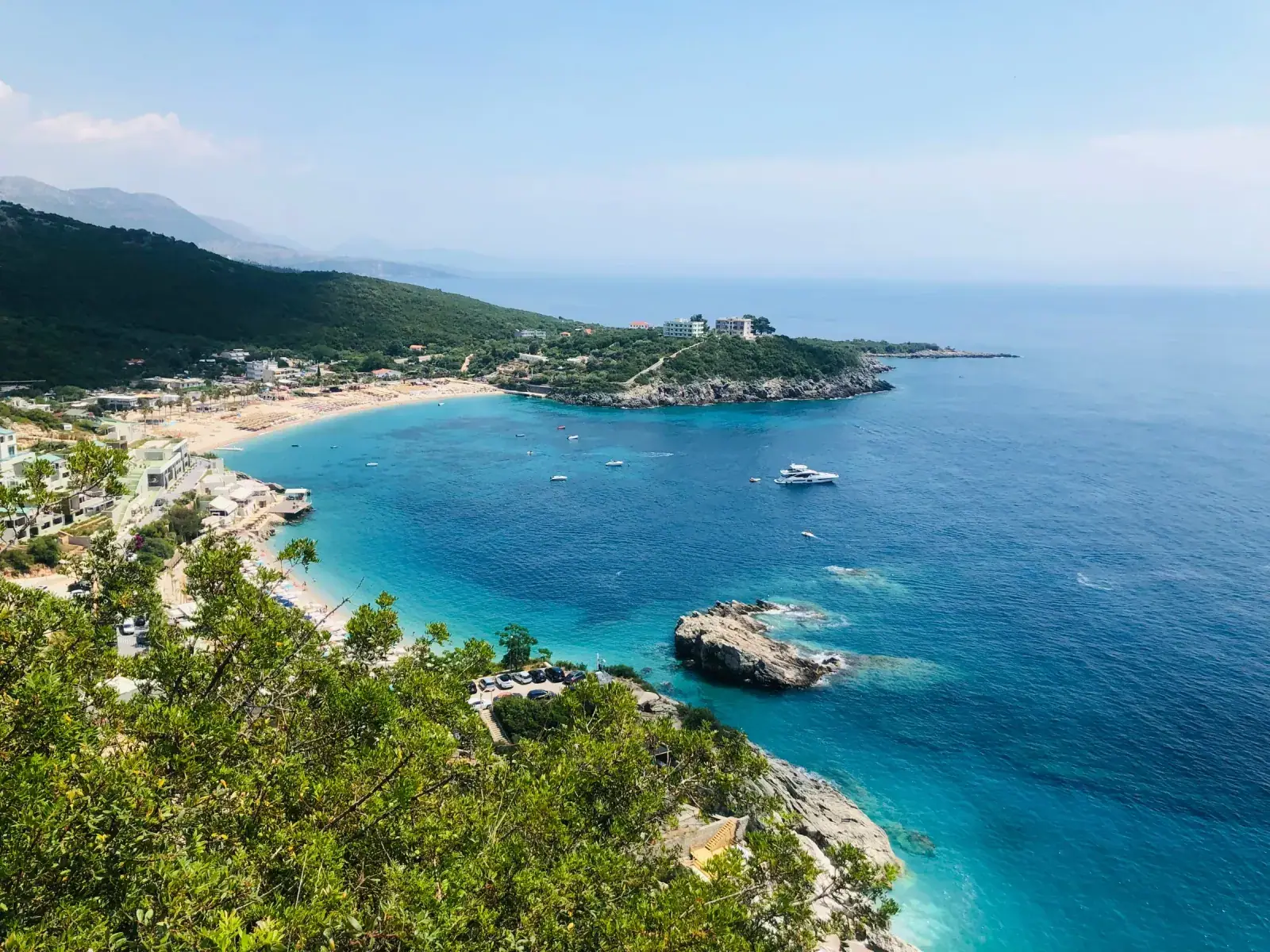
Jale Beach is a compact 300-400 meter bay 12 km north of Himara, tucked between rocky headlands with olive-covered hills rising behind it, the Riviera's backpacker cove, and increasingly its party one too. The water clarity is the strongest card: turquoise near shore, deepening to vivid blue, with good snorkeling along both headlands. Two campgrounds and a growing beach-bar strip (Favela Beach Bar draws the daytime crowd; quieter spots hold the sunset end) give it a youthful, social energy that shallow family beaches like Livadhi don't have. It's also the natural base for reaching Akuarium Beach, a 1.5 km coastal hike south around the headland. Peaceful in June and September; on July-August weekends the bar strip turns the whole cove into one late-night party.
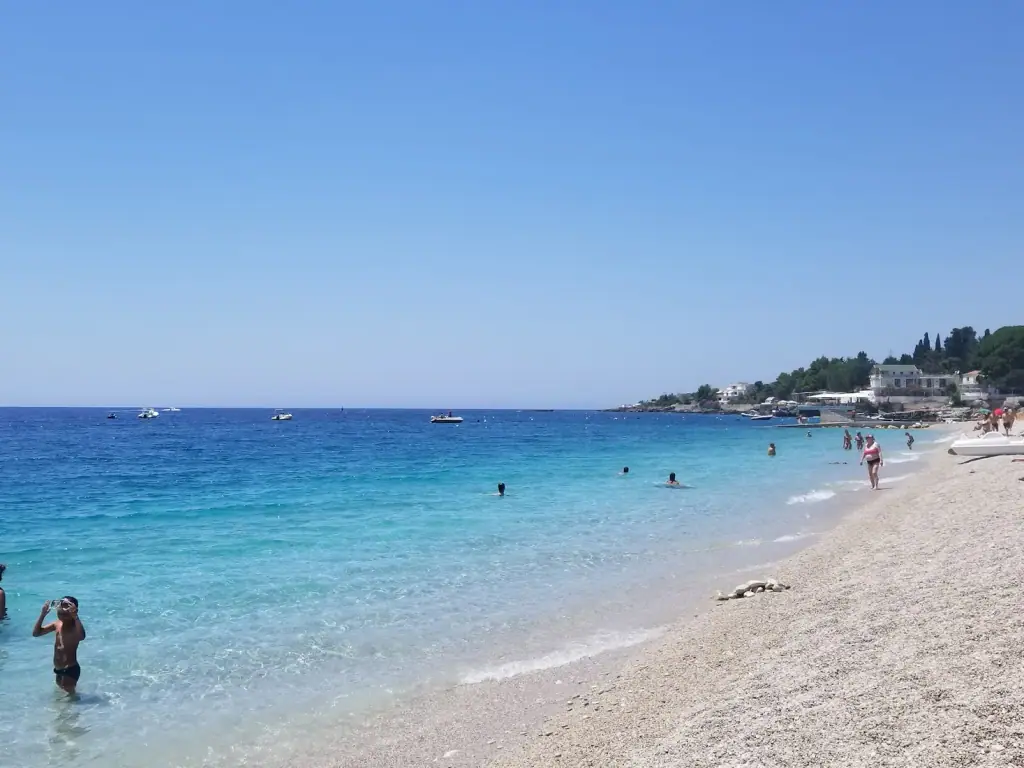
Dhermi Beach is a white pebble beach below the Ceraunian Mountains, offering a more polished and upscale beach experience than most Himara-area options. Beach clubs, waterfront hotels, and restaurants line the shore, and the striking blue Ionian waters make it one of the most photographed spots on the Albanian Riviera. Prices tend to be higher here, reflecting its reputation as a premium destination.
Taverne sul mare, caffè del mattino e le griglierie dove fanno la fila anche i locali.
I numeri che quasi tutti cercano prima di prenotare.
Guide, consigli e dritte da chi conosce il posto per il tuo viaggio a Himara.
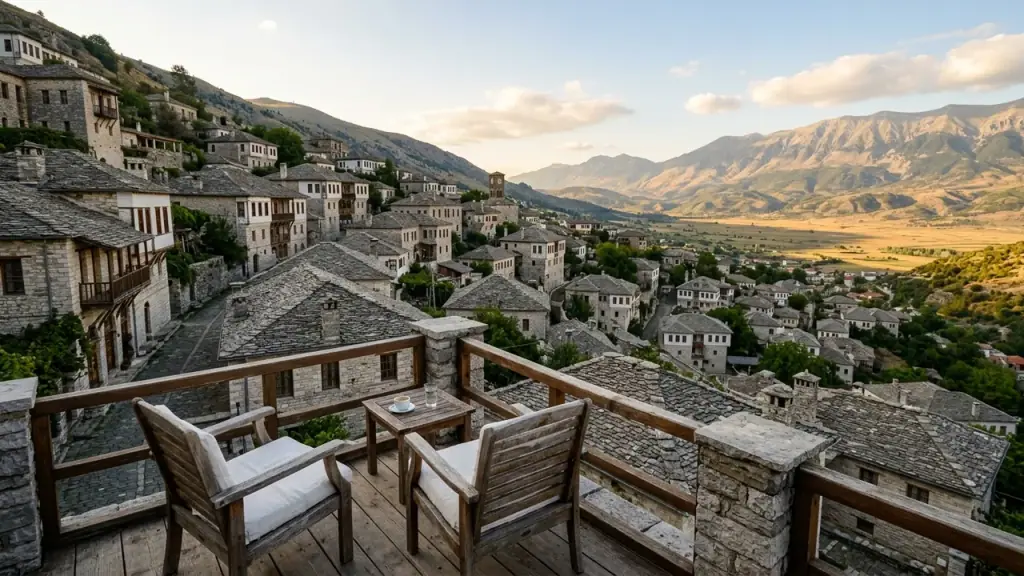
Gjirokaster hotels compared: the old bazaar, the hill below the castle or the new town, with Google scores, star class and real Maps prices for the hotels people search by name.
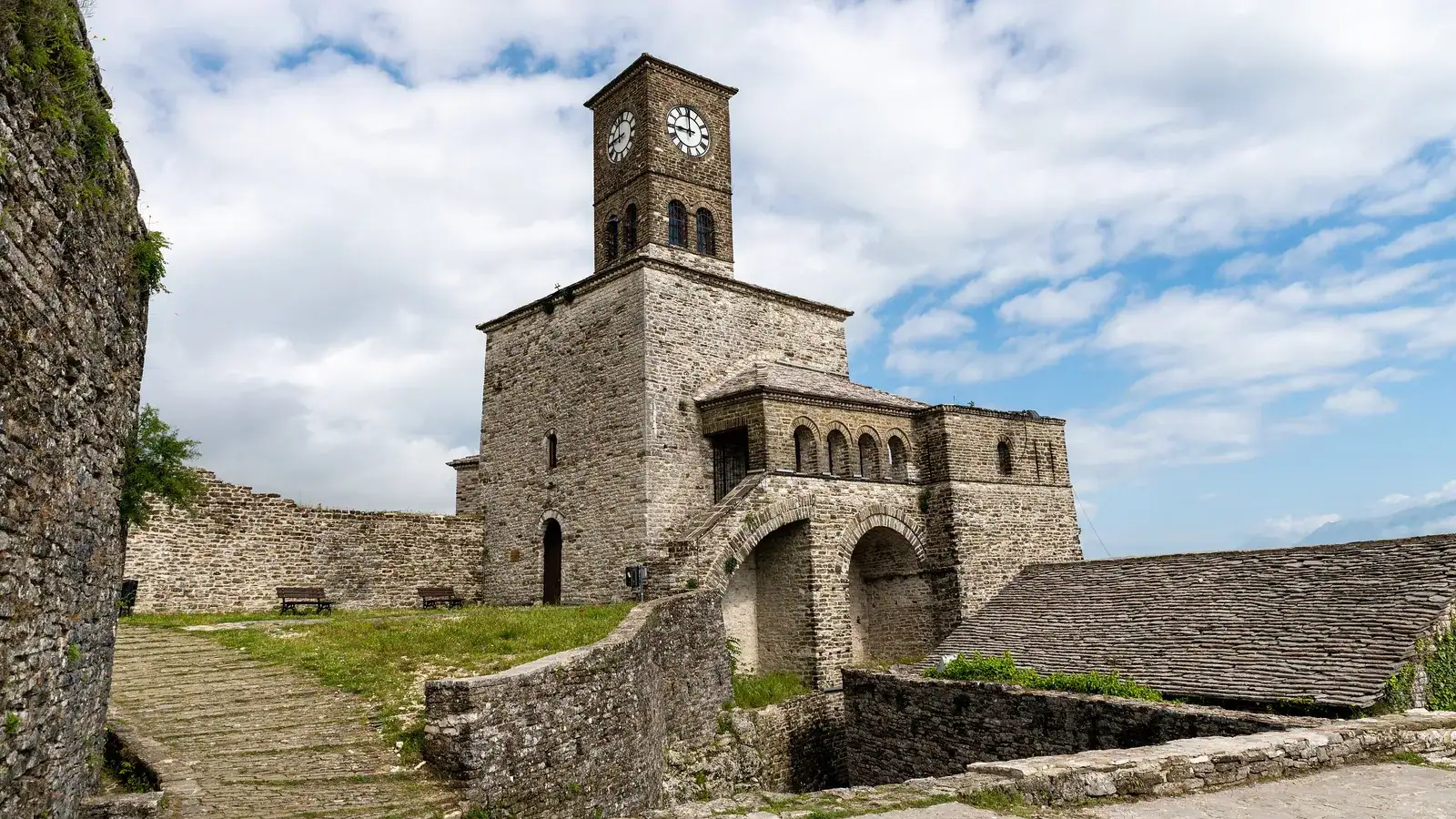
Gjirokastër castle: 400 lek entry, summer and winter hours, the gun gallery, the American jet, the prison and the clock tower, and how long to give it.
What a taxi in Saranda and Ksamil costs in 2026: published fares to Ksamil, Butrint, Gjirokastër and Tirana airport, which apps work, and the firms we checked.
Le domande più comuni per chi visita il cuore culturale della Riviera albanese.
Entrambe le cose, a seconda di cosa si intende. Dal punto di vista amministrativo Himara fa parte dell'Albania: si trova nella contea di Vlorë ed è entrata nello Stato albanese nel 1912. Sul piano culturale, la cittadina costiera e diversi villaggi vicini (Dhërmi, Palasë, Vuno, Qeparo) ospitano una comunità di etnia greca di antico insediamento, che parla un dialetto greco tutto suo, l'imariota, mentre nei villaggi dell'entroterra si parla albanese. Himara è quindi una città albanese con una storica minoranza di lingua greca, e le due identità fanno entrambe parte del suo carattere.
Il nome deriva dal greco antico Chimaira (Χίμαιρα), la stessa parola della mitologica creatura che sputa fuoco. Gli studiosi lo collegano al territorio montuoso, selvaggio e popolato di capre, oppure, secondo una lettura bizantina più tarda, ai torrenti stagionali (cheimarros, 'torrente invernale') che dopo le forti piogge si gettano in mare.
Assolutamente sì. Himara offre un'esperienza più autentica e culturale rispetto a Saranda o Ksamil, con alcune delle spiagge più belle d'Albania (Gjipe, Livadhi) e un ricco patrimonio bilingue.
Himara si raggiunge in autobus da Tirana (4-5 ore) o da Saranda (1,5 ore). In alternativa puoi prendere il traghetto da Corfù a Saranda e poi proseguire verso nord in autobus o in taxi.
L'alta stagione è a luglio e agosto, ma maggio, giugno, settembre e l'inizio di ottobre offrono un clima perfetto, meno folla e prezzi più bassi.
Himara è molto sicura per chi viaggia da solo, per le famiglie e per le coppie. La gente del posto è straordinariamente accogliente e il tasso di criminalità è molto basso.
Gjipe è la più famosa per il suo canyon, Livadhi è ideale per le famiglie e Spile per la comodità. Filikuri e le tante calette a nord si raggiungono meglio in barca.
Himara è una cittadina costiera dell'Albania meridionale, nella contea di Valona, affacciata sul Mar Ionio a metà della Riviera albanese, tra Vlorë e Saranda. Si trova a circa 1,5 ore di strada da Saranda, a circa 2 ore da Vlorë e a 3,5-4 ore da Tirana, ai piedi dei Monti Acrocerauni.
Himara è conveniente per gli standard dell'Europa occidentale, anche se un po' più cara dell'entroterra albanese. In media stagione calcola circa 25–45 € per una doppia in guesthouse, 10–20 € per un pasto al ristorante e 1,50–3 € per un caffè. Luglio e agosto sono i mesi più cari; maggio, giugno e settembre offrono il miglior rapporto qualità-prezzo.
Quando venire
Luglio e agosto sono le settimane più care dell'anno. I mesi più tranquilli costano meno: a venir meno sono piuttosto gli orari degli autobus.
Puoi venire solo ad agosto? Allora avrai tutti gli orari a disposizione: diverse partenze al giorno da Tirana, l'ultimo autobus costiero alle 19:00–20:00 e un autobus da Saranda a Ksamil ogni 20–30 minuti. In cambio, paghi le camere ai prezzi più alti dell'anno.
Quanto costa una giornata, mese per mese
Le tre fasce derivano da come le guide ai percorsi descrivono il servizio: "diverse partenze al giorno (estate)", contro una frequenza che cala drasticamente fuori stagione. Non c'è alcun dataset mese per mese alla base. I prezzi di camere e pasti si riferiscono alla media stagione. Si paga in contanti, in lek, a circa 100 ALL per un euro.