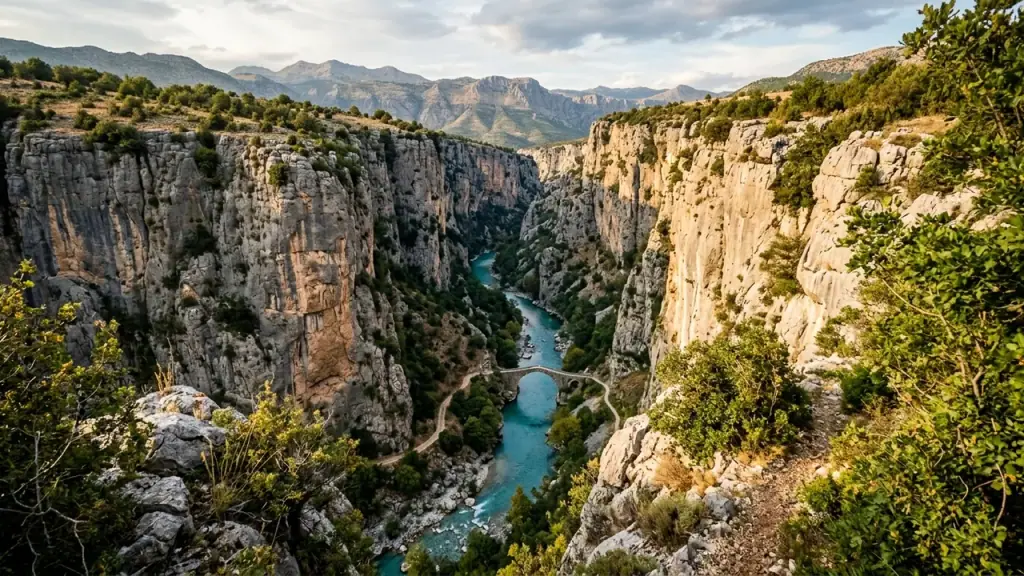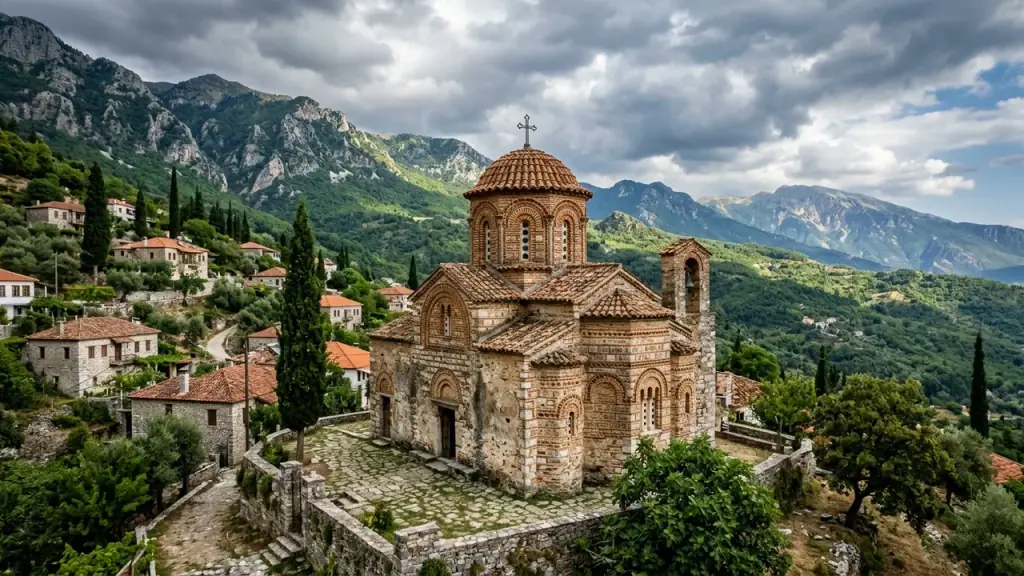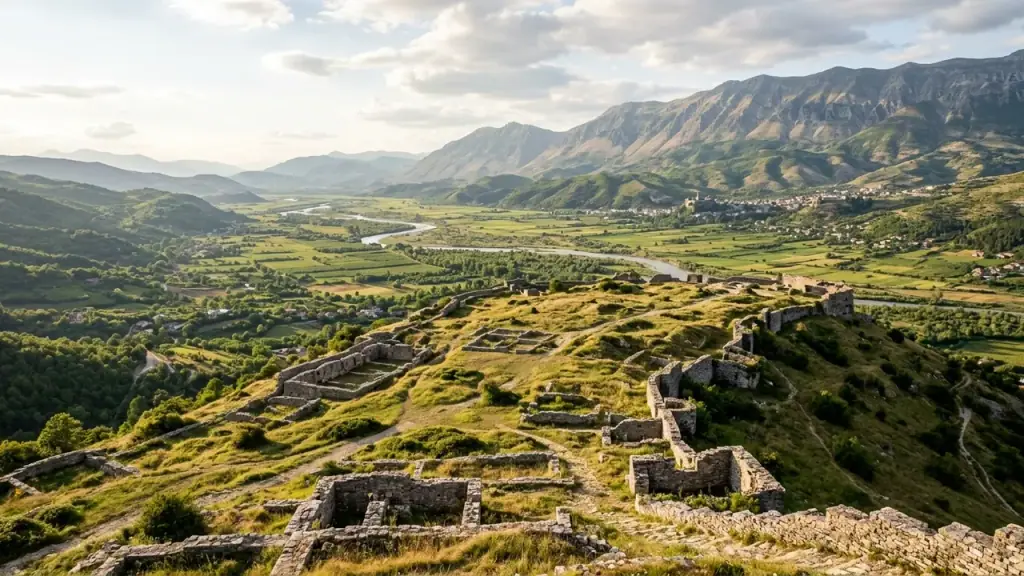
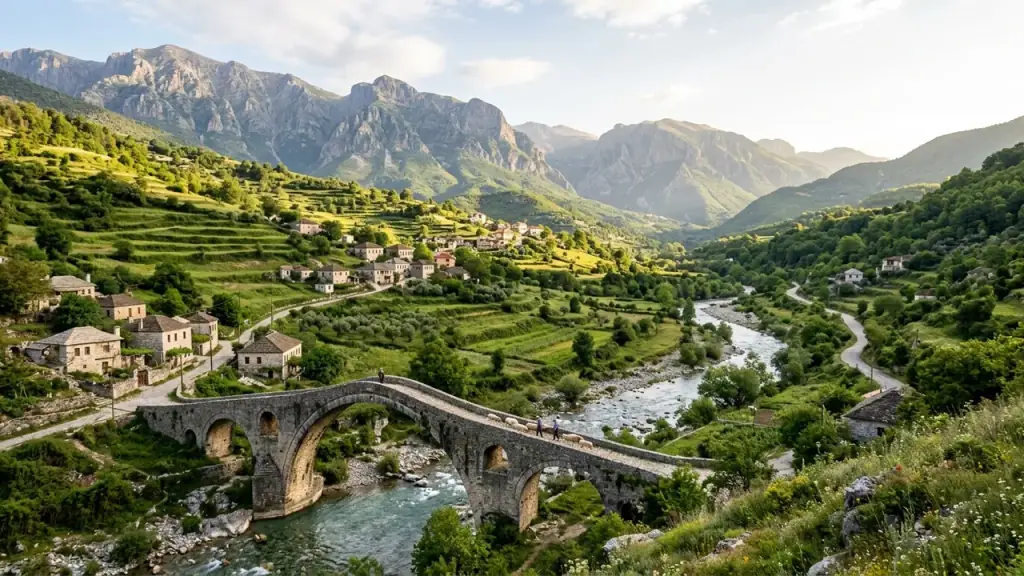
The Zagoria valley is southern Albania's hidden-world, a pocket of stone villages, Ottoman bridges and Orthodox churches strung along forgotten caravan routes, shielded by four mountain ranges and draining into the basin that Europe's first Wild River National Park was declared over in March 2023. This is slow, deep Albania: hamlets of distinctive stone houses on rocky slopes, paths that connected them for centuries, and almost no other tourists. It's best known as a trekking destination, inn-to-inn walks between the villages are one of the country's finest multi-day hikes, but even a day's exploration with a car rewards travelers who want the south's mountains and heritage over its beaches.
Zagoria in numbers
| Detail | Figure |
|---|---|
| Villages | Ten: Doshnicë, Hoshtevë, Konckë, Lliar, Nderan, Nivan, Sheper, Vithuq, Topovë, Zhej |
| Administrative unit | Zagori, in Libohovë municipality, Gjirokastër County, since the 2015 local-government reform |
| Largest village | Sheper, at 900 m, about 30 km from Gjirokastër |
| Sheper's population | Roughly 100 in winter, 400 in summer |
| Classic trek | 64.5 km of walking over 8 days, +3,525 m / −3,300 m |
| Longest day | Shepër to Përmet, 13 km over the Dhembel pass at ~1,450 m, −1,250 m of descent |
| Trek season | Mid-April to early June, and September to mid-November |
| Guided price | From €945 per person on one established Albanian operator's 2026 listing |
Those population numbers are the whole story of the valley in two figures. Sheper is the largest of the ten villages and it holds about a hundred people through the winter; the rest are smaller. That is why the silence here is real and why the walking is inn-to-inn rather than hotel-to-hotel.
Why Visit Zagoria
| Draw | What it is |
|---|---|
| Stone villages | Ten hamlets of distinctive stone houses on rocky slopes |
| Ottoman bridges | Graceful old bridges, some attributed to Ali Pasha's era |
| Orthodox churches | Frescoed churches along the old caravan paths |
| Trekking | Inn-to-inn walks, one of Albania's top multi-day hikes |
| Setting | A Drino-side valley ringed by four mountain ranges, in the Vjosa basin |
Zagoria is a place to slow down, whether on a multi-day trek or a day's drive between villages, the appeal is the landscape, the architecture and the silence rather than any single headline sight.
What to Do
- Trek the valley, the classic experience is a multi-day inn-to-inn walk linking villages along the old caravan routes, lined with Ottoman bridges and Orthodox churches. The standard eight-day version walks 64.5 km with 3,525 m of ascent, averaging about 4h25 a day: Peshtan to Limar 12 km (+875 m), Limar to Hoshtevë 14.5 km, Hoshtevë to Shepër 12.5 km (+600 m), then Shepër over the Dhembel pass to Përmet, 13 km with 1,250 m of descent and the longest day on the trail at six hours. Operators run guided and self-guided versions; one established Albanian operator listed it from €945 per person for 2026 departures.
- Explore the villages, hamlets like Lliar (Limar) and Hoshtevë, with stone houses and wide views toward the surrounding peaks, are the heart of the valley; Shepër at 900 m is the largest and the usual overnight.
- Find the bridges & churches, the old stone bridges and frescoed churches are the valley's signature heritage, remnants of its caravan-trade past.
- Soak up the Vjosa connection. The Zagoria drains west into the Drino, which runs 84.6 km to join the Vjosa near Tepelena. The Drino is one of the four tributaries (with the Kardhiq, Bënça and Shushica) written into the Vjosa Wild River National Park when Albania declared it on 15 March 2023, covering 12,727 hectares and the river's 190 undammed kilometres inside the country. Worth being precise about: the park's gazetted boundary follows those river corridors, so the valley sits in the Vjosa system rather than wholly inside the park's lines.
How to Get There
Zagoria lies in the mountains east of Gjirokastër, off the Drino/Vjosa axis.
| From | Notes |
|---|---|
| Gjirokastër | The usual gateway; Shepër is about 30 km on, see the Gjirokastër guide |
| Përmet | Reachable via the Vjosa valley, and the far end of the classic trek, see the Përmet guide |
| Himara | 100 km and 2–3 hours to Gjirokastër before you even start the valley road |
| Public transport | None worth planning a trek around; no published timetable serves the ten villages |
A car is needed to reach the valley, and a guide or organised trek is the best way to walk it. Zagoria pairs with the wider Vjosa/Gjirokastër region and the Inland South Albania Road Trip. For the broader hiking context, see Hiking Near Himara and Albanian Riviera Village Hikes. Gjirokastër-based tours are on GetYourGuide.
When to Go
| Season | Verdict |
|---|---|
| Spring | Green, wildflowers, prime trekking |
| Summer | Warm; higher routes comfortable, valleys hot midday |
| Autumn | Golden, stable weather, ideal for walking |
| Winter | Cold, some villages very quiet, limited |
Late spring and autumn are the best trekking windows, comfortable temperatures, stable weather, and the landscape at its most photogenic.
FAQ
What is the Zagoria valley known for?
Ten stone villages, old Ottoman bridges, frescoed Orthodox churches and forgotten caravan routes, in a valley draining to the Drino and so into the Vjosa basin Albania protected in March 2023. Shepër, at 900 m, holds about a hundred people in winter. It's a premier multi-day trekking destination.
Can you hike the Zagoria valley?
Yes. The standard inn-to-inn route runs eight days and 64.5 km with 3,525 m of ascent, linking Peshtan, Limar, Hoshtevë and Shepër before crossing the Dhembel pass at about 1,450 m into Përmet. Guided and self-guided versions both exist; day exploration by car is possible too.
How do you get to the Zagoria valley?
By car, usually via Gjirokastër (the main gateway) or from Përmet through the Vjosa valley. The valley is remote, with limited public transport, so most visitors drive in or join an organised trek. It's an inland excursion best paired with the wider Gjirokastër and Vjosa region.
Bottom Line
The Zagoria valley is southern Albania's hidden trekking world, stone villages, Ottoman bridges and frescoed churches in a protected Vjosa-tributary valley ringed by mountains. Come for a multi-day inn-to-inn trek or a slow day's drive from Gjirokastër. Go in spring or autumn, and trade the coast for one of the country's most atmospheric mountain landscapes. For walkers and anyone after quiet. It is the best time to come.