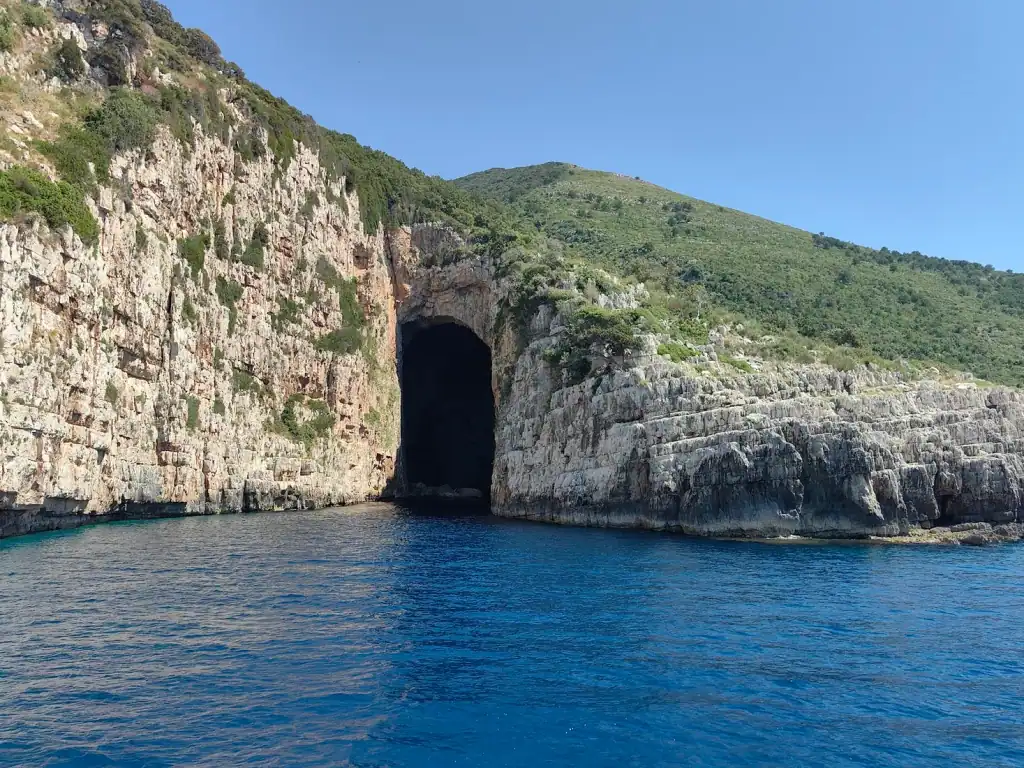
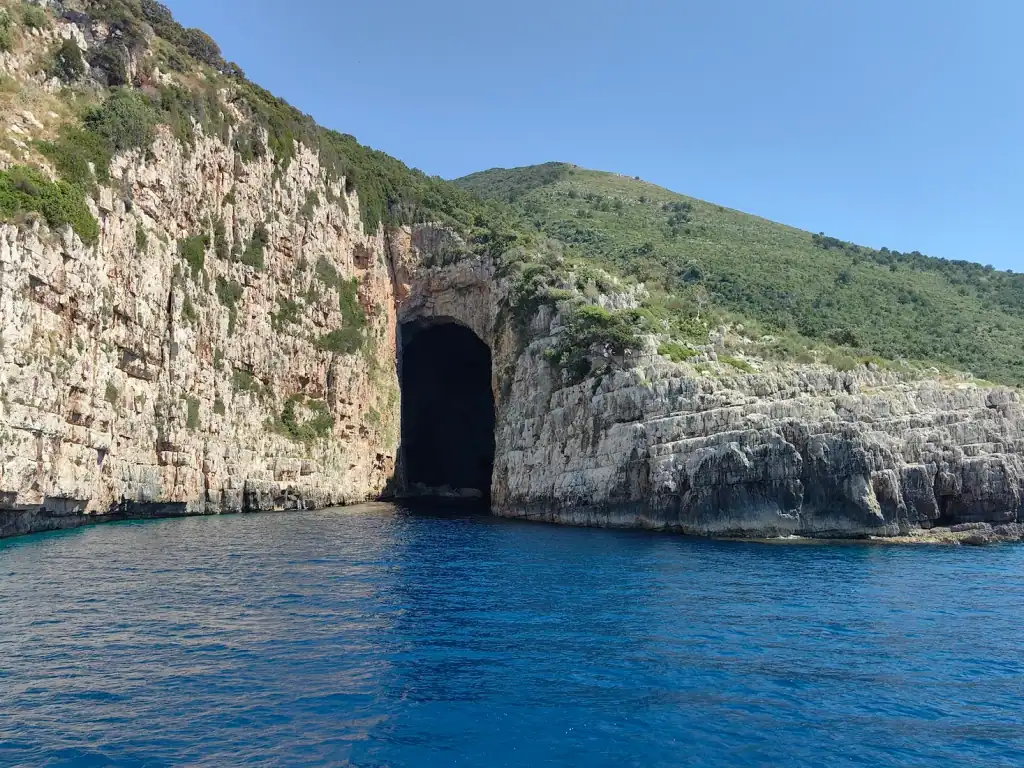
Large dark sea-cave entrance in white limestone cliffs over deep blue water on the western Karaburun peninsula
cave

Haxhi Ali Cave

Also: Shpella e Haxhi Aliut · Haxhi Ali Ulqinaku Cave

Direction from Himara
Northbound
Distance by sea
~35 km by sea — the far western flank of Karaburun, near Cape Gjuhëz
Swim stop
About 30 minutes
Access
Boat-only — wide sea entrance, accessible to small craft in calm conditions

Haxhi Ali Cave on Karaburun's western flank — a vast karst sea cave named after a 17th-century pirate, and the farthest reach of a long-haul Grama Bay boat tour from Himara.

What Haxhi Ali Cave Is

Haxhi Ali Cave (Shpella e Haxhi Aliut) is a large karst sea cave on the western flank of the Karaburun peninsula, near Cape Gjuhëz, inside the Karaburun–Sazan National Marine Park. It is one of the biggest sea caves on the Albanian coast — a wide, dark arched entrance set in white limestone cliffs above deep, exceptionally clear water.

It takes its name from Haxhi Ali Ulqinaku (c. 1569–1625), an Albanian seafarer from Ulcinj who, by tradition, used the cave as a hideout in the early 17th century. Albania's Ministry of Tourism and Environment designates it a Natural Monument of National Importance.

Why It's the Far Reach

Haxhi Ali Cave is the farthest point most Himara boat tours reach. Getting there means committing to the long-haul Karaburun route — typically the same Grama Bay full-day tour that also takes in Saint Andrew's Bay and Grama Bay. The cave sits on the open western coast, so it's the route's natural turnaround point.

If reaching this cave is your priority and you can get to Vlorë, a Vlorë-based RIB tour reaches the western Karaburun coast faster and with a calmer crossing than the full run from Himara.

What the Stop Is Like

Standard swim time is around 30 minutes in calm conditions:

  • The boat eases in through the wide cave mouth and holds position so passengers can swim
  • The water is deep, clear, and still inside
  • A waterproof camera or sealed phone case is worth bringing

Sea Conditions

The cave faces open western water and is exposed to swell from the Strait of Otranto, so operators watch the sea state closely. In choppy conditions a skipper may stop at the entrance only; in heavy swell the route is cut short and the tour returns from Grama Bay. If conditions are marginal on your day, ask before departure whether Haxhi Ali Cave is still on the itinerary.
Water

Deep, exceptionally clear

Best Time

Late morning to early afternoon in calm seas

Best For

Long-haul toursPhotographyKaraburun completionists

Location on the Riviera

Operators That Stop Here

  • Himara Water Taxi
  • Sea Breeze Boat Tours
  • Vlorë-based long-haul operators

Typically Included In

  • Grama Bay full-day from Himara (~5–5.5 hrs)
  • Karaburun perimeter cruises (often from Vlorë)

Frequently Asked Questions

Who was Haxhi Ali?+

Haxhi Ali Ulqinaku (c. 1569–1625) was an Albanian seafarer from Ulcinj who, according to tradition, used the cave as a hideout in the early 17th century. The cave on Karaburun's western coast carries his name; the Albanian Ministry of Tourism and Environment lists it as a Natural Monument of National Importance.

How far is Haxhi Ali Cave from Himara?+

Roughly 35 km by sea, on the far western flank of the Karaburun peninsula near Cape Gjuhëz, opposite Sazan Island. From Himara it's reached on a long-haul, usually full-day boat tour. Operators based in Vlorë are closer and can reach it faster, often as a half-day RIB trip.

Is Haxhi Ali Cave the same as the Blue Cave?+

No — they're two different caves on Karaburun. Haxhi Ali Cave is the large cave on the far western flank near Cape Gjuhëz; the Blue Cave is a separate stop further along the coast. Tour operators sometimes market either as a 'blue cave' for the light effect, which causes the confusion.

Can the boat go inside?+

When the sea is calm, most operators motor in slowly through the wide entrance and let you swim from the boat. The western flank is exposed, so in swell a skipper may stop at the mouth only or skip it.