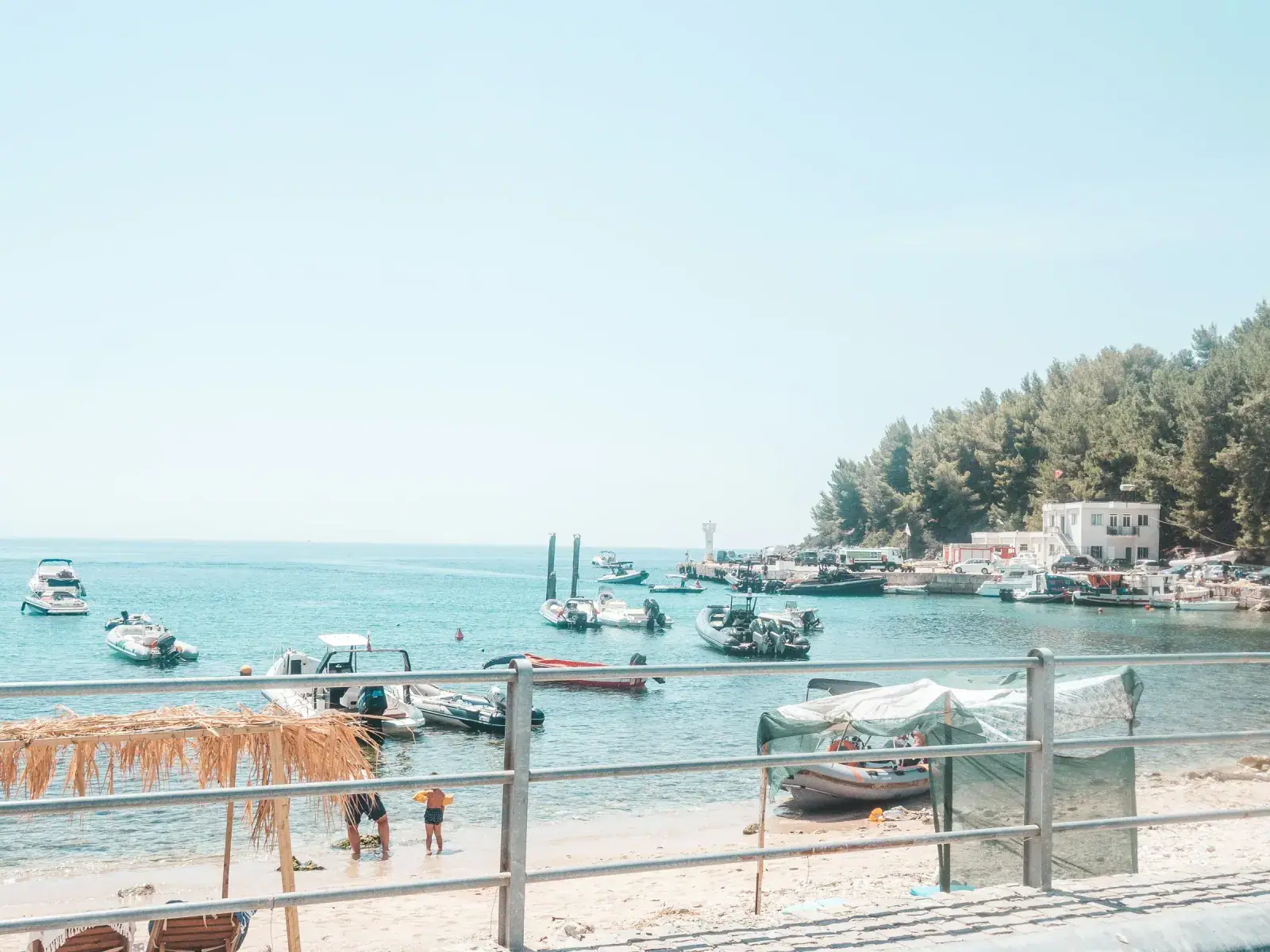
Himara and Corfu sit on opposite sides of the same stretch of Ionian Sea, roughly 30 km apart by water. On a clear afternoon from Himara's promenade, Corfu's silhouette is visible on the horizon. The water is the same color. The climate is nearly identical. The summer temperatures match within a degree or two. And yet these are completely different destinations.
Corfu is polished Greek tourism with 200+ years of international visitors, Venetian architecture, a UNESCO-listed old town, and direct flights from half of Europe. Himara is the raw Albanian Riviera -- dramatic mountains dropping into turquoise coves, cheaper everything, and the feeling of arriving somewhere before the crowds found it. One is an established Mediterranean resort island. The other is a coast that's being discovered in real time.
This comparison is honest. Both are excellent. Neither is objectively "better." The right choice depends on your budget, your travel style, and what you actually want from a week on the Ionian.
Compare hotels, apartments, and Vrbo rentals on the map. Powered by Stay22.
Quick Comparison
| Category | Himara | Corfu |
|---|---|---|
| Beaches | Pebble/white stone, dramatic coves, uncrowded | Sandy and pebble, varied, crowded in summer |
| Daily budget | 30-50 EUR (budget), 70-120 EUR (mid-range) | 70-120 EUR (budget), 140-250 EUR (mid-range) |
| Food | Albanian-Greek fusion, excellent value | Classic Greek taverna, tourist markup |
| Nightlife | Beach bars, promenade scene, low-key | Kavos party strip, Corfu Town bars, established |
| Transport access | Tirana flight + 4-5 hr drive, or Corfu ferry | Direct flights from most European cities |
| Infrastructure | Developing, cash-heavy, rough edges | Polished, reliable, card-friendly |
| Crowds (August) | Busy by Albanian standards, still manageable | 1M+ annual tourists, packed at peak |
| Culture | Albanian-Greek with Ottoman layers | Venetian-Greek, cosmopolitan |
| Vibe | Undiscovered coast, rapidly changing | Established Mediterranean resort island |
Beaches
Both coasts produce that deep Ionian turquoise. The geology differs, and so does the experience on the sand.
Himara
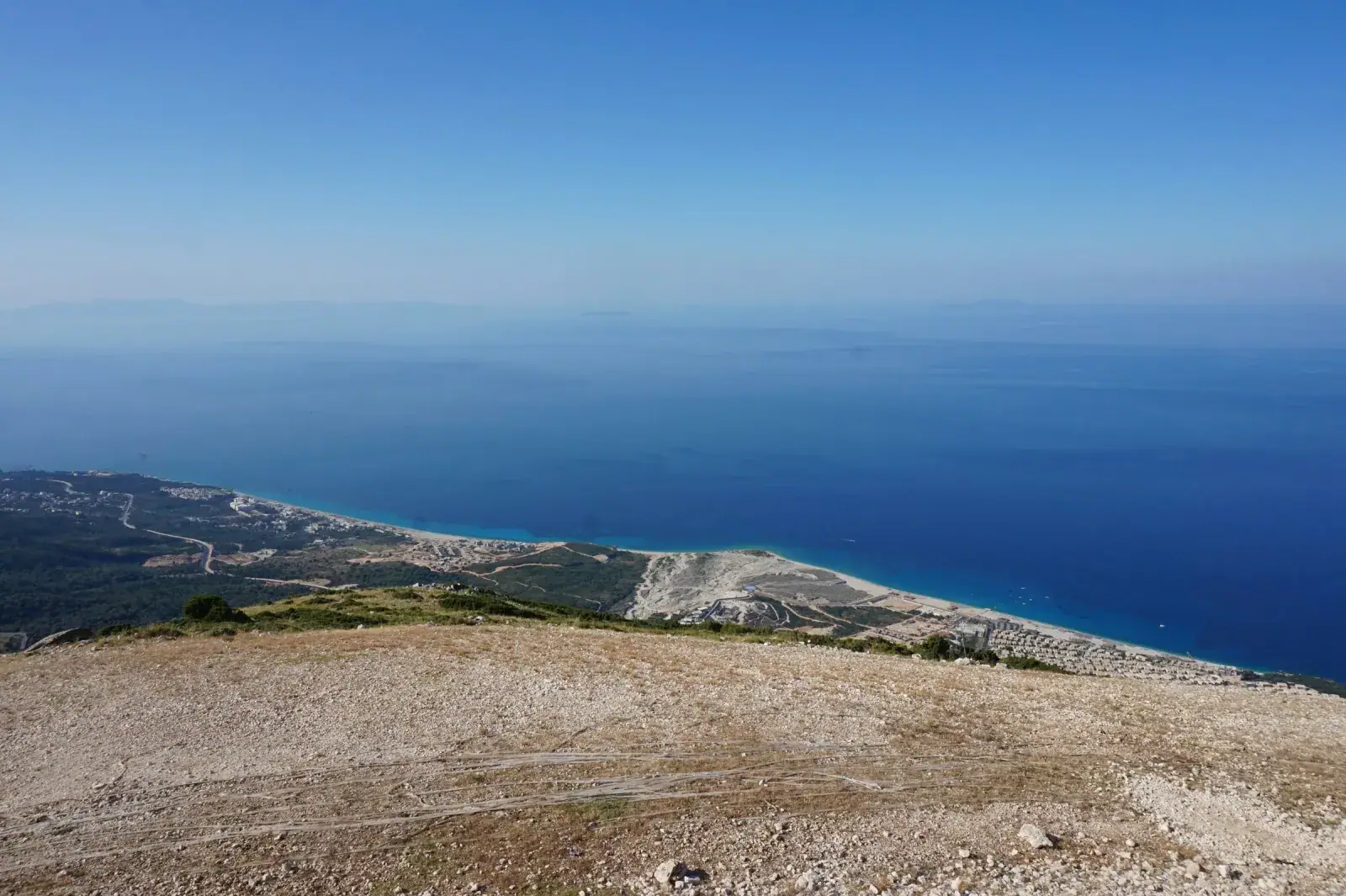
The Albanian Riviera's coastline is defined by the Ceraunian Mountains plunging directly into the sea, creating a series of coves, hidden bays, and cliff-backed beaches. Around Himara alone there are 14+ beaches reachable by car, boat, or hiking trail. Gjipe sits at the end of a canyon. Drymades is a long sweep of white pebbles. Livadhi is a gentle crescent with shallow water. Filikuri requires a 20-minute trail hike and rewards you with near-empty snorkeling. Llamani has turquoise water against sheer rock.
The beaches are overwhelmingly pebble and white stone rather than sand. The defining advantage is space. Albanian beaches are public by law -- nobody can charge for access. Even in peak August, you can lay your towel on the free section of any beach. What counts as "packed" in Himara would be "pleasantly busy" on Corfu.
Corfu
Corfu has genuine beach diversity. Paleokastritsa offers dramatic cliffs and emerald coves. Glyfada is a wide sandy beach with reliable facilities. Sidari has the Canal d'Amour rock formations. Issos and Halikounas on the southwest coast are long, sandy, and backed by dunes. The island has over 50 named beaches.
The trade-off is crowds. In July-August the popular beaches fill early. Sunbed operators claim large sections of sand. Paleokastritsa, for all its looks, can feel like a parking lot by noon. Quieter coves exist but require a car and some searching.
Verdict
Corfu wins on sand variety and sheer number of accessible beaches. Himara wins on space, clarity, and the feeling of discovery. If lying on soft sand matters, Corfu is better. If swimming in uncrowded turquoise water against a mountain backdrop matters more, Himara delivers that consistently.
Prices
This is the biggest practical difference between these two destinations, and for many travelers it decides the trip.
| Item | Himara | Corfu |
|---|---|---|
| Espresso | 1-1.50 EUR | 2.50-4 EUR |
| Beer at a bar | 2-4 EUR | 4-7 EUR |
| Restaurant main course | 7-14 EUR | 14-28 EUR |
| Seafood dinner for two (with wine) | 25-45 EUR | 55-100 EUR |
| Sunbed + umbrella (day) | 5-10 EUR (free without) | 10-25 EUR |
| Mid-range hotel (double) | 40-90 EUR/night | 80-180 EUR/night |
| Cocktail | 5-7 EUR | 8-14 EUR |
| Car rental | 25-35 EUR/day | 35-55 EUR/day |
| Realistic daily budget (per person) | 30-50 EUR (budget) / 70-120 (mid) | 70-120 EUR (budget) / 140-250 (mid) |
Himara runs 40-60% cheaper than Corfu across nearly every category. A couple doing a comfortable one-week holiday will spend roughly 800-1,200 EUR in Himara versus 1,500-2,500 EUR on Corfu. The gap compounds on daily expenses -- three coffees, a beer, lunch, sunbeds add 30-50 EUR/day on Corfu versus 12-20 EUR in Himara.
For a full cost breakdown, see the Himara budget guide.
Food
Himara
The cuisine is Albanian-Greek fusion -- grilled fish, octopus, mussels, fresh salads with feta, byrek (savory pastry), tave kosi (lamb baked in yogurt), and slow-cooked casseroles. Himara's Greek minority (Himariot Greeks) brings generations of Hellenic culinary tradition, which means dishes like grilled lamb chops, horta (wild greens), and fresh feta dressed in olive oil sit alongside Albanian staples.
A full seafood dinner for two with wine runs 25-45 EUR. A quick gyros or souvlaki is 3-5 EUR. The quality floor is high, especially at the waterfront tavernas along the promenade. The town has dozens of restaurants and you can eat somewhere different every night for two weeks.
Corfu
Corfu's food is classic Greek taverna fare and it's done well. The island has its own specialties: sofrito (veal in white sauce), pastitsada (rooster in tomato sauce with pasta), and bourdeto (spicy fish stew). Venetian and Italian influences show in the cuisine more than on mainland Greece. Fresh seafood is abundant. Good olive oil is everywhere.
The downside is pricing: a similar seafood dinner for two runs 55-100 EUR. A basic Greek salad at a tourist-facing taverna can hit 10-14 EUR. You're paying for the island markup as much as the ingredients.
Verdict
Both coastlines eat well. Himara's food is a half-step more rustic and considerably cheaper. Corfu's is more refined and more expensive. If seafood quality is your priority, both deliver -- the Ionian doesn't play favorites. The question is whether you want to spend 30 EUR or 75 EUR for that experience. For an honest look at how the two coastlines compare more broadly, see the Albanian Riviera vs Greek Islands guide.
Nightlife
Corfu
Corfu has Kavos, a purpose-built party strip on the island's southern tip. It's loud, cheap (by Greek standards), and runs all night from June through September. Away from Kavos, Corfu Town has a more sophisticated bar scene -- cocktail bars in the Liston arcade, wine bars in the old town, and waterfront spots along the Spianada.
Himara
Himara's nightlife is low-key. The promenade fills with people on summer evenings -- strolling, drinking, eating at outdoor tables. Beach bars along the waterfront serve cocktails with sea views. There are a handful of late-night bars and one or two spots that stay open past 2 AM. The nightlife scene is social and relaxed rather than rowdy.
Verdict
Corfu wins clearly. It has both the party strip (Kavos) and a sophisticated bar scene (Corfu Town). Himara offers pleasant evenings but nothing approaching a club scene.
Transport and Getting There
Corfu
Corfu International Airport (CFU) receives direct flights from London, Berlin, Vienna, Milan, Amsterdam, Stockholm, and dozens of other European cities from April through October. Budget carriers (Ryanair, easyJet, Wizz Air) serve many routes. You can leave your home airport in the morning and be on a Corfu beach by afternoon.
On the island, public buses connect the airport, Corfu Town, and major beaches. Car rental is widely available. Taxis use meters. Roads are well-maintained.
Himara
No international airport on the Riviera. The standard route is to fly to Tirana (TIA), then drive or bus 4-5 hours south over the Llogara Pass. A new airport near Vlora is under construction and will cut transfer times once operational.
The shortcut: fly to Corfu, take the 30-minute ferry to Saranda, then taxi or bus 1.5 hours north to Himara. This is faster and lets you combine both destinations. Within Himara, the town center is walkable. Outlying beaches require a car, scooter, or boat taxi.
Verdict
Corfu wins on accessibility. Direct flights and reliable local transport mean less planning. If your vacation time is limited, that convenience matters.
Infrastructure
Corfu offers card payment everywhere, reliable ATMs, paved roads to all beaches, consistent wifi, Schengen zone simplicity, and English universally spoken. Everything is bookable online.
Himara is developing. Many restaurants and beach vendors are cash-only. ATMs can run dry on peak weekends. Mountain roads to some beaches are unpaved. Wifi varies outside hotels. Albania is not in Schengen, so separate entry rules apply for some nationalities. English is widely spoken in town, less so in surrounding villages.
None of this is a dealbreaker. Millions visit Albania annually without problems. But if you're used to seamless Greek tourism infrastructure. Bring cash, confirm bus times locally, and accept that not everything will be online.
Culture
Corfu
Corfu's cultural identity is distinctly Venetian-Greek. The island was under Venetian rule for 400 years (1386-1797), and it shows in the architecture, food, and atmosphere. Corfu Town's old town is UNESCO-listed, with the Liston arcade, two Venetian fortresses, and narrow streets that feel more Italian than Greek. British colonial influence added cricket on the Spianada and ginger beer (tsitsibira).
Himara
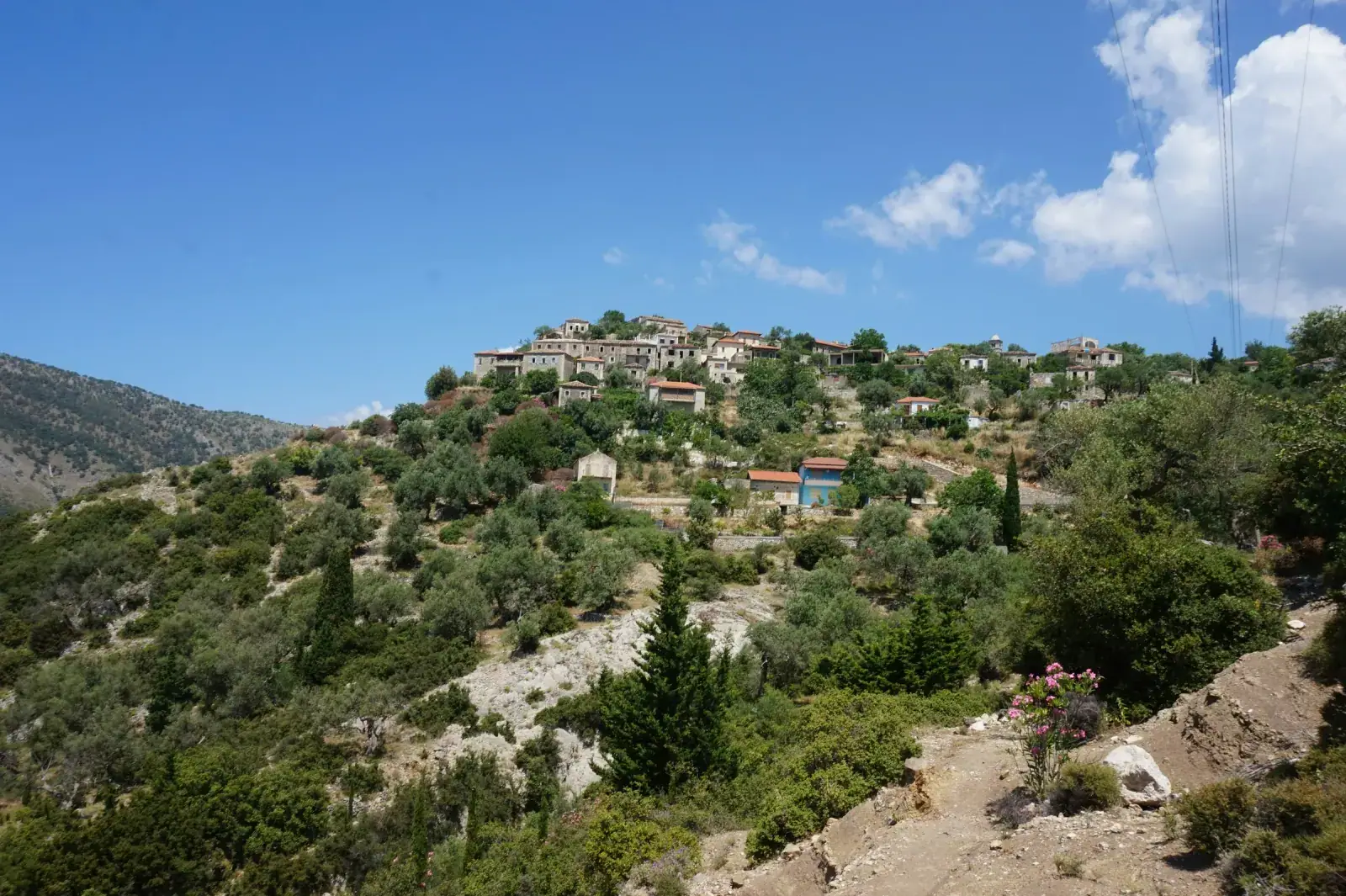
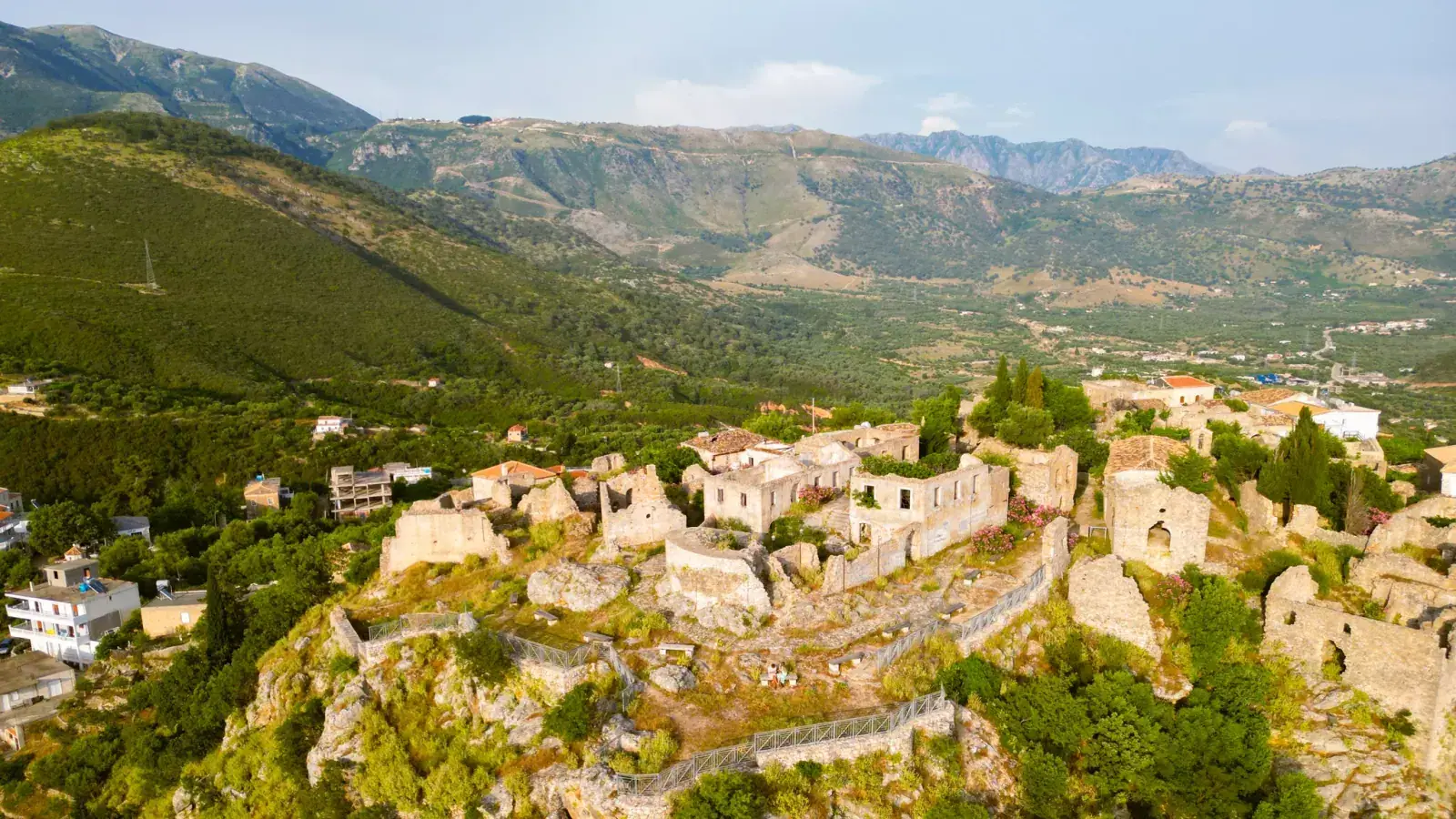
Himara's identity is more complex. The town has a significant Greek-speaking minority (the Himariots) whose presence dates back centuries. The old town and castle date to the 5th century. Ottoman-era mosques sit near Byzantine churches. Communist-era bunkers dot the coastline. The culture is a genuine crossroads -- Albanian, Greek, and Ottoman threads woven together in a way that feels distinct from both Albania's interior and the Greek islands across the water. Many locals are bilingual, and the food, religious traditions, and architecture reflect centuries of coexistence.
Verdict
Both are culturally rich in different ways. Corfu is more curated and accessible -- museums, guided tours, well-preserved architecture. Himara's history is rawer, less packaged, and rewards exploration. Neither is "better." They're genuinely different expressions of Ionian coast culture.
Crowds
Corfu receives over a million tourists annually. In July and August, Corfu Town's streets are packed, popular beaches fill by mid-morning, and restaurants require reservations. Cruise ships dock regularly, flooding the old town with day-trippers. It's a beautiful island that sometimes buckles under the weight of its own popularity.
Himara gets a fraction of those numbers. August in Himara is noticeably busier than five years ago, but "busy" here still means you can walk into a restaurant without a reservation and find space on the beach at noon. This gap is narrowing every year, but in 2026, the crowd differential remains significant. For peak-season timing, see the best time to visit guide.
Who Should Choose Himara
- Budget travelers. The 40-60% cost savings are transformative. A week in Himara costs what 3-4 days on Corfu does.
- Travelers who've done the Greek islands. Same Ionian beauty, completely different atmosphere.
- People who value authenticity. Himara is a real town with real residents, not a tourism construct.
- Adventure-oriented travelers. Hiking to hidden beaches, driving mountain passes, discovering coves by boat -- the Riviera rewards initiative. See the full beach guide for what's reachable from town.
- Long-stay visitors and digital nomads. Lower costs make extended stays viable. Himara functions as a real town year-round.
- Couples seeking a low-key romantic trip. Sunset seafood dinners on the promenade, empty beaches, no crowds. The accommodation guide covers romantic options.
Who Should Choose Corfu
- First-time Mediterranean visitors. Direct flights, reliable infrastructure, Schengen simplicity. Corfu removes logistical friction.
- Families wanting convenience. Sandy beaches, paved access, consistent services, healthcare nearby. The ease matters with young children.
- Nightlife seekers. Kavos for partying, Corfu Town for cocktails. Himara can't match this.
- Travelers with limited time. If you have 4-5 days, Corfu's direct flights are a real advantage.
- History and architecture enthusiasts. UNESCO-listed old town, Venetian fortresses, the Achilleion Palace -- Corfu's cultural sites are more developed and accessible.
- Luxury travelers. Five-star resorts, private villa rentals, decades of upscale hospitality.
Why Not Both
Here's the move most travelers miss: you don't have to choose. Corfu and the Albanian Riviera are connected by a 30-minute ferry from Saranda, and Saranda is 1.5 hours south of Himara. The crossing runs multiple times daily in summer and costs 19-25 EUR.
Combined itinerary option 1: Fly into Corfu, spend 2-3 days on the island. Take the morning ferry to Saranda, taxi or bus to Himara, spend 4-5 days on the Albanian Riviera, then reverse the route home.
Combined itinerary option 2: Fly to Tirana. Drive to Himara for a week, then head south to Saranda and take the ferry to Corfu for a day trip or a few final nights before flying home.
This gives you both worlds in a single trip. The border crossing is straightforward -- passport control on both sides, 15-20 minutes total. You'll need your passport (not just an ID card). For the full ferry logistics, including schedules and border procedures, see the detailed guide.
Frequently Asked Questions
How far is Himara from Corfu?
About 30 km across the Ionian Sea. There's no direct Himara-to-Corfu ferry, but the route via Saranda is straightforward: drive or bus 1.5 hours from Himara to Saranda, then take the 30-minute ferry to Corfu. Door to door, expect roughly 2.5-3 hours including the border crossing.
Is Himara cheaper than Corfu?
Yes, 40-60% cheaper across accommodation, food, drinks, and activities. A mid-range week in Himara costs roughly what 3-4 days on Corfu does.
Can I do a day trip from Himara to Corfu?
Yes. Drive to Saranda, catch the morning ferry, spend the day in Corfu Town, return on the evening ferry. It's a long day but doable. See the Himara to Corfu day trip guide for schedules.
Is Corfu or Himara better for beaches?
Different strengths. Corfu has more sandy beaches and greater overall variety across the island. Himara has more dramatic scenery, clearer water at pebble coves, and significantly fewer crowds. If sand matters, Corfu. If space and clear water matter, Himara.
Do I need a visa for both countries?
Corfu is Greece (Schengen). Himara is Albania (not Schengen). EU, US, UK, Canadian, and Australian citizens can enter both visa-free for tourism. If combining via the ferry, you'll pass through border control in Saranda.
Is Himara safe compared to Corfu?
Both are very safe for tourists. Albania's crime rate is lower than most Western European countries, and the Albanian Riviera is one of the safest coastal areas in the Mediterranean. Standard travel precautions apply equally in both places.
Which destination is better in September?
Both are excellent in September -- fewer crowds, warm water, lower prices. Corfu stays fully operational through October. Himara's main town stays open year-round, though some beach services wind down by late September. For timing details, see the best time to visit guide.
Can I take the ferry from Corfu to Albania with a car?
Yes. The Corfu-Saranda ferry accepts vehicles, though you should book ahead in summer. From Saranda, the coastal road north to Himara is scenic but winding. Allow 1.5 hours for the 75 km drive.