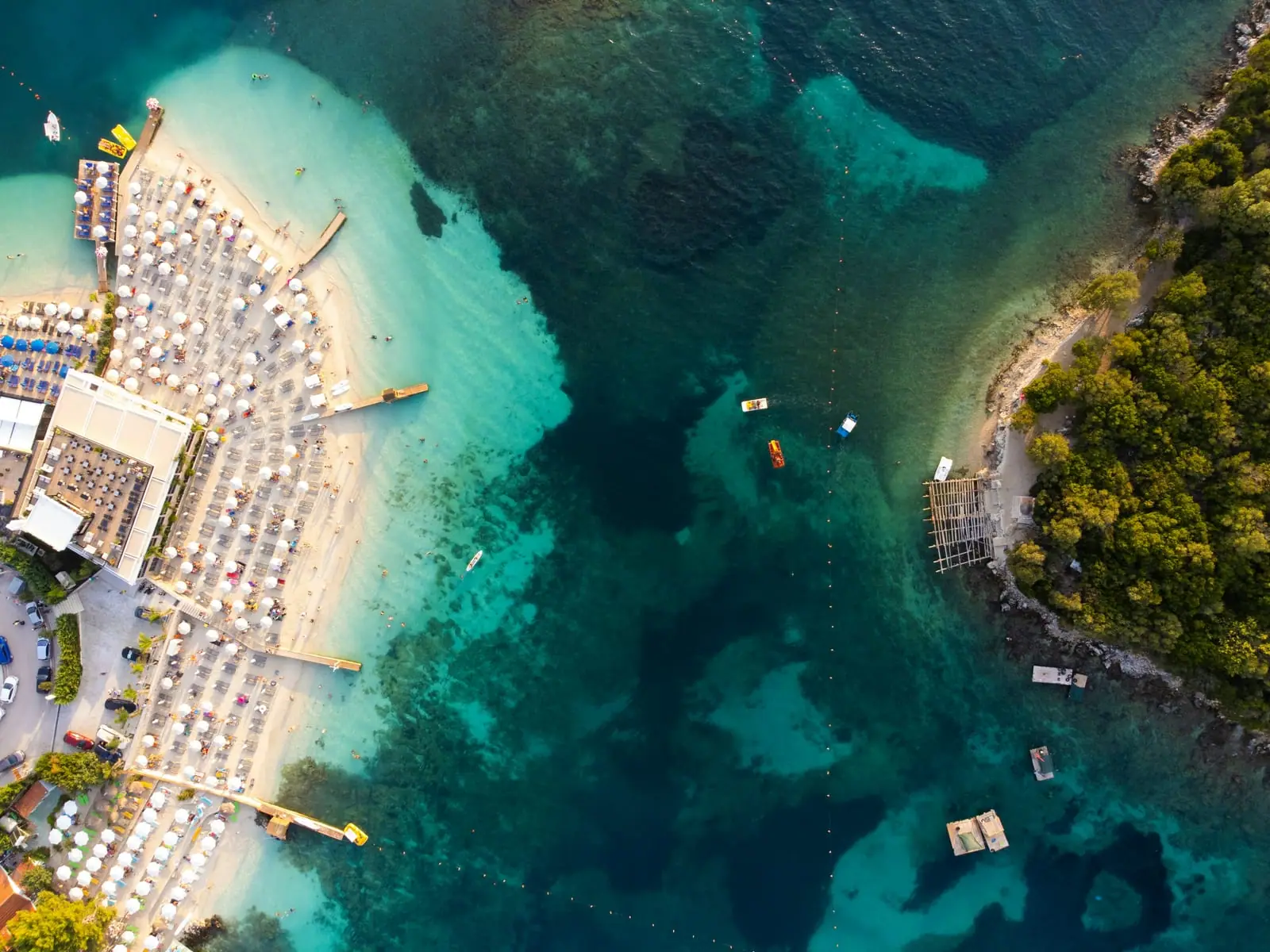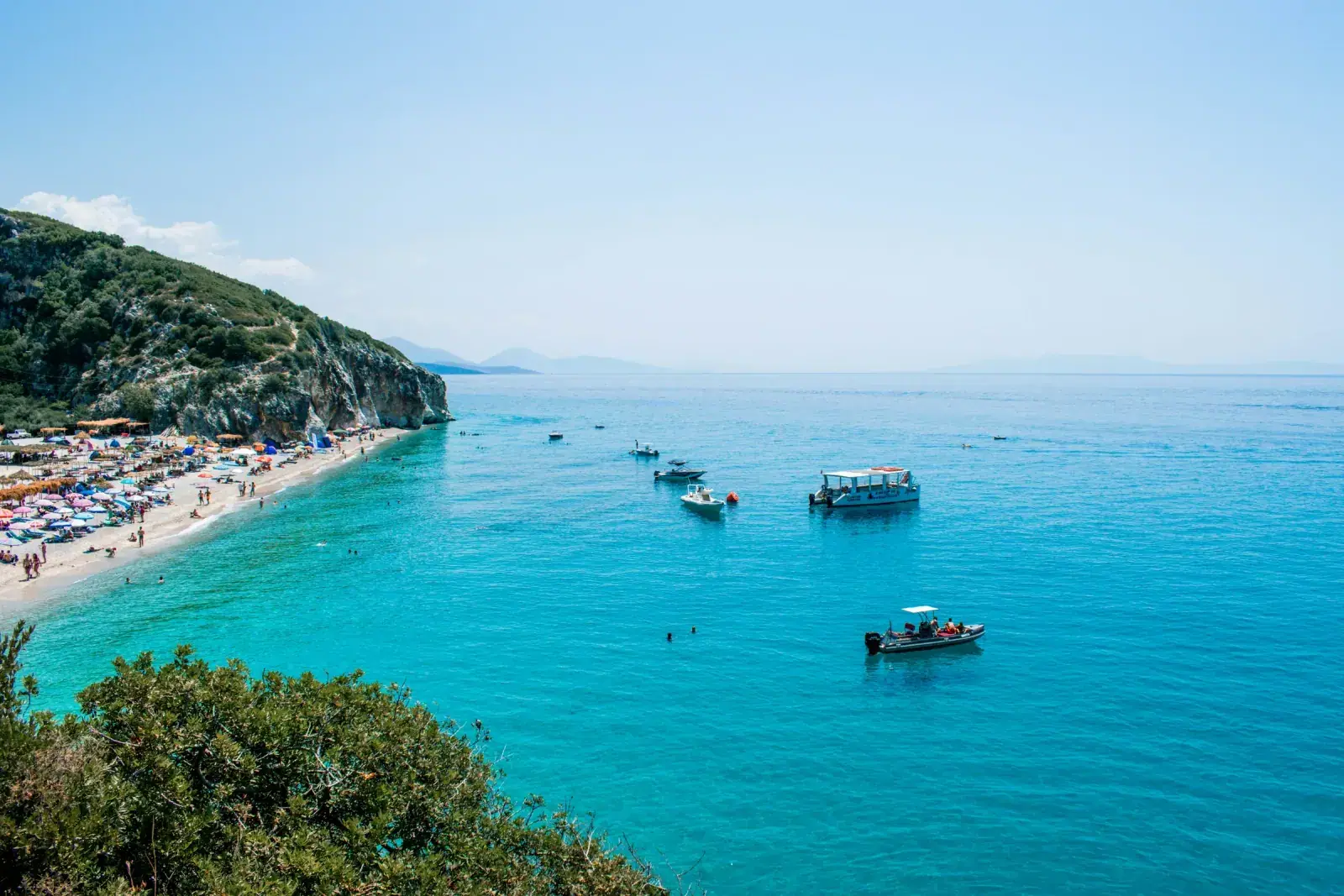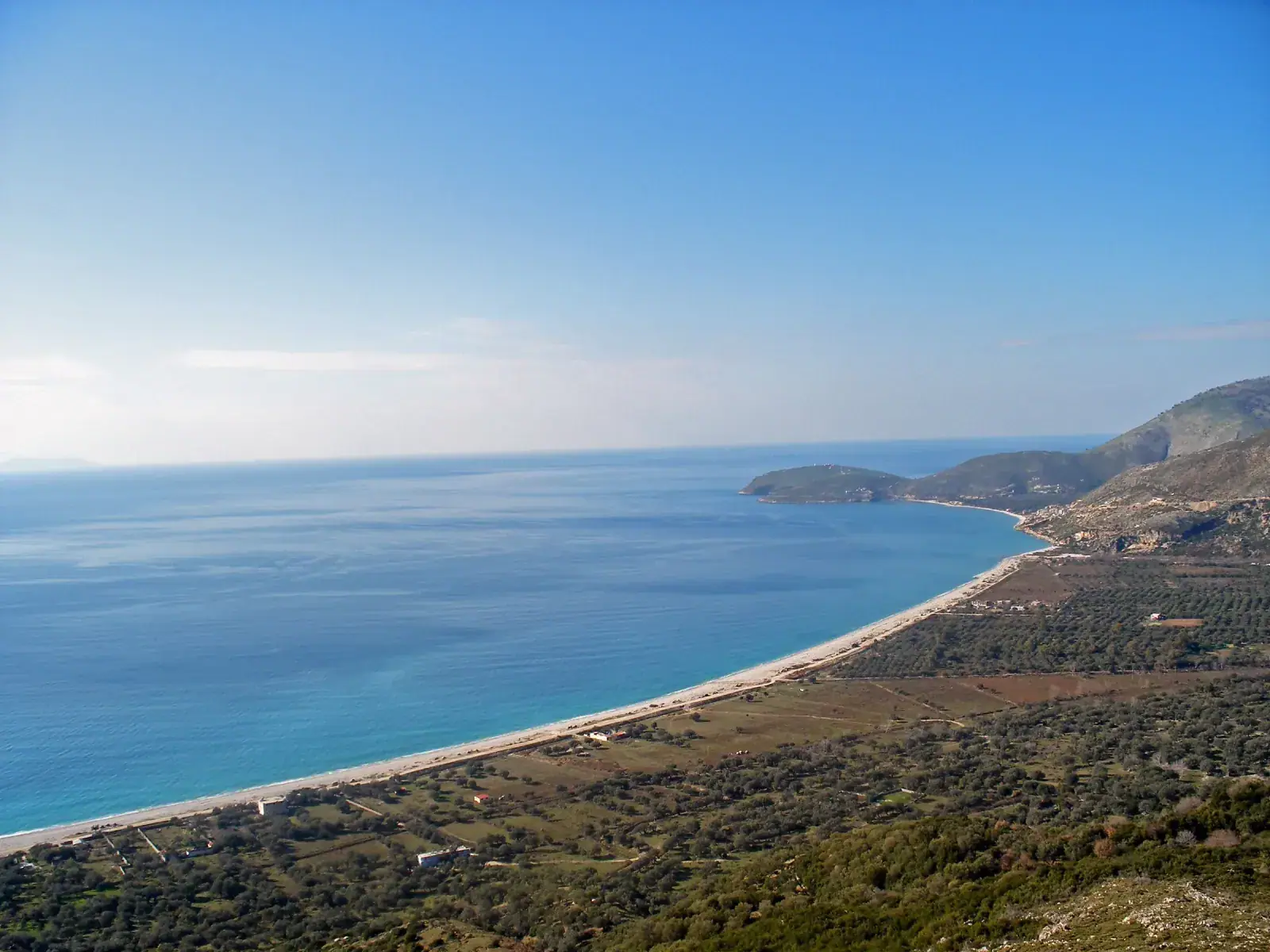
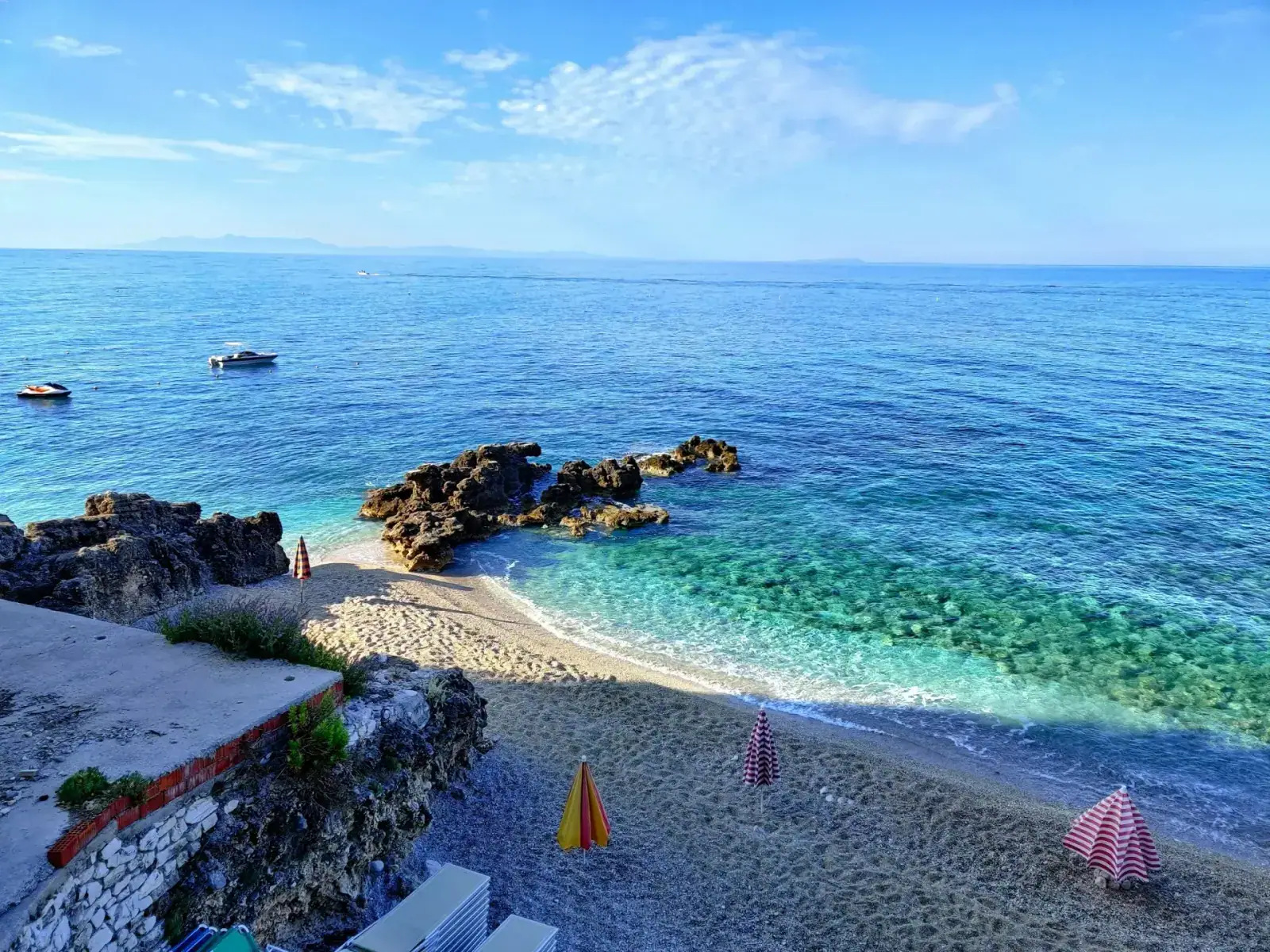
The Albanian Riviera and the Greek islands share the same Ionian Sea. On a clear day from Himara. You can see Corfu across the water. The coastline geology is similar, the water clarity is comparable, the cuisine overlaps, and the summer weather is nearly identical. The prices are not. A week on the Albanian Riviera costs roughly what three days on Mykonos does, and that gap alone has turned Albania into one of Europe's fastest-growing destinations.
But this isn't a "Albania good, Greece bad" article. Both coastlines are excellent. They serve different travelers, different budgets, and different expectations. Here's an honest breakdown of where each one wins and where it doesn't.
Compare hotels, apartments, and Vrbo rentals on the map. Powered by Stay22.
Quick Comparison
| Category | Albanian Riviera | Greek Islands |
|---|---|---|
| Daily budget | 30€–50 (budget), 70€–120 (mid-range) | 80€–140 (budget), 150€–300 (mid-range) |
| Beaches | Pebble, clear, uncrowded | Sand and pebble, iconic, often crowded |
| Food | Greek-Albanian, excellent value | Famous, and priced for it |
| Nightlife | Growing beach bar scene | World-class (Mykonos, Ios) |
| Crowds | Still manageable, even in August | Severe overtourism on popular islands |
| Infrastructure | Developing, rough edges | Polished, reliable |
| Getting there | Fly to Tirana + 4–5 hr drive | Direct flights from most of Europe |
| Visa | Not Schengen (separate visa rules) | Schengen zone |
Prices: The Main Differentiator
This is where the conversation starts and, for many travelers, where it ends. The Albanian Riviera is 40–60% cheaper than the Greek islands across nearly every category. Beach amenities, sunbeds, umbrellas, boat tours, run 70–90% cheaper.
Side-by-Side Price Comparison
| Item | Albanian Riviera | Greek Islands |
|---|---|---|
| Espresso / coffee | 1€–1.50 | 3€–5 |
| Beer at a bar | 2€–4 | 5€–8 |
| Restaurant main course | 8€–15 | 18€–35 |
| Seafood dinner for two with wine | 30€–50 | 70€–120 |
| Sunbed + umbrella (day) | 5€–10 (free by law without) | 15€–40+ (50€–60 front row on popular islands) |
| Mid-range hotel double | 40€–90/night | 80€–200+/night |
| Group boat tour | ~30€/person | 60€–100/person |
| Car rental | 25€–35/day | 35€–60/day |
| Realistic daily budget (per person) | 30€–50 (budget) / 70€–120 (mid-range) | 80€–140 (budget) / 150€–300 (mid-range) |
These aren't cherry-picked numbers. A couple doing a comfortable one-week Mediterranean holiday, hotel, restaurant meals, a boat trip, some drinks, will spend roughly 800€–1,200 on the Albanian Riviera versus 1€,800–3,000 on the Greek islands. The difference buys an extra week of vacation or a second trip entirely.
The savings hit hardest on the small daily expenses. A coffee, a beer, a sunbed, lunch, these stack up over a week. At 3€–5 per coffee three times a day, a Greek island coffee habit alone costs more than a full Albanian dinner.
For a detailed cost breakdown of the Albanian Riviera, including sample itineraries at every budget level, see the Himara budget guide.
Beaches
Both coastlines deliver some of the best swimming in the Mediterranean. The Ionian Sea doesn't play favorites, the water on both sides is clean, warm, and absurdly clear.
Albanian Riviera
Mostly pebble and white gravel beaches, tucked into coves between dramatic cliff faces. The Ceraunian Mountains drop directly to the sea, creating a series of hidden bays. Around Himara alone there are 14+ beaches reachable by car, boat, or hike, from the canyon-backed Gjipe to the long curve of Livadhi.
The defining advantage: space. Albanian beaches are public by law. Nobody can charge you for access. You can always lay your towel on the free section. Even at the peak of August, beaches like Filikuri and Llamani are never packed.
Greek Islands
The variety is hard to beat. White sand on Mykonos, volcanic red sand on Santorini, the famous Navagio shipwreck beach on Zakynthos. Greece has hundreds of islands, each with its own character. Some of these beaches are genuinely among the most beautiful in the world.
The trade-off is commercialization. On popular islands, sunbed operators claim most of the sand, and free space is limited or nonexistent. Santorini's beaches charge 15€–40 for a lounger. Mykonos beach clubs run 50€–60 for a front-row spot. The iconic beaches you've seen on Instagram often come with a crowd to match.
Verdict
Greece wins on sand variety and sheer number of world-famous beaches. Albania wins on value, space, and the feeling of discovery. If you want to swim at a gorgeous cove without fighting for a spot, the Albanian Riviera delivers that consistently. For the full ranking of what's near Himara, see the best beaches guide.
Food and Dining
Albanian Riviera
The cuisine is a fusion of Albanian and Greek traditions, grilled seafood, fresh salads, olive oil, feta, byrek (savory pastry), and slow-cooked tavë casseroles. Himara alone has 30+ restaurants ranging from waterfront tavernas to family-run guesthouses where the grandmother is doing the cooking.
A full seafood dinner for two, grilled fish, meze, salad, a bottle of local wine, runs 30€–50. A quick gyros wrap costs 3€–5. Coffee is 1€–1.50. The quality floor is high, especially in Himara, where the Greek minority brings generations of culinary tradition. For specifics, see the restaurant guide.
Greek Islands
Greek cooking has its reputation for a reason. Moussaka, souvlaki, grilled octopus, fresh feta, island-specific specialties, the variety and depth of Greek food culture is genuinely hard to match. The islands add their own twists: Santorini's tomato keftedes, Crete's dakos, the seafood of the Dodecanese.
The downside is the tourist markup. A plate of grilled octopus that costs 8€ in Himara runs 22€–30 on Mykonos. A basic Greek salad can hit 12€–15 at a waterfront table on Santorini. The food is good, often very good, but the prices reflect the island's fame rather than the ingredients' cost.
Verdict
Albania wins on value, similar dishes, similar freshness, dramatically lower prices. Greece wins on culinary reputation and variety. If eating well matters to you (it should), both destinations deliver. The question is whether you want to spend 30€ or 80€ for that experience.
Nightlife
This one isn't close. Greece wins.
Mykonos has a globally famous club scene. Ios is a backpacker party island. Corfu, Zakynthos, and Crete all have dedicated nightlife strips. These are places where people fly in specifically to go out.
The Albanian Riviera has a growing scene, beach bars in Dhermi, rooftop cocktails in Himara, late-night bars in Saranda, but it's relaxed by comparison. You'll have a great evening sipping raki on the promenade with the Ionian shimmering under the lights. You won't find a superclub with international DJs.
Where Albania does compete is the value-to-atmosphere ratio. A cocktail at a beach bar in Himara costs 5€–7. The same drink on Mykonos costs 15€–20. If your nightlife expectations center on drinks, conversation, and a good vibe rather than a mosh pit, the Albanian Riviera scene is perfectly good. If you want the party, Greece is the answer.
Crowds and Overtourism
This is the Albanian Riviera's biggest current advantage.
Greek islands like Santorini, Mykonos, and Rhodes have been dealing with overtourism for years. Santorini receives over 2 million visitors a year on an island with 15,000 residents. Cruise ships unload thousands of passengers into narrow streets. Popular beaches are standing-room only. Local governments have started capping visitor numbers and raising fees.
The Albanian Riviera sees a fraction of that. Himara in August is busy by Albanian standards, and still emptier than a Greek island in June. Beaches that would be impassable on Corfu are comfortably populated on the Albanian coast. You can still show up at a restaurant without a reservation. You can still find a parking spot.
This is changing. Albanian tourism numbers are growing 15–20% annually, and the Riviera is the primary draw. The gap between "hidden gem" and "next Croatia" narrows every year. But right now, the difference in crowd levels is dramatic. If the feeling of space matters to you, and for many travelers, it's the reason they go to the beach at all, the Albanian Riviera has a clear edge.
Infrastructure and Convenience
Greece wins here, and it matters more than people expect.
Greek Islands
- Direct flights from most European cities to island airports
- Reliable domestic ferry network with online booking
- Well-maintained roads on popular islands
- Widespread card acceptance
- Consistent wifi
- ATMs that work
- Schengen zone, no separate visa for EU/US travelers
- English universally spoken in tourist areas
- Established healthcare facilities
Albanian Riviera
- No international airport on the Riviera (fly to Tirana, then 4–5 hour bus or drive)
- Bus schedules are informal, confirm locally
- Mountain roads can be challenging (the Llogara Pass is beautiful and terrifying)
- Cash-heavy economy, many restaurants and beach vendors don't take cards
- ATMs can run dry during peak weekends
- Wifi varies wildly outside hotels
- Not in Schengen, separate entry requirements for some nationalities
- English widely spoken in Himara and Saranda, less so in smaller villages
None of this is a dealbreaker. Millions of people visit Albania every year without problems. But if you're used to the polished efficiency of Greek island tourism, where everything is online, every ferry runs on schedule, and your credit card works everywhere. Albania will require more flexibility and planning. Full details on the logistics are in the practical info guide.
Getting There
Greek Islands
Fly direct. Athens, Thessaloniki, and many island airports (Mykonos, Santorini, Corfu, Rhodes, Crete) have direct flights from most European capitals. Budget airlines serve many routes in summer. You can be on a Greek beach within hours of leaving your home airport.
Albanian Riviera
No direct international flights to the coast. The standard route is to fly to Tirana (TIA), then take a bus (15€, 4–5 hours) or rent a car (25€–35/day) and drive to Himara over the Llogara Pass. It's a spectacular drive but a long transfer day.
The shortcut: fly to Corfu, take the 30-minute ferry to Saranda, then drive or bus 1.5 hours north to Himara. This is faster and lets you combine both countries.
A new airport near Vlore is under development. When it opens, access to the Riviera will improve dramatically. Until then, getting there requires more effort than Greece. For the full route breakdown, see the Albanian Riviera travel guide.
Culture and History
Both coastlines are rich with history. This isn't really a competition, they're different but equally compelling.
The Greek islands have ancient temples, Minoan palaces (Crete), Venetian fortresses, medieval old towns (Rhodes), and the kind of deep archaeological layers that attract scholars and casual tourists alike.
The Albanian Riviera has its own distinct heritage. Himara's old town and castle dates to the 5th century. Ali Pasha's triangular fortress at Porto Palermo sits directly on the water. Butrint, near Saranda, is a UNESCO World Heritage Site with 2,500 years of continuous settlement. The Greek-speaking minority in Himara adds a cross-cultural dimension, many locals are bilingual or trilingual, and the food, architecture, and traditions reflect centuries of Greek-Albanian coexistence.
Communist-era bunkers dot the Albanian beaches. Stone villages sit above turquoise bays. Byzantine churches hide inside ruined castles. The history is less curated than in Greece, fewer museums, fewer guided tours, but it's woven into the landscape in a way that rewards exploration. For more on what makes the Albanian Riviera unique, see the full guide.
Which Destination Is Better For...
Budget Travelers
Albanian Riviera. It's not even close. A backpacker can do the Riviera on 30€–50/day including accommodation, food, and beach time. The same experience in Greece requires 80€–140. Albania is the last truly affordable Mediterranean destination.
Luxury Travelers
Greek Islands. Santorini's caldera hotels, Mykonos's private villas, Crete's five-star resorts. Greece has decades of luxury tourism infrastructure. Albania has some excellent boutique hotels (especially in Himara and Dhermi), but the luxury tier is thinner.
Families
Albanian Riviera, slight edge. The value means more space, more activities, and less budget stress. Albanian beaches are universally free to access. The pace is relaxed. Kids are welcomed warmly everywhere. Albania is a family-oriented culture. Greece is also excellent for families, but the costs are higher and the popular islands get crowded fast.
Couples
Depends. Romantic sunset dinners on the Himara promenade with fresh seafood and cheap wine, hard to beat on value. A candlelit restaurant overlooking the Santorini caldera, hard to beat on atmosphere. Albania wins if your ideal trip is authentic and relaxed. Greece wins if you want glamour and global cachet.
Party Seekers
Greek Islands. Mykonos, Ios, Corfu's Kavos strip, Zakynthos's Laganas. Greece has purpose-built party infrastructure. Albania has bars and a good time, but not the all-night scene.
Off-Season Travelers
Albanian Riviera. Himara is a real town with year-round residents, shops, and restaurants. It slows down in winter but doesn't close. Many Greek islands essentially shut down from November to April, ferries reduce, hotels close, restaurants board up. If you're traveling outside June–September, Albania gives you a functioning town with off-season charm.
First-Time Mediterranean Visitors
Greek Islands. Easier logistics, better transport links, more English, more online booking options, and Schengen-zone simplicity. Greece is a well-oiled tourism machine. Albania is more rewarding for experienced travelers who don't mind figuring things out as they go.
The Corfu Connection: Combine Both
Here's something most travelers miss: you don't have to choose. Corfu sits 30 minutes by ferry from Saranda, and Saranda is 1.5 hours from Himara. You can combine a Greek island and the Albanian Riviera in a single trip.
A practical itinerary: fly into Corfu, spend 2–3 days exploring the island. Take the morning ferry to Saranda, then bus or drive to Himara for 4–5 days on the Albanian Riviera. Or reverse it, fly to Tirana. Drive to Himara, then exit through Saranda to Corfu and fly home from there.
This gives you the best of both worlds: Greek island polish and Albanian Riviera value, same Ionian water throughout. The ferry runs multiple times daily and costs around 10€–15. It's one of the easiest border crossings in Europe (note: Albania is not in Schengen, so you will go through passport control).
The Verdict
The Greek islands are one of the world's great travel destinations for a reason. The beauty is iconic, the food is outstanding, the infrastructure works, and there's an island for every taste. If budget isn't your primary concern and you want a polished, well-connected Mediterranean holiday, Greece delivers consistently.
The Albanian Riviera offers a different proposition: comparable natural beauty, genuinely excellent food, and a feeling of discovery, at roughly half the cost. The trade-offs are real (getting there takes longer, infrastructure is rougher, nightlife is limited), but for travelers who value authenticity, space, and value over convenience and prestige, the Riviera is arguably the better trip right now.
The honest answer is that both are worth your time. If you have two weeks, do both via the Corfu ferry. If you have one week and want the safest bet, Greece won't disappoint. If you have one week and want the adventure, the Albanian Riviera will reward you with something the Greek islands increasingly can't offer: the feeling of being somewhere before everyone else found it.
For timing your Albanian Riviera trip, see the best time to visit guide. For planning your base, the Himara vs Ksamil and Himara vs Saranda vs Ksamil comparisons break down the options.
Frequently Asked Questions
Is the Albanian Riviera as beautiful as the Greek islands?
Yes, genuinely. The water clarity is comparable, both sides of the Ionian Sea produce that deep turquoise color. The Albanian coastline is more dramatic in some ways, with the Ceraunian Mountains dropping directly to the sea. Greece has more variety across its hundreds of islands, including sandy beaches and volcanic landscapes Albania can't match. But for raw coastal beauty, the Albanian Riviera holds its own against anything in Greece.
Is Albania safe compared to Greece?
Both are very safe for tourists. Albania's crime rate is lower than most Western European countries, and the Albanian Riviera specifically is one of the safest coastal areas in the Mediterranean. Violent crime is virtually nonexistent. Petty theft is rare in both countries. Standard travel precautions apply in both places.
Can I use my Schengen visa for Albania?
No. Albania is not in the Schengen zone and has its own visa rules. EU, UK, Canadian, and Australian citizens can enter Albania visa-free for up to 90 days. US citizens get a uniquely longer allowance, up to 1 year visa-free under a 2022 bilateral agreement. Check your nationality's specific requirements before traveling. If you're combining Albania with Greece via the Corfu ferry, you'll pass through border control in both directions.
Is the Albanian Riviera better than the Greek islands for families?
For budget-conscious families, yes. Free beach access, cheap meals (kids eat for 3€–5), affordable accommodation, and a relaxed atmosphere make the Albanian Riviera extremely family-friendly. Greek islands are also great for families but cost significantly more. The main consideration is logistics. Greece is easier to reach with young children since you can fly directly to island airports.
How do I get from Corfu to the Albanian Riviera?
Take the ferry from Corfu to Saranda (30 minutes, ~20€, runs multiple times daily). From Saranda, you can bus or drive to Himara (1.5 hours) or other Albanian Riviera towns. Book the ferry the day before or the morning of, it rarely sells out except during August weekends. You'll go through Albanian passport control in Saranda port.