Wind is the one variable that can turn a perfect beach day on the Albanian Riviera into a frustrating one. If you are planning to visit Himara beaches on windy days, knowing which coves stay sheltered and which get hammered by chop makes all the difference. This guide ranks every beach near Himara by wind protection, explains the typical wind patterns along this stretch of the Ionian coast, and gives you a practical plan for any breezy day.
The short version: head to enclosed coves and south-facing bays when the wind is up. Skip the long, open beaches.
Compare hotels, apartments, and Vrbo rentals on the map. Powered by Stay22.
Wind protection at a glance
| Beach | Wind Protection | Best When Wind Is... | Distance from Himara |
|---|---|---|---|
| Gjipe Beach | Excellent | Any direction | 15 km north (30 min) |
| Filikuri Beach | Excellent | Any direction | 3.5 km south |
| Porto Palermo | Very Good | NW, N | 8 km south |
| Akuarium Beach | Very Good | NW, N | Between Livadhi & Jale |
| Llamani Beach | Very Good | NW, N | 3.5 km south |
| Livadhi Beach | Good | NW (partial) | 4.5 km north |
| Potami Beach | Good | NW (partial) | 3.5 km south |
| Buneci Beach | Moderate | Moderate NW | South of Borsh |
| Jale Beach | Moderate | Moderate winds | 12 km north |
| Sfageio Beach | Poor | Calm days only | Town center |
| Spile Beach | Poor | Calm days only | Town center |
| Dhermi Beach | Poor | Calm days only | 25 min north |
| Drymades Beach | Poor | Calm days only | 25 min north |
| Borsh Beach | Poor | Calm days only | 18 km south |
How wind works on the Albanian Riviera
The Albanian Riviera coastline between Dhermi and Borsh runs roughly northwest-to-southeast. Most of the coast faces west or northwest toward the open Ionian Sea. This orientation matters because the dominant winds here are northwesterlies, locally called the maestrale, which blow straight onshore at many beaches.
Seasonal wind patterns
June through August: Lightest winds. Morning calms are common, with afternoon breezes picking up around 1-3 PM. Most days stay below 15 km/h. But several times per month, stronger northwesterly systems bring 25-40 km/h gusts lasting one to three days.
May and September-October: More variable. Wind events are more frequent and stronger (30-50 km/h). Occasional southeasterly (sirocco) winds blow offshore, leaving western-facing beaches calmer but creating rough conditions in south-facing bays.
November through April: Strong winds are regular. Swimming is only realistic on calm days. See our Himara weather guide for off-season details.
What wind speed actually means at the beach
- Under 15 km/h: Comfortable everywhere. Light ripples on the water.
- 15-25 km/h: Noticeable. Exposed beaches get choppy. Umbrellas struggle. Sheltered coves are still fine.
- 25-35 km/h: Unpleasant on exposed beaches. Sand and pebbles blow. Only well-sheltered coves are comfortable.
- Over 35 km/h: Stay off exposed beaches entirely. Even sheltered coves may have some swell.
Tip: Check Windy.com or Windguru the morning of your beach day. Both give reliable 3-day forecasts for the Himara area. Look at wind direction as much as speed. A 20 km/h wind from the southeast is a completely different story than one from the northwest.
Most sheltered beaches (go here when it's windy)
These beaches stay calm in winds up to 30 km/h and remain swimmable even when the open coast is rough.
Gjipe Beach
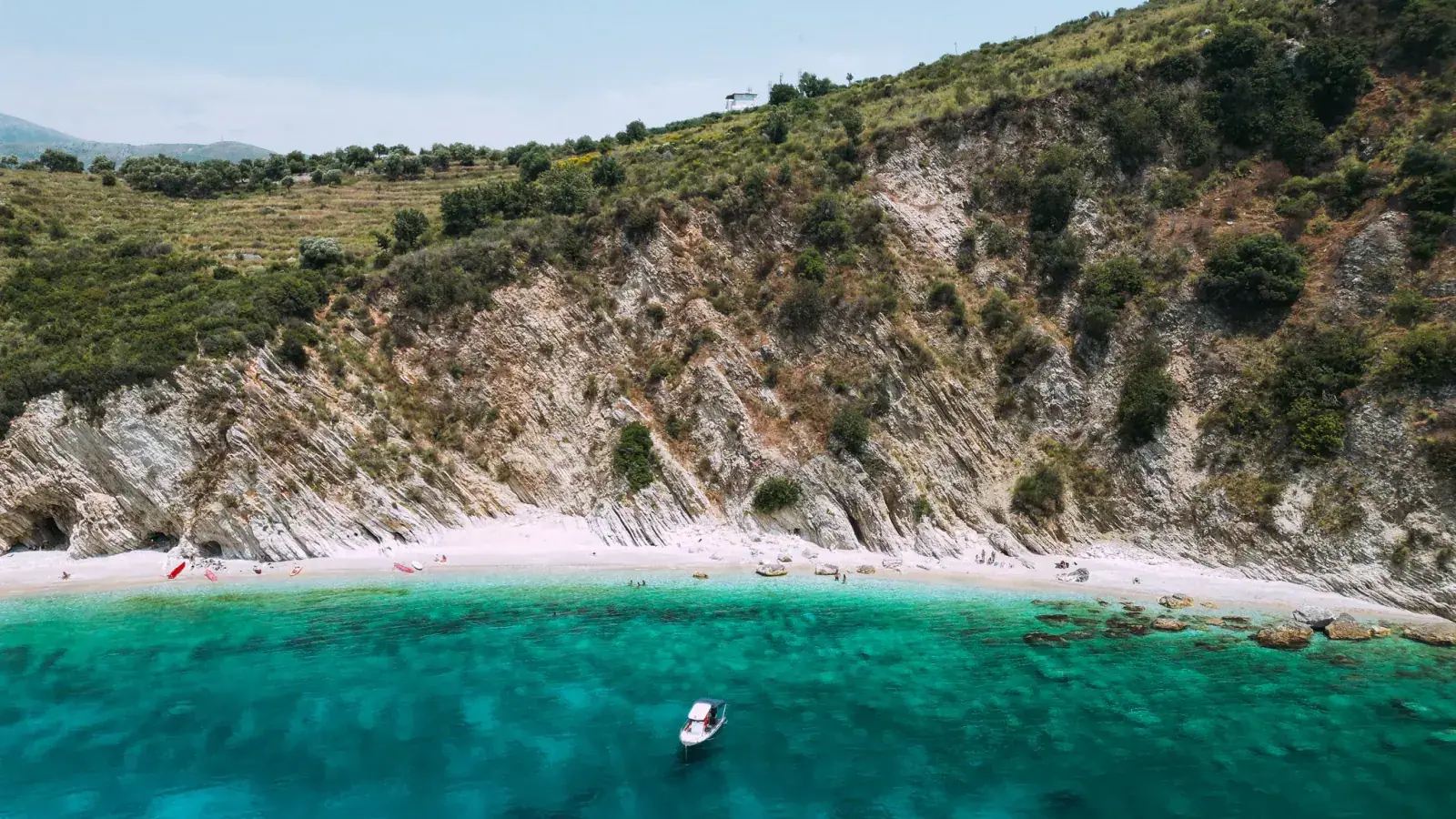
Gjipe Beach is the single best beach to visit on a windy day near Himara. The beach sits at the mouth of a deep limestone canyon, and those towering walls block wind from virtually every direction. Even when the open sea outside the cove is whitecapping, the water at Gjipe can be glassy.
Wind protection: Excellent. The canyon acts as a natural windbreak on all sides. Only a direct westerly gale pushes significant swell into the cove.
Trade-off: Getting there requires a 30-minute hike from the parking area (15 km north of Himara) or a boat ride. On very windy days, boat services may be cancelled, so plan on hiking. The canyon trail itself is sheltered and pleasant even when the hilltops are gusty.
Facilities: Basic drinks and snacks from beach vendors, umbrella rentals, camping permitted.
Best for: Anyone willing to hike for the reward of flat water on a rough day.
Filikuri Beach
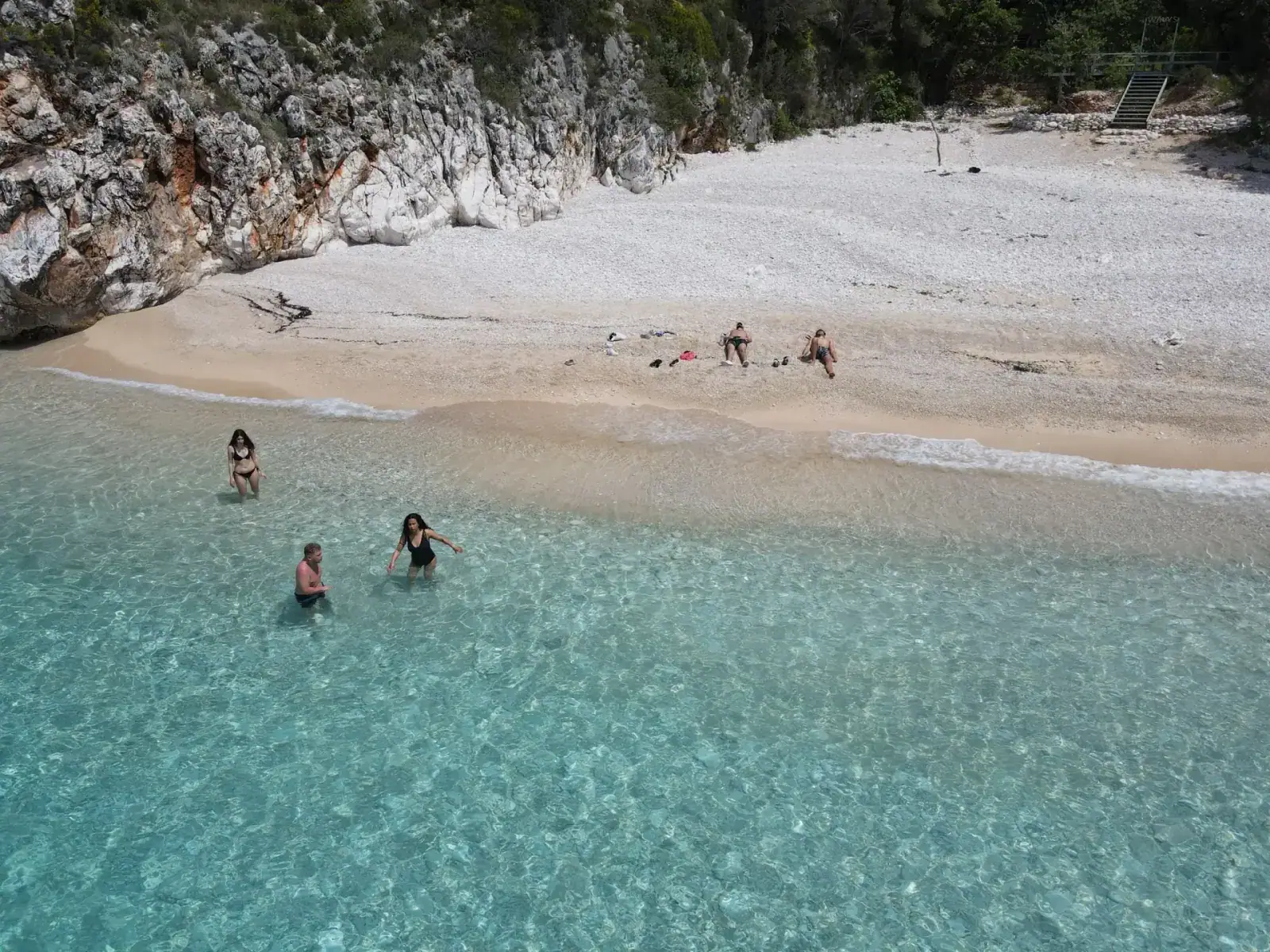
Filikuri Beach is a small hidden cove between Himara and Llamani, tucked into the rocks so tightly that wind barely reaches the water. The surrounding cliffs create near-total shelter, and on days when Spile Beach is choppy and uncomfortable, Filikuri can feel like a private swimming pool.
Wind protection: Excellent. The tight cove geometry blocks northwesterlies and most other wind directions.
Trade-off: Access requires a 20-30 minute hike from Himara, a boat ride, or kayaking from Spile Beach. Kayaking in windy conditions is not advisable. Stick to the hiking trail when it's blowing.
Facilities: None. Bring everything you need including water and food.
Best for: Hikers, snorkelers, couples seeking a sheltered and secluded swim.
Porto Palermo
Porto Palermo Beach sits inside a deep, enclosed bay 8 km south of Himara. The bay formation provides natural shelter from northwesterly and northerly winds, making it one of the most reliable calm-water spots on breezy days. The historic Ali Pasha fortress adds a visual anchor that most beaches lack.
Wind protection: Very good. The bay's shape breaks incoming northwesterlies before they reach the beach. Only strong southerlies or south-westerlies push swell inside.
Getting there: 15-minute drive south from Himara on the main coast road. Easy parking.
Facilities: Limited at the beach itself. The castle (entrance 300 ALL / ~3 euros) is the main draw.
Best for: History buffs who want a calm swim on a windy day. Combine a castle visit with beach time.
Akuarium Beach
Akuarium Beach is a tiny cove between Livadhi and Jale, famous for its clear blue-turquoise water. The surrounding rocks enclose the cove tightly enough to block most wind. On a breezy day when larger beaches are rough, Akuarium's sheltered position keeps the water remarkably calm and clear.
Wind protection: Very good. The small size and rocky enclosure mean wind passes overhead.
Trade-off: Getting there requires either a 1.5 km hike from Livadhi Beach following red trail markings, or a 4x4 approach from Jale Beach. The hike is more exposed to wind than the beach itself.
Facilities: None. Pack water and food.
Best for: Early birds willing to hike for a sheltered cove with exceptional water clarity.
Llamani Beach
Llamani Beach is a secluded bay surrounded by rocks, 3.5 km south of Himara. The rocky walls that frame the bay provide solid wind protection, keeping the water noticeably calmer than the exposed town beaches on the same day.
Wind protection: Very good against northwesterlies. The surrounding rock formations deflect wind over the bay.
Getting there: Short drive south from Himara, then a gravel path down to the beach.
Facilities: Sunbed rentals (10-20 euros). No restaurants.
Note: The water is deep with large stones on the seabed. Water shoes are strongly recommended regardless of wind conditions.
Best for: Swimmers wanting seclusion and calm water without a long hike.
Partially sheltered beaches (depends on conditions)
These beaches handle moderate winds reasonably well but get uncomfortable when gusts exceed 25 km/h.
Livadhi Beach
Livadhi Beach stretches 1.5 km along the coast, enclosed by rocky headlands on both ends. Those headlands break some incoming northwesterly wind, giving Livadhi better protection than the open beaches. The center is more exposed than the edges.
Tip: On breezy days, set up near the southern headland end where shelter is strongest.
Facilities: Full. Sun loungers, restaurants, cafes, parking.
Best for: Families wanting decent shelter with full facilities.
Potami Beach
Potami Beach sits 3.5 km south of Himara center with a more sheltered orientation than the town beaches. The coastline angle provides partial protection from direct northwesterlies. It stays comfortable in light-to-moderate wind when Spile is already choppy, though strong gusts still reach the beach.
Facilities: Beach clubs, restaurants, sunbed rentals (10-20 euros).
Best for: A quick drive from town when Spile is too windy but you don't want to go far.
Jale Beach
Jale Beach has partial shelter from headlands, but its northwest-facing orientation catches the dominant winds. Under 20 km/h it stays pleasant. Above that, expect chop. The southern end near the headland is more sheltered than the open center.
Facilities: Beach clubs, parking, hotels.
Best for: A day trip when wind is moderate and you want beach club amenities.
Buneci Beach
Buneci Beach sits south of Borsh in a position that provides some natural shelter. It is less exposed than the massive Borsh Beach next door, and its smaller footprint means the surrounding terrain breaks some wind. Still, it is not a true cove and will get choppy in sustained northwesterlies.
Wind protection: Moderate. Better than Borsh, worse than the enclosed coves.
Facilities: Sun umbrella rentals only. Very few visitors.
Best for: Quiet beach day when winds are moderate and you're already exploring the south.
Exposed beaches to avoid on windy days
These beaches face the dominant northwesterly winds with little or no natural protection. On days when the forecast shows 20+ km/h from the northwest. These are uncomfortable to unpleasant.
Spile Beach & Sfageio Beach
Spile Beach and Sfageio Beach are the main town beaches, facing northwest directly into the prevailing wind. On a breezy day, expect chop in the shallows, spray on the promenade, and umbrellas that won't stay put. No headlands or enclosing rocks to break the maestrale.
On calm days: Both are excellent: Spile for socializing, Sfageio for families with small children. Just not when it's blowing.
Dhermi Beach & Drymades Beach
Dhermi Beach and Drymades Beach both face north to northwest with no significant headlands. Northerly winds hit these beaches at full force, building waves across the open fetch.
On calm days: Among the most beautiful beaches on the Albanian Riviera, with white pebbles and a mountain backdrop.
Borsh Beach
Borsh Beach stretches 7 km with no enclosing headlands, the longest and most exposed beach on the Albanian Riviera. Wind builds surf along the entire shoreline and the sand-gravel mix blows around.
On calm days: Unmatched space and solitude. Shallow water is great for families on still mornings.
Practical tips for windy beach days
Check the forecast. Windy.com and Windguru give accurate Himara forecasts. A 20 km/h southeasterly is offshore and keeps water flat, while a 15 km/h northwesterly creates more chop than you'd expect.
Go early. Thermal winds build through the afternoon. By 8-9 AM you can swim comfortably at beaches that become unpleasant by 2 PM.
Coves beat long beaches. Wind needs fetch (distance over water) to build waves. Rock-enclosed coves deny it that distance.
Drive south for shelter. The coast south of Himara has more enclosed bays. If Dhermi is getting pounded, Porto Palermo, Llamani, and Filikuri are usually calmer. The difference can be a 10-minute drive. See our car and scooter rental guide.
Wind affects boat trips. Boat tours are typically cancelled when sustained winds exceed 25-30 km/h. Check with operators the morning of.
Planning your windy day
Scenario 1: Light wind (15-20 km/h NW) Most beaches are still fine. Avoid Spile and Sfageio if you want flat water. Livadhi, Potami, or Jale will be comfortable. Best option: Livadhi near the southern headland.
Scenario 2: Moderate wind (20-30 km/h NW) Head for the sheltered coves. Gjipe, Filikuri, Llamani, or Porto Palermo. All will have calm or near-calm water. Avoid everything in the "exposed" category.
Scenario 3: Strong wind (30+ km/h) Gjipe canyon or Filikuri are your only reliable options for flat water. Porto Palermo bay should still be swimmable but may have some swell. Consider a non-beach day: visit Himara Old Town and Castle. Take a day trip to Gjirokaster, or explore the Porto Palermo fortress.
For a broader overview of beaches along this coast, see our complete Himara beach rankings and the full beaches directory.
FAQ
What are the most sheltered Himara beaches on windy days?
Gjipe Beach and Filikuri Beach are the most sheltered options near Himara. Gjipe sits inside a deep canyon that blocks wind from all directions, while Filikuri is a small cove enclosed by tall cliffs. Both stay calm when open beaches are rough. Porto Palermo Bay and Llamani Beach are also reliable sheltered choices.
When is the Albanian Riviera windiest?
The windiest months are November through March, when strong northwesterly systems are frequent and sustained. During summer (June-August), wind is generally lightest, but periodic multi-day northwesterly events still bring 25-40 km/h gusts several times per month. May and late September can be unpredictable.
Can you still swim at Himara beaches when it's windy?
Yes, but you need to pick the right beach. Sheltered coves like Gjipe, Filikuri, and Llamani stay swimmable even in strong northwesterly wind. Exposed beaches like Spile, Dhermi, and Borsh become uncomfortable and potentially unsafe above 25 km/h. Always check current conditions before entering the water.
What wind direction is worst for Himara beaches?
Northwesterly wind (the maestrale) causes the most problems because the majority of beaches near Himara face northwest. This wind blows directly onshore, building waves and chop. Southeasterly wind is actually less problematic for most beaches since it blows offshore, keeping the sea surface flatter at west-facing shorelines.
How do I check wind conditions before going to the beach?
Use Windy.com or Windguru for reliable forecasts specific to the Himara coast. Check both wind speed and direction the morning of your beach day. For real-time conditions, the Himara port area and Spile Beach promenade give a quick visual read on how the sea looks before you commit to a drive.