Albanian cuisine sits at a crossroads. Ottoman, Greek, and Italian culinary traditions have layered themselves over centuries of local cooking, and the geography amplifies the differences: coastal Albania eats fish and olive oil, the mountains eat lamb and slow-stewed casseroles, and the plains in between grow wine grapes and wheat for the country's beloved phyllo pastries. If you travel even a few hours between regions, the food changes noticeably. That's what makes eating your way across Albania one of the best reasons to visit.
This is a region-by-region guide to what's worth ordering, what each area does best, and how much you should expect to pay. If you're spending most of your time on the coast, pair this with our detailed Himara food guide for restaurant-level specifics.
Compare hotels, apartments, and Vrbo rentals on the map. Powered by Stay22.
Quick Facts
| Topic | What to Know |
|---|---|
| Dominant flavors | Olive oil, lemon, yogurt, garlic, fresh herbs |
| Coastal cuisine | Grilled fish, octopus, Greek-influenced mezze |
| Mountain cuisine | Slow-roasted lamb, baked casseroles, layered pies |
| National dish | Tave Kosi (lamb baked in yogurt custard) |
| National spirit | Raki (clear grape brandy, 45-55% alcohol) |
| Street food staples | Byrek, sufllaqe, qofte, petulla |
| Budget meal cost | 300-800 ALL (3-8 EUR) |
| Mid-range dinner | 1,500-3,000 ALL (15-30 EUR) per person |
| Tipping | 5-10%, appreciated but not expected |
| Payment | Cash preferred at many traditional spots |
Albanian Riviera: Himara and the Ionian Coast
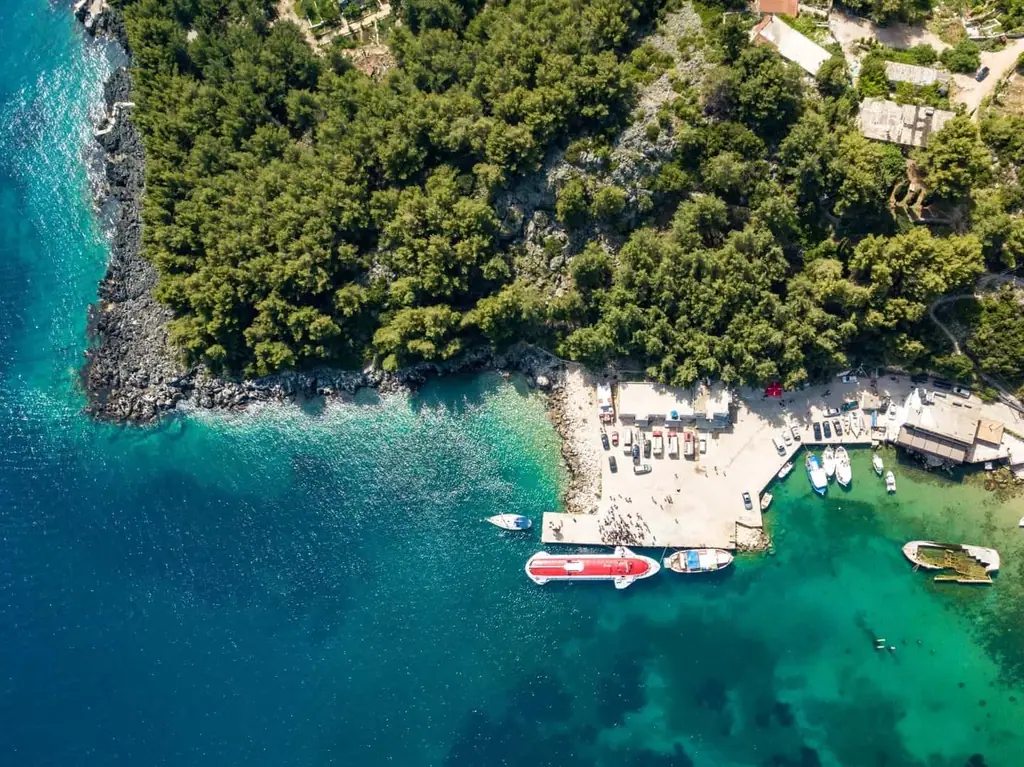
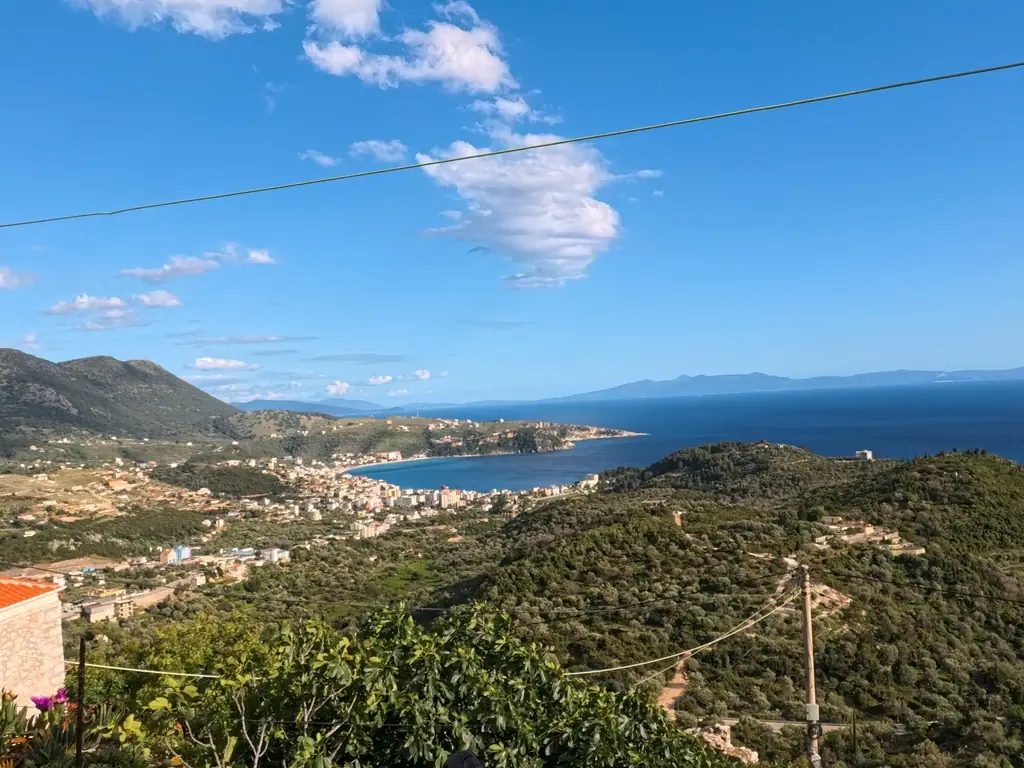
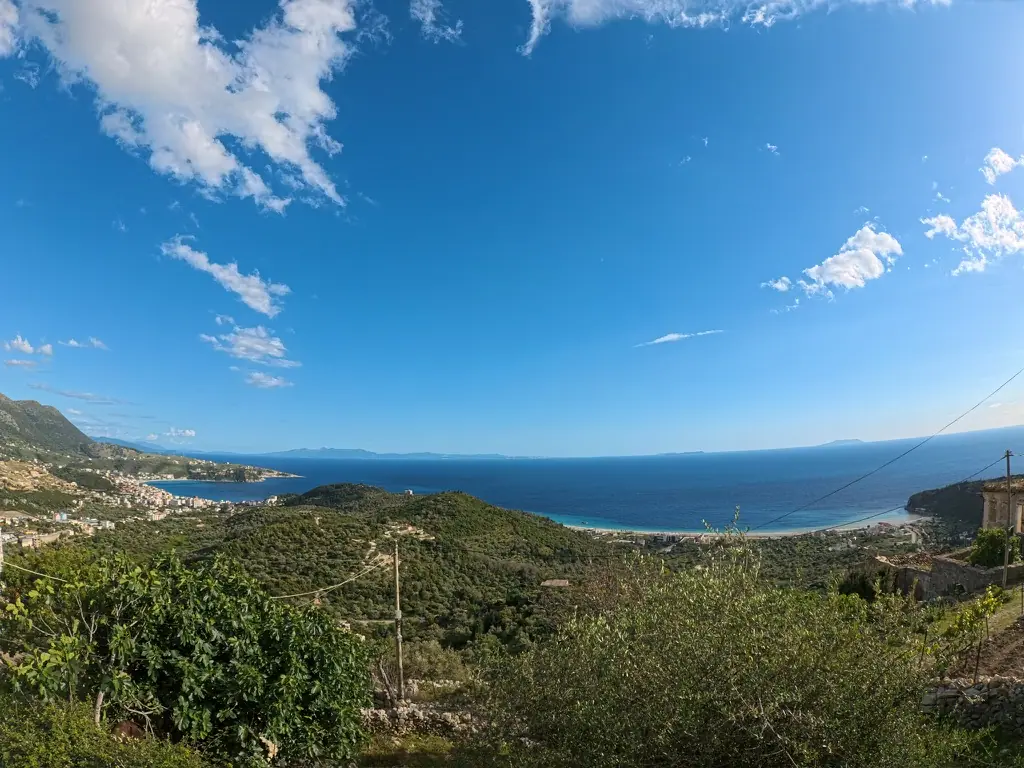
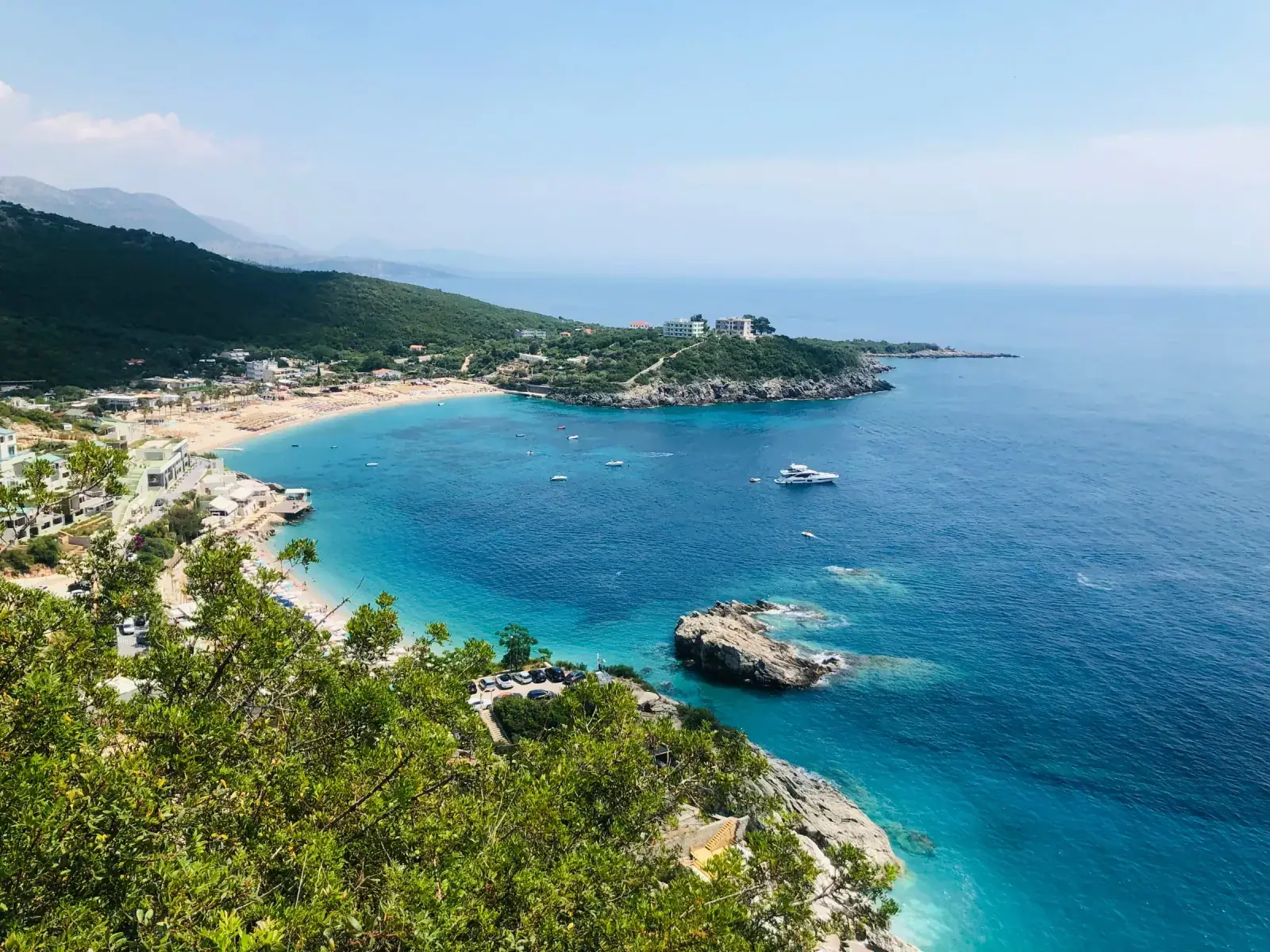
The Albanian Riviera stretches from Vlora south to the Greek border, and the food here is Mediterranean to its bones. Himara is the best-eating town on this coastline, where the significant Greek minority has shaped a cuisine that feels as much Ionian as Albanian.
Seafood dominates. Peshk ne zgare, whole grilled fish, is the dish to build every coastal meal around. Levrek (sea bass) and koce (bream/dorado) are the most common catches, dressed simply with olive oil and lemon. Grilled octopus, fried calamari, mussels saganaki, and shrimp risotto fill out the seafood menus. For a full breakdown of what to order and current pricing, see our Himara seafood guide.
The Greek influence runs deep. Horiatiki (village salad), moussaka, souvlaki, and tzatziki sit naturally alongside Albanian byrek (savory phyllo pie) and fergese (baked peppers, tomatoes, and cheese). Tave kosi appears on Riviera menus too, though it originates inland, coastal restaurants sometimes adapt it with fish instead of lamb.
Fresh salads dressed with local olive oil are genuinely excellent here. The oil from Borsh and Himara's hillside groves is peppery and full-flavored, and it shows up in everything from grilled vegetables to bread dipping.
What to budget on the Riviera:
| Meal Type | Typical Cost |
|---|---|
| Byrek from a bakery | 100-150 ALL (1-1.50 EUR) |
| Sufllaqe (Albanian gyro) | 300-500 ALL (3-5 EUR) |
| Grilled fish dinner with salad | 1,500-2,500 ALL (15-25 EUR) |
| Seafood dinner for two with wine | 3,000-5,000 ALL (30-50 EUR) |
For specific restaurant recommendations in Himara, including seafood tavernas, budget-friendly spots, and the best breakfast options, see our complete restaurant guide.
Tirana: The Cosmopolitan Capital
Tirana has Albania's most diverse restaurant scene. A city of roughly 900,000 people that's been modernizing rapidly since the early 2000s, Tirana offers everything from traditional Albanian tavernas to serious Italian restaurants, sushi bars, craft cocktail spots, and farm-to-table dining that would hold up in any European capital.
Blloku (the Block) is the dining and nightlife center. This former communist-era restricted zone, once reserved for party officials, is now packed with cafes, restaurants, and bars. It's where you'll find the most ambitious cooking in the country.
Traditional Tirana food leans on qofte (grilled meatballs seasoned with herbs and onion), tave kosi, byrek, and grilled meats. But the city's real strength is range: you can eat a 500 ALL qofte plate for lunch and a 4,000 ALL tasting menu for dinner without leaving Blloku.
Key dishes to try in Tirana:
- Qofte Korce, meatballs in the style of Korce, a Tirana restaurant staple
- Pace koke, sheep head soup, eaten as a hangover cure and breakfast tradition (not for everyone, but culturally significant)
- Taverna-style grills, mixed grill platters of lamb chops, sausage, and qofte with pickled vegetables
- Italian-Albanian fusion, pasta dishes using local ingredients, reflecting a century of Italian cultural influence
What to budget in Tirana:
| Meal Type | Typical Cost |
|---|---|
| Street food lunch (byrek, qofte) | 300-600 ALL (3-6 EUR) |
| Casual sit-down meal | 500-800 ALL (5-8 EUR) |
| Mid-range restaurant dinner | 1,200-2,000 ALL (12-20 EUR) |
| Upscale dinner per person | 2,000-5,000 ALL (20-50 EUR) |
Tirana is the only Albanian city where you'll consistently find menus in English, international dietary labels, and servers who can explain what's in a dish. If you're nervous about navigating Albanian menus elsewhere, Tirana is a good place to learn the dishes before heading south.
Berat and Elbasan: Wine Country
Berat, the UNESCO-listed "City of a Thousand Windows", sits at the heart of Albania's wine-producing region, and the food here reflects that. This is slow-cooked, hearty, inland Albanian cuisine designed for long lunches with good wine.
Tave Elbasani is the signature dish of this area. It's a lamb and yogurt casserole originating from Elbasan, baked slowly until the yogurt sets into a rich, slightly tangy crust. If tave kosi is Albania's national dish, tave Elbasani is its regional ancestor, heavier, deeper, and best eaten with a glass of local red wine.
Other essential dishes from this region:
- Japrak (grape leaves), vine leaves stuffed with rice, herbs, and sometimes ground meat. The grape leaves come from the same vines producing the wine
- Slow-cooked veal, braised with tomatoes and peppers, a central Albanian comfort dish
- Fergese Tirane/Berati, the baked pepper and cheese dish takes on local variations here, sometimes with ground meat added
- Pershesh, a traditional cornbread crumbled into yogurt or butter, a peasant dish that's become a heritage menu item in Berat restaurants
Berat wines are the reason to linger. Cobo Winery and Nurellari Winery are the two most accessible producers, both offering tastings and tours. The local grape varieties. Shesh i Zi (red) and Shesh i Bardhe (white), produce wines that are rustic but characterful. A glass at dinner costs 200-400 ALL (2-4 EUR). A bottle of good local wine from a shop runs 600-1,200 ALL (6-12 EUR).
What to budget in Berat:
| Meal Type | Typical Cost |
|---|---|
| Taverna lunch with wine | 800-1,500 ALL (8-15 EUR) |
| Full dinner for two with wine | 2,000-3,500 ALL (20-35 EUR) |
| Wine tasting at a local winery | 500-1,500 ALL (5-15 EUR) |
Prices in Berat are noticeably lower than on the coast. A serious meal with a bottle of local wine can cost less than a single fish plate on the Riviera.
Gjirokaster: Mountain Food at Its Best
Gjirokaster is a UNESCO World Heritage city built of stone, perched on a hillside above the Drinos Valley. The food here is mountain Albanian cooking at its most traditional, slow, meat-heavy, and uncompromising.
Roast lamb is the centerpiece. Gjirokaster lambs graze on wild herbs in the surrounding mountains, and the meat has a flavor that commercial lamb simply cannot replicate. Whole lambs roasted on spits appear at celebrations, but restaurants serve excellent lamb chops, slow-roasted shoulder, and lamb stews year-round.
Pite (layered savory pie) is the other essential. Unlike the smaller byrek you'll find as street food across Albania, Gjirokaster pite is a large, multi-layered affair made with hand-stretched filo dough and filled with cheese, greens, or meat. The layers are thinner and more numerous than coastal versions. Watching a Gjirokaster grandmother stretch pite dough is watching a craft that hasn't changed in centuries.
Other dishes to seek out:
- Oshaf, a dessert made from dried figs and walnuts simmered in sheep's milk, unique to the Gjirokaster region
- Qifqi, rice balls mixed with egg, herbs, and sometimes cheese, fried until crispy. A Gjirokaster specialty that's hard to find elsewhere
- Local cheese, aged white cheese from mountain shepherds, saltier and more complex than the fresh cheese on the coast
What to budget in Gjirokaster:
| Meal Type | Typical Cost |
|---|---|
| Pite from a bakery | 100-200 ALL (1-2 EUR) |
| Taverna lunch | 500-1,000 ALL (5-10 EUR) |
| Full dinner with raki | 1,200-2,000 ALL (12-20 EUR) |
Gjirokaster is one of the cheapest eating destinations in southern Albania. The restaurant scene is smaller than Berat's or Tirana's, but the quality of raw ingredients, especially lamb, cheese, and honey, is among the best in the country.
Korce: Beer, Pies, and Eastern Flavors
Korce sits in eastern Albania near the Macedonian and Greek borders, and the food here has a distinctly different character from the coast. Turkish and Macedonian influences are stronger, the cuisine is heavier, and the drinking culture centers on beer rather than wine or raki.
Birra Korca is Albania's most famous beer, and it's brewed right here. The brewery has been operating since 1928 and produces a clean, drinkable lager that you'll see in every restaurant and bar across the country. Drinking Korca in Korca hits differently, the locals take genuine pride in it, and the freshly tapped version in town is noticeably better than the bottled export.
Lakror is Korca's signature dish, a massive, thin-crusted filo pie filled with leeks, onions, or a mix of greens and cheese. It's bigger and flatter than the byrek or pite found elsewhere, often baked in round trays the size of a car wheel. Bakeries sell it by the slice, and it's the default working lunch in the city.
Other essential Korca food:
- Petulla, fried dough fritters, plain or stuffed with cheese or jam. Albania's answer to doughnuts. A morning staple in Korca, where they're served with sugar or honey for 50-100 ALL (0.50-1 EUR)
- Kukurec, grilled intestines wrapped around offal on a spit. Turkish in origin, polarizing in reputation, and beloved locally. Try it if you're adventurous
- Pasticho, a baked pasta and meat dish closer to Greek pastitsio than Italian lasagna, reflecting the cultural overlap in this border region
- Romsteak, a breaded, pan-fried meat cutlet served with potatoes. Simple, filling, a local comfort food
What to budget in Korca:
| Meal Type | Typical Cost |
|---|---|
| Lakror slice + Korca beer | 200-400 ALL (2-4 EUR) |
| Taverna dinner | 600-1,200 ALL (6-12 EUR) |
| Night out with beer and food | 1,000-2,000 ALL (10-20 EUR) |
Korca is cheap even by Albanian standards. A full night of eating and drinking rarely breaks 2,000 ALL per person.
Permet: Raki, Spoon Sweets, and Thermal Springs
Permet is a small town in southeastern Albania that punches well above its weight in the food world. It sits along the Vjosa River in a valley known for fruit orchards, and two products define its culinary identity: raki and gliko.
Raki is Albania's national drink, but Permet is where the best of it comes from. Local families distill their own from grapes, plums, or mulberries, and the quality of Permet raki is recognized across the country. If someone offers you homemade raki from Permet, accept. The spirit is smoother, more aromatic, and more nuanced than the industrial versions. Alcohol content typically runs 45-55%. For the full picture on what raki actually is, how it differs from Turkish raki, and drinking etiquette, see our Albanian raki guide.
Gliko (spoon sweets) are Permet's other claim to fame. These are whole fruits or fruit pieces preserved in sugar syrup, walnuts, figs, cherries, quince, watermelon rind, and even eggplant. They're served on a small spoon with a glass of cold water and a coffee, traditionally offered to guests as a welcome. The craft is taken seriously here, and every family has its own recipes. Jars of gliko make excellent souvenirs.
The thermal springs in the area (Benja Thermal Baths) create a local food culture around long, leisurely meals before or after bathing. Restaurants near the springs serve grilled meats, river trout, and salads made with produce from the surrounding valley.
What to budget in Permet:
| Meal Type | Typical Cost |
|---|---|
| Coffee with gliko | 150-300 ALL (1.50-3 EUR) |
| Taverna meal | 500-1,000 ALL (5-10 EUR) |
| Raki tasting at a family producer | Often free with a meal, or 200-500 ALL |
Shkoder: Lake Fish and Northern Character
Shkoder is the main city of northern Albania, sitting at the southern end of Shkoder Lake, the largest lake in the Balkans. The food here is notably different from southern Albania: heavier, more meat-focused, with Italian and Montenegrin influences from centuries of trade across the border.
Karp (carp) from Shkoder Lake is the local specialty. Freshwater carp is baked, grilled, or stewed with onions and tomatoes and served as the default fish dish. It has a different character from the coastal seafood of the Riviera, earthier, meatier, and typically cheaper. Lake trout also appears on menus.
Other northern Albanian dishes:
- Flia, a multi-layered crepe-like dish baked in rounds with cream between each layer, traditionally cooked over embers with a sac (domed metal lid). It's laborious to make properly and not found outside northern Albania
- Tave dheu, an earthenware-baked dish with meat, rice, and yogurt
- Pasta influence, proximity to Italy and Montenegro means pasta dishes appear more frequently here than in central Albania. Fresh pasta with meat sauce or cheese is a common lunch
What to budget in Shkoder:
| Meal Type | Typical Cost |
|---|---|
| Lake fish dinner | 600-1,200 ALL (6-12 EUR) |
| Taverna lunch | 400-800 ALL (4-8 EUR) |
| Coffee and pastry | 150-300 ALL (1.50-3 EUR) |
Shkoder is a common starting point for travelers heading to the Albanian Alps (Theth and Valbona), and the city is worth a day just for the food and the lake promenade.
Street Food Across Albania
Regardless of which region you're in, Albanian street food follows a consistent pattern. These are the items you'll find everywhere, from Tirana to the smallest coastal village.
Byrek (savory phyllo pie) is the foundation. Varieties include me djath (cheese), me spinaq (spinach), and me mish (meat). Bakeries sell it fresh from the oven for 100-150 ALL (1-1.50 EUR) across the country. It's the default Albanian breakfast alongside a cup of yogurt or a coffee. The quality varies, seek out bakeries where you can see byrek coming out of the oven.
Sufllaqe is Albania's take on the gyro. Grilled meat (usually chicken or pork, sometimes lamb), vegetables, tzatziki, and fries wrapped in flatbread. It costs 250-400 ALL (2.50-4 EUR) at most stands and is the best fast meal in the country. On the Riviera, the Greek influence elevates the average sufllaqe quality above what you'll find inland.
Qofte (grilled meatballs) are the universal bar snack and casual lunch. Seasoned with herbs, onion, and sometimes breadcrumbs, served with bread and grilled peppers. Budget 300-500 ALL (3-5 EUR) for a qofte plate.
Petulla (fried dough) are the Albanian morning default outside cities. Dusted with powdered sugar or served with cheese and honey. They cost almost nothing, 50-100 ALL (0.50-1 EUR), and are best eaten hot.
The Vegetarian Situation
Albania is a meat-and-fish country, and dedicated vegetarian restaurants are essentially nonexistent outside Tirana. But the picture is better than it sounds.
Every region has naturally vegetarian dishes baked into the culinary tradition: fergese (the baked pepper and cheese dish), byrek me djath (cheese pie), fasule (white bean stew), grilled vegetables, Greek salad, rice pilaf, and various bean dishes. These aren't afterthoughts, they're dishes Albanians have eaten for centuries.
The coast is easier for vegetarians than the mountains. Grilled vegetable platters, pasta, pizza, and the Greek-influenced mezze culture mean you'll always find options at Riviera restaurants. Inland, especially in Gjirokaster and Korce, menus lean heavier on meat and the vegetable options require more active searching.
Strict vegans will have a harder time. Dairy (especially white cheese and yogurt) is fundamental to Albanian cooking. Communicate clearly, stick to beans, grilled vegetables, salads, and bread, and you'll manage. For detailed guidance on the coast, see our vegetarian and vegan Himara guide.
Regional Price Comparison
| Region | Budget Meal | Mid-Range Dinner | Splurge Dinner for Two |
|---|---|---|---|
| Albanian Riviera | 300-600 ALL (3-6 EUR) | 1,500-2,500 ALL (15-25 EUR) | 4,000-6,000 ALL (40-60 EUR) |
| Tirana | 300-600 ALL (3-6 EUR) | 1,200-2,000 ALL (12-20 EUR) | 4,000-8,000 ALL (40-80 EUR) |
| Berat | 300-500 ALL (3-5 EUR) | 800-1,500 ALL (8-15 EUR) | 2,500-4,000 ALL (25-40 EUR) |
| Gjirokaster | 200-400 ALL (2-4 EUR) | 600-1,200 ALL (6-12 EUR) | 2,000-3,000 ALL (20-30 EUR) |
| Korce | 200-400 ALL (2-4 EUR) | 600-1,200 ALL (6-12 EUR) | 1,500-2,500 ALL (15-25 EUR) |
| Permet | 200-400 ALL (2-4 EUR) | 500-1,000 ALL (5-10 EUR) | 1,500-2,500 ALL (15-25 EUR) |
| Shkoder | 200-500 ALL (2-5 EUR) | 600-1,200 ALL (6-12 EUR) | 2,000-3,000 ALL (20-30 EUR) |
The pattern is clear: the coast and capital are the most expensive, and prices drop as you move inland and north. Even at the top end, Albanian dining remains a fraction of what comparable meals cost in Croatia, Greece, or Montenegro.
What to Eat in Himara Specifically
If you're based in Himara for most of your trip, as many Albanian Riviera visitors are, here's what to prioritize:
- Grilled whole fish at any waterfront taverna on Spile promenade. Levrek or koce, olive oil and lemon, nothing else needed. See our seafood guide for specifics.
- Grilled octopus, the signature Himara dish. When charred right, it's one of the best things you'll eat in Albania.
- Byrek from a town center bakery for breakfast. Cheese or spinach, with yogurt on the side.
- Sufllaqe for a fast lunch. Budget 300-500 ALL.
- Trilece (tres leches cake) for dessert. The best version is at the century-old Kafe Pasticeri 1928.
- Raki after dinner. Accept the first glass offered. Sip, don't shoot.
- Morning coffee at a seaside cafe, the coffee culture here is serious and cheap.
For the full Himara food picture, including restaurant ratings, grocery shopping tips, and seafood pricing, browse our complete collection of Himara food guides.
Frequently Asked Questions
Is Albanian food similar to Greek food?
On the coast, substantially. The Albanian Riviera shares the Ionian culinary tradition with western Greece, grilled fish, olive oil, salads, phyllo pastries. Inland, Albanian food diverges: heavier meat dishes, yogurt-based casseroles, and Ottoman-influenced preparations that have more in common with Turkish cooking than Greek. The overlap is strongest in southern Albania, where Greek minority communities have preserved centuries of shared food culture.
What is the national dish of Albania?
Tave kosi, lamb baked slowly in a custard of yogurt and eggs until the surface sets into a golden crust. It originates from Elbasan in central Albania but appears on menus nationwide. The dish is rich, tangy, and has no direct equivalent in neighboring cuisines.
How much should I budget for food per day in Albania?
Budget travelers eating street food and bakery meals can manage on 800-1,500 ALL (8-15 EUR) per day. Mid-range eating at sit-down restaurants with drinks runs 1,500-3,000 ALL (15-30 EUR) per person. Even a dedicated food-focused day with multiple restaurant meals rarely exceeds 5,000 ALL (50 EUR). Albania is one of the cheapest countries in Europe for eating out.
Is Albanian food spicy?
No. Albanian cuisine uses herbs (oregano, mint, dill, parsley) and garlic generously, but chili heat is almost entirely absent. If you want spice, you'll need to ask for it. The closest thing to a spicy condiment is pickled hot peppers, which appear on some tables.
Can I drink the tap water in Albania?
Tap water quality varies by city. In Tirana and larger cities, it's generally safe but often tastes of chlorine. On the Albanian Riviera, many locals drink tap water, but bottled water is cheap (50-100 ALL / 0.50-1 EUR) and a safer default for travelers. Mountain spring water in places like Permet and Gjirokaster is excellent.
What should I drink besides raki?
Albanian wine is underrated and improving rapidly. Shesh i Zi (red) and Shesh i Bardhe (white) are the signature local grape varieties. Birra Korca is the go-to beer. Turkish coffee and espresso are the daily caffeine sources. Mountain tea (caj mali), made from dried sideritis, is the caffeine-free evening drink and grows wild in the Albanian highlands.
Are restaurants cash-only in Albania?
Increasingly no. Tirana restaurants almost universally accept cards. On the Albanian Riviera, most established restaurants take cards, but some traditional tavernas remain cash-only. Inland Albania. Gjirokaster, Permet, Korce, still leans heavily toward cash. Always carry some Albanian lek. The exchange rate hovers around 100 ALL to 1 EUR.