Most Albanian Riviera restaurants operate on a system that surprises tourists from northern Europe and North America: you don't order fish from a menu the way you'd pick a steak. You walk up to a glass display case filled with the day's catch on ice, point at what you want, and the waiter weighs it. The price is per kilogram, and that number can vary by species, by season, and by whether the fish is farmed or wild. If you've never ordered this way, your first Riviera fish dinner can feel like a negotiation. It isn't. Understanding the system means the difference between a 1,500 ALL lunch and an accidental 5,000 ALL surprise.
This guide covers every fish and seafood species you'll encounter on the Albanian Riviera, what's in season when, how the ordering process actually works, and where to eat in Himara specifically. If you just want a clean translation reference for menu words, our Albanian fish & seafood vocabulary guide is the lookup-style version of this article, Albanian-to-English-to-Latin with cooking method words and 2026 prices in one place.
Compare hotels, apartments, and Vrbo rentals on the map. Powered by Stay22.
Quick facts
| Detail | What to Know |
|---|---|
| Pricing method | Per kilogram (whole fish) or per portion (shellfish, prepared dishes) |
| Average fish dinner for two | 3,000-5,000 ALL (30-50EUR) with sides and wine |
| Default cooking style | Grilled (zgare), usually the best option |
| Display case system | Standard at most seafood restaurants on the coast |
| Payment | Most places accept card, but cash gets faster service |
| Best value species | Merluci (hake) and barbun (red mullet) |
| Peak freshness months | June through September |
| Key phrase to learn | "Sa eshte per kilogram?" (How much per kilo?) |
Fish and seafood species guide
Here's what you'll find in the display case at a typical Albanian Riviera seafood restaurant, with the Albanian name, what it is, and what you'll pay in a restaurant setting. Prices are for 2026 and reflect the range from casual beach tavernas to upscale waterfront spots.
| Albanian Name | English | Restaurant Price | Notes |
|---|---|---|---|
| Levrek | Sea bass (branzino) | 2,000-3,500 ALL/kg | The default order, reliable, mild, always available |
| Koce | Sea bream (orata/dorado) | 2,000-3,000 ALL/kg | Slightly sweeter than levrek, often a bit cheaper |
| Barbun | Red mullet | 1,500-2,500 ALL/kg | Smaller fish served whole, classic Mediterranean |
| Merluci | Hake | 1,200-2,000 ALL/kg | Cheaper white fish, excellent value |
| Karkaleca | Shrimp | 2,000-3,500 ALL/kg | Usually grilled or in pasta/saganaki |
| Oktapod | Octopus | 1,500-3,000 ALL/kg | Grilled is the Riviera standard |
| Midhje | Mussels | 800-1,500 ALL/portion | Steamed with garlic, white wine, herbs |
| Kallamar | Squid (calamari) | 1,000-2,000 ALL/portion | Fried rings or grilled whole |
A few things worth noting. Levrek and koce dominate every menu because they're the workhorses of Ionian seafood, affordable to source, easy to grill, and hard to mess up. Barbun is the fish locals tend to order for themselves: small, bony, intensely flavored, and dirt cheap relative to the premium species. If you see dentex (dental) or grouper (cernia) in the case, those are wild catch and priced accordingly. Expect 3,000-4,500 ALL/kg.
For a broader breakdown of what prepared dishes cost at Himara restaurants, see our seafood guide.
What's fresh when: seasonal availability
Not everything in the display case is equally fresh year-round. The Ionian Sea off the Albanian coast has distinct seasonal patterns, and knowing them helps you order smarter.
| Season | What's Best | Notes |
|---|---|---|
| Spring (April-May) | Mackerel (skumri), sardines, red mullet | Migration season brings smaller pelagic fish close to shore |
| Summer (June-August) | Tuna (ton), sea bass, sea bream, shrimp, octopus | Peak season, widest selection, highest demand, busiest restaurants |
| Early autumn (September-October) | Swordfish (peshkaqen shpate), sea bream, squid | Shoulder season, fewer tourists, excellent freshness |
| Winter (November-March) | Mussels, hake, squid | Limited selection, many Riviera restaurants close |
Shrimp and mussels are available year-round, though summer quality is best. Farmed levrek and koce are also available in every season since they come from aquaculture rather than daily boats.
If you're visiting June through September, you'll have the full range. In shoulder season, lean toward whatever the restaurant has the most of. That's what came in fresh.
How to order fish on the Albanian Riviera
The process is straightforward once you've done it once.
Step 1: Approach the display. Walk up to the glass case near the entrance. Fish are on ice, usually with small signs or no labels. If you're not sure what you're looking at, ask.
Step 2: Ask what's available. The phrase is "Cfare keni sot?" (What do you have today?). The waiter will walk you through what's fresh, pointing and naming species.
Step 3: Pick your fish. Point at the one you want. You're choosing a specific individual fish, not a generic "one sea bass." Size matters because you're paying by weight.
Step 4: They weigh it. The waiter takes your fish to a scale and tells you the weight and total price. If a levrek weighs 800g at 2,500 ALL/kg, your fish costs 2,000 ALL (20EUR). No shame in asking for a smaller one.
Step 5: Choose your cooking method. They'll ask how you want it prepared:
- Zgare (grilled). The default and almost always the best choice. Charcoal-grilled with olive oil and lemon.
- Skuqur (fried). Pan-fried or deep-fried, common for smaller fish and calamari.
- Furre (baked). Oven-baked, sometimes with vegetables and potatoes.
- Tave (stewed). Slow-cooked in a clay dish with tomatoes and onions.
If you don't specify, they'll grill it. That's the right default.
Step 6: Confirm the price. Before the fish goes to the kitchen. Confirm the total. "Sa eshte totali?" (How much is the total?) avoids any confusion at the bill.
Farmed vs wild: what you're actually eating
Most levrek and koce served at Albanian Riviera restaurants is farmed, from aquaculture operations around Butrint lagoon in southern Albania or from Greek fish farms. This isn't a scandal. Farmed branzino and dorado are the standard across the entire Mediterranean restaurant industry, from Barcelona to Bodrum.
Wild fish does exist and is worth seeking out. Wild levrek and koce are smaller, firmer in texture, and more concentrated in flavor, typically 20-30% pricier than the farmed equivalent.
If you care about the distinction, ask: "I eger?" (Is it wild?). A reliable tell: if the restaurant has a consistent supply of identically-sized branzino every day, those fish are farmed. Wild catch varies in size and availability.
The smaller species, barbun, sardines, and mackerel, are almost always wild-caught. They're too small and cheap to farm commercially, which is another reason to order them: genuine local seafood at a lower price point.
Price traps and how to avoid them
The Albanian Riviera is not a tourist trap by Mediterranean standards, but a few pricing practices catch first-timers off guard.
The unmarked fish. Some restaurants don't label prices in the display case. Always ask before they weigh it. "Sa eshte per kilogram?" should become automatic.
The large fish push. A waiter might steer you toward a bigger fish. A 1.2kg levrek at 3,000 ALL/kg is 3,600 ALL (36EUR). That's a significant single plate. Ask for a 400-500g fish instead. Two smaller fish for two people often costs less than one large one.
Tourist pricing. Uncommon but not unheard of. A few beachfront spots have been known to quote higher prices to tourists than to Albanian or Greek-speaking regulars. The defense: check the price on the menu. Confirm verbally, and walk to the next restaurant if something feels off.
The extras. Bread, salad, cover charges add up. A 2,500 ALL meal becomes 3,500 ALL once you add salad (500-700 ALL), bread (sometimes 200 ALL), and drinks. For more on managing costs, see our budget eating guide.
Where to eat fish in Himara
Himara has distinct seafood zones, each with a different character.
Spile promenade
The main waterfront strip. Taverna Lefteri is the anchor, with grilled octopus and daily catch on a deck over the water. Merluc Fish Shop is the budget play: the owner catches the fish himself, cash only. The promenade is the most reliable zone for a first-night seafood dinner. See our full restaurant guide for reviews.
Livadhi beachfront
The long sandy beach south of town has a growing line of beachfront restaurants. The Jester's Taverna sits right on the sand and does solid grilled fish with a relaxed beach-bar atmosphere. Slightly more tourist-oriented than Spile, but the setting, fish with your feet in the sand, is hard to beat.
Jale cove
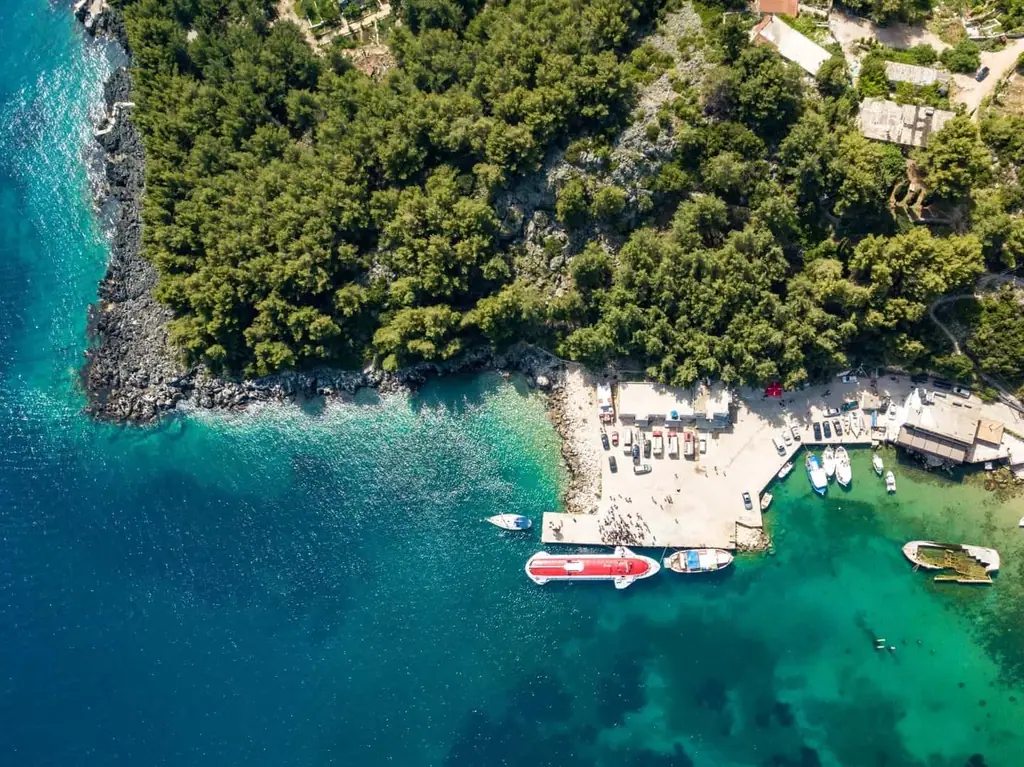
Roughly 8km south of Himara center, Jale's cove restaurants serve some of the freshest fish on the coast. Boats come in, fish goes to the kitchen. Fewer menu options but higher average quality. Worth the drive for lunch. The bay views alone justify the trip. For options in this area, see our sunset dining guide.
Potam area
Quieter than Spile, with a handful of family-run tavernas that serve a more local crowd. Taverna Velco and Lui Potam are standouts, with Greek-leaning preparations, less hustle, and fish that's often from local boats. If you want a quieter meal without the promenade buzz, Potam is the move.
What to order if you're unsure
If this is your first Albanian Riviera fish meal and you don't know where to start, here's the safe order for two people:
- One whole grilled levrek or koce (400-600g. Ask for medium size), roughly 1,000-1,500 ALL
- One grilled octopus, roughly 800-1,200 ALL
- One Greek salad, roughly 500-700 ALL
- Bread (often complimentary)
- A carafe of house wine, roughly 500-800 ALL
Total: approximately 3,000-4,200 ALL (30-42EUR) for two. That's a complete seafood dinner with wine at a waterfront table on the Ionian coast. For context on what else to eat in town beyond seafood, see our Albanian food guide.
For families with kids who might not go for whole grilled fish, fried calamari and shrimp pasta are the reliable child-friendly orders. See our family restaurant guide for places that handle groups well.
Frequently asked questions
Is the fish in Albanian Riviera restaurants fresh or frozen?
Most whole fish displayed on ice is fresh, either caught that day or the day before. Prepared dishes (seafood pasta, risotto, fried calamari) may use previously frozen ingredients, particularly outside peak summer. If freshness matters to you, order from the display case rather than the prepared menu. The rule of thumb: if you can see it on ice. It was never frozen.
How much should I expect to spend on a fish dinner?
A full seafood dinner for two with whole grilled fish, a starter, salad, and wine runs 3,000-5,000 ALL (30-50EUR) at most Riviera restaurants. You can eat for less by ordering smaller fish and skipping starters, or spend more by choosing premium species like dentex or ordering a full seafood platter. See our seafood guide for a detailed cost breakdown.
What's the best fish to order on the Albanian Riviera?
Grilled levrek (sea bass) is the safest first order, mild, clean-flavored, and consistently well-prepared everywhere. Koce (sea bream) is slightly sweeter and often a bit cheaper. For the most authentic local experience, order barbun (red mullet). It's what Albanian fishermen eat themselves.
Can I buy fish at the market and have a restaurant cook it?
Not common practice. Most restaurants source their own fish. If you want to cook your own, the Himara fish market and fishermen selling at the port offer prices typically 30-50% below restaurant per-kilo rates.
Is it safe to eat raw fish or sushi on the Albanian Riviera?
Stick to cooked preparations. A couple of restaurants have started offering sushi-style dishes, but the cold chain infrastructure for safe raw fish isn't as established here. The grilled and fried traditions exist for good reason.
What fish should I avoid ordering?
Avoid expensive species at restaurants that specialize in pizza or pasta. They won't have the turnover to keep premium fish fresh. Be cautious with "catch of the day" at places without a display case. If you can't see the fish before ordering, you have less information to work with.
Are there vegetarian or non-fish options at seafood restaurants?
Yes. Almost every seafood restaurant also serves Greek salad, grilled vegetables, pasta, and meat. If no one at your table wants seafood, you'll find better value at a general taverna. See our Himara restaurant guide.