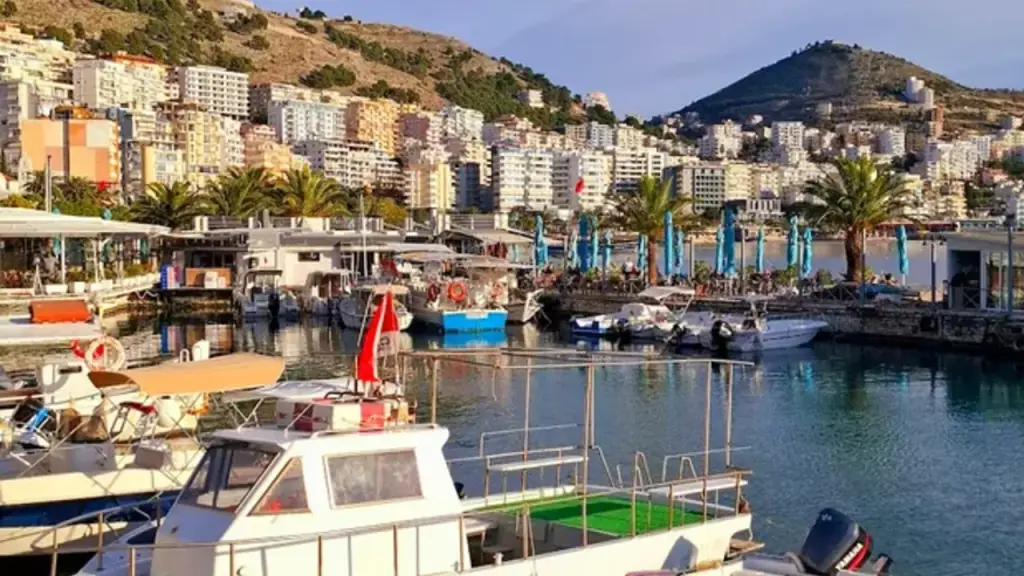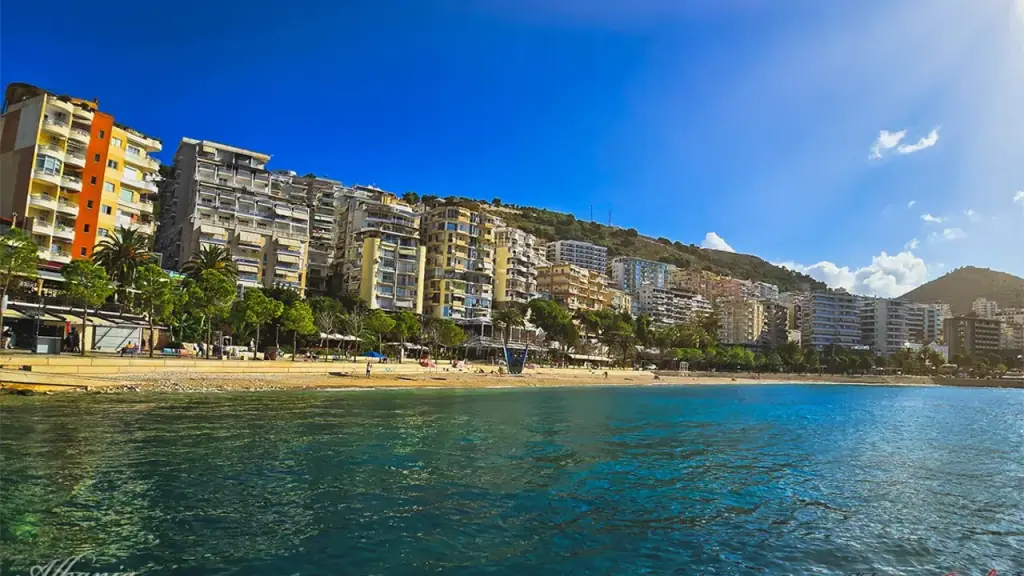
The Ionian Sea doesn't recognize the border. The same water lapping the white pebbles of Himara reaches Corfu thirty minutes later by ferry, same latitude, same currents, same underwater visibility. So why does a beach day cost a couple twice as much in one country versus the other? And does the cheaper option actually deliver the same experience, or do you give up something that matters? We spent a week in May 2026 swimming both coasts back-to-back to answer that, beach by beach, receipt by receipt. The verdict isn't a clean win for either side.
Compare hotels, apartments, and Vrbo rentals on the map. Powered by Stay22.
Quick Overview
| Category | Albania | Greece |
|---|---|---|
| Water quality | Excellent -- clear Ionian | Excellent -- clear Ionian |
| Beach type | Mostly pebble and white gravel | More sand options, plus pebble |
| Crowds | Manageable, even in August | Severe on popular islands |
| Sunbed cost | 5-15 EUR | 15-40 EUR (80-200 EUR Mykonos) |
| Beach bar coffee | 1-1.50 EUR | 3.50-5 EUR |
| Beachside lunch | 5-10 EUR | 15-25 EUR |
| Snorkeling gear rental | 5-8 EUR | 10-20 EUR |
| Boat tour (half day) | 20-35 EUR/person | 50-100 EUR/person |
Water Quality: Same Sea, Different Shores
This is the most important point and the one most travelers don't realize until they arrive: the Albanian Riviera and the Greek islands sit on the same body of water. The Ionian Sea doesn't recognize national borders. Underwater visibility at Gjipe Beach or Livadhi in Himara is comparable to -- and in many cases exceeds -- what you'll find at popular Greek island beaches.
Albania actually has an edge in water clarity at several beaches. Less coastal development means fewer marina pollutants and less boat traffic. Beaches like Filikuri, Llamani, and the coves around Himara see a fraction of the human traffic that Santorini or Mykonos beaches absorb daily. Fewer people and less construction translates directly to cleaner swimming conditions.
Greece has invested decades in water quality monitoring and Blue Flag certification, with rigorous testing infrastructure. Albania's testing regime is improving but not yet at the same level. The water itself is equally clean in most places; Greece simply has better documentation to prove it.
Winner: Tie on actual water quality. Albania wins on crowds in the water. Greece wins on certified monitoring. For the full rundown of what's available near Himara, see the best beaches in Himara guide.
Beach Types: Pebble vs Sand
This is where personal preference matters most.
Albanian Riviera
The Albanian coast is predominantly pebble and white gravel beaches, set in dramatic coves between the Ceraunian Mountains and the Ionian Sea. The pebble composition is actually what creates the extraordinary water clarity -- there's no sand to stir up. Beaches range from the tiny hidden coves of Filikuri (accessible only by boat or hike) to the long crescent of Livadhi, from the canyon-backed Gjipe to the gentle curve of Potami.
The exception is Ksamil, near Saranda, which has genuine white sand beaches reminiscent of Caribbean shores. It's Albania's most popular beach destination and, predictably, its most crowded. Outside Ksamil, expect pebbles -- beautiful ones, but pebbles nonetheless. Water shoes are recommended at most Albanian beaches.
Greek Islands
Greece offers far more variety. White sand on Mykonos, volcanic red and black sand on Santorini, golden sand on Crete, fine pebble on Corfu. With hundreds of islands, Greece covers nearly every beach type imaginable. If you specifically want soft sand between your toes, Greece has more options.
That variety comes at a cost beyond money. The most famous Greek sand beaches are heavily commercialized. Elafonisi on Crete, Navagio on Zakynthos, the caldera beaches on Santorini -- these attract enormous daily visitor numbers. The Instagram-famous beaches are often the most crowded.
Winner: Greece wins on variety and sand options. Albania wins on raw, undeveloped beauty. If sand matters to you, Greece (or specifically Ksamil in Albania) is the answer. If clear water and space matter more, the Albanian Riviera consistently delivers. For a complete ranking, see the best beaches in Albania guide.
Beach Costs: Albania Wins by a Wide Margin
For a full price comparison covering hotels, restaurants, and daily budgets beyond the beach, see our Albania vs Greece cost guide. Here we focus on what you spend at the waterline.
Sunbeds and Beach Access
Albanian beaches are free to access by law. Nobody can charge you for entering a beach or laying down your towel. Sunbed and umbrella rentals on the Albanian Riviera run 500-1,500 ALL (5-15 EUR). On most beaches around Himara, a comfortable set costs around 1,000 ALL (10 EUR) for the day.
Greek beaches are technically free to access, but on popular islands, sunbed operators claim so much space that the "free" zone is often a narrow strip of uncomfortable rocks. Standard sunbed rates on mid-tier Greek islands run 15-30 EUR. Santorini charges 20-40 EUR. Mykonos beach clubs charge 50-200 EUR for premium positions.
A couple spending a week at the beach saves 150-400 EUR on sunbeds alone by choosing Albania. For beach-by-beach pricing on the Albanian Riviera, see the sunbed prices guide.
Beach Bar Prices
A coffee at a beach bar in Himara costs 1-1.50 EUR versus 3.50-5 EUR on Corfu. A beer runs 2-4 EUR versus 5-8 EUR. Cocktails are 5-8 EUR versus 10-16 EUR. Over a week of beach days, drinks alone account for 100-200 EUR in savings.
Beach Activities
| Activity | Albania | Greece |
|---|---|---|
| Kayak rental (1 hr) | 5-10 EUR | 15-25 EUR |
| Boat tour (half day) | 20-35 EUR | 50-100 EUR |
| Snorkeling gear rental | 5-8 EUR | 10-20 EUR |
| Jet ski (30 min) | 30-50 EUR | 60-100 EUR |
| Parasailing | 25-40 EUR | 50-80 EUR |
The savings compound quickly. A couple doing a boat tour, renting kayaks, and spending a week at beach bars will save 300-600 EUR by choosing the Albanian Riviera over a comparable Greek island.
Crowds and Development
This is Albania's strongest card. The Albanian Riviera is still in the early stages of tourism development. Even at peak August capacity, beaches around Himara feel spacious compared to their Greek counterparts. You can find genuinely empty coves with a short hike or boat ride. That's increasingly impossible on the Greek islands.
Greece received over 30 million international tourists in 2025. Albania received roughly 10 million -- a huge increase from 6 million in 2022, but still a fraction of Greece's total. Himara's beaches, even popular ones like Livadhi and Potami, don't approach the density of Santorini's Kamari or Mykonos's Paradise Beach.
Albania's rapid growth is changing things fast. Construction along the coast is accelerating. The window of "undiscovered" Albania is closing, but for now, you'll still find dramatically fewer people per meter of beach than on any popular Greek island. Greece's popular islands, meanwhile, face genuine overtourism -- Santorini has implemented visitor caps, Mykonos locals protest seasonal crowding, and mid-tier islands deal with cruise ship surges that overwhelm beach infrastructure.
Winner: Albania, clearly. For a deeper dive, see the Albanian Riviera vs Greek Islands guide.
Snorkeling and Diving
The Albanian Riviera is underrated for underwater exploration. The same low boat traffic and minimal coastal development that keeps the water clean also means healthier marine ecosystems close to shore. Snorkeling off the rocks at Llamani, Filikuri, or the coves south of Himara reveals sea urchins, octopus, and schools of bream in 10-15 meters of visibility. The underwater rock formations at Gjipe and around Porto Palermo are particularly good.
Greece has a more developed dive industry -- PADI-certified centers on most popular islands, organized snorkeling excursions, and mapped dive sites with wrecks and reef systems. Zakynthos has the famous Blue Caves. Crete has the Elephant Cave. Santorini has volcanic underwater formations. If you want structured dive experiences with professional outfitters, Greece has more options.
Albania's dive scene is growing. A handful of operators around Saranda and Himara offer guided dives and snorkeling tours, typically at 30-50% lower cost than Greek equivalents. What Albania lacks in organized dive infrastructure it makes up for in accessible shore snorkeling -- many of the best spots require nothing more than a mask, fins, and walking into the water from a rocky cove.
| Snorkeling/Diving | Albania | Greece |
|---|---|---|
| Shore snorkeling quality | Excellent -- low traffic, clear water | Good -- varies by island, often crowded |
| Dive center availability | Limited (Saranda, Himara) | Widespread (most islands) |
| Guided snorkel tour | 15-25 EUR | 35-60 EUR |
| Introductory dive | 40-60 EUR | 70-120 EUR |
| Visibility | 10-20 meters typical | 10-25 meters typical |
Winner: Greece wins on organized diving infrastructure. Albania wins on accessible, uncrowded shore snorkeling and value.
Beach Access Difficulty
Not all beaches are created equal when it comes to getting there, and this is where the two coastlines differ most.
Albanian Riviera beaches range from drive-up easy to genuinely challenging:
- Easy access: Livadhi (Himara), Potami, Dhermi main beach, Ksamil -- paved road, parking, walkable
- Moderate: Spile Beach (short walk from Himara center), Jalë (unpaved last stretch), Borsh (long beach, easy once you arrive)
- Challenging: Gjipe (steep 20-minute descent on foot from parking), Filikuri (boat or 30-minute scramble), Llamani (short but rocky path)
Greek island beaches are generally easier to reach. Popular islands have paved roads to most beaches, bus routes, and even water taxis. The trade-off: easy access means more people. The hard-to-reach Albanian coves are precisely the ones where you find solitude.
If you're fit and adventurous, Albania rewards the effort with empty coves. If you want to step off a bus onto sand, Greek islands are more accommodating.
Getting to the Beaches
Greece wins on logistics -- direct flights to island airports put you on sand within hours. Albania requires a flight to Tirana plus a 4-5 hour drive, or the shortcut via the Corfu to Saranda ferry. Once on the Albanian Riviera, some of the best beaches require unpaved roads or short hikes, which is part of the charm but not for everyone.
The practical difference that matters for beach days: on Greek islands. You can walk or take a short bus to multiple beaches. On the Albanian Riviera, a rental car is essential for beach-hopping. Roads to beaches like Gjipe and Filikuri are rough but passable.
For a broader comparison covering food, nightlife, and infrastructure beyond the beach, see our Albanian Riviera vs Greek Islands guide.
Best Albanian Beaches for Greek Island Lovers
If you love specific Greek island beaches, here are the Albanian equivalents that deliver a similar experience at a fraction of the price:
- Love Mykonos beaches? Try Ksamil. White sand, turquoise water, four small islets offshore. It's Albania's most "Greek" beach experience -- organized sunbeds, beach bars, shallow warm water. Gets crowded in August, but nothing close to Mykonos levels. 20 minutes from Saranda.
- Love Corfu's west coast? Try Dhermi. White pebble, dramatic cliffs, well-organized beach bars. Dhermi's coastline mirrors the Paleokastritsa vibe -- coves backed by mountains, crystal water, a developing beach bar scene -- at 40-60% less.
- Love Lefkada's Porto Katsiki? Try Gjipe. Canyon-backed beach accessible by hike or boat, dramatic cliff walls, no development. Gjipe delivers the same "hidden paradise" feeling that Porto Katsiki had before it got famous.
- Love Zakynthos party beaches? Try Jalë. Long stretch of mixed sand and pebble, multiple beach bars with music, organized sunbeds, watersports. The closest thing to a Greek party beach on the Albanian Riviera.
- Love quiet Cycladic coves? Try Filikuri or Llamani. Boat-access or hike-access coves with virtually no one else there. The solitude that Cycladic beaches offered 20 years ago, available now on the Albanian Riviera.
- Want a Greek-style organized beach day? Try Livadhi, Himara. A long crescent of fine pebble with organized sunbed sections and beach bars. The infrastructure and vibe resemble a mid-tier Greek beach at Albanian prices. See the best beaches in Himara for details.
Best Greek Beaches Near Albania
If you're visiting the Albanian Riviera and want to add Greek beaches to your trip, these are within easy reach:
- Corfu (Korfuz) -- A 30-minute ferry from Saranda. Paleokastritsa has good coves with organised facilities. Sidari's Canal d'Amour is unique sandstone. Corfu offers a full Greek island experience without a long journey. See the Himara vs Corfu comparison for help choosing.
- Paxos and Antipaxos -- Small islands south of Corfu accessible by day trip boat. Antipaxos has some of the clearest water in the entire Mediterranean, with white sand beaches that rival the Caribbean. Worth the trip from either Corfu or Saranda.
- Sivota (mainland Greece) -- Just across the border from Albania. Turquoise lagoon-like bays, not yet overwhelmed by tourism. A quieter alternative to the islands.
Combining both countries in one trip is straightforward and highly recommended. See the Albania-Greece itinerary guide for detailed routing and the Corfu to Himara ferry guide for logistics.
Beach Day Price Comparison
Real 2026 prices at the waterline. Albania figures are based on the Himara/Dhermi area. Greece figures are based on Corfu and mid-tier islands (not Mykonos/Santorini, which cost 30-100% more).
| Expense | Albania | Greece (mid-tier) | Albania savings |
|---|---|---|---|
| Sunbed + umbrella (day) | 5-15 EUR | 15-30 EUR | 50-65% |
| Beachside lunch | 5-10 EUR | 15-25 EUR | 55-65% |
| Coffee at a beach bar | 1-1.50 EUR | 3.50-5 EUR | 65-70% |
| Beer at a beach bar | 2-4 EUR | 5-8 EUR | 50-55% |
| Cocktail | 5-8 EUR | 10-16 EUR | 45-50% |
| Boat tour (half day) | 20-35 EUR/person | 50-100 EUR/person | 55-65% |
| Kayak rental (1 hr) | 5-10 EUR | 15-25 EUR | 60-65% |
| Snorkeling gear (day) | 5-8 EUR | 10-20 EUR | 50-60% |
| Beach parking | Free-2 EUR | 5-15 EUR | 60-85% |
For accommodation and full daily budget comparisons, see the Albania vs Greece cost guide.
Verdict: Which Beaches Should You Choose
Albanian beaches are better if you want:
- Uncrowded swimming -- Space and solitude that Greek islands can no longer offer in peak season
- Cheaper beach days -- 40-60% savings on sunbeds, drinks, boat tours, and watersports
- Shore snorkeling -- Cleaner, quieter waters with better casual snorkeling from the rocks
- Adventure coves -- Hidden beaches accessible by boat or hike, with no one else there
- Pebble beach clarity -- The white gravel creates extraordinary underwater visibility
Greek beaches are better if you want:
- Sand -- More and better sand options across hundreds of islands
- Easy beach access -- Paved roads, bus routes, and water taxis to most beaches
- Organized diving -- PADI centers, mapped dive sites, professional outfitters
- Beach variety in one trip -- Island hopping via ferry connects dozens of different beach types
- Facilities on the beach -- Lifeguards, marked swimming areas, accessible infrastructure
The Best Move: Combine Both
Fly into Corfu for 2-3 days of Greek sand beaches, then take the 30-minute ferry to Saranda and head to Himara for Albanian pebble coves at half the price. Same Ionian water throughout. For a day-by-day plan, see the Albania-Greece itinerary.
Frequently Asked Questions
Is the water quality in Albania as good as Greece?
Yes. Both coastlines sit on the Ionian Sea, and the water quality is comparable. Several Albanian beaches have better clarity due to less boat traffic and development. Greece has more formal Blue Flag certifications, but the swimming experience is equally excellent on both sides.
Are Albanian beaches sandy or pebbly?
Mostly pebble and white gravel, which is what gives the water its extraordinary clarity. The main exception is Ksamil near Saranda, which has white sand. If sand is essential, Greece offers more options. If water clarity and space matter more, Albania's pebble beaches are an advantage. Pack water shoes.
How much cheaper are Albanian beaches compared to Greek beaches?
Roughly 40-60% cheaper across all beach-related expenses. Sunbeds cost 5-15 EUR versus 15-40 EUR in Greece. A beachside lunch runs 5-10 EUR versus 15-25 EUR. A week-long beach holiday for two costs 700-1,200 EUR on the Albanian Riviera versus 1,500-3,000 EUR on a mid-tier Greek island.
Can I visit both Albanian and Greek beaches in one trip?
Absolutely -- it's the recommended approach. Corfu is a 30-minute ferry ride from Saranda, Albania. A practical itinerary is flying into Corfu, spending 2-3 days on the island, ferrying to Saranda, then driving 45 minutes to Himara for the remainder of your trip. The Corfu to Himara ferry runs multiple times daily and costs around 20 EUR. You can also day-trip from Saranda to Corfu if you're based in Albania.
Is Albania safe for beach tourism compared to Greece?
Both countries are very safe for tourists. The Albanian Riviera has virtually no violent crime, and petty theft is rare at beaches. The main differences are infrastructure-related: Greece has better-marked swimming areas, wider lifeguard coverage in practice, and more reliable emergency services. Albania does have a lifeguard regime, set by Council of Ministers decision nr. 649 of 16 October 2024, but it attaches to licensed beach stations and managed public beaches rather than to the wild coves much of the Riviera is made of, and it requires beaches that cannot meet the criteria to post a sign saying nobody is watching. Our beach safety guide explains what that means beach by beach.