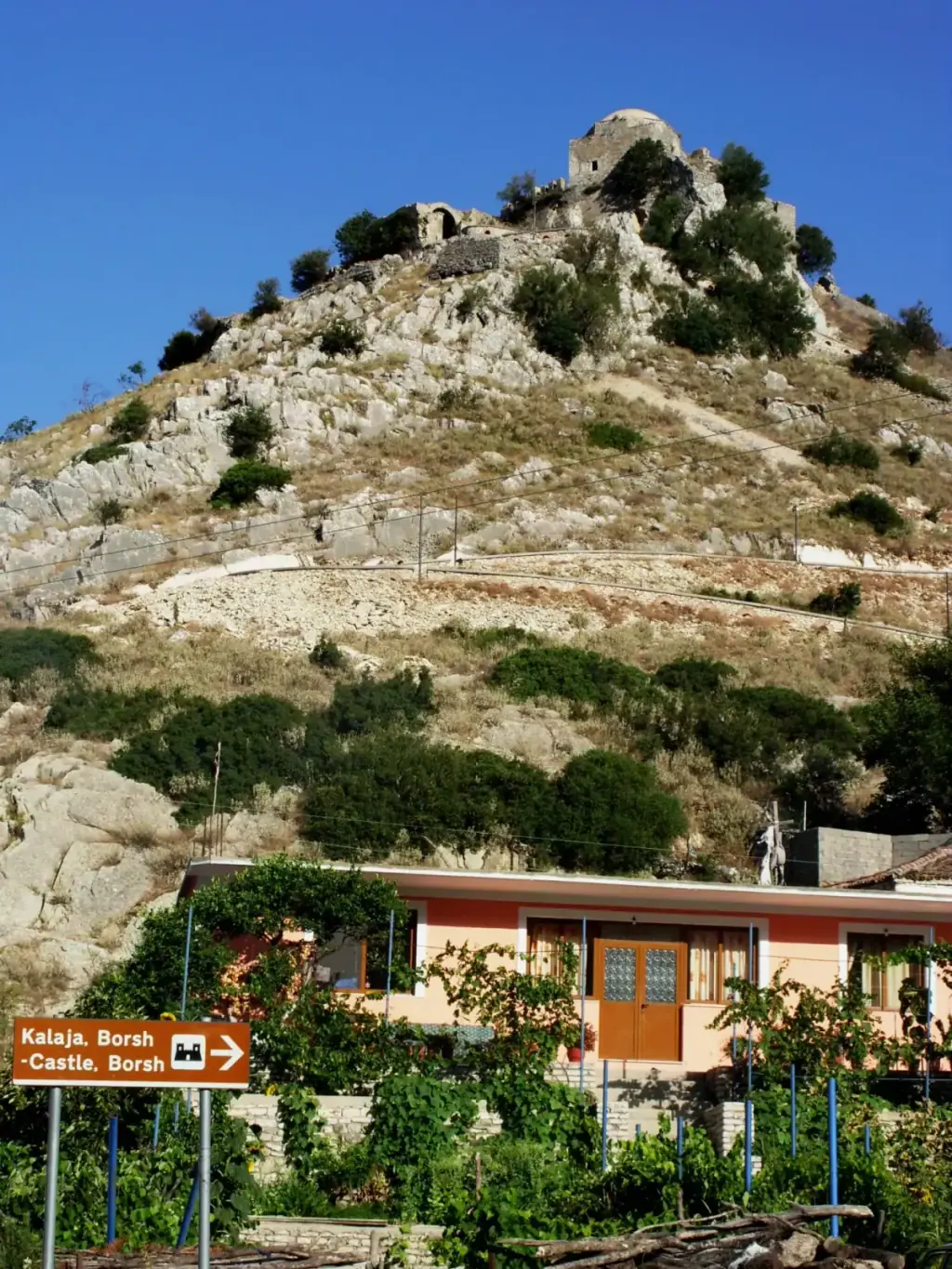
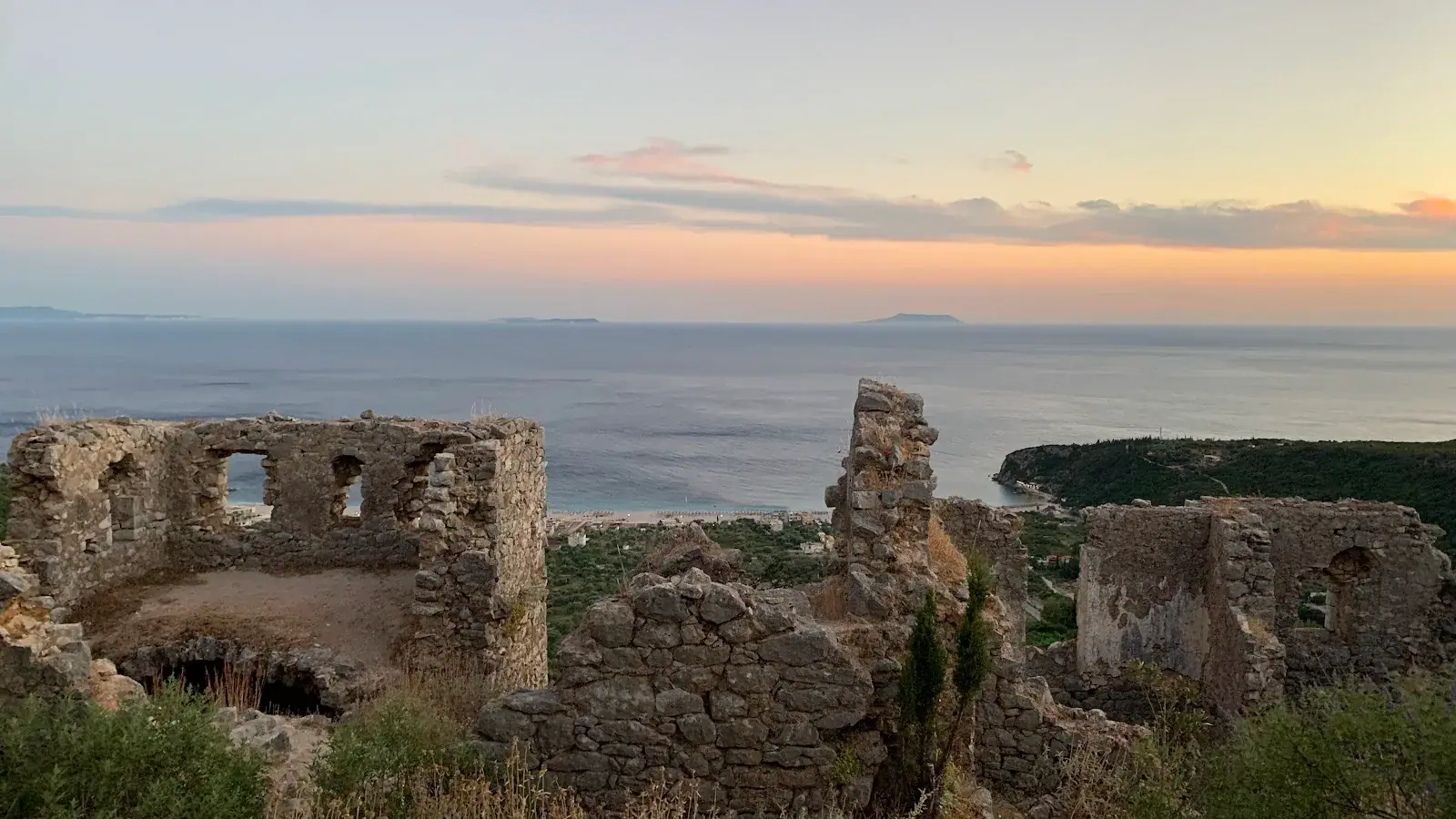
Himara Castle & Old Town
In town, 15–20 min walk uphill from the promenade
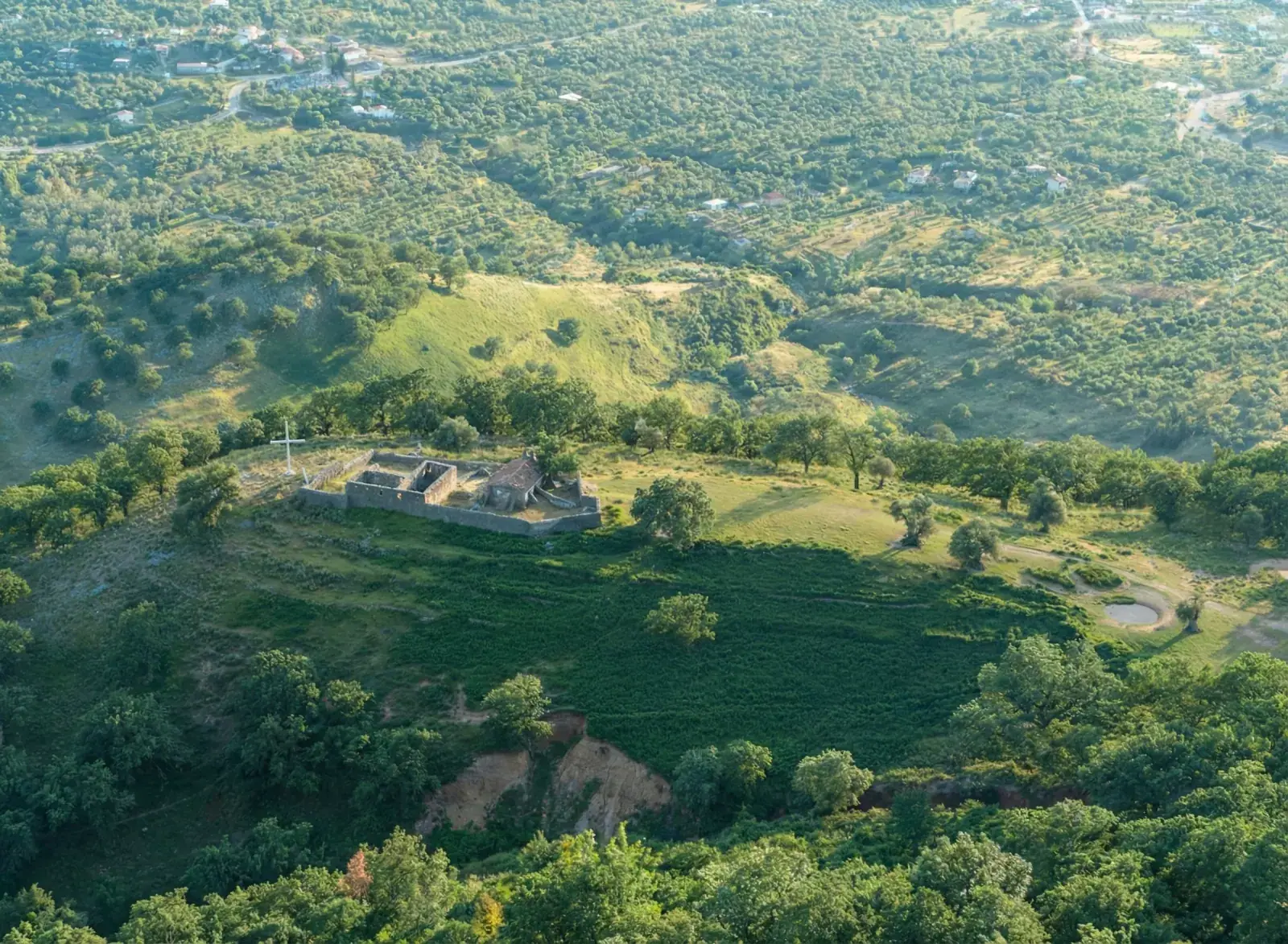
Athali-Berg, oberhalb des Zentrums von Himara
Das Athali-Kloster (albanisch: Manastiri i Athalit, griechisch: Μονή Αθαλιού) liegt hoch oben auf dem Athali-Berg über Himara, eine abgelegene Wallfahrtsstätte aus dem 18. Jahrhundert im byzantinischen Stil, nur über eine 2-stündige Wanderung bergauf erreichbar. Das Kloster ist klein, aber bedeutsam: ein fortwährender Ort orthodoxer Wallfahrt, verbunden mit Berichten über wundersame Heilungen, und an einer der panoramischsten Positionen der Riviera erbaut. Die meisten Reisenden unternehmen den Aufstieg nie, und genau deshalb bleibt es eines der stimmungsvollsten Wahrzeichen der Gegend.
Das Kloster wurde im 18. Jahrhundert während der späten osmanischen Zeit gegründet, als die Bevölkerung von Himara trotz nomineller osmanischer Herrschaft de facto ihre orthodoxe Autonomie behielt. Im traditionellen byzantinischen Baustil errichtet, diente es als Wallfahrtsort für Dorfbewohner aus der gesamten Region Himara. Berichte über wundersame Heilungen, besonders in Verbindung mit der Quelle nahe dem Kloster, ziehen seit über 200 Jahren Pilger an. Der Atheismus der kommunistischen Ära unterdrückte von 1967 bis 1990 die offene religiöse Betätigung, doch das Gebäude überdauerte. Die Wallfahrt wurde seither wieder aufgenommen.
Die byzantinisch geprägte Kapelle aus dem 18. Jahrhundert mit traditioneller Steinbauweise; die Quelle, die mit der Wallfahrtstradition des Klosters verbunden ist; Panoramablicke über Himara, die Spile-Bucht und an klaren Tagen den gesamten Küstenverlauf nördlich Richtung Dhermi und südlich Richtung Porto Palermo; der Weg selbst, alte Maultierpfade durch Olivenhaine und Bergbuschland, mit der Bucht den größten Teil des Aufstiegs über in Sicht.
Nur zu Fuß. Der Weg beginnt in Spile (zentrales Himara) und steigt über 2 Stunden etwa 800 Höhenmeter an, alten Maultierpfaden durch Olivenhaine und Bergbuschland folgend. Eine grobe 4x4-Piste existiert, ist aber für Mietwagen nicht geeignet. Für einen angenehmen Besuch engagieren Sie einen ortskundigen Führer mit Geländewagen, oder beginnen Sie die Wanderung um 6 Uhr, um der Hitze zu entgehen. Bringen Sie 2 l Wasser pro Person und festes Wanderschuhwerk mit.
Frühling (April–Mai) und Herbst (September–Oktober) für kühle Wandertemperaturen. Meiden Sie Juli und August, der ungeschützte Bergweg ist in der Sommerhitze brutal. Starten Sie vor Sonnenaufgang, um in der kühleren Morgenluft abzusteigen.
Geschichte, praktische Tipps und Hinweise zur Route ausführlich, der Artikel, der tiefer geht als diese Seite.
Nicht mit einem normalen Mietwagen. Es existiert eine sehr grobe 4x4-Piste, doch der Untergrund ist zu uneben für normale Fahrzeuge, und Ihre Versicherung deckt Schäden nicht ab. Die meisten Besucher wandern. Wenn Sie fahren müssen, engagieren Sie einen ortskundigen Führer mit einem geeigneten Geländewagen, fragen Sie in Ihrer Unterkunft oder bei einem Tourveranstalter in Himara.
Etwa 2 Stunden bergauf und 1,5 Stunden zurück, je nach Kondition. Der Weg steigt vom Spile Beach aus etwa 800 Höhenmeter an. Planen Sie insgesamt 3–4 Stunden inklusive Zeit am Kloster ein. Bringen Sie 2 l Wasser pro Person und festes Wanderschuhwerk mit und starten Sie im Sommer vor Sonnenaufgang, um der Hitze zu entgehen.
Ja, die Wallfahrt wurde seit 1990 nach dem Ende des staatlich verordneten Atheismus wieder aufgenommen. Die Stätte bleibt ein bedeutendes orthodoxes Wallfahrtsziel, besonders verbunden mit Berichten über wundersame Heilungen an der Quelle nahe dem Kloster. Gottesdienste und Pilgerversammlungen finden an den großen orthodoxen Feiertagen statt; ansonsten ist die Kapelle unbeaufsichtigt.
Frühling (April–Mai) und Herbst (September–Oktober) bieten die besten Bedingungen, kühle Temperaturen und klare Sicht. Meiden Sie Juli und August. Wenn Sie im Sommer wandern, starten Sie vor Sonnenaufgang, um in den kühlen Stunden aufzusteigen und bis zum späten Vormittag abzusteigen. Der ungeschützte Bergweg bietet kaum Schatten.
Fehlt etwas oder ist etwas falsch? Schreib uns an info@himara.net