Himara Castle & Old Town
In town, 15–20 min walk uphill from the promenade
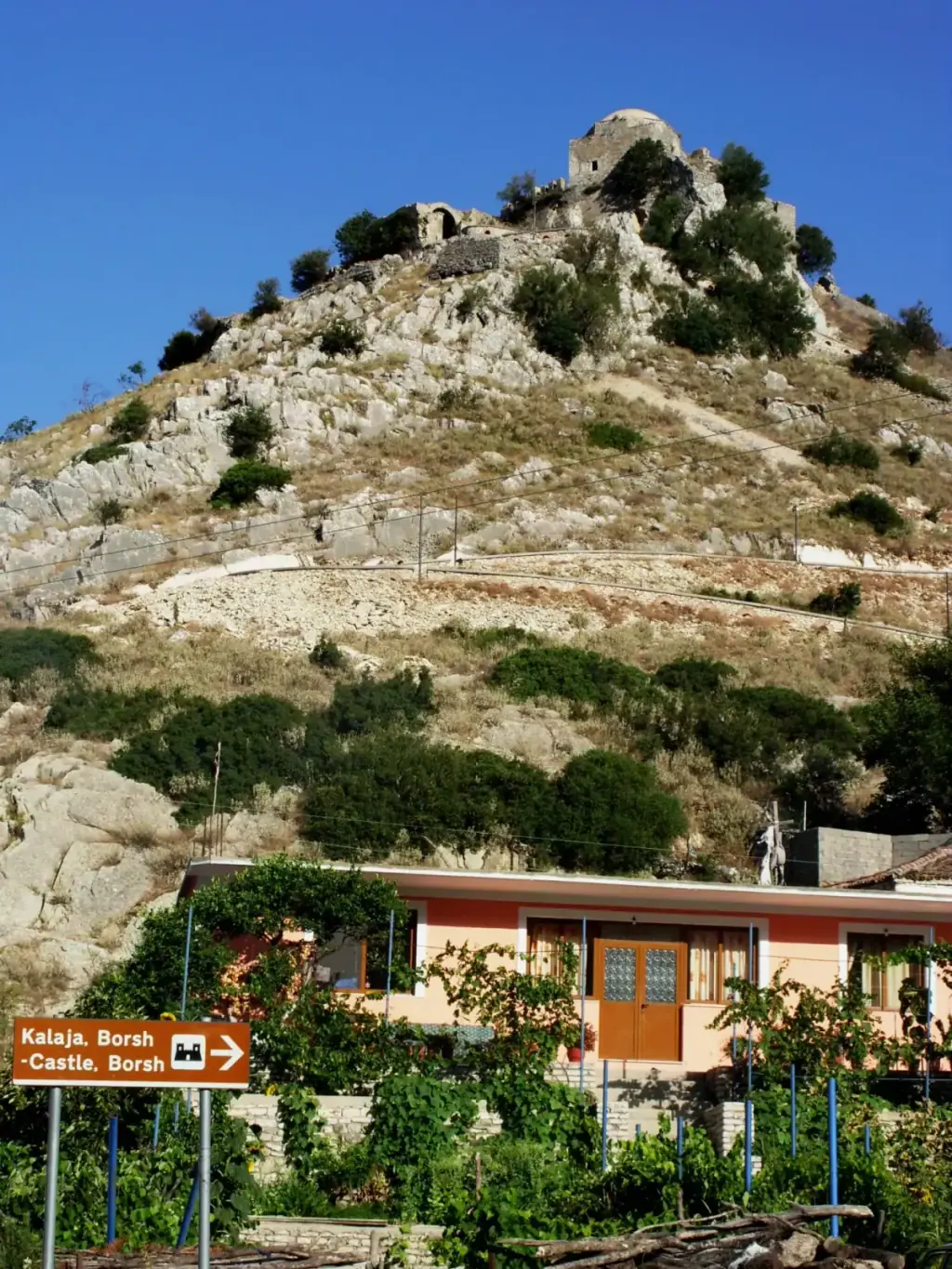
Hügelkuppe oberhalb des Dorfes Borsh, 500 m über dem Meeresspiegel
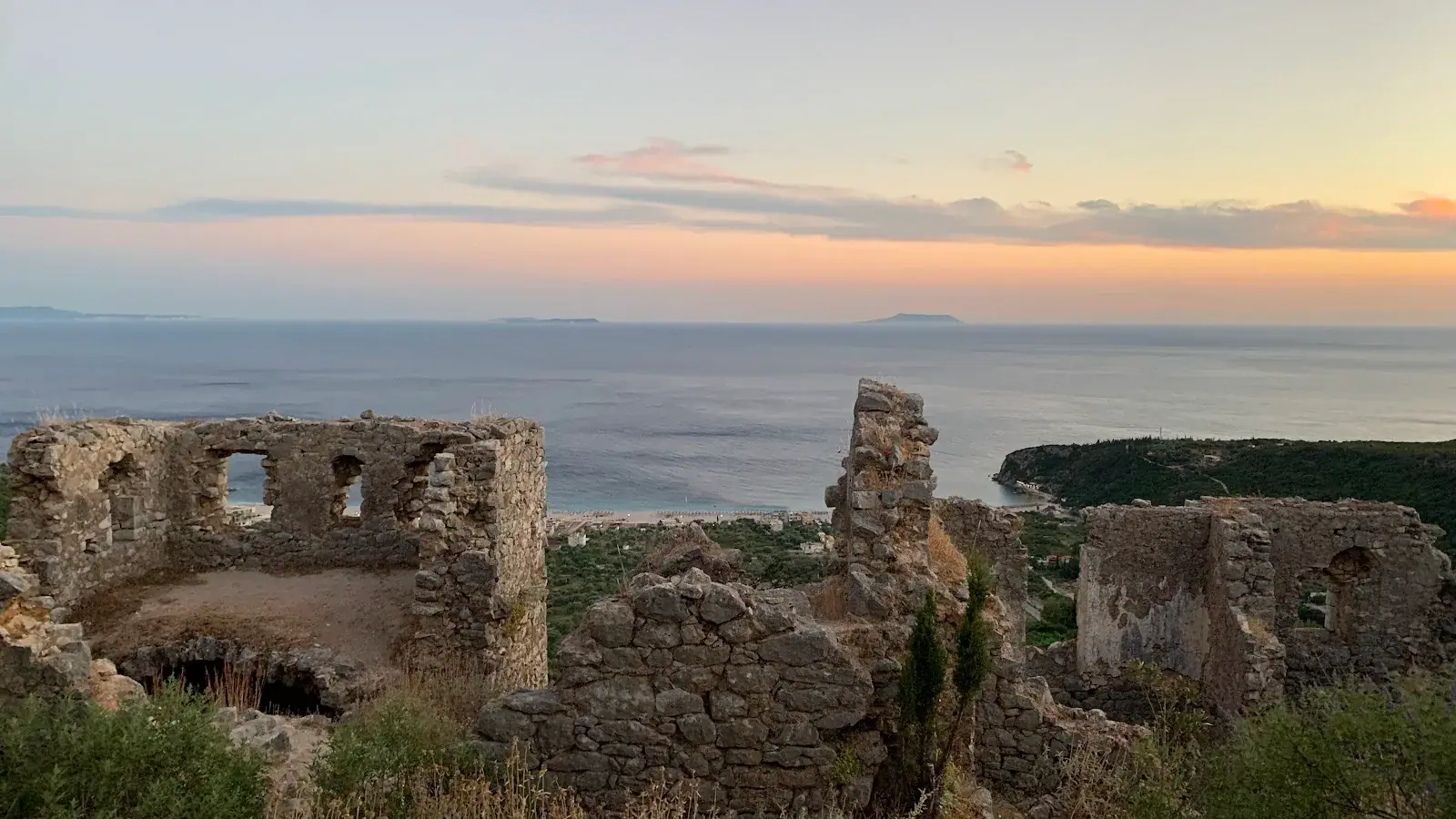
Die Burg von Borsh (albanisch: Kalaja e Sopotit, griechisch: Κάστρο του Σόποτου), historisch als Sopot-Burg bekannt, liegt auf einer felsigen Hügelkuppe 500 Meter über dem Meeresspiegel mit Blick auf den Strand von Borsh, mit 7 km Albaniens längster Sandstreifen. Die Befestigung ist seit dem 4. Jahrhundert v. Chr. durchgehend besetzt, geschichtet von jeder Macht, die die Ionische Küste beherrschte: chaonische Akropolis, byzantinische Festung, venezianischer Vorposten, osmanische Befestigung unter Ali Pascha. Sie liegt nun in malerischer Ruine, frei zu besuchen, und belohnt den steilen Aufstieg mit 360°-Blick über Strand, Tal und Berge.
Die ältesten Mauern stammen aus dem 4. Jahrhundert v. Chr. und sind chaonisch, errichtet von demselben griechischen Stamm, der die Burg Himara im Norden befestigte. Die Byzantiner erweiterten die Befestigungen während ihrer langen Herrschaft über die Riviera. Venezianische Händler hinterließen im 15. Jahrhundert ihre Spuren, bevor die Osmanen sie einnahmen. Ali Pascha baute Teile im frühen 19. Jahrhundert wieder auf, in derselben Zeit wie Porto Palermo. Die Stätte wurde nach dem Zusammenbruch des Osmanischen Reiches aufgegeben und verwittert seither frei, was sie so beeindruckend wirken lässt.
Geschichtetes Mauerwerk, bei dem sich die Mauern jeder Besatzung mit den vorherigen überlagern; der erhaltene Torbogen am südlichen Zugang; ruinöse Fundamente einer byzantinischen Kapelle nahe dem Gipfel; 360°-Blicke, der Borsh Beach, der sich 7 km unterhalb nach Westen erstreckt, das Tal des Borsh-Flusses, das ins Landesinnere schneidet, die dahinter aufragenden Berge. An klaren Tagen reicht der Blick nach Süden bis Saranda.
Fahren Sie von Himara aus südlich auf der SH8 (~20 km, 25 Min.) oder nehmen Sie den Minibus Himara–Saranda nach Borsh. Vom Dorf aus führt eine schmale asphaltierte Straße ein Stück bergauf; Sie können näher an die Burg heranfahren als bis zum Dorfweg, wodurch sich die Wanderung auf 15–20 Minuten verkürzt. Das letzte Stück erfolgt stets zu Fuß über Kopfsteinpflaster, 250 Meter Höhengewinn auf etwa 1,3 km, ohne Schatten.
Früher Morgen (vor 9 Uhr) oder später Nachmittag (nach 17 Uhr). Der Kopfsteinpflasterweg ist ungeschützt und mittags im Sommer brutal. Verbinden Sie den Besuch mit dem Borsh Beach für den Nachmittag. Sonnenliegen 7–10 €, mehrere Restaurants am Strand.
Geschichte, praktische Tipps und Hinweise zur Route ausführlich, der Artikel, der tiefer geht als diese Seite.
Mittel. Der Kopfsteinpflasterweg gewinnt auf etwa 1,3 km 250 Meter an Höhe und dauert 30–60 Minuten einfach. Die größte Herausforderung ist der fehlende Schatten, der ungeschützte Hang ist an heißen Tagen erbarmungslos. Starten Sie früh oder besuchen Sie ihn am späten Nachmittag. Sie können ein Stück hinauffahren und die Wanderung auf 15–20 Minuten verkürzen.
Ja, der Besuch ist kostenlos. Kein Tor, keine Tickets, keine festen Öffnungszeiten. Die Burg liegt als offene Ruine da, und Sie können sie frei erkunden. Anders als bei Porto Palermo und der Burg Himara gibt es keinen geregelten Zugang. Bringen Sie Wasser und festes Schuhwerk mit, der Weg ist auf dem gesamten Anstieg unebenes Kopfsteinpflaster.
Die ältesten Befestigungen stammen aus dem 4. Jahrhundert v. Chr., errichtet von den chaonischen Griechen, die diese Küste beherrschten. Aufeinanderfolgende byzantinische, venezianische und osmanische Besatzungen bauten die Mauern über mehr als 2.000 Jahre hinweg um und erweiterten sie. Sie ist eine der ältesten durchgehend genutzten Verteidigungsanlagen an der Albanischen Riviera.
Ja, das ist die übliche Tour. Wandern Sie zur Burg in den kühlen Morgenstunden (insgesamt 2–3 Stunden) und steigen Sie dann für den Nachmittag zum Borsh Beach hinab. Sonnenliegen kosten 700–1.000 ALL (~7–10 €) zur Miete, und mehrere Restaurants am Strand servieren frische Meeresfrüchte. Der Borsh-Wasserfall liegt 20 Minuten Fahrt weiter südlich für einen längeren Tag.
Fehlt etwas oder ist etwas falsch? Schreib uns an info@himara.net