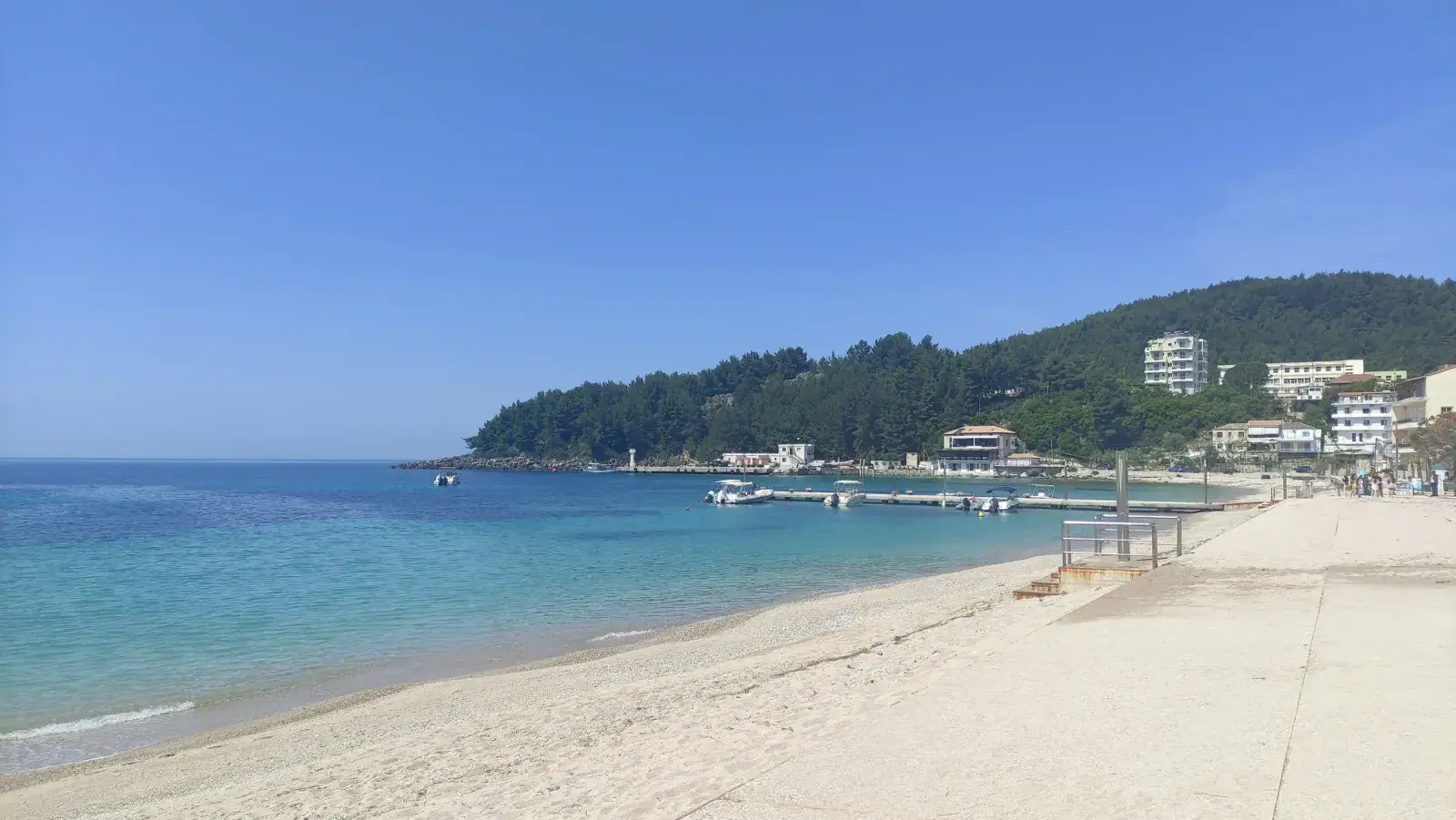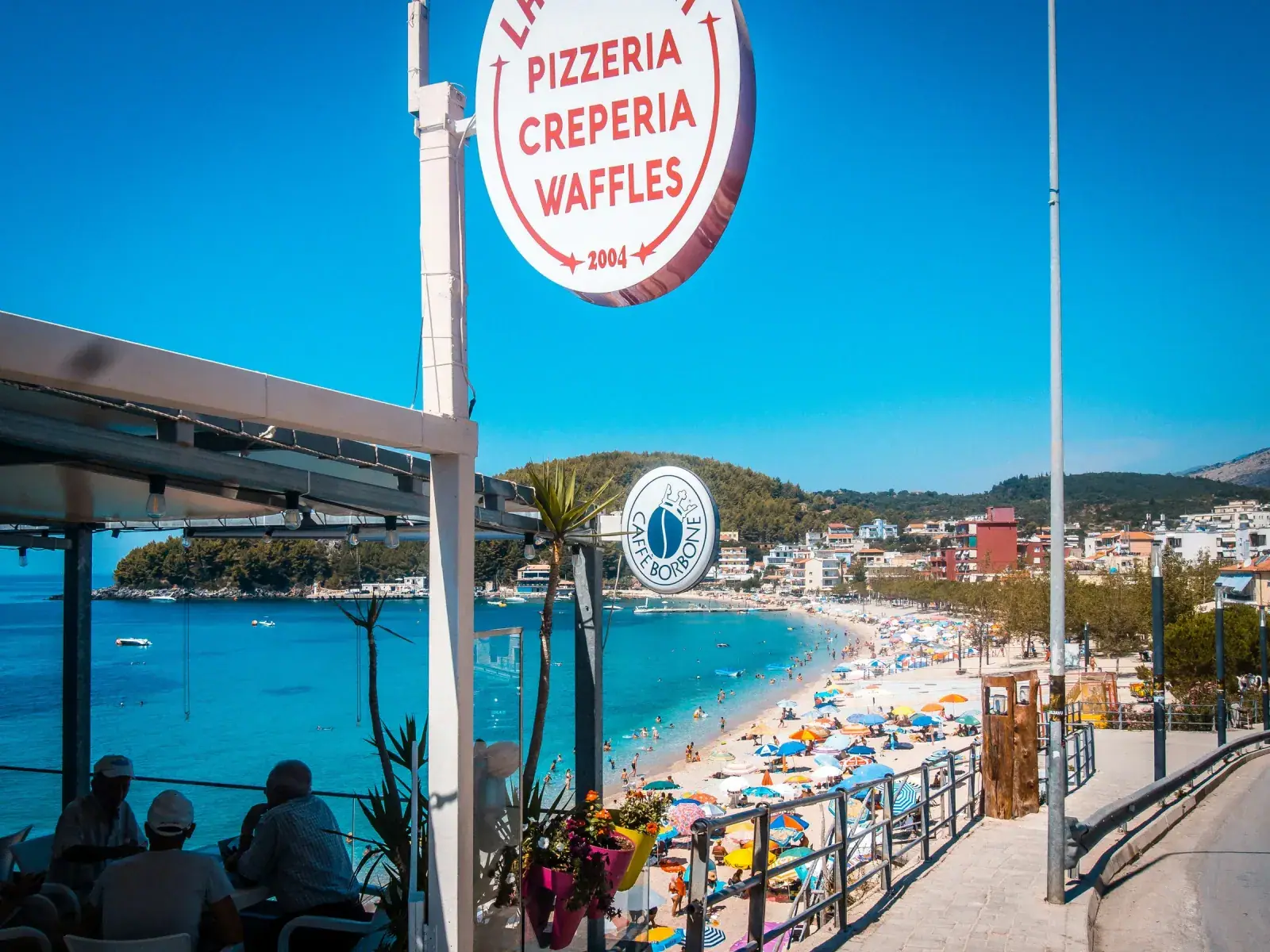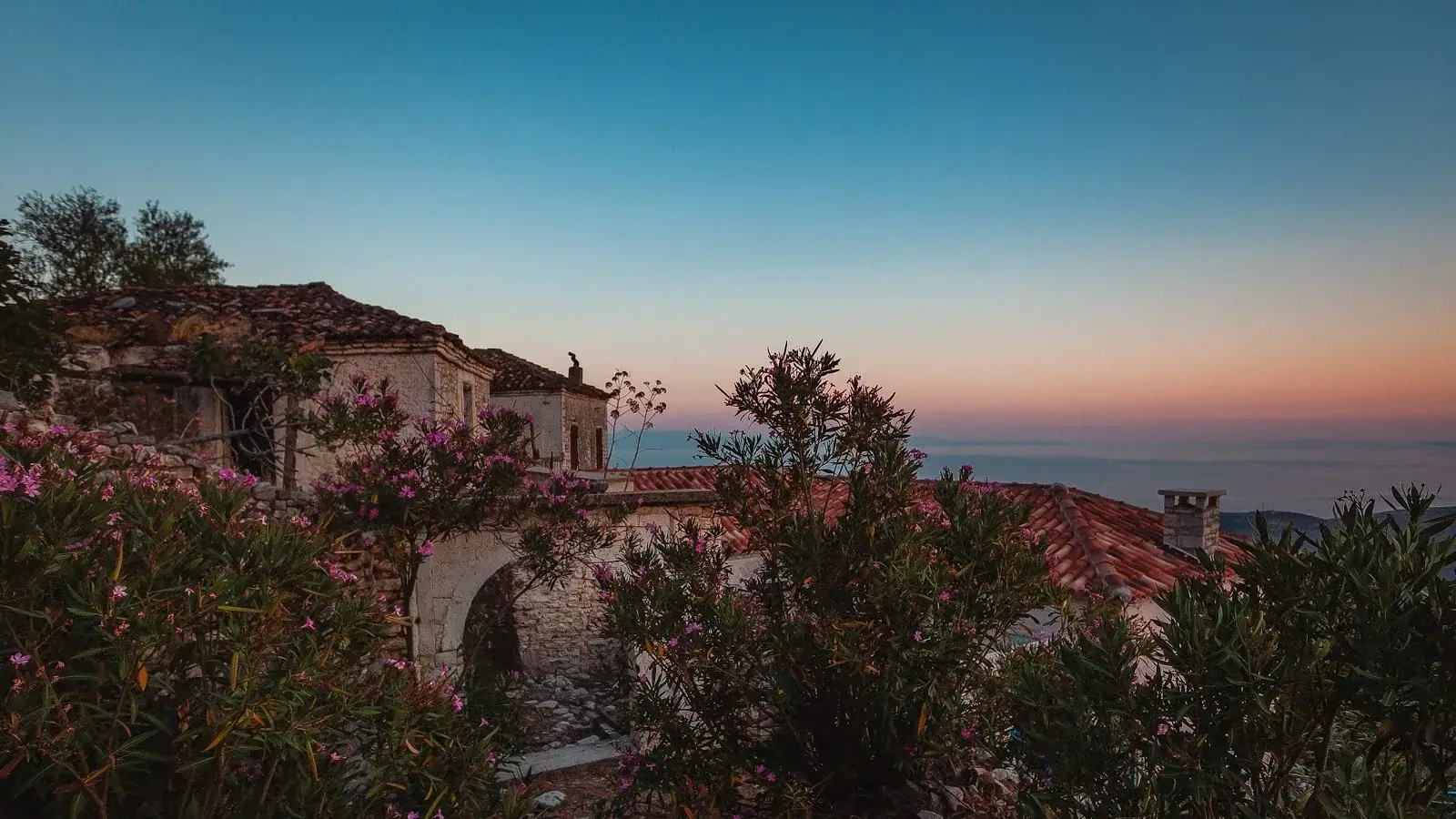
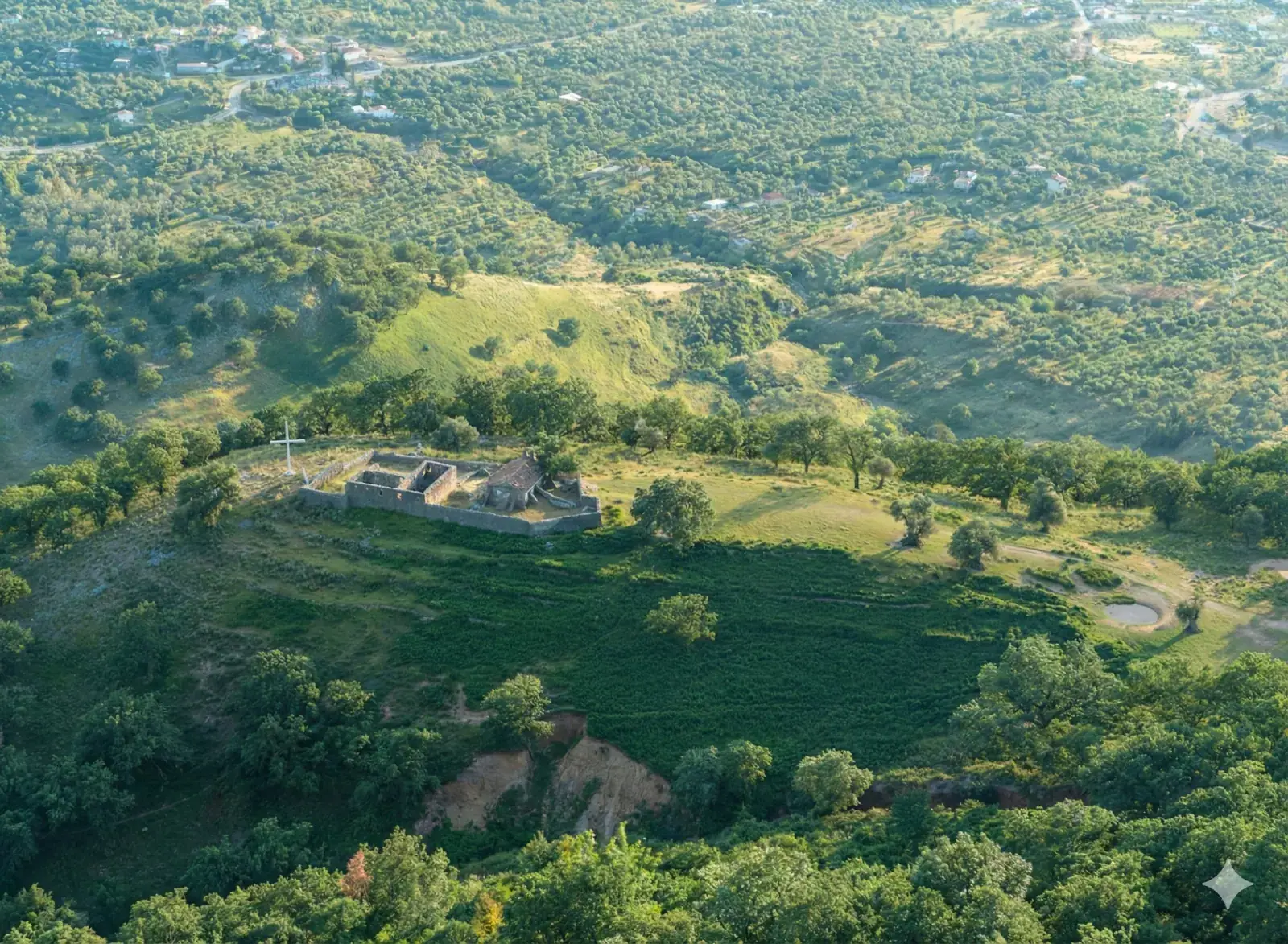
Every summer, Himara's promenade fills with restaurants competing for tourist attention, multilingual menus, photos of food on display boards, staff beckoning you in. Those places are fine. But the restaurants where year-round residents and returning diaspora families actually eat are one street back, uphill in the old town, or tucked into neighborhoods most visitors never find. The food is better, the prices are lower, and the experience is closer to how people actually live on this coast.
Compare hotels, apartments, and Vrbo rentals on the map. Powered by Stay22.
Quick Facts
| Detail | Info |
|---|---|
| Local meal price range | 500-1,500 ALL (5-15€) per person |
| Tourist promenade meal | 1,500-3,000 ALL (15-30€) per person |
| Typical savings | 40-60% less at local spots |
| Best time to spot locals | Sunday lunch, 1:00-3:00 PM |
| Payment | Cash only at most local spots |
| Useful phrase | "Ku hani ju?" (Where do you eat?) |
| Language on menus | Albanian, Greek, or no menu at all |
How to Spot a Local Spot
The signs are consistent:
- No English menu, written in Albanian or Greek, handwritten, or nonexistent. The waiter tells you what's available. Laminated menus with photos in four languages? Wrong place.
- Fewer than 10 tables, sometimes four or five, in a courtyard or on a narrow terrace.
- The owner is also the cook, or the cook's spouse takes your order. There is no hostess stand.
- Packed with Albanian families on Sunday, the single most reliable indicator. Three generations at the table on a Sunday afternoon means the food is good.
- No TripAdvisor sticker, no Google reviews QR code, no Instagram handle on the napkins.
- Raki arrives without you asking, complimentary raki before or after the meal is standard at local spots. Tourist restaurants sometimes charge for it.
For a full overview of every dining option, see our restaurant guide. But if you want to eat the way Himariot families eat. You have to leave the waterfront.
Where to Look: Neighborhoods Tourists Miss
Old Town / Upper Himara
The old town above the main road is where Himara's oldest families live, stone houses, narrow alleys, cats on every wall. A few family-run tavernas operate up here, usually in converted ground floors or courtyards. The food is traditional: tave kosi, slow-cooked lamb, grilled vegetables from the garden, house wine from barrels. Prices are the lowest in Himara because there's no waterfront premium and no foot traffic to inflate demand. A full meal with wine for two can come in under 2,000 ALL (20€).
The walk uphill filters out most tourists, which is exactly why the food stays honest. If you see hand-painted signs in Greek pointing to a terrace with five tables, sit down.
Potam Area
Potam is the residential neighborhood between Himara's center and Livadhi Beach. A handful of small restaurants here serve food that competes with anything on the waterfront at lower prices. The vibe is neighborhood dining: regulars know each other, the owner might sit down and have a raki with you.
This is where returning diaspora families. Himariots who live in Athens or Tirana most of the year. Go when they come back for summer. They want the cooking they grew up with, done right. Follow them.
Spile Area
A few restaurants along the Spile coastal walk sit slightly off the main path. You have to know they're there or stumble on them between beaches. The seafood tends to be fresher and cheaper because owners often buy directly from fishermen. For more on Himara's seafood scene, see our seafood guide.
Behind the Promenade
The simplest trick: walk one street back from the waterfront. Second-row restaurants don't pay waterfront rent, which means lower prices for the same ingredients, often from the same suppliers. A grilled fish plate that costs 1,500 ALL on the promenade might be 900 ALL one block inland. The view disappears, but the food often improves because these places survive on repeat local customers, not passing tourists.
What Locals Order Differently
Locals don't eat the same way tourists do. The default is not "one main course each."
Meze style, always. Multiple small plates for the table. Greek salad, grilled peppers, tzatziki, feta with olive oil, olives, bread, eaten communally. Main dishes come after, if at all. More social and cheaper than individual entrees.
House wine by the carafe. Nobody orders a labeled bottle. House wine comes in a carafe for 300-500 ALL (3-5€) per half liter. Rough, honest, perfect with grilled food.
Raki before the meal. A small glass before food is the standard opener, digestive, ceremonial, non-negotiable. At true local spots, this arrives free.
Slower pace. Sunday lunch lasts two to three hours. The bill comes when you ask for it, not before.
The bill argument. Every Albanian at the table will fight to pay. This is genuine. If you're dining with locals, insist once, then accept gracefully.
Dishes to Seek Out at Local Spots
The traditional Albanian dishes you'll find at local restaurants differ from the tourist-friendly greatest hits. Here's what to order when the waiter asks "cfare doni?" (what do you want?):
Tave kosi, lamb baked in a yogurt and egg custard until golden on top. This is Albania's national dish and most local tavernas in upper Himara do a version. Rich, tangy, deeply savory. 600-900 ALL (6-9€).
Qofte, grilled meatballs, herbed and slightly charred. Every family has their recipe. Served with grilled peppers, bread, and raw onion. 400-600 ALL (4-6€).
Japrak, grape leaves stuffed with rice, herbs, and sometimes ground meat. The vegetarian version (with rice and lemon) is more common at home-style restaurants. 400-700 ALL (4-7€).
Fresh fish, grilled simply, at local spots, the fish is whatever the boat brought in that morning. The waiter tells you what's available. It comes whole, grilled with olive oil, lemon, and salt. No sauce, no garnish, no need for either. 800-1,200 ALL (8-12€) for a whole fish.
Byrek from a furre, this is breakfast and sometimes lunch. A furre (bakery) makes byrek in large trays, spinach, cheese, or meat filling in phyllo dough, and sells it by weight or by piece. This is not a restaurant dish. Locals buy byrek from the bakery, not from a restaurant menu. 80-150 ALL (0.80-1.50€) per piece.
Breakfast Like a Local
Skip the hotel breakfast buffet. Walk to the nearest furre buke (bakery) and buy a byrek, spinach (spinaq) or cheese (djath). Pair it with a glass of dhalle, a salty yogurt drink that's Albania's answer to Turkish ayran. Flaky pastry plus cold, tangy yogurt is the default Albanian breakfast: under 250 ALL (2.50€), and you won't be hungry until mid-afternoon.
If you want to sit down, find a cafe and order a macchiato, not cappuccino, that's the default coffee order across Albania. 100-150 ALL (1-1.50€). For a full rundown of morning options, see our breakfast guide.
The Price Difference Is Real
The quality gap between a 1,000 ALL meal at a local taverna and a 2,500 ALL meal on the promenade is often zero, or inverted.
| Meal | Local Spot | Promenade |
|---|---|---|
| Grilled fish plate with salad | 800-1,200 ALL (8-12€) | 1,500-2,500 ALL (15-25€) |
| Meat meze for two | 1,000-1,500 ALL (10-15€) | 2,000-3,000 ALL (20-30€) |
| Byrek + dhalle (breakfast) | 150-250 ALL (1.50-2.50€) | N/A (not served) |
| House wine (0.5L carafe) | 300-500 ALL (3-5€) | 500-800 ALL (5-8€) |
| Full dinner for two with wine | 2,000-3,000 ALL (20-30€) | 4,000-6,000 ALL (40-60€) |
Over a week, a couple eating at local spots saves 50-70€ per day, without sacrificing anything except a sea view. For more on managing food costs, see our food budget guide.
How to Find These Places
You won't find most of them on Google Maps. Here's what works:
Ask your host. The single best strategy. Ask the person running your accommodation: "Ku hani ju?", where do you eat? Not "where should I eat" (they'll send you to the promenade). The distinction matters.
Follow Greek-speaking families on Sunday. Between 12:00 and 2:00 PM on Sundays, multi-generational families head to their regular spots. A group of 8-12 people walking purposefully uphill? They know where they're going.
Check Google Maps for Greek-language reviews. A restaurant with 50 reviews all in Greek and a 4.8 rating is a stronger signal than 500 reviews in English.
Walk the back streets. One or two blocks behind the waterfront, or up toward the old town. Courtyard with a few tables, laundry drying overhead, older woman carrying plates, you've found it.
Go at local hours. Lunch at 1:30-2:30 PM, dinner at 9:00-10:00 PM. Eating at 6:00 PM teaches you nothing about where locals go.
FAQ
Are local restaurants safe for tourists?
Completely. You might face a language barrier, but food safety standards are the same. Point at what other tables are eating, use Google Translate, or say "cfare keni sot?" (what do you have today?) and let the waiter decide.
Do I need to speak Albanian or Greek?
No, but a few phrases help. "Ku hani ju?" (where do you eat?), "cfare keni?" (what do you have?), and "shume e mire" (very good) earn genuine warmth. Greek is more common than English in upper Himara.
Will local restaurants have English menus?
Usually not. Many tell you verbally what's available. This means the kitchen cooks what's fresh that day rather than maintaining a fixed menu, it's a good sign, not a bad one.
What if I have dietary restrictions?
Vegetarian options are plentiful, grilled vegetables, Greek salad, cheese byrek, japrak, fergese, beans. For allergies, use Google Translate to explain directly. See our guide on eating in Himara for more on navigating menus.
When are local restaurants open?
Most operate late May through September. Some in the old town and Potam stay open year-round with limited hours. Sunday lunch is the most reliable time to find everything open and full.
Should I tip at local restaurants?
Rounding up to the nearest 100 or 200 lek is appreciated. Leaving 5-10% is generous by local standards. At family-run places, a sincere "shume e mire" means as much as the tip.
How do I get to the old town restaurants?
Walk uphill from the main road (SH8) toward the old town and castle. The climb takes 10-15 minutes and is steep. The reward is food at half the promenade price, served in stone courtyards overlooking the bay.