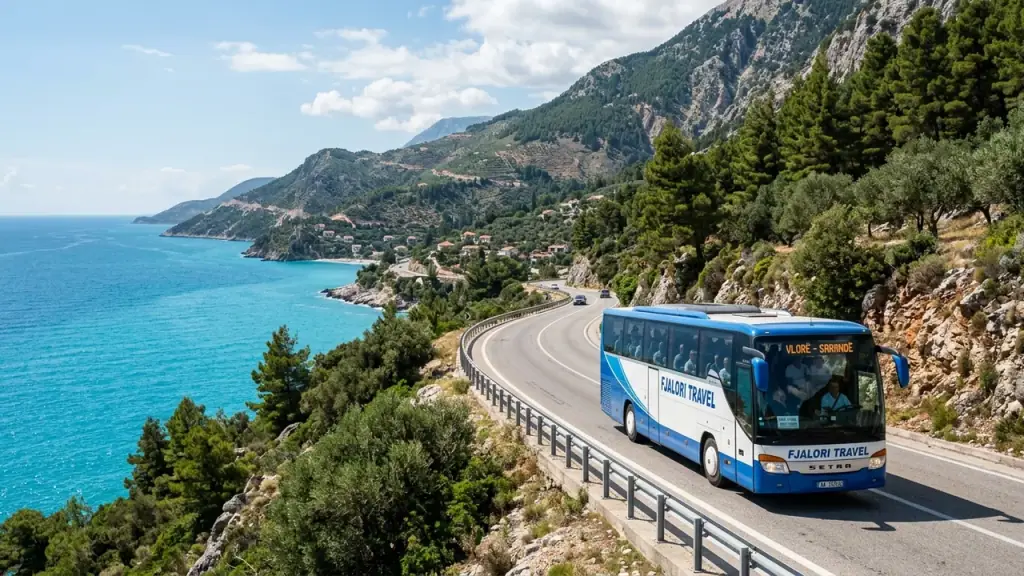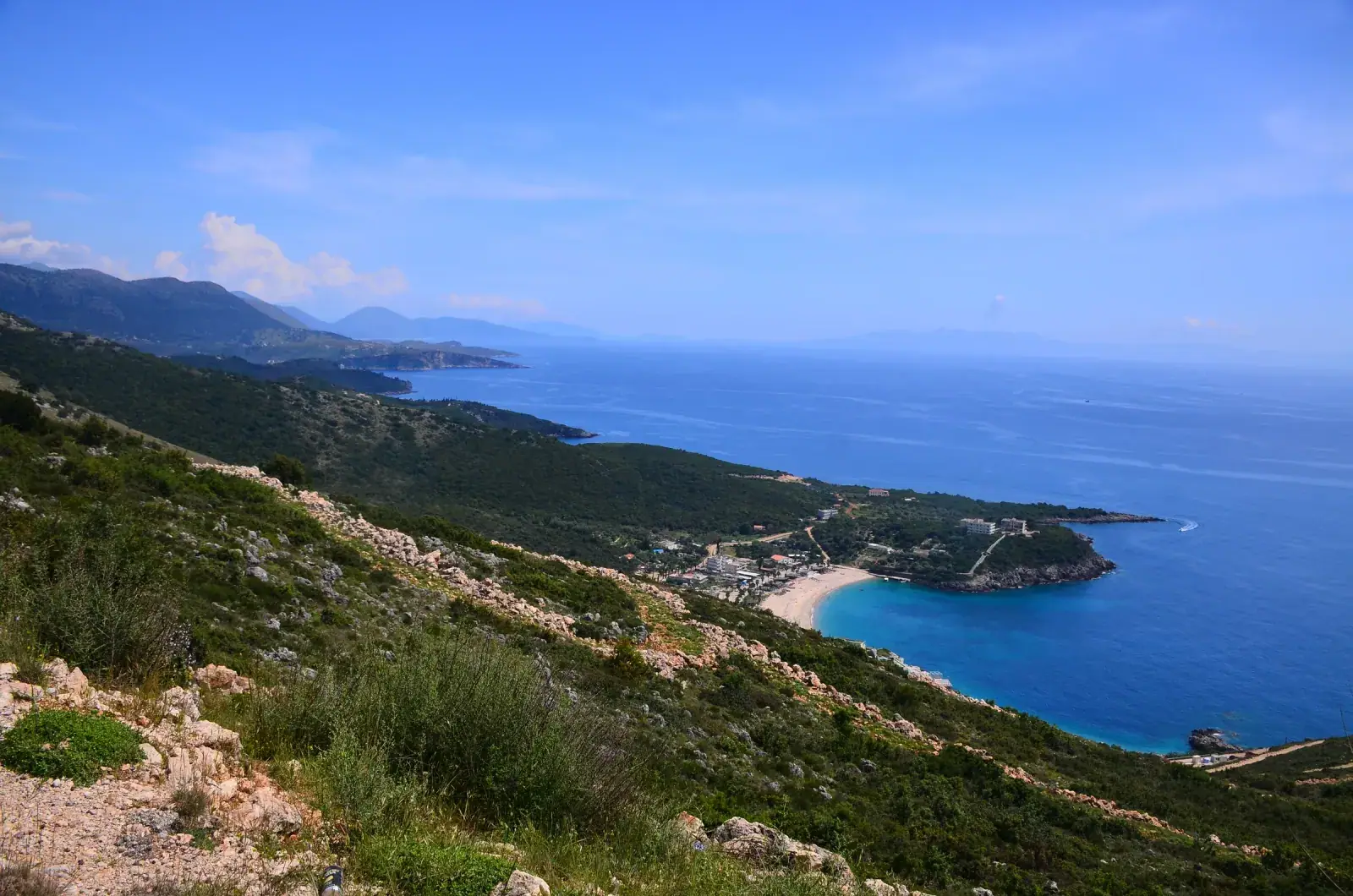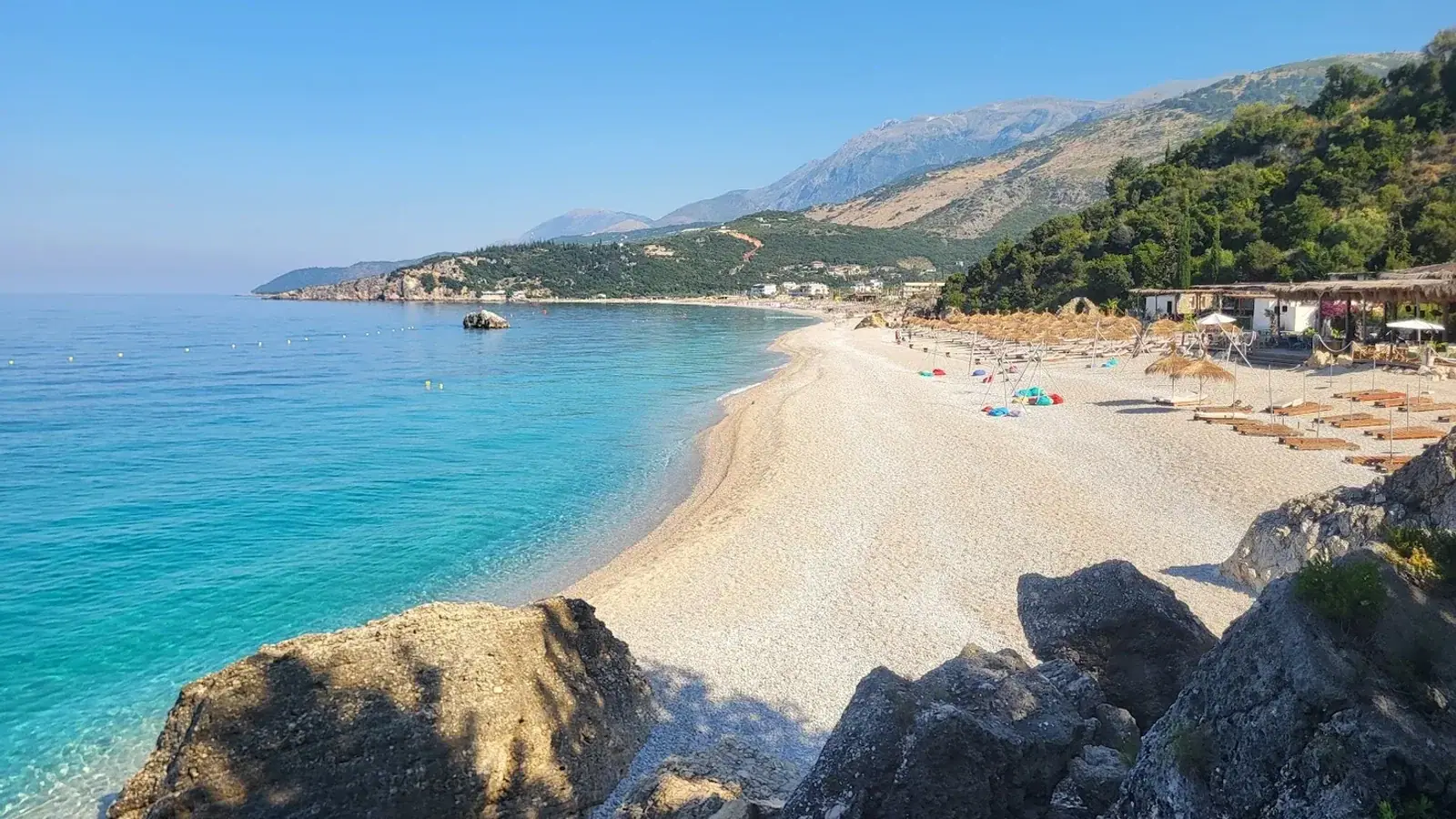
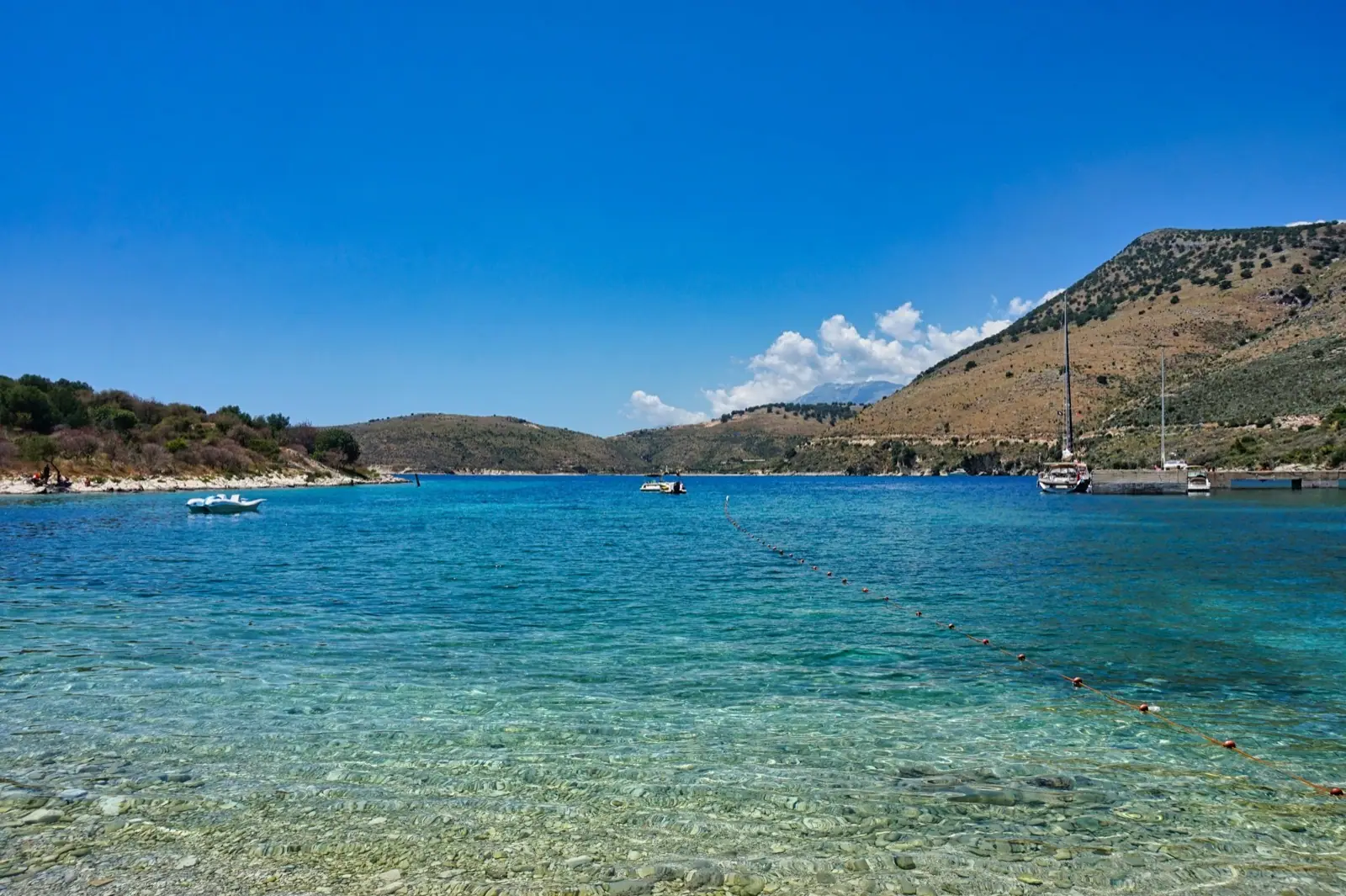
If you are traveling vlora to saranda bus. Plan this as a variable coastal run, not a fixed timetable sprint. Current route data shows an average around 3h, but real outcomes can range from roughly 2h to 4h depending on stops, congestion, and seasonality. The route is absolutely doable and usually good value, but only if you plan with realistic buffers.
This guide gives you the execution version: times, costs in lek and euro, stop logic, and fallback thresholds that prevent missed check-ins and stressful arrival days.
Compare hotels, apartments, and Vrbo rentals on the map. Powered by Stay22.
Quick Summary
| Item | Practical baseline |
|---|---|
| Average published duration | ~3h (180 minutes) |
| Typical observed range | ~2h to ~4h |
| Typical ticket range | 1,200 to 1,500 ALL (12EUR to 15EUR) |
| Daily departures (sample) | ~6 |
| Earliest listed departure (sample) | ~07:00 |
| Latest listed departure (sample) | ~16:00 |
| Distance baseline | ~160.7 km |
The Core Answer: How to Ride Vlora to Saranda Well
- Take an early or mid-morning departure unless you specifically need late arrival.
- Budget for
3h 30m to 4h 30mfrom terminal to accommodation, not just in-bus time. - Keep at least
2,000 ALL (20EUR)in small notes for local friction. - If you have any hard same-day commitment, set a fallback trigger before you board.
Local Naming and Ticket Labels
| Place | Greek | Albanian | Common label on platforms |
|---|---|---|---|
| Vlora | Αυλώνας | Vlorë | Vlore / Vlorë |
| Saranda | Άγιοι Σαράντα | Sarandë | Saranda / Sarandë |
| Himara | Χειμάρρα | Himarë | Himare |
| Dhermi | Δρυμάδες | Dhërmi | Dhermi |
You may see mixed spelling. Confirm destination and operator name before boarding, not only the city spelling.
Route Data You Can Actually Use
From published Vlora-Saranda line statistics and route metadata:
| Metric | Current planning value |
|---|---|
| Average trip duration | 180 minutes |
| Minimum observed duration | 120 minutes |
| Maximum observed duration | 240 minutes |
| Minimum ticket price | 12EUR (1,200 ALL) |
| Maximum ticket price | 15EUR (1,500 ALL) |
| Daily buses on sampled schedule | 6 |
| Earliest sampled departure | 07:00 |
| Latest sampled departure | 16:00 |
| Road distance | ~160.7 km |
These are planning anchors, not guarantees. Treat them as your decision framework.
Budget Planner (ALL + EUR)
| Traveler profile | Transport plan | One-way spend estimate |
|---|---|---|
| Backpacker | Intercity bus only | 1,200 to 2,200 ALL (12EUR to 22EUR) |
| Couple | Bus + occasional taxi at either end | 2,500 to 5,500 ALL (25EUR to 55EUR) |
| Family | Bus if flexible, transfer if time-critical | 4,000 to 12,000 ALL (40EUR to 120EUR) |
| Digital nomad | Bus plus backup transfer budget | 3,000 to 8,000 ALL (30EUR to 80EUR) |
Departure Strategy: Which Bus Window to Choose
Early window (around first departures)
Best when:
- You want maximum fallback options.
- You need an afternoon check-in in Saranda.
- You are linking to activities the same day.
Midday window
Best when:
- You have no tight hard commitment.
- You prefer slower travel mornings.
Late window (closer to final departures)
Use carefully:
- Good only for fully flexible arrivals.
- Higher risk of reduced fallback options if delays stack.
Why This Route Feels Longer Than the Map Suggests
Three reasons:
- Coastal stop behavior: boarding, short waits, and passenger turnover add cumulative minutes.
- Peak-season congestion: beach-corridor pressure can expand each segment.
- Arrival friction: getting from station to accommodation can add 10 to 40 minutes.
That is why your practical end-to-end window should be wider than the in-bus estimate.
Buffer Engineering for Real Itineraries
Use one of these planning formulas:
| Itinerary type | Formula |
|---|---|
| Flexible day | Published average + 30 minutes |
| Standard hotel check-in day | Published average + 60 minutes |
| Hard same-day event | Published average + 90 minutes and backup mode |
For Vlora -> Saranda, that means:
- Flexible: plan around
3h 30m - Standard: plan around
4h - Hard deadline: plan around
4h 30mwith fallback
Fallback Logic That Prevents Missed Plans
Set this before you leave:
- If delay projection exceeds your acceptable arrival threshold, switch to taxi/private transfer for the final segment at the first good hub stop.
- If you miss a check-in window, message accommodation immediately and secure late-arrival confirmation.
A pre-decided fallback is better than improvised panic decisions at sunset.
Safety and Comfort Notes
FCDO Albania guidance highlights road-safety and driving-risk considerations in-country. Even as a bus passenger, this matters for expectation-setting:
- Movement may be less predictable than rigid app schedules imply.
- Night transfers can feel slower due to visibility and stop behavior.
- Keep valuables close in busy terminals and on boarding.
What to pack for this corridor
- At least 1L water per person
- Sun protection in warm months
- Power bank + charging cable
- Small cash notes in ALL
- Light layer for AC or evening wind
Bus vs Taxi vs Transfer: Decision Table
| Your constraint | Best choice | Why |
|---|---|---|
| Lowest cost | Bus | Cheapest per person |
| Hard arrival deadline | Transfer | Best schedule control |
| Family with heavy bags | Transfer | Less transfer friction |
| Solo traveler, no deadline | Bus | High value and simple |
| Mid-budget with some urgency | Hybrid | Controlled risk at moderate cost |
Station and Last-Mile Strategy in Saranda
Do not stop planning at "bus arrival." Finish the route design:
- Confirm where your line typically drops passengers.
- Pre-pin accommodation location.
- Decide whether to walk, take a short taxi hop, or use local transport.
- Message host/hotel with a realistic arrival band, not an exact minute.
This last-mile discipline is where many otherwise-good itineraries fail.
High-Season vs Shoulder-Season Expectations
| Season | Reliability pattern | Price pressure |
|---|---|---|
| July-August | Highest delay risk | Stronger at popular time slots |
| May-June | Usually manageable | Moderate |
| September-October | Often smoother than peak | Moderate to lower |
| Winter months | Lower demand, fewer windows | Variable by service |
Practical Examples
Example A: Budget traveler, no hard deadline
- Take standard bus.
- Budget
1,500 to 2,000 ALL (15EUR to 20EUR)all-in for small extras. - Keep arrival expectation broad.
Example B: Couple with dinner reservation at 19:00
- Choose earlier departure than you think you need.
- Add
+60 minutesbuffer minimum. - Have taxi fallback ready if schedule drifts.
Example C: Family reaching Saranda for a next-day ferry
- Bus is usually fine with flexible evening arrival.
- If kids are tired or weather degrades, switch early to transfer to protect recovery time.
Stop Strategy: Where People Lose Time
Most delay complaints on this corridor are not about one dramatic event. They come from small stop-level inefficiencies that compound.
| Stop-level issue | Time penalty pattern | Fix |
|---|---|---|
| Arriving at the wrong pickup point | 10 to 40 minutes | Save and verify exact map pin in advance |
| Slow luggage loading on full buses | 5 to 20 minutes | Arrive early and board promptly |
| Last-minute payment friction | 5 to 15 minutes | Carry small ALL notes and backup card |
| Unplanned last-mile search in Saranda | 10 to 30 minutes | Pre-pin accommodation and route |
Practical stop rule
Treat every stop interaction as part of total journey time. If you optimize only the in-bus segment, your door-to-door estimate will be wrong.
If You Need to Continue South or Cross to Corfu
Many travelers ride Vlora -> Saranda and then continue to:
- Ksamil
- Himara in reverse on another day
- Corfu ferries via Saranda port If that is your plan, do not cut your arrival margin too tightly. Port-day and transfer-day operations can both drift, and drift compounds quickly when you chain transport modes.
Scenario Planning Matrix
| Scenario | Best plan | Why |
|---|---|---|
| You must check in by 15:00 | Early departure + strong buffer | Highest protection against traffic variance |
| You are on a strict budget | Standard bus + lean extras | Keeps spend near fare floor |
| You have heavy luggage | Bus with early arrival at stop or transfer | Reduces load-time stress |
| You are linking to ferry next day | Bus is usually enough | Overnight buffer absorbs variance |
Rule for linked itineraries
If your next segment is critical. Avoid same-day razor-thin handoffs. A cheap bus fare does not compensate for a missed ferry or forced emergency taxi.
Last-Mile Arrival Plan in Saranda
Your transport day is not finished when the bus reaches the city. Build a last-mile plan in advance:
- Confirm your accommodation pin and walking difficulty.
- Decide in advance if you will walk, use a short taxi ride, or meet a host pickup.
- Send your host an arrival range, not a single exact minute.
- Keep one backup contact method if mobile data becomes unreliable.
This simple closeout sequence removes most arrival friction and prevents avoidable late-evening stress. It also improves host communication and check-in reliability.
Frequently Asked Questions
How long is the Vlora to Saranda bus ride?
Current route datasets show an average around 3 hours, but real travel can run from roughly 2 to 4 hours. Plan with a wide range, especially in summer when coastal congestion and stop times can expand total journey time.
How much is a Vlora to Saranda bus ticket?
Published route data places common fares around 1,200 to 1,500 ALL (12EUR to 15EUR). Carry some extra cash for local transfers or station-to-hotel last-mile costs.
Are there multiple buses per day from Vlora to Saranda?
Yes, route pages often show several daily departures (for example, around six on sampled schedules). Exact times can change by date and operator, so confirm close to travel day.
Should I take taxi instead of bus on this route?
Take bus if cost matters most and your arrival is flexible. Choose taxi or transfer when timing certainty matters more than price, especially for check-ins, event deadlines, or family logistics.
What is the best way to avoid missed plans?
Use the average duration plus a meaningful buffer, not just the fastest published timing. Set a fallback trigger before departure and switch early if delay threatens your key commitment.
Sources
- Gjirafa Travel
Vlore -> Sarandaroute page, metadata, and embedded statistics:https://travel.gjirafa.com/en/bus/vlora-to-saranda - OpenStreetMap Nominatim coordinates:
https://nominatim.openstreetmap.org/ - OSRM distance/time baseline checks:
https://router.project-osrm.org/ - UK FCDO Albania safety and road-risk guidance:
https://www.gov.uk/foreign-travel-advice/albania/safety-and-security
Fact-Check Notes
- Verified: Vlora-Saranda average/min/max duration, fare range, and sampled departure window from Gjirafa line statistics and metadata.
- Verified: Distance baseline from route statistics and independent routing sanity checks.
- Range-verified: Last-mile and seasonal variance represented as operational ranges.
- Inference: Buffer formulas and fallback strategy derive from published variance and real-world transfer behavior patterns.