The Himara fish you can buy direct from the boat is not the same fish you see on the restaurant menu, even when the restaurant claims "local catch." The boat-direct version is whichever species the morning's nets actually held, koce one day, lavrak the next, mackerel and bonito in late summer, the occasional octopus, and the price is a third of what the restaurant charges for the same animal three hours later. Below is when the boats actually come in (it's not the time most travelers assume), who to ask, what's in season month by month, and the etiquette that gets you taken seriously instead of waved off. For the restaurant-side of Himara seafood, see Himara Seafood Guide. For the vocabulary you need to ask intelligent questions, see Albanian Fish Vocabulary Guide. For the broader seasonal pattern across the coast, Albanian Riviera Seasonal Seafood. This page is the harbor-specific practical guide that those three reference.
Compare hotels, apartments, and Vrbo rentals on the map. Powered by Stay22.
When the Boats Come In
The single most asked question. The answer surprises most travelers.
| Time | What's happening |
|---|---|
| 05:00-06:30 | Small-boat skiffs that fished overnight return. Smallest landings, often just enough for the fisherman's own family + a few neighbours. Few outside buyers around. |
| 07:00-08:30 | The main morning landing. The boats that left at first light come in with the largest single haul of the day. This is when buying direct works best. |
| 11:00-12:30 | Secondary landing from short-trip boats. Smaller catches, often the "premium" species (bigger lavrak, occasional sea bream) targeted on shorter trips. |
| 16:00-17:30 | Late-afternoon landings, only when sea conditions allowed an afternoon trip. Hit-or-miss; in July-August it's reliably the afternoon-breeze problem (see Himara Weather Guide) that kills boats going back out. |
| 18:00-19:30 | Evening cleanup. The day's leftover catch is sold to restaurants at the dock. Direct buying is over by this point. |
The 7:00-8:30 window is the one to plan for. Set an alarm. Walk down to the southern end of the Spile promenade where the small-boat dock sits. Have cash in lek. Bring an insulated bag if you're not eating it within four hours.
Who to Ask. The Harbor Cast
Three categories of people at the harbor, each handles buyers differently.
The fishermen themselves, the people unloading the boats, sell directly. Common practice: they have a household allocation, a neighbourhood-friends allocation, and whatever's left is for sale. The transaction is informal and quick. Andoni, who runs one of the small skiffs that fishes the Filikuri-side reefs, is usually one of the first back; Spiro, who works a slightly bigger boat with two crew, lands closer to 8:30. Both have been fishing this stretch for over twenty years. Don't approach mid-unload, wait until the catch is laid out and they're cleaning gear.
The intermediaries, locals who buy in bulk from multiple boats and resell from a cool box or small stall, are the easier entry point for travelers. They speak more Italian and English, they're set up for retail, and they keep a more consistent inventory through the morning. The trade-off: their price is 20-30% above the fisherman-direct price.
The restaurant buyers, chefs and owners from the Himara restaurants who buy the largest single allocations, show up between 7:30 and 8:30. They get first pick of premium species (bigger lavrak, koce, the occasional dorado). If you see a chef negotiating, wait until they're done before approaching the same fisherman.
What's in Season. Honest Month-by-Month
The "fresh seafood always available" line restaurants give is true only at the species level. Specific species follow specific months. The pattern at the Himara harbor in 2026:
| Month | Likely catches | What restaurants will charge | Direct-from-boat price (per kg) |
|---|---|---|---|
| March-April | Octopus, calamari (squid), small mullets | 35-50 €/kg | 12-18 €/kg |
| May | First lavrak (sea bass), mackerel, koce (denticis) | 40-55 €/kg | 15-22 €/kg |
| June | Lavrak, koce, sea bream, smaller tuna | 45-60 €/kg | 18-25 €/kg |
| July-August | Lavrak (peak), mackerel, bonito, octopus | 50-70 €/kg | 20-28 €/kg |
| September | Same as July-August plus sardine schools | 45-65 €/kg | 18-25 €/kg |
| October | Lavrak, late mackerel, octopus | 40-55 €/kg | 15-22 €/kg |
| November-February | Smaller catches, weather-dependent, mostly octopus and calamari | 35-50 €/kg | 12-18 €/kg |
The direct-from-boat price is approximately one-third of the restaurant charge for the same animal, the markup covers the chef's prep, the side dishes, the table service, and the restaurant's risk on unsold inventory. Whether the spread is worth paying depends on whether you have a kitchen.
The Buying Etiquette
Six rules that get you served as a serious buyer rather than waved off as a sightseer.
- Show up at the right time, not before. Sightseers who arrive at 06:00 to "see the fishermen" before any boats are back are the harbor's morning irritation. Arrive at 07:15 minimum.
- Have cash in lek. Euros are accepted but at a worse mental-conversion rate. 500-lek and 1000-lek notes ideal. Don't show up with a 5000-lek note expecting change.
- Don't haggle hard on small purchases. A 1-kg buy is a small transaction; bargaining over 200 lek embarrasses both parties. Pay the asking price for small amounts; negotiate only on 3kg+ purchases.
- Ask "Çfarë ka sot?" ("What's there today?") rather than asking for a specific species. The seller leads you to whichever fish is freshest in their box, which is what you want.
- Bring your own bag. Insulated cooler bag preferred. The fishermen will package in newspaper if you have nothing, but it leaks within an hour.
- Let them clean it if offered. "Pastër apo i plotë?" ("Cleaned or whole?"), cleaned costs nothing extra in most cases and saves you the gut-and-scale work. If you're cooking within four hours, accept the offer.
What to Cook, Where, How
Direct-from-boat seafood is wasted on a hotel-room kettle. The four use-cases that justify the early morning:
1. Self-catering apartment with a real kitchen. This is the primary use-case. Properties listed in our Himara family apartments with kitchen guide all have the gear to grill or pan-sear a fresh fish properly. Salt, lemon, olive oil, a hot pan or charcoal grill. Albanian-coast fish needs nothing else.
2. Beach picnic / boat-day picnic. Lavrak grilled and packed in foil keeps four hours and travels well to a boat tour day or a beach-day at Llamani or Buneci.
3. Cook-with-host arrangement. A few of the smaller Himara guesthouses will cook a buyer's fish for them for a small charge (10-15 €/person), saves you the kitchen problem and gives you the restaurant version of your own catch. Ask at check-in.
4. Resell to a friendly restaurant. A few Himara restaurants will accept a buyer's fish and prepare it for the table for a cooking fee (around 10 €/person). Less common than the guesthouse version, more common at family-run small spots. Always ask in advance.
Where the Harbor Is, Exactly
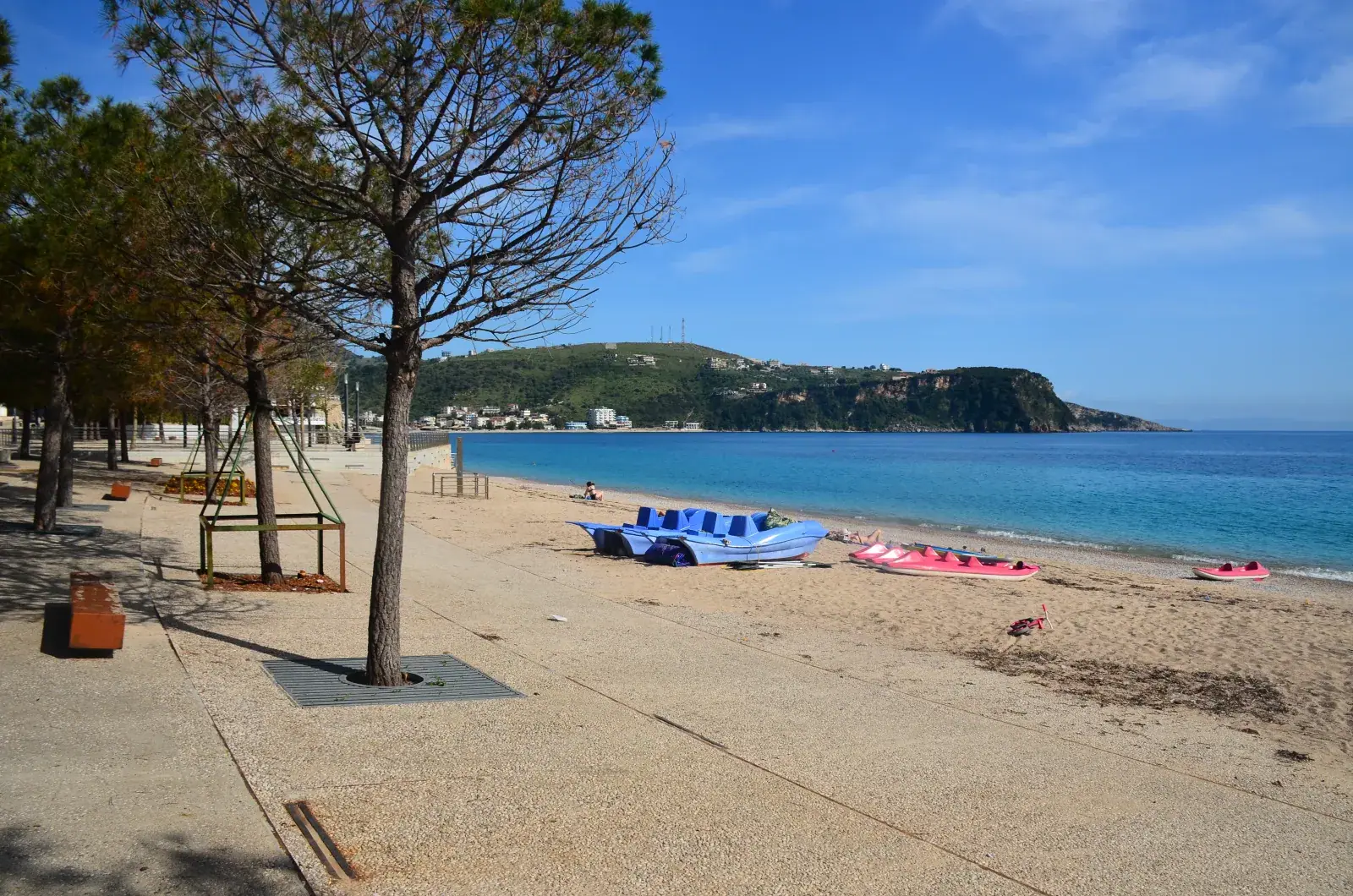
The Himara fish landing happens at the southern end of the Spile promenade, not at the larger main Spile-beach pier (which is mostly for tourist boats and the Himara boat tours). The fishing dock is the smaller wooden pier 200m south of the main beach, where the small-boat skiffs are pulled up on the concrete ramp. There's no signage; you orient by following the smell of fish at 7:00.
From the Himara old town, it's a 10-minute walk downhill. From the main promenade restaurants, 5 minutes south. From most Spile hotels, under 10 minutes.
When Direct-Buying Doesn't Work
The harbor is closed to direct buyers in three situations:
- Sea-condition closures. A bad-weather day means no boats went out the previous night. The morning landing is small or absent. Check the weather; if yesterday's afternoon was rough, today's morning is thin.
- August religious holidays. August 15 (Assumption) and surrounding days, many boats stay in. Plan around these.
- End-of-season (mid-October onward). Boats reduce frequency; some retire for the winter. By November, the harbor is mostly silent.
If direct-buying doesn't work for your day, the back-up is the Spile fish market (a small covered area inland from the promenade where intermediaries operate), still cheaper than restaurants, still local, less authentic but always open.
How the Local Catch System Actually Works
A bit of context that helps the morning visit make sense. Himara's small-boat fishing fleet is around 15-20 active boats. Most are owner-operated, family-handed-down vessels of 5-8 metres. They fish the inshore reefs (the Filikuri-Akuarium stretch, the Porto Palermo bay, the deeper drop-off west of Spile) at depths from 5 to 80 metres depending on target species. Nets are mostly long-line and trammel-net; small-scale handline for premium species.
The catch quota is informal and self-regulated. Albanian commercial fishing rules apply but enforcement on the Himara stretch is light, so the constraints are mostly cultural, the families have fished these waters for three generations and the over-fishing concern is real to them.
The Greek-minority cultural overlay, see Greek Minority in Himara for the broader context, is visible at the harbor too. Many of the older fishermen are bilingual; the boat names often have Greek roots ("Agios Nikolaos" appears on several stern boards); the religious calendar partly shapes which days boats stay in.
This isn't an industrial fishery and it doesn't pretend to be. The whole apparatus is small, traditional, and operates on a scale where buying directly from the people who caught the fish is genuinely possible, which is the entire reason this article exists.
What This Isn't
To set expectations clearly:
- Not a tourist attraction. No tour, no ticket, no guide. Just a working harbor.
- Not English-friendly. Some Italian works (the older fishermen worked in Italy in the 1990s). English varies fisherman to fisherman.
- Not Instagram-friendly. The harbor at 07:30 is muddy concrete, fish guts on the dock, men working fast. The clean-postcard version doesn't exist.
- Not a guaranteed experience. If conditions are wrong, there's nothing to see and nothing to buy. Accept the possibility.
FAQ
What time do the fishing boats come back to Himara?
The main morning landing is 07:00-08:30 at the southern end of the Spile promenade. Smaller landings happen 05:00-06:30 (overnight boats) and 11:00-12:30 (short-trip boats). Late-afternoon landings (16:00-17:30) only happen on calm days, mostly in shoulder season.
Can I buy fresh fish directly from the boats in Himara?
Yes, informally and in cash. The 07:00-08:30 morning window at the southern end of Spile promenade is the right time. Bring cash in Albanian lek, an insulated bag, and ask "Çfarë ka sot?" ("What's there today?") rather than asking for a specific species. Prices are roughly one-third of restaurant prices.
What fish is in season in Himara in summer?
July-August peak catches are lavrak (sea bass), mackerel, bonito, koce (denticis), and octopus. Sea bream and dorado appear regularly. For the full vocabulary including Albanian and Greek names, see our Albanian Fish Vocabulary Guide.
Is it worth getting up early to buy fish at the Himara harbor?
If you have a kitchen, yes. The price spread vs restaurants is 3-to-1, the freshness is uncomparable, and the morning at the harbor is one of the genuinely-local experiences left on the Riviera. If you're hotel-bound with no cooking facility, the math doesn't work, eat at a Himara seafood restaurant instead.
Do the fishermen speak English?
Inconsistently. Some Italian and Greek tend to work better with the older fishermen. The intermediaries (the resellers with cool boxes) are easier for English-only conversation. Pointing at the fish and showing cash gets the transaction done regardless.
Bottom Line
The Himara fish harbor at 07:00-08:30 on a calm morning is the cheapest, freshest, most local seafood the Riviera offers, but only if you have a kitchen, cash in lek, and the patience to show up at the right time. Use it for self-catering stays and family villa rentals; skip it if you're hotel-bound. The 16-fisherman fleet, the bilingual older crew, and the 3-to-1 price advantage over restaurants are real. They've been real for a long time. They'll stay real as long as Himara remains a working fishing town, which is at least the next several years.