Three governments publish travel advice on Albania, and none of them tells women not to go. What they do say is more specific than "it's safe," and the specifics are what change how you plan a trip: one of them flags rural harassment, all three flag the roads, and none of them flags the beaches. This guide sets out what the official advice actually states, what a week costs at real fares and room rates, and how to build a route that keeps you in the parts of the country the advisories are relaxed about.
Quick facts
| Details | Source | |
|---|---|---|
| Canada's risk grade | "Take normal security precautions", the same grade applied to most of Western Europe | travel.gc.ca, updated 9 September 2026 |
| US risk grade | Level 2, "Exercise Increased Caution", citing crime | US State Department Albania travel advisory |
| Crime against foreigners | "There is crime and violence in some areas, but reports of crime targeting foreigners are rare." | UK FCDO |
| The one women-specific warning | "Women travelling alone in some rural areas may be subject to some forms of harassment and verbal abuse." | Government of Canada |
| The biggest actual risk | The roads. "Deaths from road traffic accidents are amongst the highest in Europe." | UK FCDO |
| Petty crime | Pickpocketing in crowded markets, airports and transport hubs | FCDO and Canada, both |
| Emergency numbers | 112 general, 127 ambulance, 129 police | 112 and 127 from the UK FCDO; 129 from AKEP's numbering regulation of 3 November 2015, article 10, and travel.gc.ca |
| British Embassy Tirana | +355 4 223 4973 (working hours) | UK FCDO |
| Exchange rate | 1€ ≈ 92 ALL (September 2026) | Site practical info |
| Hostel dorm | 11–25€ a night in Himara | Site hotels data |
| Budget range | 30–50€ a day budget, 70–120€ mid-range | Site practical info |
| Best months | June, September (warm, fewer crowds, lower prices) | n/a |
Read those top two rows together: Canada grades Albania "take normal security precautions", its lowest tier, while the US sits a notch higher at Level 2 for crime generally, not for anything aimed at tourists. The only warning in any of the three that is specific to women concerns rural areas, and the only risk any of them describes in superlative terms is driving. That combination should shape the itinerary: coastal towns, public transport, and a late start on the mountain roads if you do drive.
Safety reality
The UK FCDO's formulation is the useful one: "There is crime and violence in some areas, but reports of crime targeting foreigners are rare." Albania has organised crime, and that is what the US Level 2 grade is about. It does not intersect with a visitor's week on the coast. The same FCDO page reserves its strongest language for something else entirely: "Deaths from road traffic accidents are amongst the highest in Europe." Canada agrees, calling road conditions and road safety "poor throughout the country." If you are ranking your own risks on this trip, the car is at the top and it isn't close.
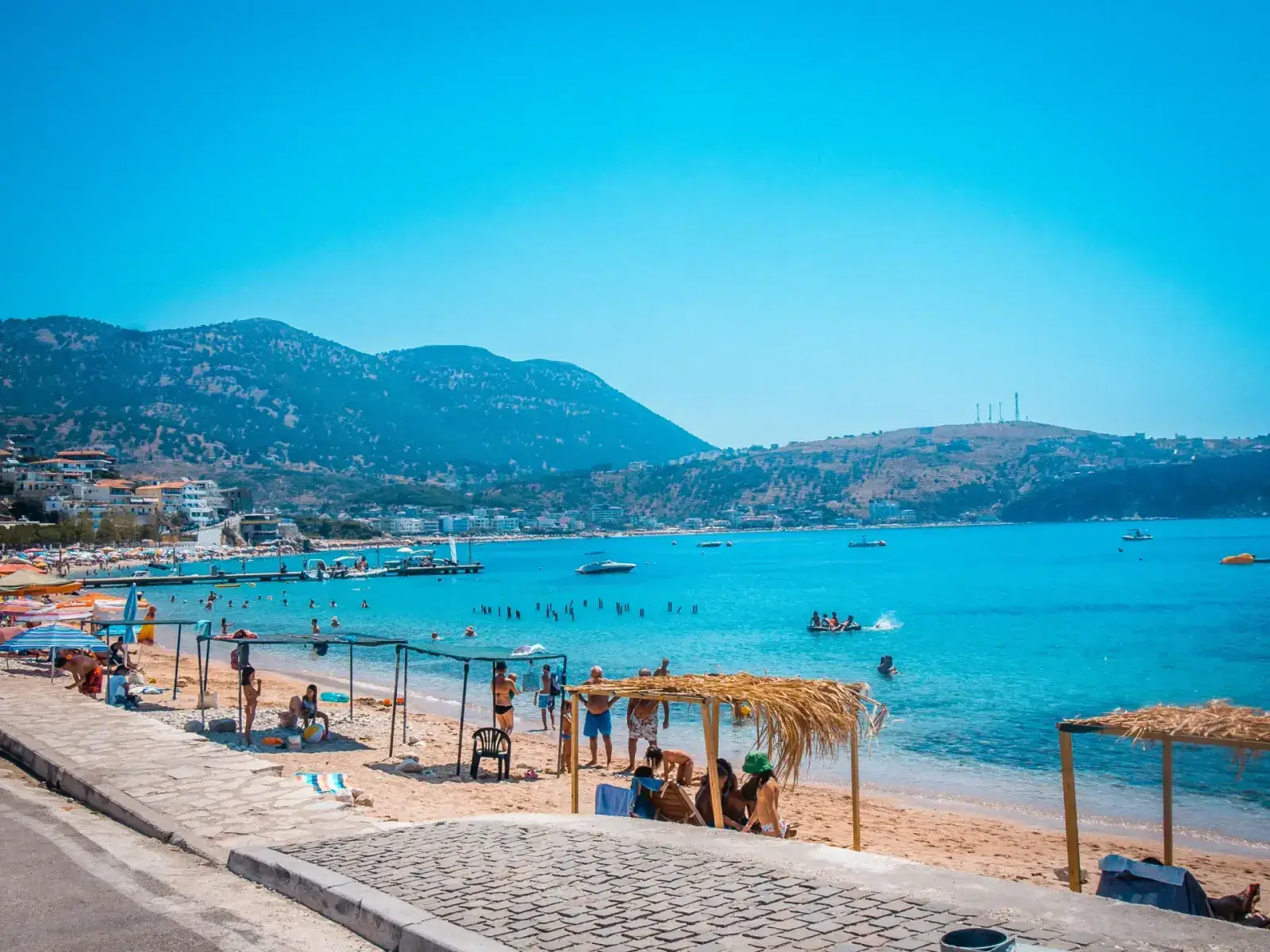
Himara is a particularly strong base for solo women. It's compact, walkable, and small enough that the hostel owner, the restaurant staff, and the beach bar guys all know each other. Antisocial behavior is noticeable and socially unacceptable in a town this size.
Both the FCDO and the Canadian advisory name the same petty-crime pattern: pickpocketing and bag-snatching in crowded places: markets, airports and transport hubs. That maps onto Tirana's bus stations far more than it does a Riviera promenade.
The cultural factor matters. Albanians follow a tradition called besa, an honor code that includes protecting guests. You'll encounter it constantly: the cafe owner who won't let you pay for your coffee, the stranger who walks you to your destination instead of pointing, the guesthouse host who calls ahead to your next stop to make sure someone meets you. For solo women, this hospitality instinct creates a safety net that statistics alone don't capture.
Harassment: what to actually expect
Only one government advisory says anything specific about this, and it is worth quoting exactly. The Government of Canada's Albania advice, updated 9 September 2026, states: "Women travelling alone in some rural areas may be subject to some forms of harassment and verbal abuse."
Note what that sentence does and does not say. It is geographically bounded to rural areas, not the country. It describes harassment and verbal abuse, not assault. And it is the only women-specific line in any of the UK, US or Canadian advisories on Albania.
What that means for an itinerary:
- Coastal tourist areas (Himara, Saranda, Dhermi): outside the scope of the advisory's rural qualifier. Eating alone, drinking alone and sitting on the beach alone are unremarkable in towns where a large share of summer custom is foreign.
- Tirana: a capital city; the advisories' petty-crime warnings apply around transport hubs, the rural-harassment line does not.
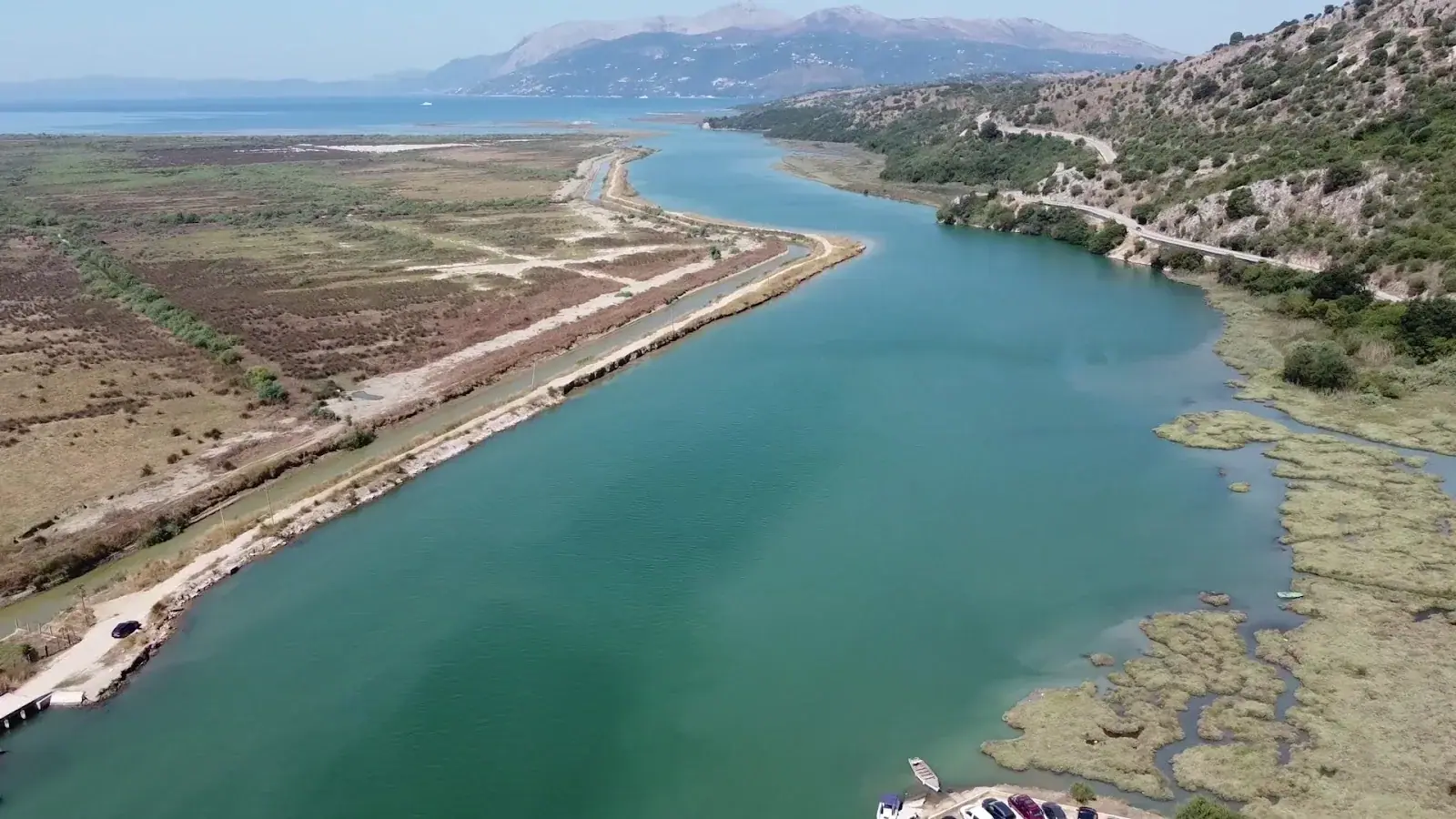
- Rural and inland areas: this is the bit Canada is describing. It does not make inland Albania off-limits, and Gjirokaster and Berat are ordinary tourist towns. It is still a reason to be deliberate about arriving in a village after dark, or hiking a remote trail without telling anyone your route.
What works: a confident, direct demeanor goes further than avoiding eye contact. A firm "no" or simply walking away ends the great majority of interactions.
Accommodation
Booking.com reviews help, so filter for solo traveler reviews for an accurate picture. The price bands below come from our own Himara hotels data, current for the 2026 season:
| Type | Price per night | Notes |
|---|---|---|
| Hostel dorm bed | 11–25€ | Himara Downtown Hostel 11–20€, Oasis Hostel 12–25€ |
| Hostel private room | up to 45€ | Himara Hostel spans 12–45€ dorm to private |
| Simple guesthouse / apartment | 24–80€ | The widest band; shoulder season sits at the bottom of it |
| Mid-range hotel | 55–90€ | Sea-view rooms toward the top |
| Boutique / top end | 95–350€ | 180–350€ buys the best address in town |
Against the 30–50€ budget day and 70–120€ mid-range day in our practical info, a dorm bed plus three meals genuinely lands under 50€.
Family-run guesthouses are a standout option. Albanian families take the host role seriously, and a solo female guest often gets extra attention. There's always someone around, doors are locked at night, and owners keep a quiet eye on who's coming and going. Many will help you arrange transport, recommend restaurants, and generally adopt you for the duration of your stay.
Hostels exist in Tirana, Saranda, and Himara. Himara's hostel scene is small but excellent for solo female travelers: social without being chaotic, with communal breakfasts and organized group activities that make meeting people effortless. Mixed and female-only dorms are available at most.
Hotels and apartments booked through major platforms are reliable. In Himara specifically, you'll find everything from beachfront hotels to quiet apartments in the old town, all walkable to restaurants and the promenade.
One practical note: Ground-floor apartments in very quiet areas might feel isolated at night. Book on an upper floor or in a busier part of town. In Himara, the Spile Beach and promenade area keeps you close to activity.
Getting around safely
Transport in Albania is straightforward once you understand the system, and cheap enough that "just take the bus" is almost always the right answer.
What the routes actually cost
| Route | Fare | Duration | Frequency |
|---|---|---|---|
| Tirana → Himara | 12–15€ | 3h 30m–5h | Several daily in summer; departures around 07:00, 13:00 and 18:00 |
| Tirana → Saranda | 12–20€ (1,200–2,000 ALL) | 4h 30m–7h+ | One direct daily, more in summer |
| Saranda → Himara | 6–10€ | 1h 15m–2h | Direct local services daily, from ~07:00 |
| Vlora → Himara | 8–10€ (800–1,000 ALL) | 1h 15m–2h 30m | Frequent daily intercity buses |
| Himara → Dhermi | 2–3€ | ~25 min | Multiple SH8 buses daily |
| Himara → Borsh | 3–5€ | 30–45 min | Direct furgon, several daily |
| Saranda → Ksamil | ~1€ (100 ALL) | 15–20 min | Every 20–30 min in summer |
| Saranda → Gjirokaster | ~4–5€ (400–500 ALL) | 1h 45m–2h | ~3 daily in high season |
Those are the fact-checked figures from our own route guides; at 92 ALL to the euro in September 2026, a week of coastal hopping costs less than a single airport transfer at home. A whole seven-day Riviera route comes to roughly 25–35€ of bus fares in total: Tirana in, then Saranda, Himara, Dhermi, back out.
Furgons (shared minibuses) are the backbone of Riviera transport. You flag one down by the road and pay the driver. For details, see the getting around Himara guide.
Taxis: In Tirana, use the Bolt app for upfront pricing and a tracked ride. The tracking is the real benefit for a solo traveller, not the price. Outside Tirana, agree the fare before getting in. Both the FCDO and the Canadian advisory warn against unofficial taxis; take the official ones at airports and stations.
Driving: this is the one area where every advisory raises its voice. The FCDO: "Driving can be very hazardous and often aggressive and erratic. Deaths from road traffic accidents are amongst the highest in Europe," adding that "minor traffic disputes can quickly escalate, especially as some motorists could be armed." Canada calls road conditions and safety "poor throughout the country" and advises driving defensively. If mountain roads stress you, the bus table above costs less than the fuel would.
Hitchhiking: don't. Furgons and buses cover the same routes for 2–10€.
Night safety
The Albanian Riviera is safe at night, with some common-sense caveats.
Himara's promenade is well-lit, crowded in season, and completely comfortable for solo women after dark. The xhiro, the traditional evening stroll, means the promenade fills with families, couples, and groups from sunset until late. Walking from a restaurant back to your hotel at midnight is not a concern. Check the nightlife guide for where to go.
Saranda's waterfront is similar: busy, well-lit, and safe. Bars and restaurants cluster along the promenade, and there's foot traffic until well past midnight in summer.
What to avoid: Unlit rural roads at night, anywhere. Walking alone on isolated stretches outside town after dark. This isn't Albania-specific advice; it's universal. Stick to lit, populated areas and you won't have issues.
None of the three advisories flags night-time street safety in Albanian towns as a distinct risk. Their night-time caution is the general "take sensible precautions against street crime, particularly in larger cities and late at night" line the FCDO applies broadly. Trust your instincts anyway. If something feels off, leave.
Dress code
Albania is one of the most secular countries in Europe despite having a Muslim-majority population. No dress code, no hijab requirement, no expectation that women cover up.
On the coast: Bikinis, one-pieces, whatever you're comfortable in. Walking from the beach to a nearby cafe in a cover-up and sandals is standard.
In towns: Shorts, dresses, tank tops are all fine. Nobody will look twice.
At churches and mosques: Cover shoulders and knees. Same etiquette as Italy or Greece.
Rural areas: Slightly more conservative by habit. You may attract less attention in modest clothing, but this is comfort calibration, not a safety issue.
Cultural tips for solo women
Albanian men offering help: This happens constantly. A man carrying your bag to a bus, a taxi driver refusing payment for a short ride, a restaurant owner insisting on a free dessert. This is almost always genuine hospitality, not a prelude to something uncomfortable. The besa tradition means guests are under the community's protection. Accept help gracefully when it feels right, decline politely when it doesn't.
Coffee invitations: Albanian coffee culture is intense. Being invited for coffee is a social default, not a romantic advance. You can accept without it implying anything. If you want to keep it brief, have your coffee and leave; nobody will be offended.
"Where is your husband?" You may hear this in more traditional settings. It's curiosity, not judgment. "I'm traveling alone" or "my husband is at home" both work. Inventing a husband is unnecessary. Albanians are accustomed to independent foreign women, especially in tourist areas.
Learn two words: Faleminderit (thank you) and mir (good/fine). Using even basic Albanian earns immediate goodwill.
Suggested solo female routes
Route 1: Albanian Riviera focus (7 days)
| Day | Location | Highlights |
|---|---|---|
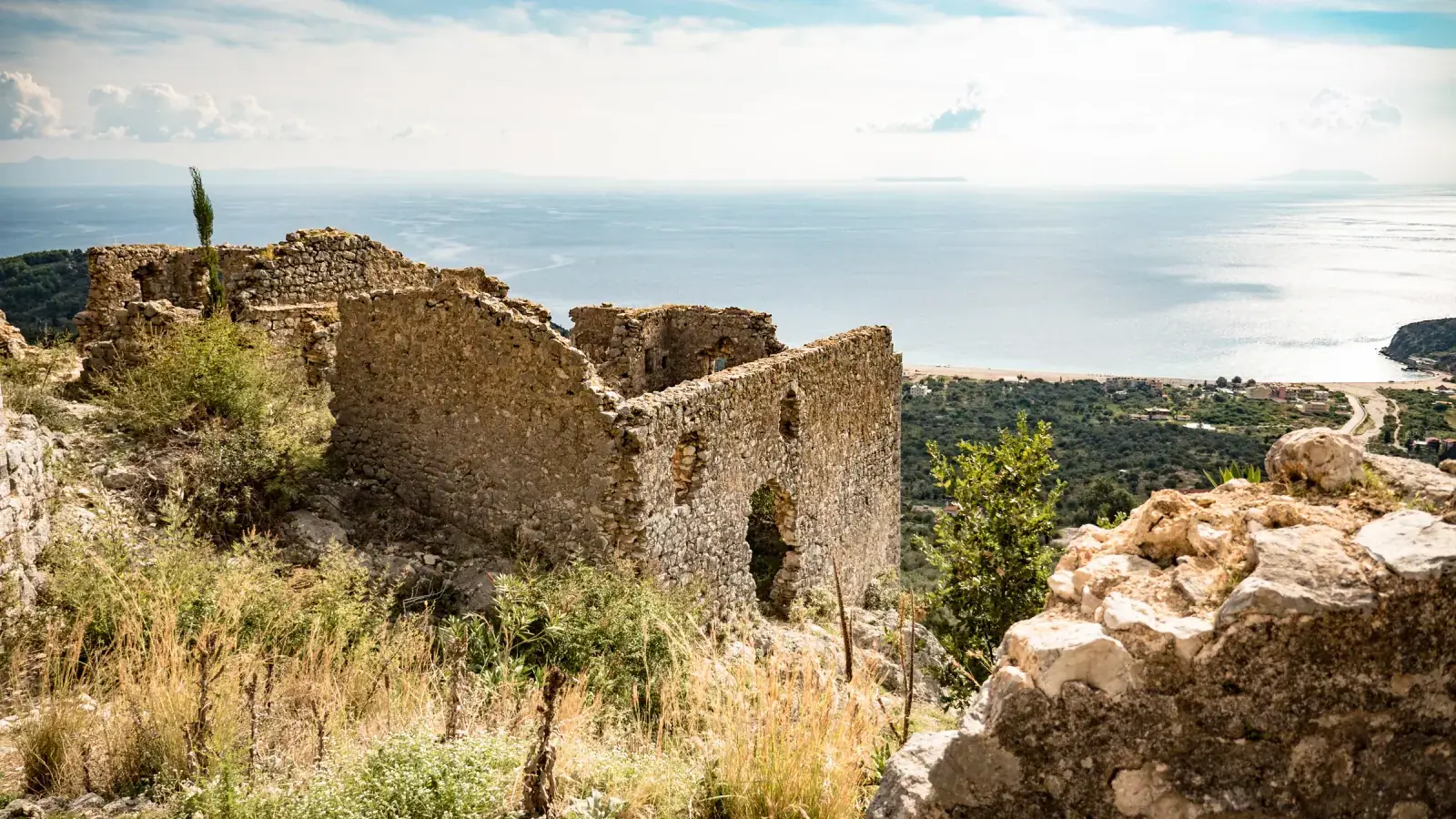
| 1-2 | Saranda | Waterfront promenade, Lekursi Castle sunset, evening bar scene |
| 3 | Blue Eye + Gjirokaster day trip | Natural spring, UNESCO old town, return to Saranda |
| 4-6 | Himara | Spile Beach, boat tour, old town hike, xhiro evenings |
| 7 | Dhermi or Drymades | Beach day, return to Saranda or onward to Tirana |
This route keeps you in well-touristed coastal towns the entire time. Saranda and Himara both have hostels, active promenades, and easy access to beaches and day trips. It's the safest, most social route for a first-time solo female visitor.
Route 2: Tirana + coast combo (7 days)
| Day | Location | Highlights |
|---|---|---|
| 1-2 | Tirana | Blloku neighborhood, markets, cafes, museums |
| 3 | Tirana to Himara (bus, 3.5 hrs) | Llogara Pass views from the bus |
| 4-5 | Himara | Beach days, hiking, boat tours, nightlife |
| 6 | Saranda | Day trip from Himara or move south |
| 7 | Saranda or return | Blue Eye excursion, departure prep |
Good if you want a mix of city and coast. Tirana has a solid hostel scene, lively cafe culture, and a different energy from the Riviera. The bus ride through Llogara Pass is scenic and safe.
Route 3: culture + coast (9 days)
| Day | Location | Highlights |
|---|---|---|
| 1-2 | Tirana | Capital exploration |
| 3-4 | Gjirokaster | UNESCO stone city, castle, bazaar |
| 5 | Blue Eye | Day trip from Gjirokaster, then onward to Saranda |
| 6-7 | Saranda/Ksamil | Beaches, Butrint National Park |
| 8-9 | Himara | Coastal hiking, beach, xhiro, departure |
Best for travelers who want more than beaches. Gjirokaster is a hillside stone city with guesthouses that feel like staying in a museum. The route moves south along the coast, ending in Himara before departure.
Connecting with other travelers
Solo doesn't have to mean alone.
Hostels are the obvious starting point. Communal breakfasts at Himara's hostels create natural meeting opportunities every morning. Ask someone where they're headed and you'll have a beach companion within five minutes.
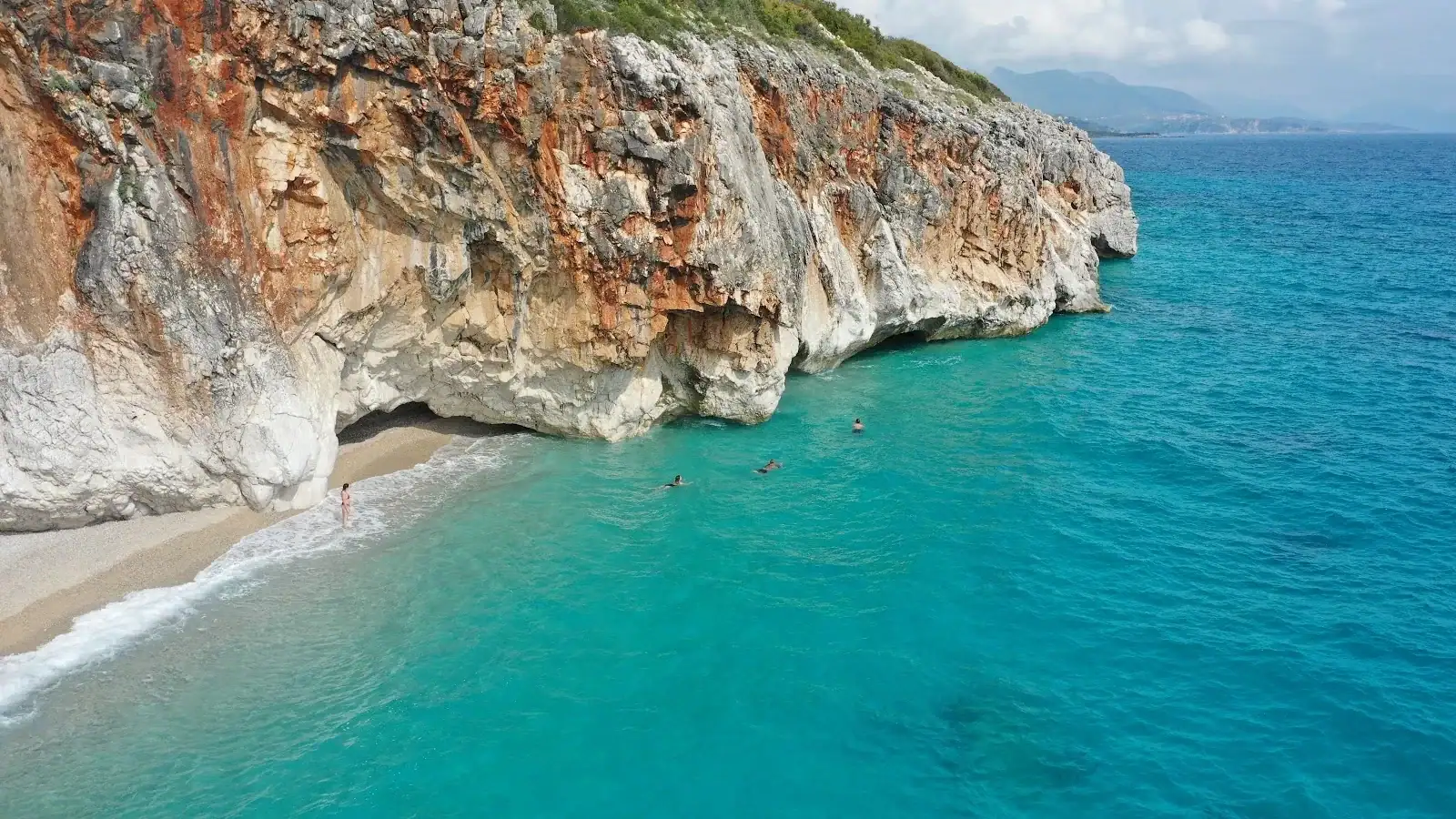
Boat tours are the single best activity for meeting people. A group boat tour from Spile Beach carries 10-24 passengers to hidden coves, and our activities listing prices the standard shared half-day at about 30€ per person. Five hours swimming and eating together bonds people fast.
Beach bars in Himara and Dhermi are social by design. Small enough that a solo woman at the bar gets pulled into conversation.
The xhiro: Himara's evening promenade ritual. Locals and tourists walk, stop for ice cream, and watch the sunset. As a solo traveler, it's where you'll keep running into the same people day after day.
Organized day trips: Group excursions to Gjirokaster, Blue Eye, or Butrint attract a mix of solo travelers and couples, and the shared experience makes conversation easy.
Frequently asked questions
Is Albania safe for solo female travelers?
No government advisory warns women against travelling to Albania. Canada grades the country "take normal security precautions" and notes only that "women travelling alone in some rural areas may be subject to some forms of harassment and verbal abuse." The FCDO says reports of crime targeting foreigners are rare, and reserves its strongest warning for the roads. Read the full safety breakdown.
What should I wear in Albania?
Whatever you want. Albania has no dress code. Bikinis at the beach, casual summer clothing in towns, shorts and tank tops everywhere. The only exception is covering shoulders and knees when entering churches or mosques. Rural areas are slightly more conservative in practice, but there is no clothing requirement.
Is it safe to walk alone at night?
In Himara and Saranda, the promenades are well-lit and crowded until late in season. Walking home from a restaurant or bar at midnight is not a concern. Avoid unlit rural roads at night; this is common-sense advice that applies everywhere.
Do I need to speak Albanian?
No. English is widely spoken in tourist-facing businesses across the Riviera and in Tirana. Hotel staff, restaurant servers, and tour operators communicate in English without issues. For interactions outside tourist areas, Google Translate with the Albanian offline pack handles everything. Check things to know before visiting for more practical language tips.
Can I use public transport as a solo woman?
Yes, and it is the cheaper and statistically safer option given what the advisories say about Albanian roads. Saranda to Himara is 6–10€ for 1h 15m–2h, Tirana to Himara 12–15€ for 3h 30m–5h, Himara to Dhermi 2–3€. In Tirana, the Bolt app gives you a tracked ride with upfront pricing. On the Riviera, agree the taxi fare before getting in and avoid unofficial cars at airports and stations, as both the FCDO and the Canadian advisory recommend.
What's the best base for solo female travel on the Riviera?
Himara. It's compact, walkable, has a strong hostel scene, an active promenade, and the right balance of social energy and peace. Saranda is a good alternative if you prefer a slightly larger town. Dhermi works if you want beach clubs and a younger crowd.
Is it easy to travel Albania without a car?
Yes. Buses connect Tirana to all major Riviera towns. Furgons fill the gaps along the coast. In Himara, everything is walkable. A car is convenient but not necessary, and getting around without one is straightforward. Many solo female travelers prefer not driving because Albanian road conditions are the one area that genuinely requires extra caution.