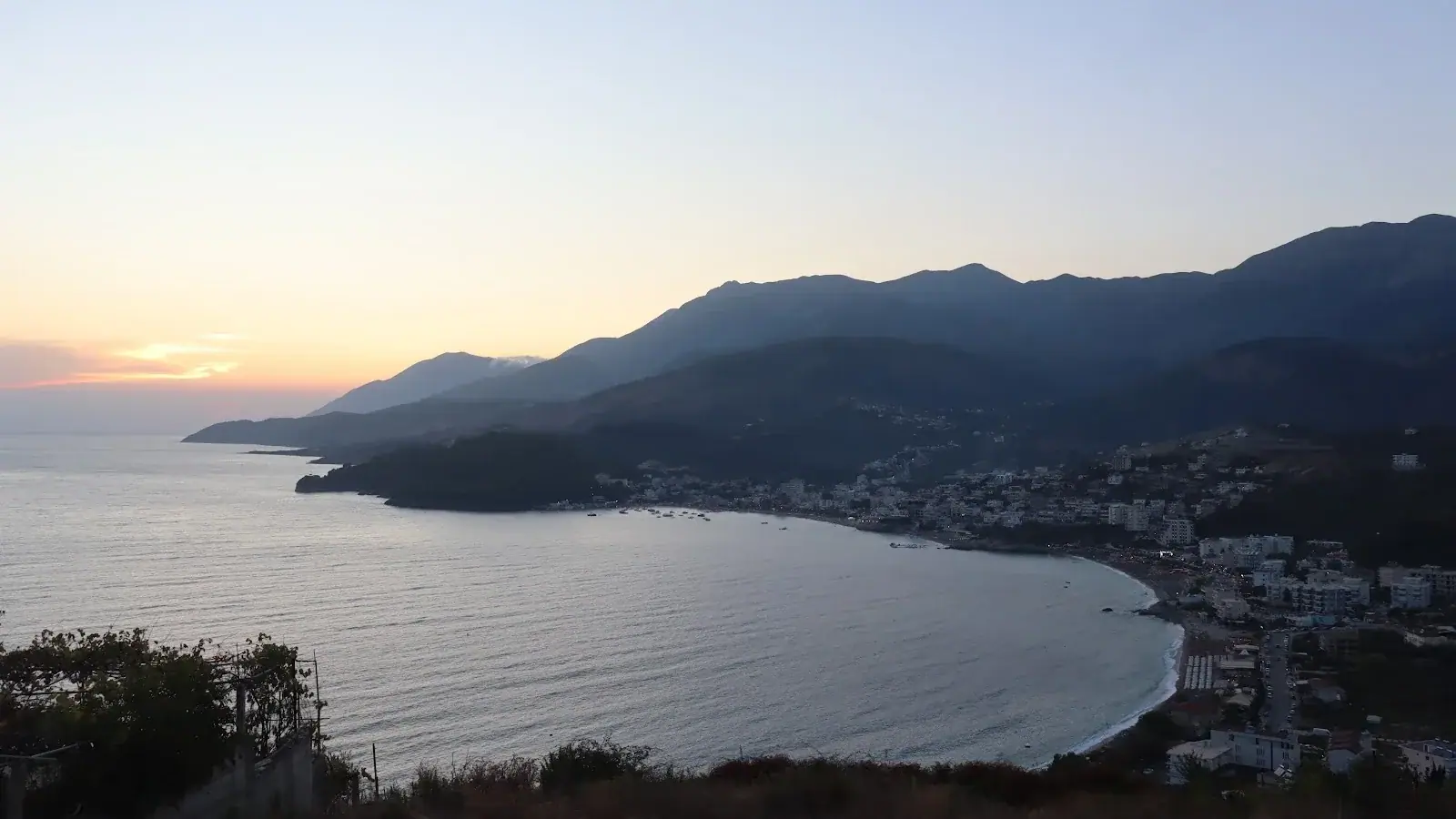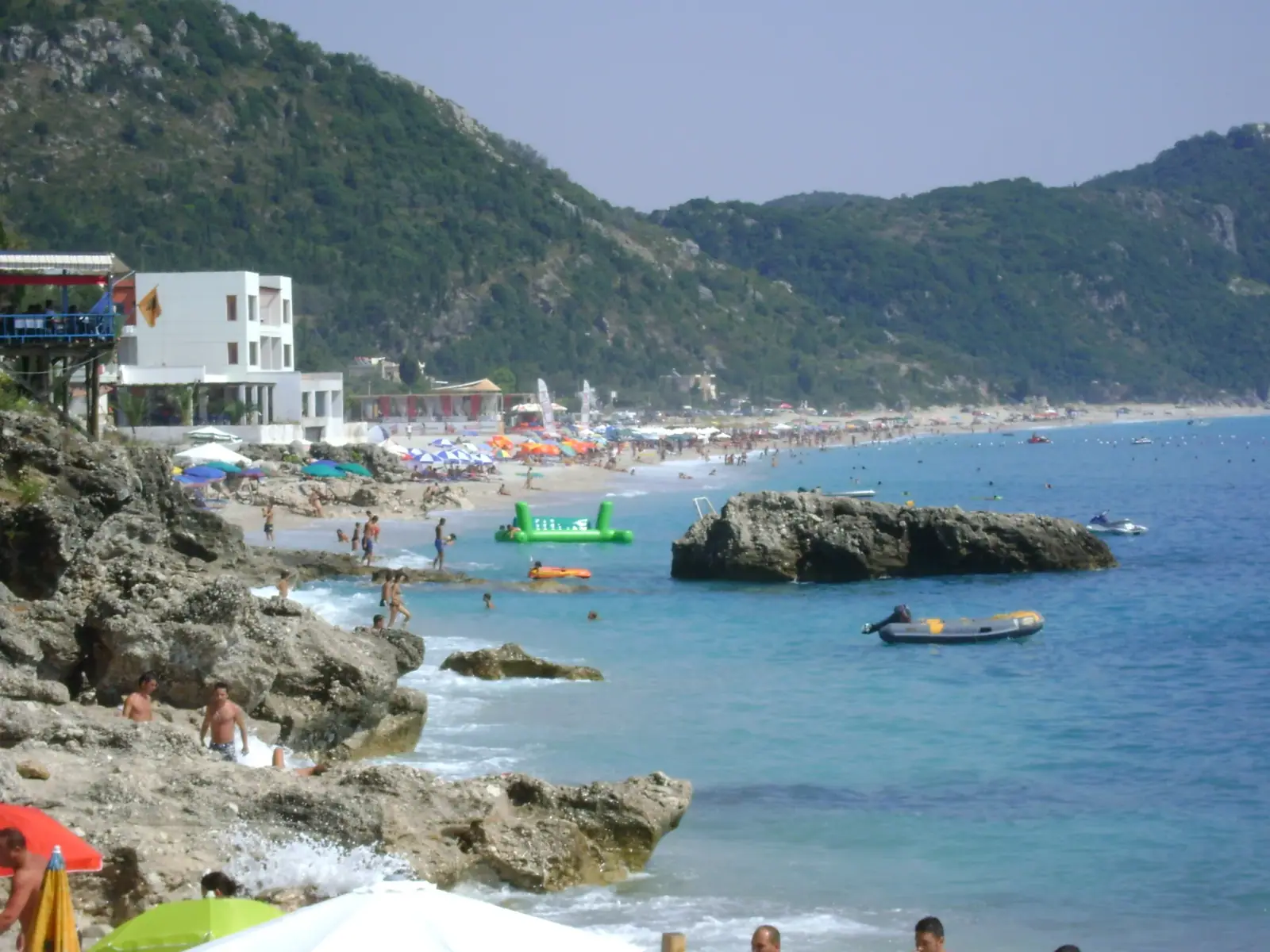
Most beaches around Himara are marketed toward families and casual waders. But the Ionian coastline here drops off fast, and several coves along the Albanian Riviera offer genuinely challenging conditions for strong swimmers. If you are looking for Himara beaches with deep water, this guide covers every spot worth your time, ranked by how demanding the water actually is, that means steep drop-offs, cliff jumping, open-water distance swims, and underwater terrain worth exploring.
Compare hotels, apartments, and Vrbo rentals on the map. Powered by Stay22.
Quick overview: deep water beaches near Himara
| Beach | Water Depth | Drop-off | Cliff Jumping | Distance from Himara | Best For |
|---|---|---|---|---|---|
| Filikuri Beach | Deep, drops fast | Steep within 5 m of shore | 5 m platform (south side) | 2.5 km (hike/kayak) | All-around strong swimmer spot |
| Llamani Beach | Deep throughout | Immediate from entry | 5 m platform | 3.5 km (drive) | Deep-water snorkeling, boulder diving |
| Gjipe Beach | Deep at canyon edges | Gradual center, steep sides | Up to 9 m (NW cliffs) | 15 km (drive + hike) | Cliff jumping, cave exploration |
| Porto Palermo | Deep in bay center | Moderate from rocky entries | Informal rock jumps | 8 km (drive) | Open-water bay crossings |
| Kico Beach | Deep at pier/cliffs | Steep off rocks | Multiple heights off pier | 2 km (walk) | Quick cliff jump session |
| Akuarium Beach | Moderate | Gradual | None | 6 km (hike) | Advanced snorkeling in confined cove |
Filikuri Beach, the best deep water swimming near Himara
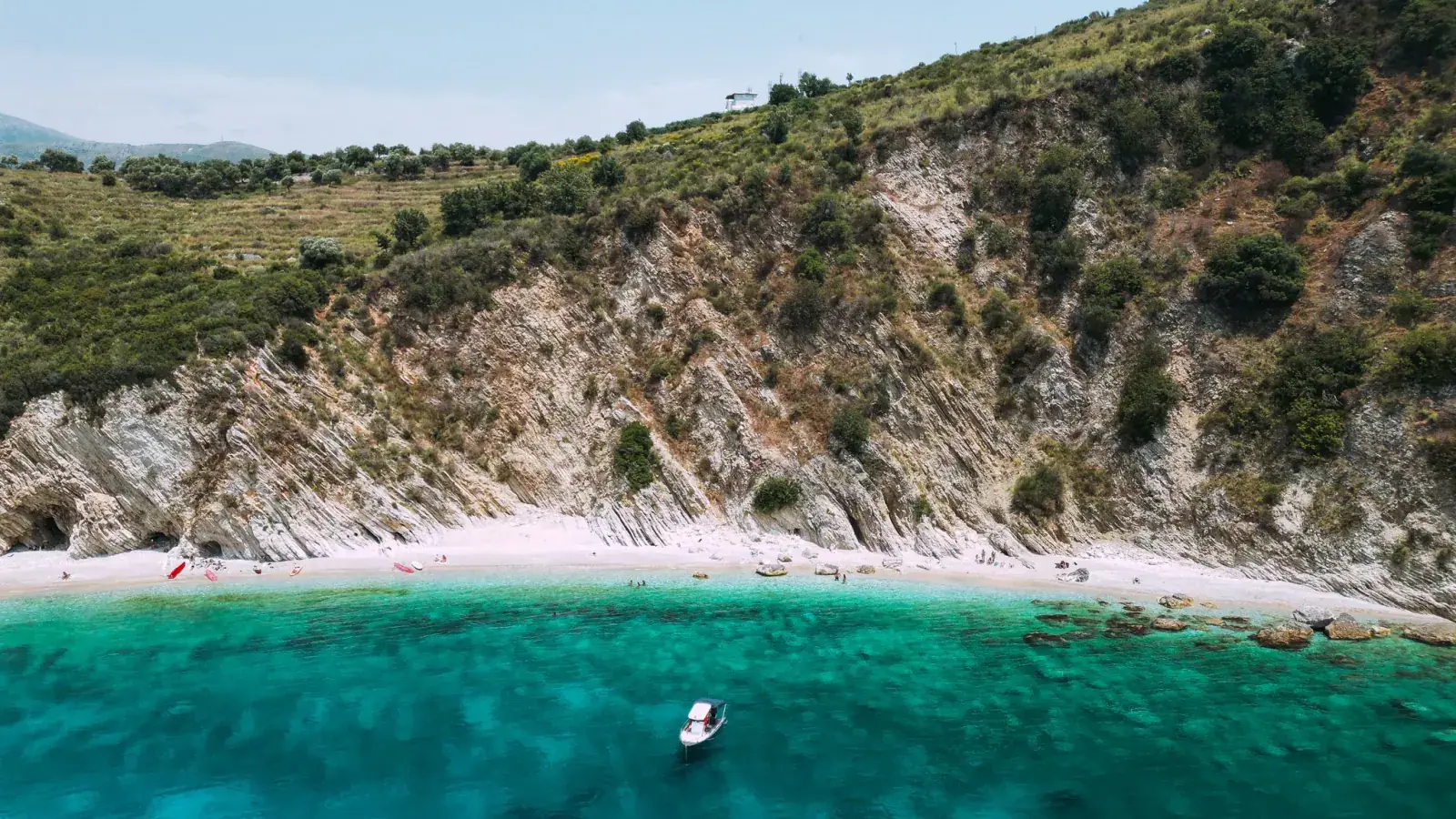
Filikuri Beach is the top pick for strong swimmers, and it is not close. The water here deepens within a few meters of the pebble shore, dropping over submerged boulders and rock shelves into blue that fades out of sight. Visibility regularly exceeds 15 meters, so you can watch the seabed fall away beneath you, an experience that's equal parts beautiful and unnerving if you are not used to open water.
The south side of the cove has a natural rock platform roughly 5 meters above the water, worn smooth by jumpers. Below it, the depth is sufficient for safe entry, though you should always check conditions on the day. The water here also runs 2-3 degrees cooler than at town beaches due to underground freshwater springs feeding into the cove.
Why strong swimmers love it: The combination of deep water, rocky underwater terrain, excellent snorkeling, and zero facilities means Filikuri naturally filters out casual beachgoers. On most days you share the cove with fewer than a dozen people. The underwater landscape of boulders, rock shelves and sand patches attracts fish and creates varied terrain for freediving exploration.
Getting there: A steep 20-30 minute hike from the road above, or paddle a kayak from Spile Beach (about 30 minutes). There are no facilities at all, so bring water, food, and your own snorkel gear. Read the full Filikuri Beach guide for trail details and access options.
Conditions to watch: The cove faces west and is exposed to afternoon swells. Morning is calmer and offers better underwater visibility. The hike back up in midday heat is the real challenge. Plan your energy accordingly.
Llamani Beach, deep water right off the shore
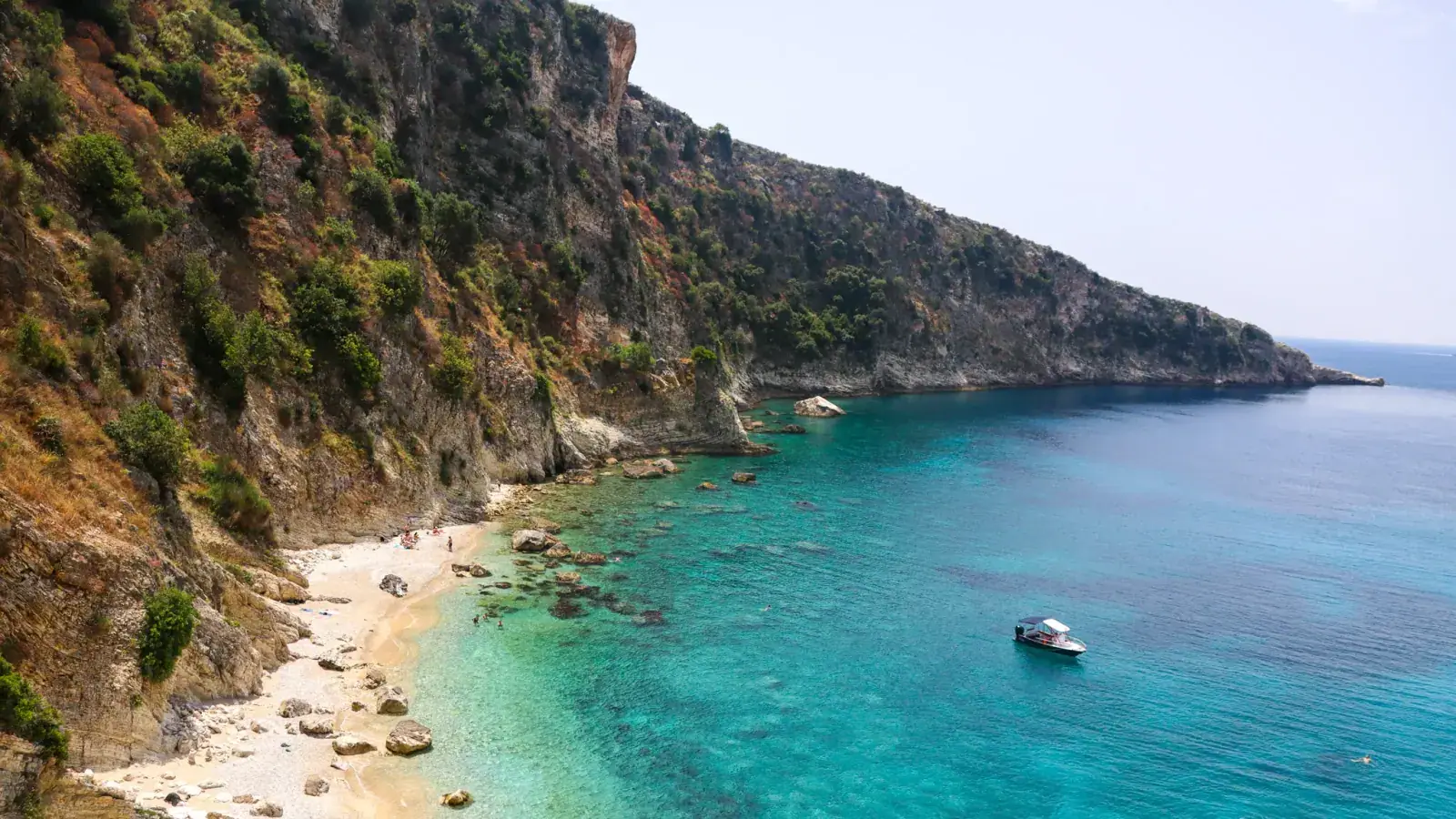
Llamani Beach is where water gets deep fast. Unlike the gradual shelves at Livadhi or Spile, Llamani drops into several meters of depth almost immediately from the pebble entry. Large boulders sit on the seabed below, creating a dramatic underwater landscape of house-sized stones with blue water extending into the distance.
The south-side rocks have a worn 5-meter jumping platform that locals and repeat visitors use regularly. The depth below is reliable, but the rocky seabed means you should never dive headfirst from an unfamiliar position.
What makes it different: Llamani is the easiest-to-reach deep water beach near Himara. It is a short drive south on a paved road with a gravel path to the beach. You get the depth and challenge without the 30-minute hike that Filikuri demands. Water shoes are essential. The large stones on the seabed and at the entry are unforgiving on bare feet.
Best for: Swimmers who want deep water without the logistics. Snorkelers who prefer floating above deep boulder fields rather than shallow reef. The cliff edges on both sides of the bay offer the best underwater views.
Facilities: Sunbed rentals for 10-20 euros. That is about it.
Gjipe Beach, canyon walls and the highest cliff jumps
Gjipe Beach sits at the mouth of a limestone canyon with 70-meter walls rising on both sides. The beach itself has a gradual entry in the center, but the edges where the canyon meets the sea are where strong swimmers want to be. The seabed drops sharply along both cliff walls, and at the base of the northwestern cliffs. You will find the highest cliff jumps on this stretch of coast, up to 9 meters.
The sea caves at the base of the canyon walls are accessible by swimming from the beach. At low tide, overhangs and cave entrances emerge along both sides. Swim into these and you will find sheltered pockets where fish gather, with visibility that makes it feel like snorkeling in a flooded cathedral. The water is deep enough around the cave entrances that you will not touch bottom.
Cliff jumping at Gjipe: The northwestern side has multiple jump points at varying heights, topping out around 9 meters. The water below is deep, but scrambling up the rocks to reach the higher platforms requires sure-footedness and dry conditions. Do not attempt the highest jumps without first watching others and checking the depth yourself.
Getting there: Park 15 km north of Himara (300 lek / 3 euros parking) and hike 30 minutes down through the canyon. Alternatively, take a boat from Himara. This saves your energy for the water. See our full Gjipe Beach guide for all access options.
Conditions to watch: Small waves reach the center of the beach, and the canyon can funnel wind. The cave sections are calmest in the morning before the afternoon breeze picks up.
Porto Palermo, bay crossings for distance swimmers
Porto Palermo is not a traditional beach swim. The bay is a large, sheltered inlet with Ali Pasha's triangular fortress on one side and rocky coastline wrapping around both edges. The water is notably bluer and deeper than at other beaches in the area, and the bay's protected shape means conditions stay calm even when the open Ionian is choppy.
For distance swimmers, the appeal is straightforward: you can swim across the bay (roughly 400-500 meters one way), parallel to the coastline, or loop the fortress peninsula. The water is deep in the center of the bay, well over your head for most of the crossing, and the rocky entries on the fortress side let you exit, rest, and swim back.
Why it works for strong swimmers: Porto Palermo is the closest thing to an open-water swim course near Himara without heading to the actual open sea. The calm, deep water and defined bay boundaries make it safer for distance work than swimming out from an exposed beach. You can also explore the Cold War-era submarine tunnel on the bay's southern edge, though swimming inside it requires confidence in dim, enclosed water.
Practical notes: 8 km south of Himara by car. The castle entrance is 300 lek (3 euros). Water shoes recommended on the mixed sand and pebble entries. Very few people. This is not a sunbed beach.
Kico Beach, cliff jumps close to town
Kico Beach is a small spot built into the rocky coastline southeast of Himara center, reachable by a 20-25 minute walk along the main road. The draw here is a small pier and rocky platforms at varying heights that let you jump straight into deep, clear water.
This is not a beach for lounging. It is a cliff-jump-and-swim spot with a small restaurant attached. The water deepens quickly off the rocks and pier, and the clarity is good enough for impromptu snorkeling around the underwater rock formations below the jumping points.
Best for: A quick session when you want to jump and swim without committing to a full day trip. The proximity to town makes it easy to combine with lunch or an evening swim. The pier jumps are roughly 3-4 meters, with natural rock options at slightly different heights.
Akuarium Beach, deep snorkeling in a confined cove
Akuarium Beach is famous for its glass-clear shallow water, but the edges of the cove, where the pebble floor meets the enclosing rocks, drop into deeper terrain worth exploring if you are a confident swimmer. Fish congregate in the rocky edges, and the visibility is exceptional enough to spot them from the surface.
This is not a deep-water destination in the same way Filikuri or Llamani are. But the confined cove, the rock-edge depths, and the need to hike in (1.5 km from Livadhi Beach, following red trail markings) mean it attracts a self-selecting crowd of capable swimmers and snorkelers.
Warning: Akuarium went viral on social media. By 11 AM in summer it is packed. Arrive before 10 AM or skip it entirely.
Deep water beach comparison: which one matches your swimming style
| If you want... | Go to | Why |
|---|---|---|
| Deepest water closest to shore | Llamani Beach | Drops to several meters within steps of the entry |
| Best cliff jumping (highest) | Gjipe Beach | Up to 9 m jumps off NW canyon walls |
| Best underwater terrain for freediving | Filikuri Beach | Boulder fields, rock shelves, fish, 15+ m visibility |
| Distance swimming in calm water | Porto Palermo | Protected bay, 400-500 m crossings, deep center |
| Quick cliff jump near town | Kico Beach | 20-min walk from Himara, pier jumps 3-4 m |
| Deep snorkeling with best clarity | Akuarium Beach | Glass-clear cove with rocky-edge drop-offs |
Safety considerations for deep water swimming near Himara
The Ionian coast around Himara is not lifeguarded at most beaches. At the beaches in this guide, Filikuri, Llamani, Gjipe canyon edges and Porto Palermo. You are swimming in deep water with no rescue infrastructure. That is part of what makes them appealing, but it means you need to manage your own risk.
What to know:
- Currents: Generally minimal in the sheltered coves (Filikuri, Llamani, Akuarium). Porto Palermo's bay is calm. Gjipe can get light currents when wind funnels through the canyon. The open coast between beaches has stronger currents. Do not swim between coves along the exposed shoreline.
- Temperature: The Ionian around Himara ranges from roughly 22-28 degrees Celsius in summer. Filikuri runs 2-3 degrees colder due to freshwater springs. In June and September, water is cooler and you may want a thin rashguard for longer swims.
- Cliff jumping: Always check depth before jumping from any new spot. Submerged rocks can sit just below the surface in places that look deep from above. Watch locals first. Never jump headfirst at an unfamiliar location.
- Gear: Water shoes are non-negotiable at Llamani and recommended everywhere else. Bring your own mask and snorkel. Rental availability is limited outside of Spile Beach. For distance swims at Porto Palermo, a swim buoy adds visibility.
- Buddy system: Solo deep-water swimming at remote coves like Filikuri carries real risk. Swim with someone, or at minimum, ensure other people are present and aware of your plans.
For broader snorkeling and underwater recommendations, see our snorkeling and diving guide.
Where not to go for deep water
A few beaches near Himara are popular but wrong for strong swimmers looking for depth and challenge:
- Spile Beach: The main town beach is shallow and gradually sloped. Fine for families. Boring for anyone who wants to swim, not wade.
- Livadhi Beach: Himara's longest beach at 1.5 km, but the water is deliberately shallow and slow-deepening, built for kids and casual swimmers. The rocky headlands at both ends offer some snorkeling interest, but the beach itself is not a deep-water spot.
- Borsh Beach: Seven kilometers long with shallow water throughout. The opposite of what this guide covers.
For the full rundown on all beaches, see our best beaches in Himara ranking.
Frequently asked questions
Which Himara beach has the deepest water closest to shore?
Llamani Beach drops to several meters depth almost immediately from the pebble entry. Large boulders sit on the seabed below, and you are in deep water within a few steps. Water shoes are essential due to the rocky entry and seabed. It is a 3.5 km drive south of Himara center.
Is cliff jumping safe at Gjipe Beach?
The northwestern cliffs at Gjipe have jump points up to 9 meters high. The water below is deep, but you should always check conditions yourself before jumping. Submerged rocks can sit just below the surface in unexpected places. Watch locals first, never dive headfirst, and avoid jumping after rain when the rocks are slippery.
Can you swim across Porto Palermo Bay?
Yes. The bay crossing is roughly 400-500 meters one way, with deep water in the center and rocky exit points on the fortress side. The sheltered bay stays calm even when the open Ionian is rough, making it the safest distance-swim option near Himara. Bring a swim buoy for visibility to boat traffic.
Are there lifeguards at deep water beaches near Himara?
No. Filikuri, Llamani, Gjipe canyon edges, Porto Palermo, and Kico Beach are all unlifeguarded. You are entirely responsible for your own safety. Swim with a buddy, assess conditions before entering, and do not overestimate your abilities in unfamiliar deep water.
What is the best time of year for deep water swimming near Himara?
Late June through mid-September offers the warmest water (22-28 degrees Celsius) and calmest conditions. July and August are peak season with the most people but also the warmest and clearest water. June and September are quieter, slightly cooler, and better for serious swimmers who want the beaches to themselves.