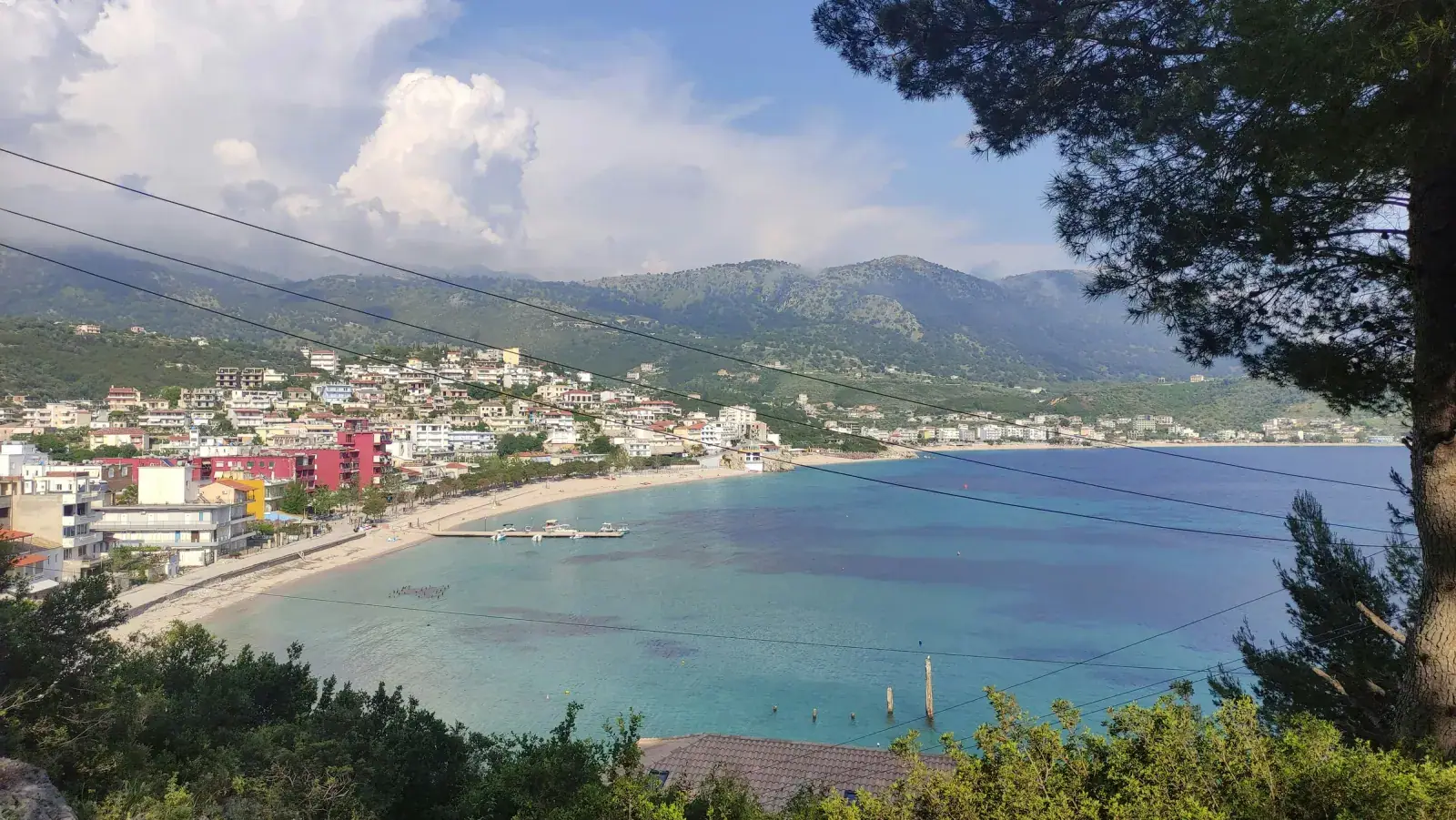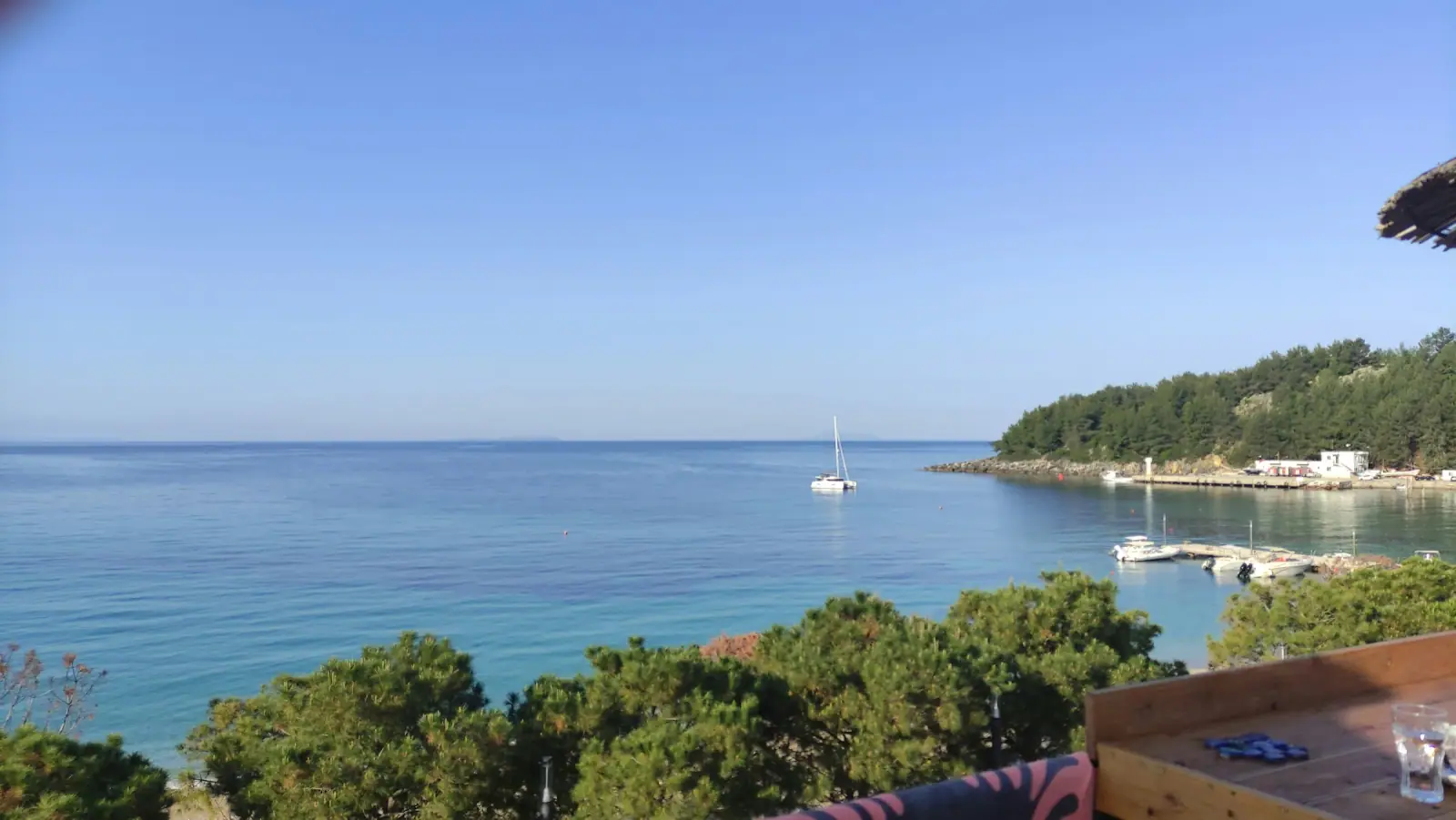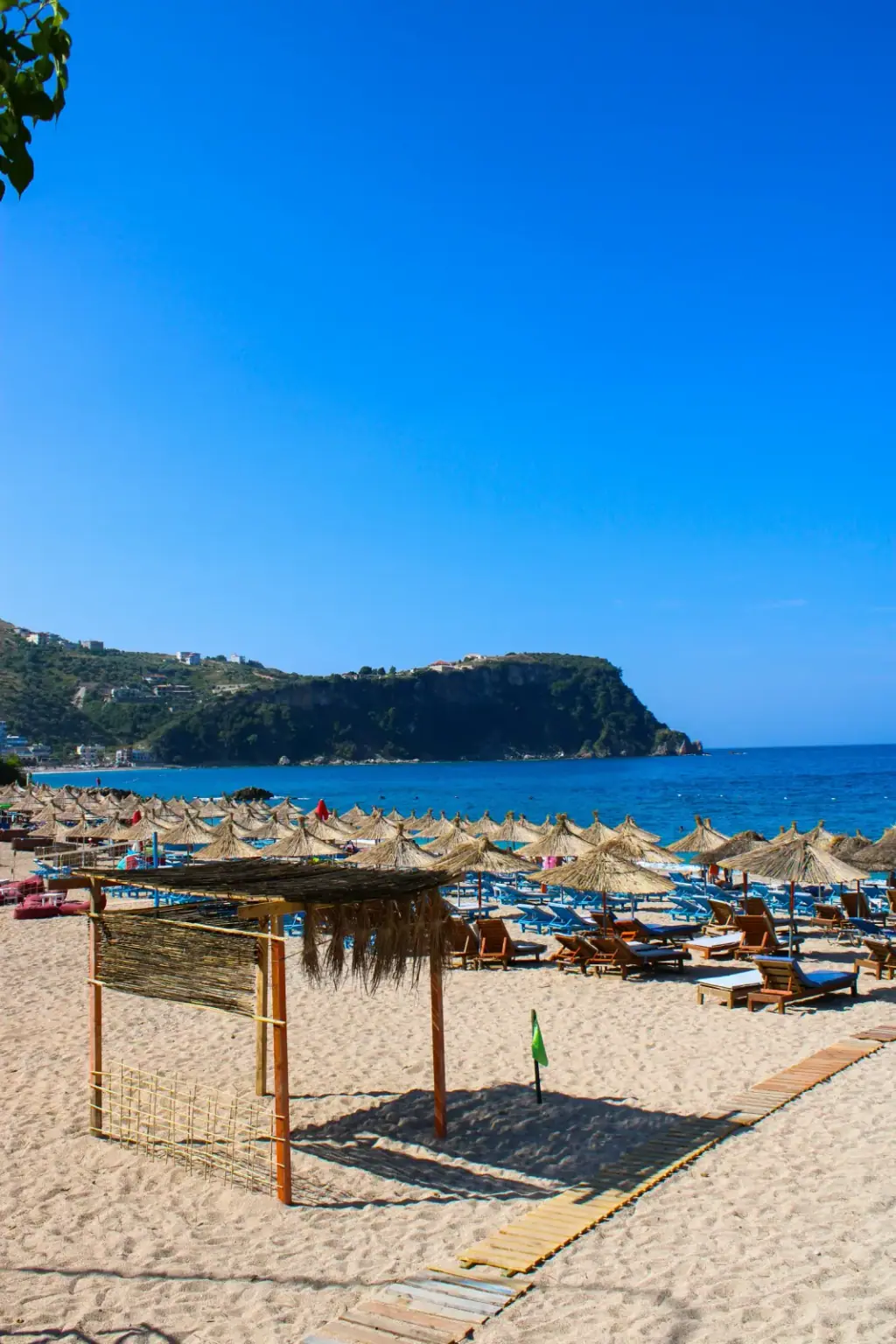
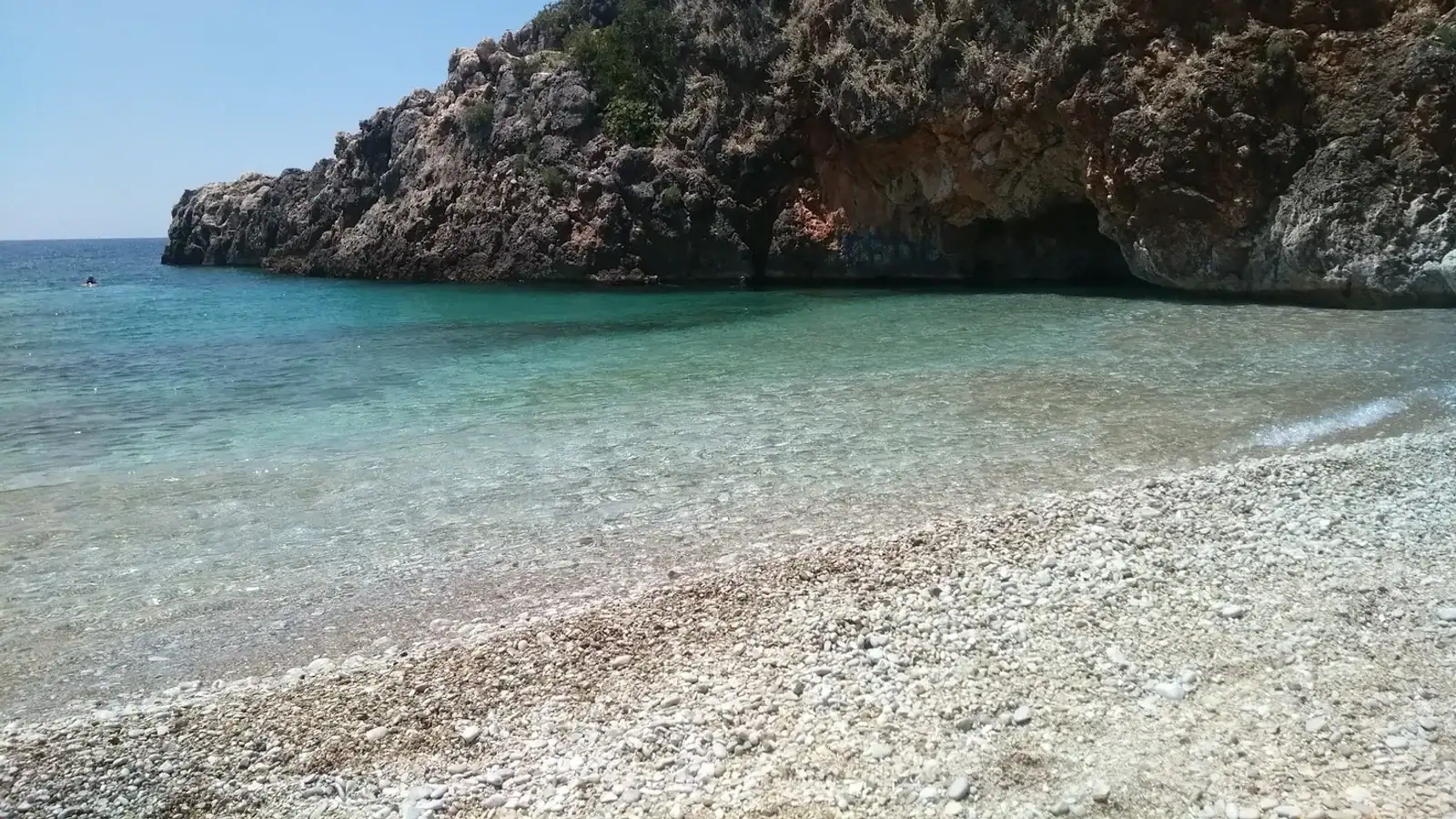
If you're researching the Himara cost of living as a digital nomad, the short answer is 700-1,500 EUR per month for a comfortable life on the Albanian Riviera. That's a full month of accommodation, food, internet, transport, and enough seaside dinners to make your friends back home jealous. Himara is one of the cheapest coastal towns in Europe where a remote salary buys more than survival. Fresh seafood, a swim in the Ionian, and money left over.
This guide breaks down exactly what one month costs across three budget tiers, with real prices in Albanian lek (ALL) and euros. Albania's currency is the lek, and the exchange rate sits at roughly 1 EUR = 100 ALL. Euros are accepted widely, but you'll get better rates paying in lek.
Compare hotels, apartments, and Vrbo rentals on the map. Powered by Stay22.
Monthly Budget at a Glance
| Category | Budget Nomad (700-900 EUR) | Comfortable Nomad (1,000-1,500 EUR) | Premium Nomad (1,800-2,500 EUR) |
|---|---|---|---|
| Accommodation | 300-450 EUR | 500-800 EUR | 900-1,400 EUR |
| Food & groceries | 200-250 EUR | 300-400 EUR | 450-600 EUR |
| Internet & phone | 15-30 EUR | 30-50 EUR | 50-80 EUR |
| Transport | 20-40 EUR | 50-100 EUR | 100-200 EUR |
| Entertainment | 50-80 EUR | 100-150 EUR | 200-300 EUR |
| Miscellaneous | 30-50 EUR | 50-80 EUR | 100-150 EUR |
These numbers reflect shoulder season prices (May-June and September-October), the best months for nomads. July-August prices jump 30-50% on accommodation and some services. Winter (November-March) is cheaper but many businesses close.
For context: Lisbon runs 1,500-2,500 EUR/month for the same lifestyle. Bali's popular nomad hubs cost 1,000-1,800 EUR. Tbilisi sits around 800-1,400 EUR. Himara undercuts all of them on the budget end while offering a Mediterranean lifestyle that Tbilisi and Bali can't match.
Accommodation Costs
Accommodation is your biggest expense, and where the three budget tiers diverge most.
Budget Nomad: 300-450 EUR/month
Basic studio apartments or guesthouse rooms on a monthly basis. Himara's long-stay rental market is informal, most deals happen through Facebook groups, Booking.com messages, or walking into guesthouses and negotiating in person.
| Option | Nightly Rate | Monthly Rate (negotiated) |
|---|---|---|
| Basic studio apartment | 2,000-3,000 ALL/night (20-30 EUR) | 30,000-45,000 ALL (300-450 EUR) |
| Guesthouse private room | 2,500-4,000 ALL/night (25-40 EUR) | 35,000-50,000 ALL (350-500 EUR) |
Monthly rentals come with a 30-50% discount over nightly rates, you need to ask, nobody advertises monthly pricing. Most budget apartments include basic Wi-Fi, a kitchenette, and AC. Himara is walkable, so even "far" from center means a 15-minute walk.
Comfortable Nomad: 500-800 EUR/month
This is where most nomads land. A proper one-bedroom apartment with reliable Wi-Fi, a kitchen, a workspace (or at least a table that works as one), and usually a balcony with a sea view.
| Option | Nightly Rate | Monthly Rate (negotiated) |
|---|---|---|
| One-bedroom apartment | 5,000-8,000 ALL/night (50-80 EUR) | 50,000-80,000 ALL (500-800 EUR) |
| Apart-hotel with amenities | 6,000-10,000 ALL/night (60-100 EUR) | 60,000-90,000 ALL (600-900 EUR) |
At this tier, look for apartments in the Potami area or near the center of town. Ask landlords about internet speed before committing, apartment Wi-Fi ranges from barely functional to a solid 20+ Mbps, and you won't know until you test it. A good apartment at 600 EUR/month with a sea-view balcony and working Wi-Fi is the sweet spot.
Premium Nomad: 900-1,400 EUR/month
Boutique hotel suites, high-end apartments, or the best sea-view properties in town. At this level, you're getting a pool, potentially a gym, quality furnishings, and fast internet included.
For detailed accommodation options at every price point. Check the where to stay guide and the budget travel guide.
Food & Grocery Costs
Food in Himara is genuinely cheap by European standards, and the quality is high. Fresh fish comes off boats daily, produce is local and seasonal, and Greek-Albanian cuisine is built on olive oil, grilled meat, and vegetables, simple food done well.
Eating Out
| Meal Type | Price (ALL) | Price (EUR) |
|---|---|---|
| Coffee (espresso/macchiato) | 100-200 ALL | 1-2 EUR |
| Breakfast at a cafe | 300-600 ALL | 3-6 EUR |
| Gyros or street food | 300-500 ALL | 3-5 EUR |
| Local taverna lunch/dinner | 800-1,500 ALL | 8-15 EUR |
| Mid-range restaurant dinner | 1,500-3,000 ALL | 15-30 EUR |
| Beer (local) | 200-400 ALL | 2-4 EUR |
| Cocktail | 500-800 ALL | 5-8 EUR |
A full day of eating out, coffee, gyros for lunch, seafood dinner with a beer, runs 15-25 EUR. That's 450-750 EUR/month if you never cook.
Grocery Shopping
Mini-markets are well-stocked for basics. Shops along the main road cover everything for home cooking.
| Item | Price (ALL) | Price (EUR) |
|---|---|---|
| Bread (loaf) | 100-150 ALL | 1-1.50 EUR |
| Eggs (10) | 200-300 ALL | 2-3 EUR |
| Local cheese (kg) | 500-800 ALL | 5-8 EUR |
| Chicken breast (kg) | 400-600 ALL | 4-6 EUR |
| Fresh fish (kg, market) | 800-1,500 ALL | 8-15 EUR |
| Fruit/vegetables (kg) | 80-200 ALL | 0.80-2 EUR |
| Olive oil (1L, local) | 600-1,000 ALL | 6-10 EUR |
| Wine (bottle, Albanian) | 400-800 ALL | 4-8 EUR |
Monthly Food Budget by Tier
- Budget nomad (200-250 EUR): Cook most meals, eat out 2-3 times per week at local tavernas. Grocery bill around 120-150 EUR/month, eating out budget 80-100 EUR.
- Comfortable nomad (300-400 EUR): Mix of cooking and eating out. Lunch at cafes most days, dinner out 4-5 times per week. This is the lifestyle sweet spot, you eat well without thinking about it.
- Premium nomad (450-600 EUR): Eat out for most meals, including mid-range restaurants and waterfront seafood spots. A few cocktail evenings per week.
For restaurant recommendations, see the best restaurants in Himara guide.
Internet & Coworking Costs
This is the make-or-break category for nomads, and Himara is honest-to-a-fault territory. There are no dedicated coworking spaces in town. Your options are apartment Wi-Fi, mobile data, and cafes.
Internet Setup
| Option | Speed | Monthly Cost |
|---|---|---|
| Apartment Wi-Fi (included) | 10-25 Mbps | 0 EUR (included in rent) |
| Fixed ISP (if not included) | 15-25 Mbps | ~18 EUR |
| Mobile data (Vodafone/ONE) | 30-40 Mbps 4G | 10-20 EUR |
| eSIM (Saily, top pick; Airalo, Holafly) | Variable | 15-30 EUR |
The practical setup: Apartment Wi-Fi for general work, plus a local SIM for tethering during video calls. A Vodafone SIM with unlimited data runs about 1,500 ALL (15 EUR) per month. The Tourist Pack at 29 EUR gets you 100 GB over 21 days.
Wi-Fi is generally reliable in the town center and Potami area but inconsistent in outlying neighborhoods and during peak evening hours. Mobile data tethering is your insurance policy for important calls.
Cafe "Coworking"
No formal coworking space, cafes are your office. The social contract: buy a coffee every couple of hours, don't hog tables during lunch rush, tip. Your "coworking" cost is coffee money, 2-4 EUR per session. See the coworking cafes guide for Wi-Fi speeds, outlets, and quiet hours at each spot.
Monthly internet costs by tier:
- Budget nomad (15-30 EUR): Apartment Wi-Fi + one SIM card.
- Comfortable nomad (30-50 EUR): SIM card + cafe coffees as workspace rent + occasional cafe meals.
- Premium nomad (50-80 EUR): Premium data plan + regular cafe sessions + occasional day trips to Saranda's coworking space (25 EUR for 3 days).
Transport Costs
Himara is small. You can walk across town in 20 minutes. Most nomads don't need daily transport at all.
| Option | Cost |
|---|---|
| Walking | Free |
| Local bus (to nearby beaches) | 100-300 ALL (1-3 EUR) per trip |
| Scooter rental | 2,000-3,000 ALL/day (20-30 EUR), ~200 EUR/month |
| Car rental | 3,000-5,000 ALL/day (30-50 EUR) |
| Taxi to airport (Tirana) | 15,000-20,000 ALL (150-200 EUR) |
| Bus to Tirana | 1,500-2,000 ALL (15-20 EUR) |
Monthly Transport by Tier
- Budget nomad (20-40 EUR): Walk everywhere in town. Occasional bus to Livadhi Beach or Potami Beach. Maybe one day trip by bus.
- Comfortable nomad (50-100 EUR): Rent a scooter for a week or two to explore beaches like Gjipe, Jale, and Llamani. Scooter freedom is worth it for beach-hopping.
- Premium nomad (100-200 EUR): Rent a car for the month. Gives you full access to the Albanian Riviera. Dhermi, Borsh, Porto Palermo, and weekend trips to Gjirokaster or Saranda.
For rental details, see the car and scooter rental guide.
Entertainment & Activities
The best things in Himara are free, swimming, hiking, sunsets. Your entertainment budget covers social activities and excursions.
| Activity | Cost |
|---|---|
| Beach access | Free (most beaches) |
| Sunbed rental | 500-1,000 ALL (5-10 EUR) |
| Boat tour (full day) | 3,000-5,000 ALL (30-50 EUR) |
| Diving session | 4,000-6,000 ALL (40-60 EUR) |
| Hiking (self-guided) | Free |
| Old Town exploration | Free |
| Nightlife (drinks + entry) | 1,000-3,000 ALL (10-30 EUR) per evening |
| Gym (if available) | 3,000-5,000 ALL (30-50 EUR) per month |
Monthly Entertainment by Tier
- Budget nomad (50-80 EUR): Free beaches, hiking, Old Town walks. A couple of boat trips and a few evenings out.
- Comfortable nomad (100-150 EUR): Regular beach days with sunbeds, one or two boat tours, occasional diving, 2-3 nights out per week.
- Premium nomad (200-300 EUR): Private boat trips, diving courses, regular nightlife, day trips to surrounding areas.
Total Monthly Budget: The Full Picture
Here's the complete breakdown across all three tiers.
Budget Nomad: 700-900 EUR/month
Cooking most meals in a basic studio, working from apartment Wi-Fi and cafes, walking everywhere, free beaches and hiking. This is a genuinely good life, not a sacrifice. At 800 EUR/month, you're on the Mediterranean for less than a studio apartment costs in most European cities. Best for: early-career nomads, those building savings, extended slow-travel stays.
Comfortable Nomad: 1,000-1,500 EUR/month
A proper apartment with a workspace, eating out regularly, a scooter for beach exploration, reliable internet from multiple sources. This is where the lifestyle-to-cost ratio peaks. Best for: most remote workers, freelancers, anyone wanting the best value.
Premium Nomad: 1,800-2,500 EUR/month
High-end apartment or boutique hotel, dining at the best restaurants, car rental, regular activities. At 2,500 EUR/month, you're living a premium coastal lifestyle that would cost 4,000-6,000 EUR in Portugal, Croatia, or southern France. Best for: senior professionals prioritizing comfort.
How Himara Compares
| Destination | Monthly Cost (Comfortable Tier) | Notes |
|---|---|---|
| Himara, Albania | 1,000-1,500 EUR | Best value Mediterranean. Limited coworking. |
| Bali, Indonesia | 1,000-1,800 EUR | Excellent coworking, longer flights, visa hassle. |
| Lisbon, Portugal | 1,500-2,500 EUR | Great infrastructure, expensive rent. |
| Tbilisi, Georgia | 800-1,400 EUR | Cheapest, but no beach and colder winters. |
| Split, Croatia | 1,500-2,200 EUR | Similar coastline, significantly pricier. |
Himara wins on cost-to-lifestyle ratio. It loses on infrastructure, limited coworking, variable Wi-Fi, fewer international flights. For nomads who don't need a WeWork every day, the tradeoff is worth it.
Best Months for Digital Nomads
Himara's economy is seasonal, and timing your stay matters.
May-June and September-October are the sweet spots. Weather is warm (22-28C), beaches are uncrowded. Prices are 30-40% below peak, and most businesses are open. The nomad community peaks in these months, enough people to be social, not so many that cafes are packed.
July-August is full tourist season. Prices peak, beaches are crowded, and cafes are too busy for laptop work. November-April sees many businesses close entirely. A handful of nomads stay through winter at rock-bottom prices (apartments for 200-300 EUR/month), but expect solitude and limited services.
For a detailed month-by-month breakdown, see the digital nomad guide to Himara.
Tips for Keeping Costs Down
Negotiate monthly rates. Contact accommodation directly, mention 30+ days, and ask for their best rate. Landlords prefer guaranteed income over empty beds.
Cook breakfast and lunch. Save restaurant budget for dinners. Grocery breakfast and homemade lunch keeps food under 5 EUR/day.
Avoid peak season. June vs August can mean 300-500 EUR/month difference on accommodation alone.
Join local nomad groups. Facebook groups surface the best apartment deals and cafe recommendations.
For more budget tips, check the Himara on a budget guide and the practical info page.
Frequently Asked Questions
Is Himara cheap enough to live on 1,000 EUR per month?
Yes. At 1,000 EUR/month, you can rent a one-bedroom apartment (400-500 EUR), eat a mix of home-cooked and restaurant meals, have reliable internet, and cover entertainment and transport. It's comfortable rather than lavish, especially in shoulder season when prices are lowest.
Does Himara have coworking spaces for digital nomads?
No. Himara has no dedicated coworking space. Remote workers use cafes with Wi-Fi as their workspace. The nearest proper coworking is in Saranda, about 1.5 hours south. Most nomads work from apartment Wi-Fi and cafe-hop when they want a change of scenery. See the coworking cafes guide for the best options.
Is the internet in Himara reliable enough for remote work?
Apartment Wi-Fi averages 15-25 Mbps, enough for video calls and general productivity. Mobile 4G hits 30-40 Mbps as backup. The main risk is evening slowdowns. For important calls, tethering through mobile data is the standard workaround among resident nomads.
What visa do digital nomads need for Albania?
US citizens can stay visa-free for up to one year. EU citizens get 90 days. Albania also offers a Digital Nomad "Unique Permit" for longer stays. Requirements and processing are straightforward compared to most countries. Check current requirements before traveling, as visa rules update periodically.
When is the best time for digital nomads to visit Himara?
May through June and September through October. These shoulder months offer warm weather, low prices, uncrowded beaches, and the best balance of open businesses and affordable stays. July and August are too crowded and expensive for productive remote work, while winter sees many businesses closed entirely.