Beaches in Himara are generally safe for swimming. The Ionian Sea along the Albanian Riviera is calmer than the Adriatic side, with warm, clear water and mild conditions through most of the summer. That said, there are real hazards worth understanding before you get in. Albania does have a legal lifeguard regime, but it attaches to licensed beach stations and managed public beaches, not to the wild coves half this coast is made of, and the regulation itself provides for beaches that carry a sign saying nobody is watching. Pebble beaches create steep underwater drop-offs that can surprise waders. Sea urchins are common on rocky sections. Currents pick up near headlands and canyon mouths. And WHO advises avoiding midday sun outright once the UV index passes 8, which a Mediterranean summer does routinely. None of this should discourage you from swimming -- it should make you swim smarter. This guide covers every safety concern beach by beach so you can enjoy the water without surprises.
Compare hotels, apartments, and Vrbo rentals on the map. Powered by Stay22.
Hazard Summary
| Hazard | Risk Level | Where | Prevention |
|---|---|---|---|
| No lifeguard on duty | High | Unorganised coves; anywhere the tower is unstaffed | Supervise children, swim with a partner |
| Steep drop-offs | Moderate | Most pebble beaches | Enter slowly, test depth before committing |
| Underwater rocks | Moderate | Llamani, Filikuri, Akuarium | Water shoes. Watch footing |
| Sea urchins | Moderate | Rocky sections of all beaches | Avoid stepping on rocks. Wear water shoes |
| Currents | Low-Moderate | Gjipe, headlands, open stretches | Stay close to shore, don't fight currents |
| Jellyfish | Low | Open water, any month | Check the water before entering; seawater rinse and hot water if stung |
| Sunburn/heat | High | Everywhere | SPF 50+, shade, hydration |
Lifeguards: What the Law Requires, and Where That Leaves You
Albanian law does require lifeguards, and it is worth knowing exactly where the duty falls, because it does not fall everywhere you will want to swim.
Council of Ministers decision nr. 649, dated 16 October 2024, the regulation governing beach stations, requires every licensed beach station to guarantee a qualified, certified beach lifeguard (vrojtues plazhi) for the entire time it is operating, one for each 80 metres of linear shoreline, and stations shorter than 80 metres are covered too. Article 9 of the regulation applies the same safety requirements to public beaches, and a January 2026 amendment extended them again to public beaches that a municipality charges admission for. The regulation also specifies what you should be able to see from the sand:
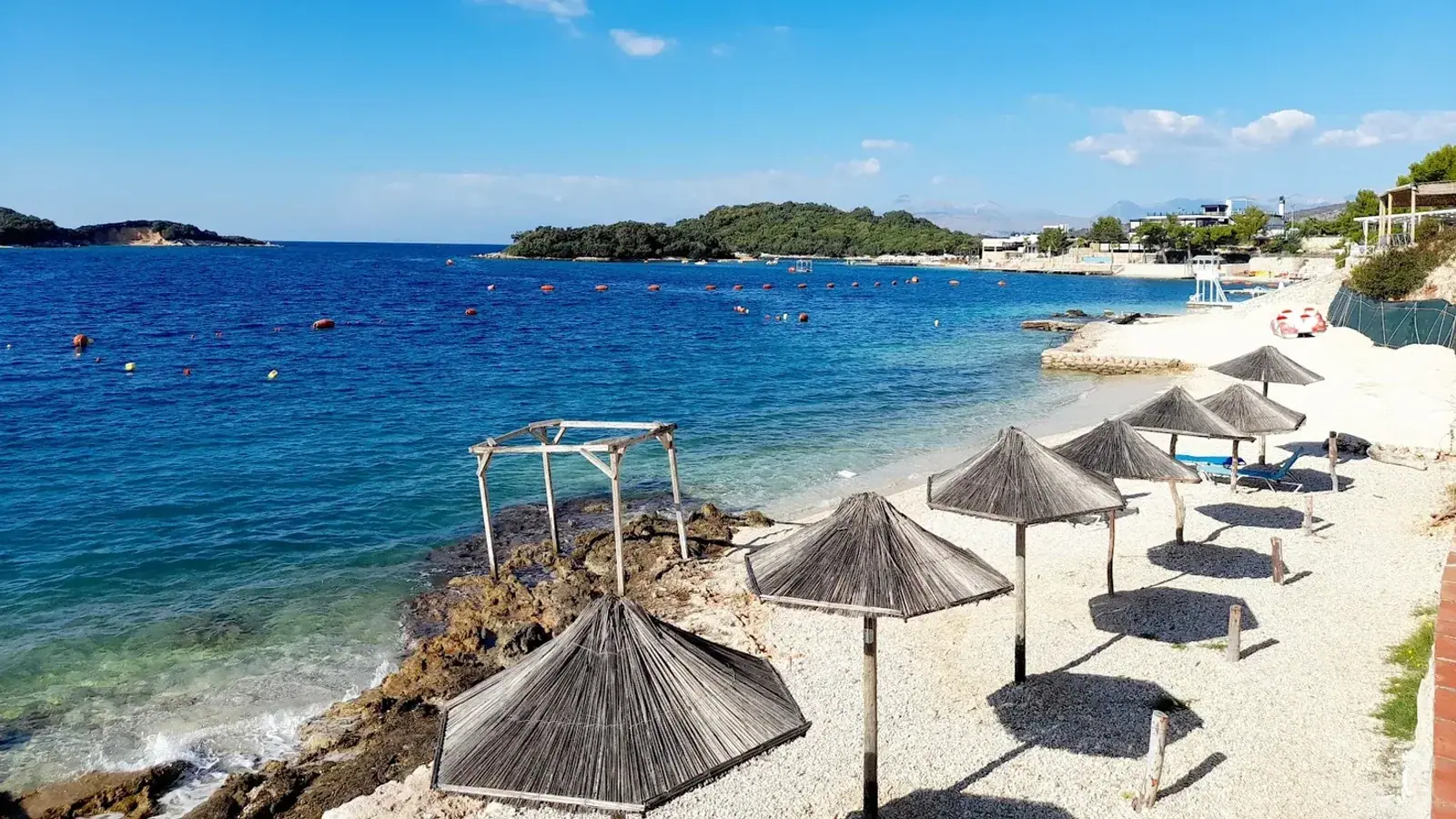
- An observation point set forward of the first row of umbrellas, with a clear field of view, its canopy in red fabric marked "VROJTUES PLAZHI" / "LIFEGUARD".
- A daily flag on a 3.5 m pole, changed as conditions change: green means swimming is allowed, yellow means swim with care, red means swimming is forbidden. The pole must carry a board explaining the flags in Albanian and English.
- A marked swimming zone, its outer edge ringed with 22 cm red buoys strung on a floating rope every 30 to 50 m, reaching up to 200 m from shore for type A beaches and 100 m for type B, with white buoys of the same size marking the safe swimming water in as far as the 1.6 m depth line.
- Posted emergency contacts, and the instruction, in the regulation's own words, that "in the event of an emergency at sea, call 112."
And here is the part that matters most on this coast. Point 6 of the same article covers public beaches run by local government and type C beaches "where the safety criteria cannot be provided": these must post clearly visible signs reading "KUJDES! - KY PLAZH NUK KA VROJTUES PLAZHI" / "ATTENTION! - THIS BEACH HAS NO LIFEGUARD". The law, in other words, anticipates unguarded beaches and requires them to say so.
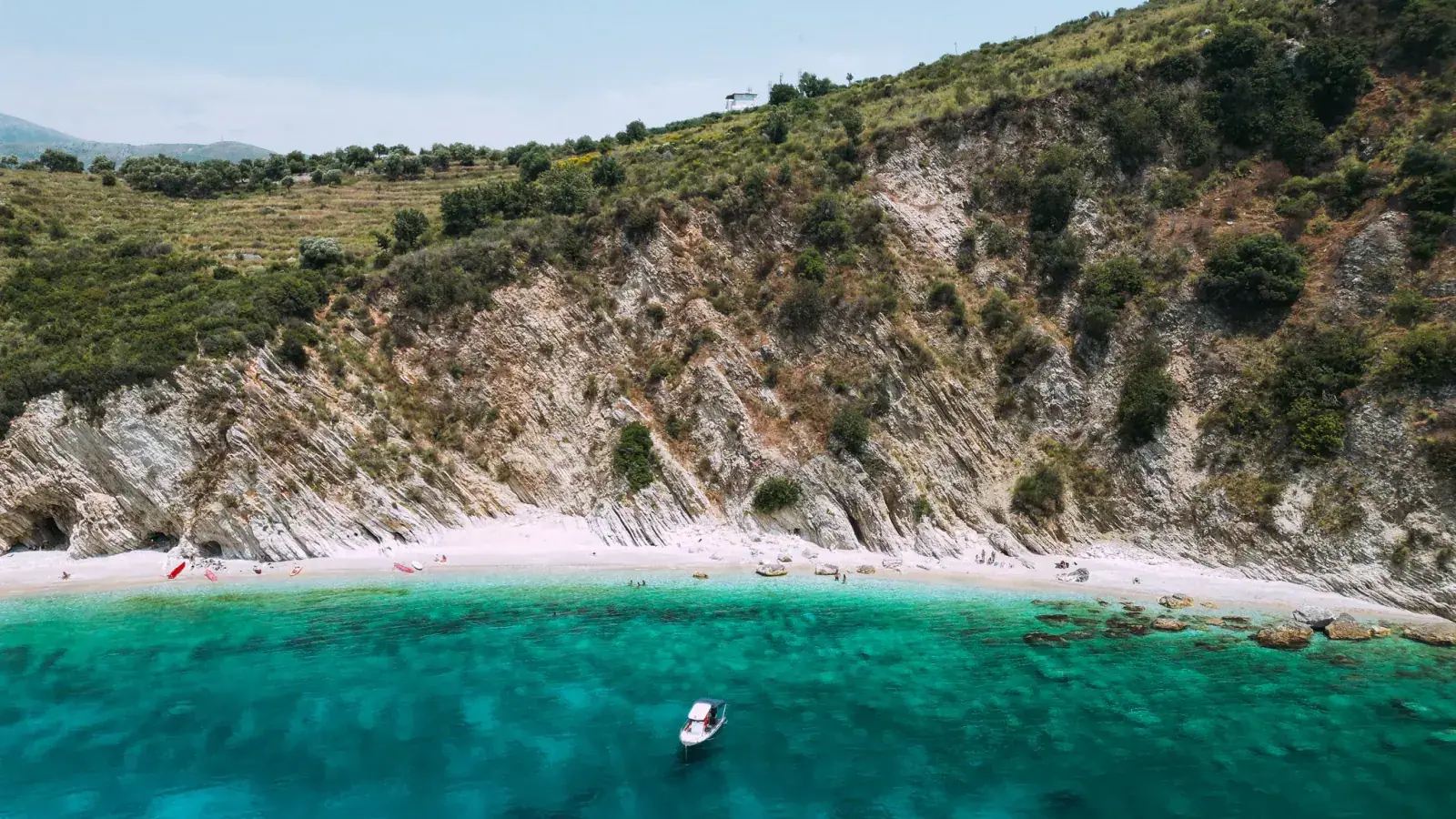
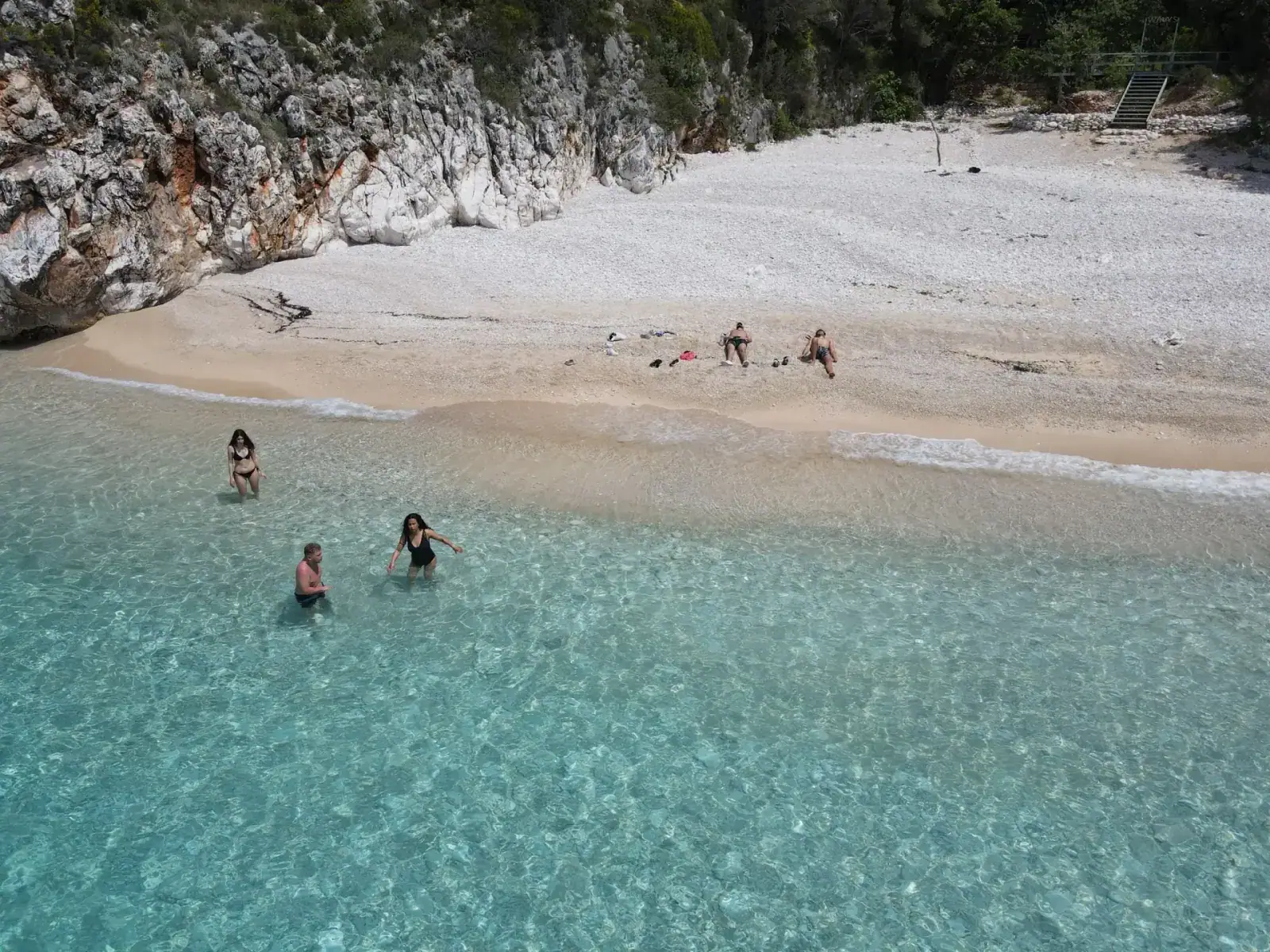
Practically: at an organised beach with sunbeds you should expect a red-canopy tower, a flag and a lifeguard, and it is fair to ask where they are if you cannot see them. At the coves you reach on foot or by boat, Filikuri, Gjipe, Akuarium, there is no beach station, so there is nobody on duty and you are entirely responsible for your own supervision in the water. Parents with young children should plan accordingly: someone should always be watching from close range, not from a sunbed 30 meters back.
If you are traveling with children, our Himara beaches for kids guide ranks beaches by safety for young swimmers.
Pebble Beach Hazards
Nearly every beach on the Albanian Riviera is pebble, not sand. This changes the safety picture in ways that sand-beach swimmers may not expect.
Steep Drop-Offs
Pebble beaches often have steep underwater gradients. You might be ankle-deep one step and waist-deep the next. This is especially pronounced at:
- Spile Beach: Drops off quickly within 3-4 meters of shore.
- Llamani Beach: Uneven bottom with sudden depth changes.
- Potami Beach: Moderate drop-off, less predictable than Livadhi.
Livadhi Beach and Borsh Beach are the exceptions -- both have more gradual entries, making them better choices for families.
Underwater Rocks
Large submerged rocks and boulders are present at several beaches, particularly:
- Llamani Beach: Rocky bottom in several sections, poor visibility at the waterline.
- Filikuri Beach: Beautiful for snorkeling precisely because of the rocks, but they create foot hazards at entry.
- Akuarium Beach: Rocky entry is part of the experience but requires careful footing.
Water Shoes Are Essential
This is not optional advice. Pack reef shoes or water shoes with hard soles. You need them for:
- Walking on pebbles without pain (especially at Gjipe where stones are larger).
- Protecting feet from sea urchin spines on rocky entries.
- Navigating submerged rocks without slipping.
Cheap water shoes (1,000-1,500 ALL) are sold at shops in Himara town and along the Spile promenade, but sizes and quality are limited. Bring your own if possible.
Currents and Wave Conditions
The Ionian coast along Himara is generally calm. You are swimming in a sheltered stretch of the Mediterranean with no significant tidal movement. On a typical summer day, the water is flat to gently rolling. However, currents do exist in specific situations.
Where Currents Are Strongest
- Gjipe Beach: Sits at the mouth of a canyon that funnels wind and water. Currents can develop along the edges of the cove, particularly when wind pushes water into the canyon.
- Headlands and points: Where beaches end at rocky headlands (common at Llamani, Filikuri, and between Dhermi coves), water moves faster as it wraps around the point. Stay away from the rocks at beach edges.
- Open stretches of Borsh: The 7 km length of Borsh Beach means sections further from shore can have gentle longshore drift on windy days.
Wind-Driven Conditions
The main wind to watch is the maestrale (NW wind), locally called "maestrali." It typically picks up in the afternoon and can create choppy conditions, especially on north-facing beaches like Drymades and Dhermi. When the maestrale is strong:
- Waves at Drymades Beach and Dhermi can reach 0.5-1 meter -- uncomfortable for casual swimming.
- South-facing beaches like Spile Beach and Llamani Beach stay calmer.
- If conditions look rough, check our guide to Himara beaches on windy days for sheltered alternatives.
What to Do in a Current
If you feel yourself being pulled, do not swim directly against it. Swim parallel to shore until you are out of the current, then swim back in. The currents here are not powerful enough to drag a competent swimmer far out, but fighting them wastes energy.
Sea Urchins
Sea urchins (ricci di mare in Italian, which many locals understand) are present on rocky sections of most Himara beaches. They are dark, spiny, and sit on submerged rocks and boulders, usually in water less than 2 meters deep.
Where They Are Most Common
- Rocky edges of Spile Beach, particularly near the southern cliffs.
- Entry areas at Filikuri Beach and Akuarium Beach.
- Around submerged boulders at Llamani Beach.
- Less common on pure pebble or sand-gravel sections (Livadhi, Borsh).
How to Avoid Them
- Wear water shoes with hard soles. This is the simplest and most reliable prevention.
- Enter the water slowly and look where you step, especially on rocky entries.
- Avoid walking on visible rocks below the waterline.
- Shuffle your feet rather than lifting and placing them.
What to Do If You Step on One
Sea urchin spines break off under the skin and cause sharp pain and swelling. The NHS treats spines and stings from sea creatures the same way, and its advice is the one to follow:
- Exit the water and sit somewhere you can see the affected area clearly.
- Rinse the area with seawater, not fresh water.
- Remove the spines "using tweezers or the edge of a bank card". Never with bare hands.
- Soak the area in very warm water, "as hot as can be tolerated", for at least 30 minutes. If you cannot soak it, use hot flannels or towels.
- Take paracetamol or ibuprofen for the pain.
The NHS is equally clear about what not to do: "do not pee on the sting", "do not apply ice or a cold pack", "do not cover or close the wound". Vinegar appears nowhere in its advice. Get emergency help for difficulty breathing, chest pain, severe swelling, severe bleeding, vomiting, fits, or loss of consciousness, and see a doctor if the wound looks infected.
Jellyfish
Jellyfish come and go on this coast, usually arriving in groups pushed by currents rather than as isolated encounters. Nobody publishes sighting data for the Albanian Ionian, so treat any month as possible and check the water before you get in.
Species You May See
Two Mediterranean species are worth telling apart. The mauve stinger, Pelagia noctiluca, is the one that hurts: a peer-reviewed review in Marine Drugs calls it "from the irritant/toxic point of view ... the most important Mediterranean jellyfish", and attributes the abnormal Mediterranean blooms of the early 1980s mainly to it (Mariottini & Pane, 2008). The moon jellyfish, Aurelia aurita, translucent with four visible rings, is one of the species the same review says proliferated less and "caused less health problems because of their scant poisonousness".
What to Do If Stung
The NHS advice is the same for any sea creature sting:
- Rinse the affected area with seawater, not fresh water.
- Remove any tentacles or spines with tweezers or the edge of a bank card, never with bare hands.
- Soak the area in very warm water, as hot as can be tolerated, for at least 30 minutes.
- Take paracetamol or ibuprofen for the pain.
- Do not pee on the sting, apply ice, or cover the wound.
Call 112 or get to a hospital if there is difficulty breathing, chest pain, severe swelling around the sting, vomiting, fits, or loss of consciousness.
Prevention
Before entering the water, scan the surface and shallow areas for jellyfish. If you see one, there are usually more nearby. On days when jellyfish are reported, beaches with less open-water exposure (small coves like Filikuri and Akuarium) tend to see fewer than long, exposed stretches.
Sun and Heat Safety
Mediterranean summer sun is the hazard most likely to actually ruin a beach day here. WHO's UV index guidance is the benchmark to plan around: at an index of 3 to 7 you should "seek shade during midday hours" and wear a shirt, sunscreen and hat; at 8 and above the advice hardens to "avoid being outside during midday hours" and shade, shirt, sunscreen and hat become "a must" (WHO, UV index Q&A). Check the day's forecast index rather than guessing, and assume a full unprotected beach day will burn you whatever your skin tone.
Practical Measures
- Sunscreen: Apply SPF 50+ liberally and reapply every 90 minutes, or immediately after swimming. Bring sunscreen from home -- Albanian pharmacy options are limited and expensive (2,000-3,000 ALL for a small tube).
- Shade: Most organized beaches rent umbrellas (300-500 ALL). At unorganized beaches like Filikuri and Gjipe. There is no shade at all. Bring a lightweight beach shelter or position yourself near cliff shadow in the morning.
- Peak hours: The sun is most dangerous between 11:00 and 16:00. Consider a mid-day break at a restaurant or your accommodation.
- Hydration: Carry more water than you think you need. At beaches without facilities (Filikuri, Akuarium, Gjipe). There is no place to buy drinks once you arrive. Dehydration combined with heat and salt water is a common cause of headaches and fatigue among visitors.
- Children: Kids burn faster and dehydrate faster. UV-protective rash guards are strongly recommended over sunscreen alone for extended beach days.
Emergency Contacts and Medical Care
| Service | Contact | Notes |
|---|---|---|
| General emergency | 112 | The number the beach-station regulation tells you to call in a sea emergency |
| Ambulance | 127 | National Emergency Medicine Centre, 24/7. Do not assume the operator speaks English |
| Himara Health Center | Located in Himara town center | Minor injuries, stings, cuts, basic treatment |
| Nearest hospital | Vlora Regional Hospital | 62 km north, a 1h 30m - 2h 30m drive |
| Pharmacy | Multiple in Himara town center | Open daily in summer, reduced hours off-season |
What the Himara Health Center Can Handle
The health center (qender shendetesore) in Himara town handles minor beach injuries: sea urchin spine removal, wound cleaning, jellyfish sting treatment, and mild sunburn. Staff may speak limited English but can manage common situations.
What Requires Vlora Hospital
Anything beyond minor first aid -- suspected fractures, deep lacerations, serious allergic reactions, or any concern about a child -- requires the hospital in Vlora (Vlorë), 62 km north, which the Ministry of Health lists with surgery, intensive care, paediatrics and imaging among its posts. The drive is 1.5 to 2.5 hours via the SH8 and the Llogara Tunnel. If you are driving, the route is straightforward but includes mountain hairpins. Make sure you have a working navigation app downloaded offline.
Keep your travel insurance details accessible. If you need evacuation or hospital care, having your policy number ready speeds up everything.
For general practical planning, see our practical information page.
Beach-by-Beach Safety Notes
| Beach | Entry Depth | Urchin Risk | Current Risk | Best For |
|---|---|---|---|---|
| Spile Beach | Steep drop-off | Moderate (rocky edges) | Low | Convenience, not families with toddlers |
| Livadhi Beach | Gradual | Low | Low | Safest for kids and weak swimmers |
| Potami Beach | Moderate drop-off | Low-Moderate | Low | Calm days, adults |
| Filikuri Beach | Rocky, uneven | High | Low | Strong swimmers, snorkelers |
| Llamani Beach | Uneven, rocky sections | High | Low-Moderate | Confident swimmers |
| Gjipe Beach | Moderate | Low | Moderate (canyon mouth) | Fit adults, adventurers |
| Borsh Beach | Gradual | Low | Low-Moderate (on windy days) | Families, long walks |
| Drymades Beach | Moderate | Low | Moderate (when maestrale blows) | Experienced swimmers |
| Akuarium Beach | Rocky entry | High | Low | Snorkelers with water shoes |
Safest for kids: Livadhi Beach and Borsh Beach. Both have gradual entries and low urchin risk. See our full kids beach guide for details.
Deepest entries: Spile Beach and Potami Beach. Not dangerous for adults, but not ideal for non-swimmers.
Strongest currents: Gjipe Beach near the canyon mouth, and headland edges at Llamani and between Dhermi coves.
For a complete ranking of every beach, see our best beaches in Himara guide.
Frequently Asked Questions
Are Himara Beaches Safe for Swimming?
Yes. Himara beaches are safe for swimming for anyone who can handle basic open-water conditions. The Ionian Sea here is calm, warm, and clear throughout summer. The main risks are steep pebble entries, sea urchins on rocky sections, and the fact that a lifeguard is only legally required where there is a beach station or a managed public beach, so the wild coves have nobody watching. Supervise children closely. Wear water shoes, and enter unfamiliar beaches slowly.
Are There Jellyfish in Himara?
Jellyfish turn up on this coast as they do across the Mediterranean, and no sighting data is published for the Albanian Ionian, so check the water before you swim in any month. The painful one is the mauve stinger, Pelagia noctiluca, which the scientific literature calls the most important stinging jellyfish in the Mediterranean; the common moon jellyfish is far milder. If stung, rinse with seawater and soak in very warm water, per NHS advice.
Do You Need Water Shoes in Himara?
Yes. Water shoes are strongly recommended at every Himara beach and essentially required at rocky-entry beaches like Filikuri, Akuarium, and Llamani. They protect against pebble discomfort, sharp rocks, and sea urchin spines. Bring a pair with hard soles from home, as local shops have limited stock.
What Is the Nearest Hospital to Himara?
The nearest full hospital is Vlora Regional Hospital, 62 km north of Himara and a 1.5 to 2.5 hour drive along the SH8 and the Llogara Tunnel. For minor injuries, the Himara Health Center in town handles cuts, stings, and basic wound care. For emergencies, dial 112.
Is It Safe to Swim at Night in Himara?
Swimming at night is not recommended. The lifeguard duty in the beach-station regulation runs only while the station is operating, so after hours nobody is watching anywhere. Beaches are unlit, making it impossible to see rocks, drop-offs, or currents. If you do swim after dark, stay in very shallow water at a beach you know well, and never swim alone.
Sources
- VKM nr. 649, date 16.10.2024, "Per miratimin e rregullores 'Per kushtet dhe kriteret e ushtrimit te veprimtarise se stacionit te plazhit'" - Albanian Council of Ministers, article 9. Lifeguard per 80 m of shoreline, observation point, flag system, buoyed swimming zone, the "THIS BEACH HAS NO LIFEGUARD" sign, and the instruction to call 112 in a sea emergency. The decision has since been amended by VKM nr. 168, date 12.3.2025, VKM nr. 60, date 28.1.2026 and VKM nr. 346, date 13.5.2026; the only change any of them makes to article 9 is to extend its safety requirements to public beaches that a municipality charges admission for. Checked 20 September 2026.
- Jellyfish and other sea creature stings - NHS (UK). First aid for stings and spines, and what not to do. Checked 20 September 2026.
- Radiation: the ultraviolet (UV) index - World Health Organization. UV index bands and the protection advice at each. Checked 20 September 2026.
- Mariottini GL, Pane L. The mauve stinger Pelagia noctiluca (Forsskal, 1775). Distribution, ecology, toxicity and epidemiology of stings. A review. Marine Drugs 6(3):496-513, 2008. Relative toxicity of Pelagia noctiluca and Aurelia aurita in the Mediterranean. Checked 20 September 2026.
- Health advice for Albania and safety and security - UK Foreign, Commonwealth & Development Office. Ambulance number 127; beach flag and lifeguard instructions. Checked 20 September 2026.
- Spitali Rajonal Vlore - Albanian Ministry of Health. Clinical posts listed at the nearest hospital. Checked 20 September 2026.
- Distances from Himara - our own route guide for the Himara-Vlora distance and drive time.