What the submarine tunnel is
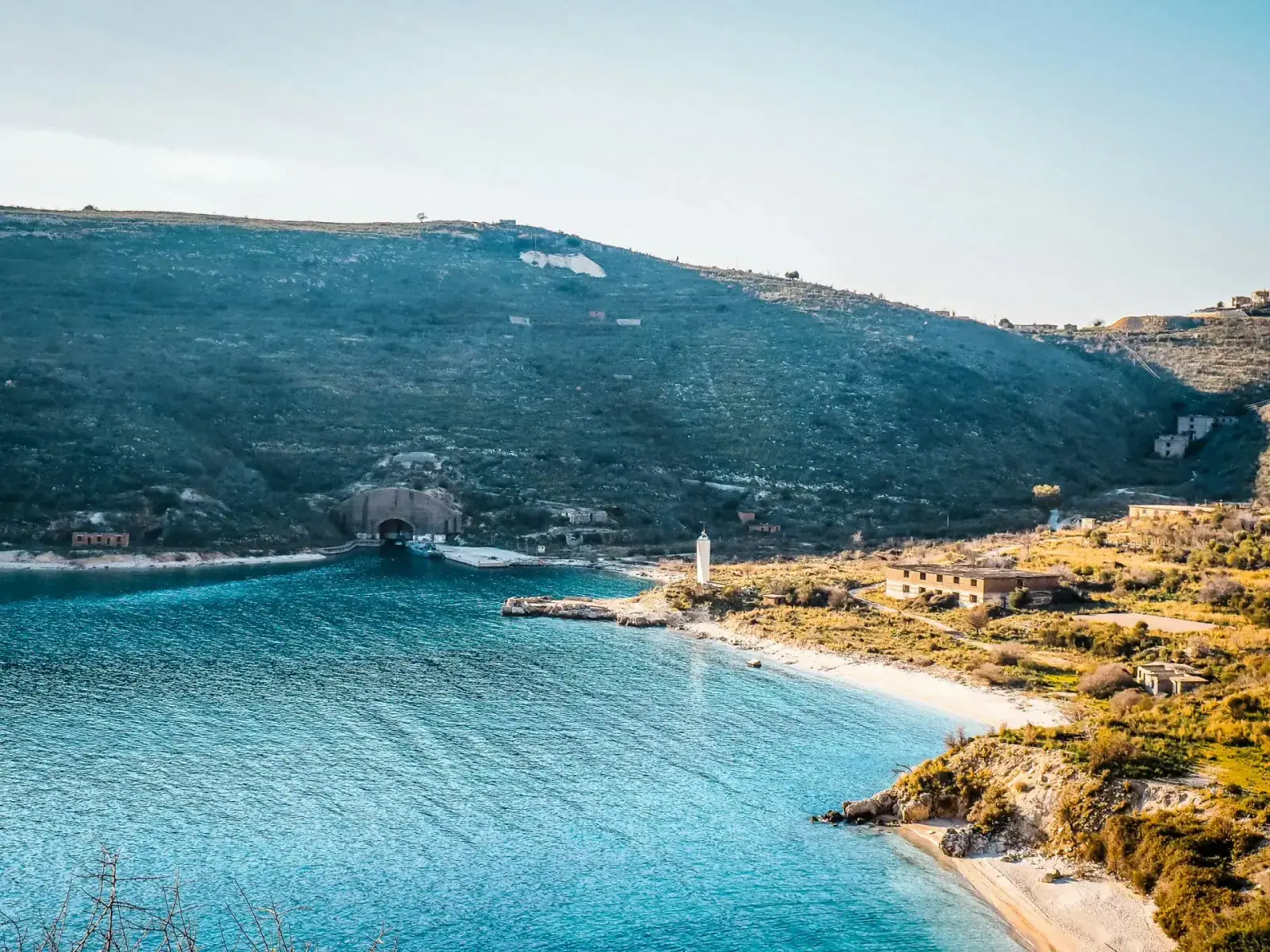
The Porto Palermo submarine tunnel is a Cold War-era underground naval base at the northern end of Porto Palermo Bay. Built between 1969 and 1988 under Enver Hoxha's communist regime, the tunnel was designed to hide and protect the Albanian Naval Force's Whiskey-class submarines from foreign inspection and aerial attack, first from the Soviet Union after Albania's 1961 split with Moscow, and later from any potential Cold War aggressor.
Construction history:
- Initial Chinese assistance during early excavation (Albania was aligned with China after the Soviet split)
- Albanian completion after the China alliance also cooled in the late 1970s
- Operational until 1998
- Sealed since 1998 with blast-resistant concrete-filled gates
The tunnel exceeds 650 metres in length and is approximately 12 metres high, with the underwater entrance designed so submarines could enter submerged or semi-submerged for maximum stealth.
Why it's a boat-tour landmark
The tunnel is one of the most striking Cold War military relics on the European coast, and the only way to see the entrance is from the water. Every Porto Palermo half-day tour includes:
- A short run to the bay's northern end
- Approach to the tunnel entrance
- 10–15 minutes for photos and brief explanation
- Continuation back into the bay for the castle and swim stop
The boat cannot enter the tunnel, which remains within a restricted military zone. The entrance itself is photogenic, and the contrast with the 19th-century castle elsewhere in the same bay is part of the tour's appeal.
What's inside (you can't see this from the boat)
The tunnel was built to be self-sufficient under siege:
- Up to four Whiskey-class submarines (75-metre Soviet diesel-electrics)
- Narrow-gauge railway for logistics
- Gantry cranes for maintenance
- Workshops, arsenals, command centres
- Internal supply systems to keep the base operational independently
The Whiskey-class submarines themselves were originally Soviet vessels stationed at the Pasha Liman base after Albania joined the Warsaw Pact in 1955. When Albania broke with the USSR in 1961, the country seized four of the twelve Russian Whiskey-class submarines then on its territory; the rest left with the Soviet withdrawal. The Porto Palermo tunnel was built to protect the four retained vessels. The submarines were eventually decommissioned; the tunnel was sealed in 1998.
For interior detail and overland tour status (when permitted), see our Porto Palermo Submarine Tunnel article.
Position
The submarine tunnel entrance sits at approximately 40.069°N, 19.781°E at the northern end of Porto Palermo Bay. From Himara by sea, the boat reaches the bay in ~25 minutes, runs to the tunnel entrance in another 5–10 minutes, then doubles back to the central peninsula and Ali Pasha's castle.
Practical notes
- The tunnel entrance is the most photographed Cold War feature in southern Albania
- Operators give brief verbal context during the stop; depth varies by skipper
- Don't try to swim toward the tunnel. It's still inside a military zone
- The tunnel is partly submerged, with water reaching the entrance and the upper portion visible as a concrete arch
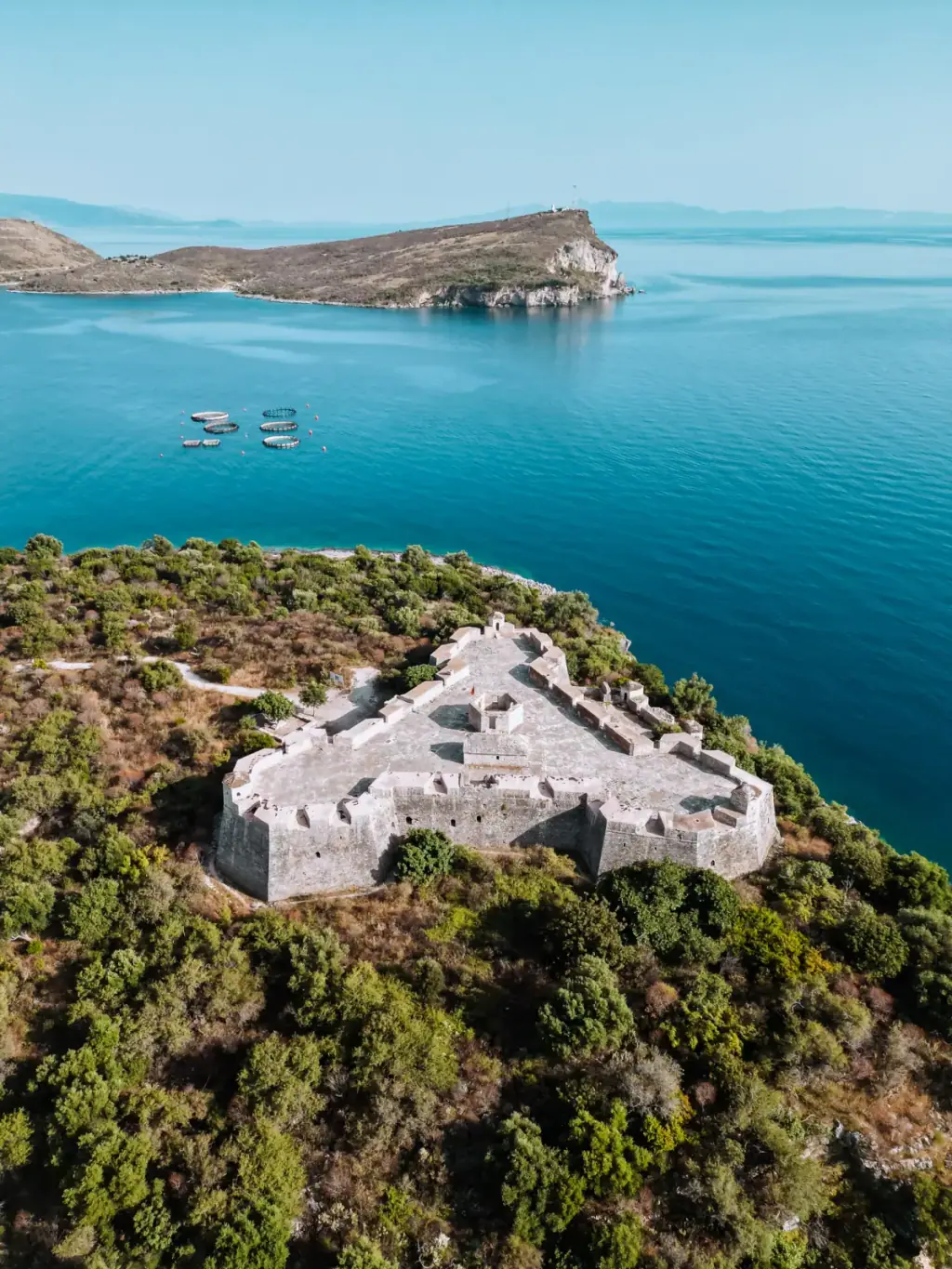
Why Porto Palermo's history layers together
Within ~500 metres of each other inside Porto Palermo Bay you have:
| Era | Site | What it controlled |
|---|---|---|
| 19th c. | Ali Pasha's Castle | Local population + Riviera coast |
| 20th c. (Cold War) | Submarine tunnel | Adriatic naval reach |
That density is what makes the southbound boat tour worth doing even if it's not as scenic as the Karaburun routes north.
Want to visit the submarine tunnel on a tour? It's the headline cultural stop on the Porto Palermo half-day boat tour from Himara, bookable on GetYourGuide with fixed prices and free cancellation.