Fig and Olive is the Himara restaurant you have to go looking for. It's tucked away from the road with no signage to announce it, which means most people who eat here arrived on a recommendation and a phone full of Google Maps directions. The payoff for finding it is a sea-view terrace that's popular for the evening light and a Mediterranean menu that leans into seafood, a more polished alternative to the traditional tavernas. This is a review of what it's actually like, who it suits, and whether the higher bill is justified.
Compare hotels, apartments, and Vrbo rentals on the map. Powered by Stay22.
Quick take
| Info | |
|---|---|
| Type | Mediterranean bistro, seafood-forward; Google Maps lists it plainly as "Restaurant" |
| Location | Livadh Road, north of Himara center, hidden with a sea-view terrace |
| Address | Rruga, Himarë 9425. Coordinates 40.11454, 19.73077 (Plus code 4P7J+R8) |
| Price range | 1,500–3,500 ALL per person, the spend band on its Google Maps listing on 20 September 2026, reported by 285 diners |
| Google rating | 4.7 from 1,090 reviews, read 20 September 2026 |
| Phone | +355 68 905 0872 |
| Best for | Sunset dinners, couples, a dressier meal out |
| Known for | Sea-view terrace, octopus salad, prawn saganaki |
| Hours | Afternoon and evening, no lunch. The Maps listing carried no weekday schedule on 20 September 2026, only a next opening of 5:30 PM |
| Reservations | Strongly recommended in high season |
| Why go | A sea-view terrace and a more polished evening out |
What it is, and who it's for
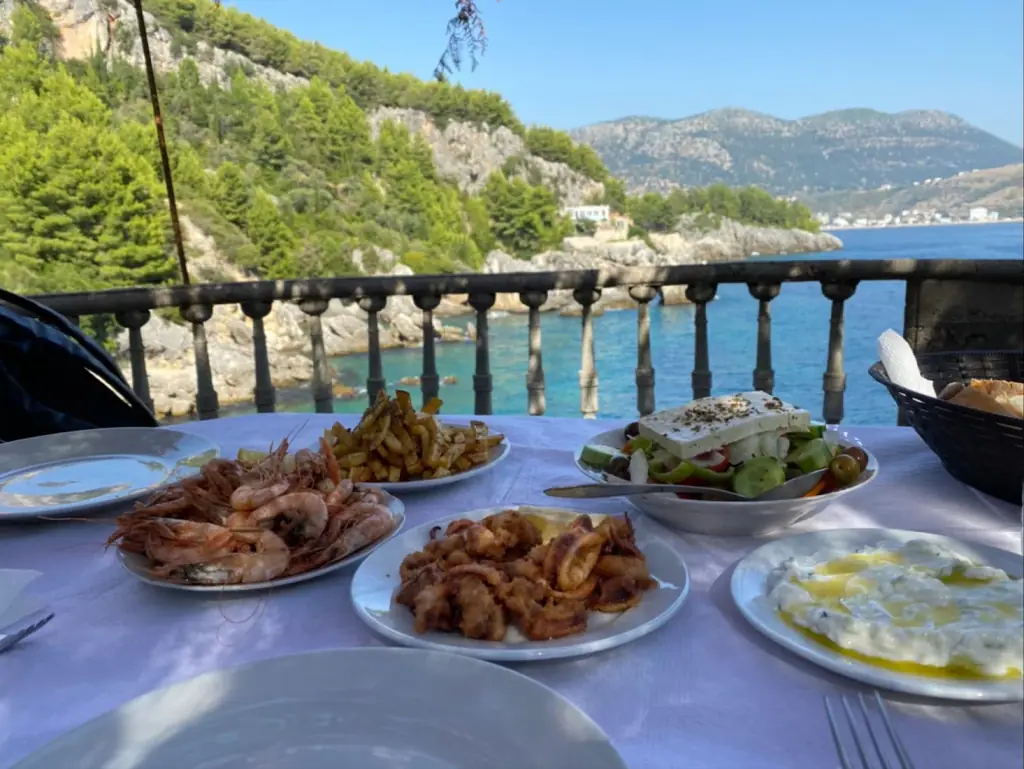
Fig and Olive is a bistro, not a taverna. The distinction matters. The menu reads Mediterranean with a strong seafood lean, the plating is more considered, and the room is built around the view rather than around turning tables fast. It opens in the late afternoon, and the sea-view terrace is at its best in the evening light. The catch, literally, is that it's slightly hidden from the road with no signs, so you'll want directions loaded before you set out.
This is a dinner-out restaurant, not a casual lunch stop. It suits couples, anyone after a sunset-anchored evening, and travelers who want one slightly elevated meal during a Himara stay. If you want cheap, fast, and traditional, the tavernas and grill houses will serve you better and lighter on the wallet.
What to order
The kitchen's reputation is built on its seafood and Mediterranean plates. The dishes that come up most often from people who've eaten here:
- Octopus salad. A recurring favorite, fresh and well-dressed
- Prawn saganaki. Prawns in a tomato-and-cheese sauce, a signature
- Seafood mains. The menu's strongest territory; this is where the bistro earns its bill
- Mediterranean small plates. Good for building a shared, leisurely meal as the sun drops
The smart move is to treat it as a seafood-and-sunset dinner: a couple of starters to share, a seafood main each, and a glass of wine timed to the light. That's the experience the place is designed around.
Price and value
Fig and Olive runs more expensive than Himara's traditional tavernas. That's the honest headline, and there's now a number on it: its Google Maps listing showed a spend band of 1,500–3,500 ALL per person, reported by 285 diners, when it was read on 20 September 2026. The same band sits on our Fig and Olive record. It's not a Western-Europe price shock, but it's a clear step up from the grill houses and family tavernas nearby. What you're paying for is the terrace, the sunset, the seafood, and a more polished evening. For a special dinner, most diners come away feeling it was worth it; for an everyday meal, the tavernas are better value.
If you want to keep the bill predictable, anchor the order around set-priced plates rather than anything sold by weight, and check portion sizes before ordering for a group.
When to go
- Evening: the sweet spot. Book a terrace table and arrive before the light starts to go
- High season (July–August): reserve ahead. It gets busy, and the best terrace tables go first
- No lunch: it opens in the afternoon, so don't plan a midday meal around it. Its Google Maps listing published no weekday schedule on 20 September 2026, only a next opening of 5:30 PM, so call +355 68 905 0872 if the timing matters
- Shoulder season: confirm it's open before making a special trip, as the afternoon-and-evening schedule tightens outside peak summer
Walkable from where?
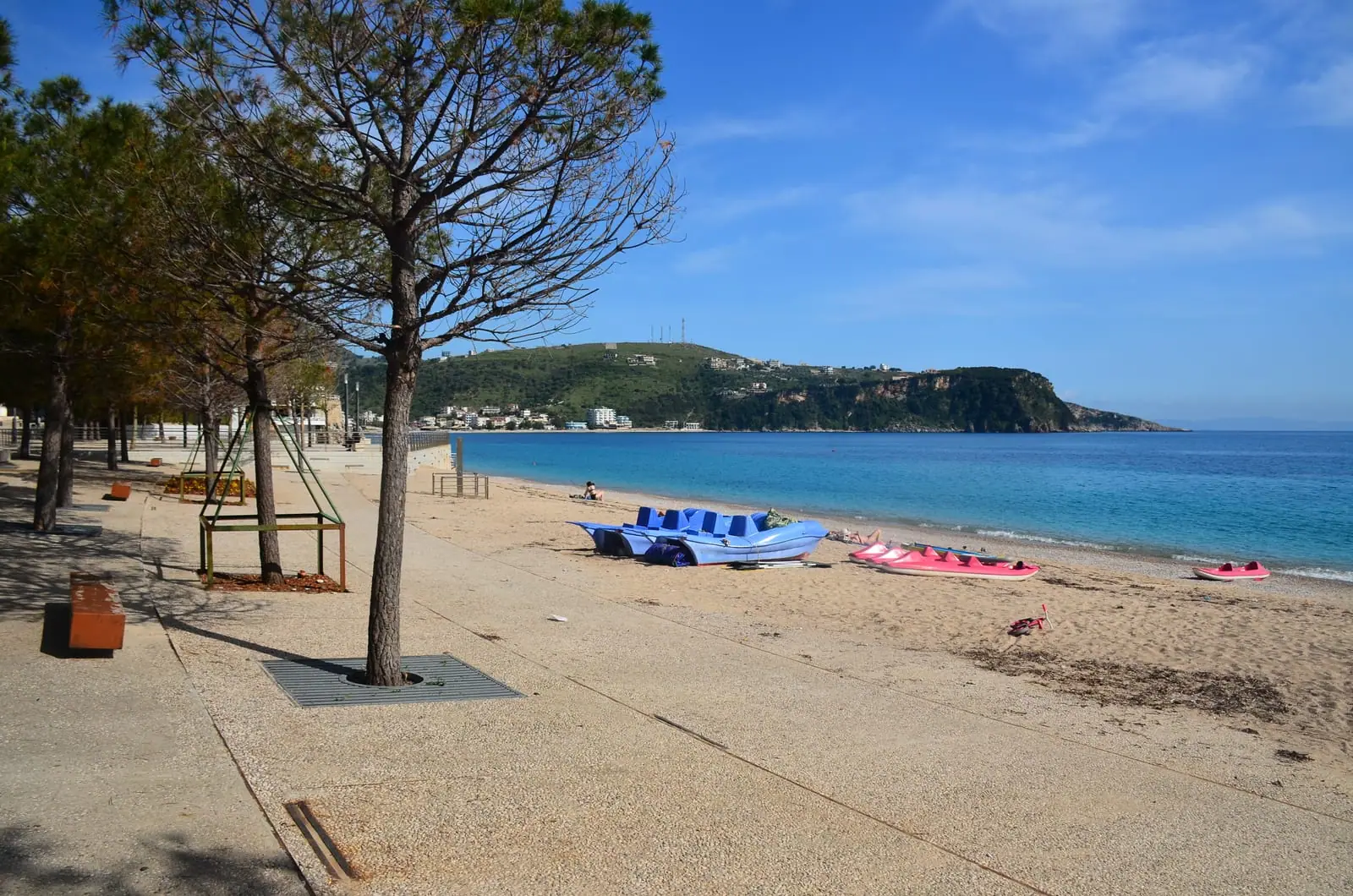
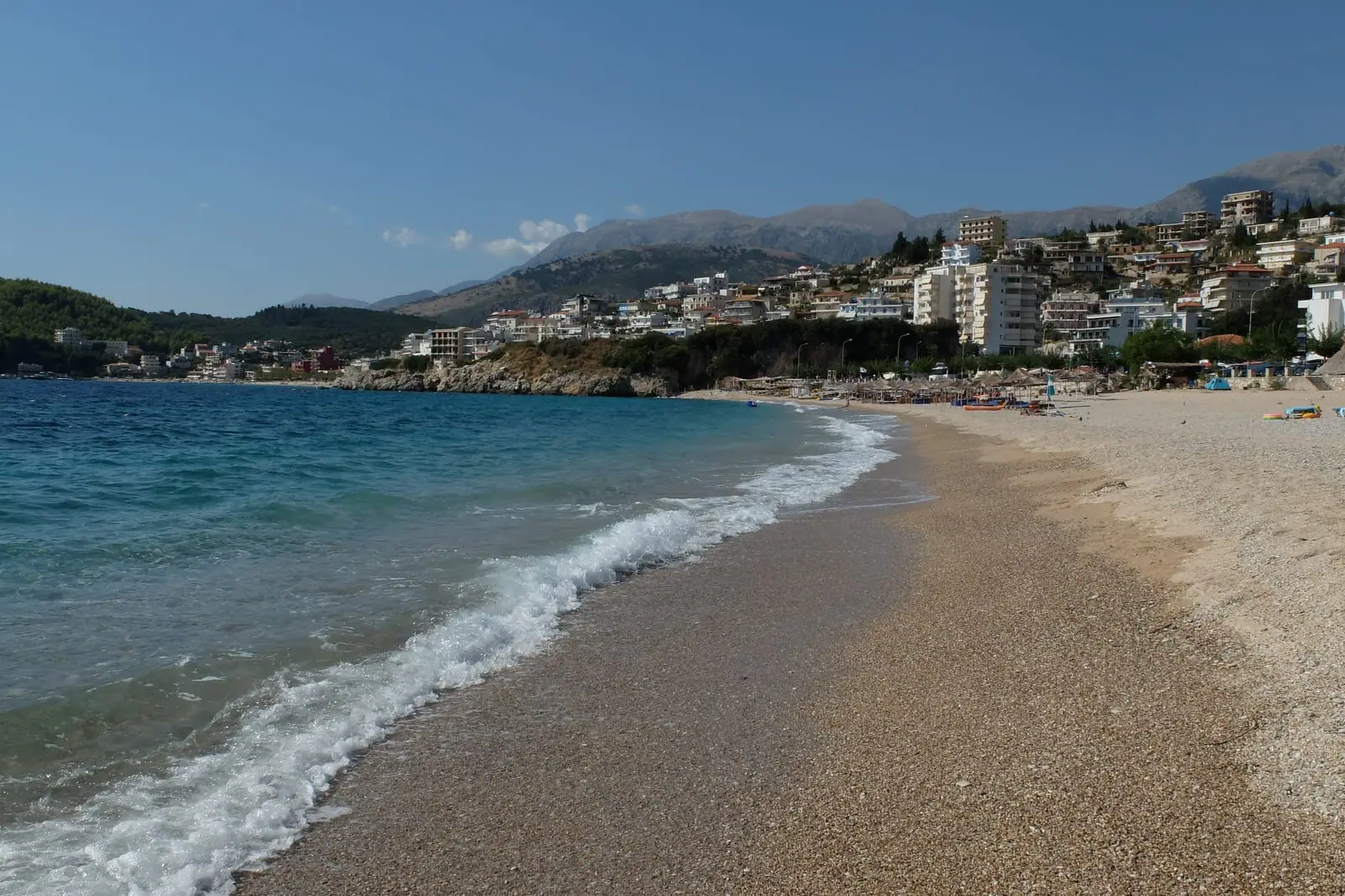
Fig and Olive is on Livadh Road, on the north side of Himara toward Livadhi Beach rather than on the central Spile promenade, and set back from the road with no signs. From Himara center it's a short drive or taxi; on foot it's a longer walk than you'd expect, and the final approach is the part people get lost on. Either way, use Google Maps and follow the pin, not your instinct. Arriving while there's still daylight makes the first visit much easier.
How it compares
- vs Taverna Lefteri: Lefteri is the beachfront seafood taverna, feet-near-the-water, traditional, lower bill. Fig and Olive is the dressier, hidden, sunset-terrace bistro. Go to Lefteri for the classic taverna night; go to Fig and Olive for the polished sunset date.
- vs Taverna Pirosia: Pirosia is the inland garden taverna with grilled lamb at taverna prices. Fig and Olive is the opposite end of the same town, with seafood, sea view, and higher spend. They're two completely different evenings.
- vs UMI Sushi & Cocktail: both are Himara's "modern, view-led, dressier" tier. UMI is sushi-and-cocktails on a rooftop; Fig and Olive is Mediterranean seafood on a hidden terrace. Pick by craving.
For the full landscape, see our best restaurants in Himara guide.
Frequently asked questions
What is Fig and Olive in Himara known for?
It's known for its hidden sea-view terrace and a seafood-forward Mediterranean menu. Dishes like octopus salad and prawn saganaki come up repeatedly. It's a dressier, afternoon-and-evening bistro, a more polished alternative to Himara's traditional beachfront tavernas, and a popular choice for evening dinners.
How do I find Fig and Olive in Himara?
Use Google Maps and follow the pin. It's set back from the road with no signage, so it's genuinely easy to miss on a first visit. Arriving while there's still daylight makes the final approach much simpler than trying to find it after dark.
Is Fig and Olive expensive?
It runs higher than Himara's traditional tavernas and grill houses, a clear step up, though not a Western-Europe price shock. You're paying for the sea-view terrace, the seafood, and a more polished evening. For a special dinner most diners find it worth it; for everyday eating the tavernas offer better value.
Do I need a reservation at Fig and Olive?
In high season, yes. It gets busy and the best terrace tables go first. Reserving is the only reliable way to secure a terrace seat for the evening. Outside peak summer, confirm it's open before making a special trip, since the afternoon-and-evening schedule tightens in the shoulder months.