Himara Castle & Old Town
In town, 15–20 min walk uphill from the promenade
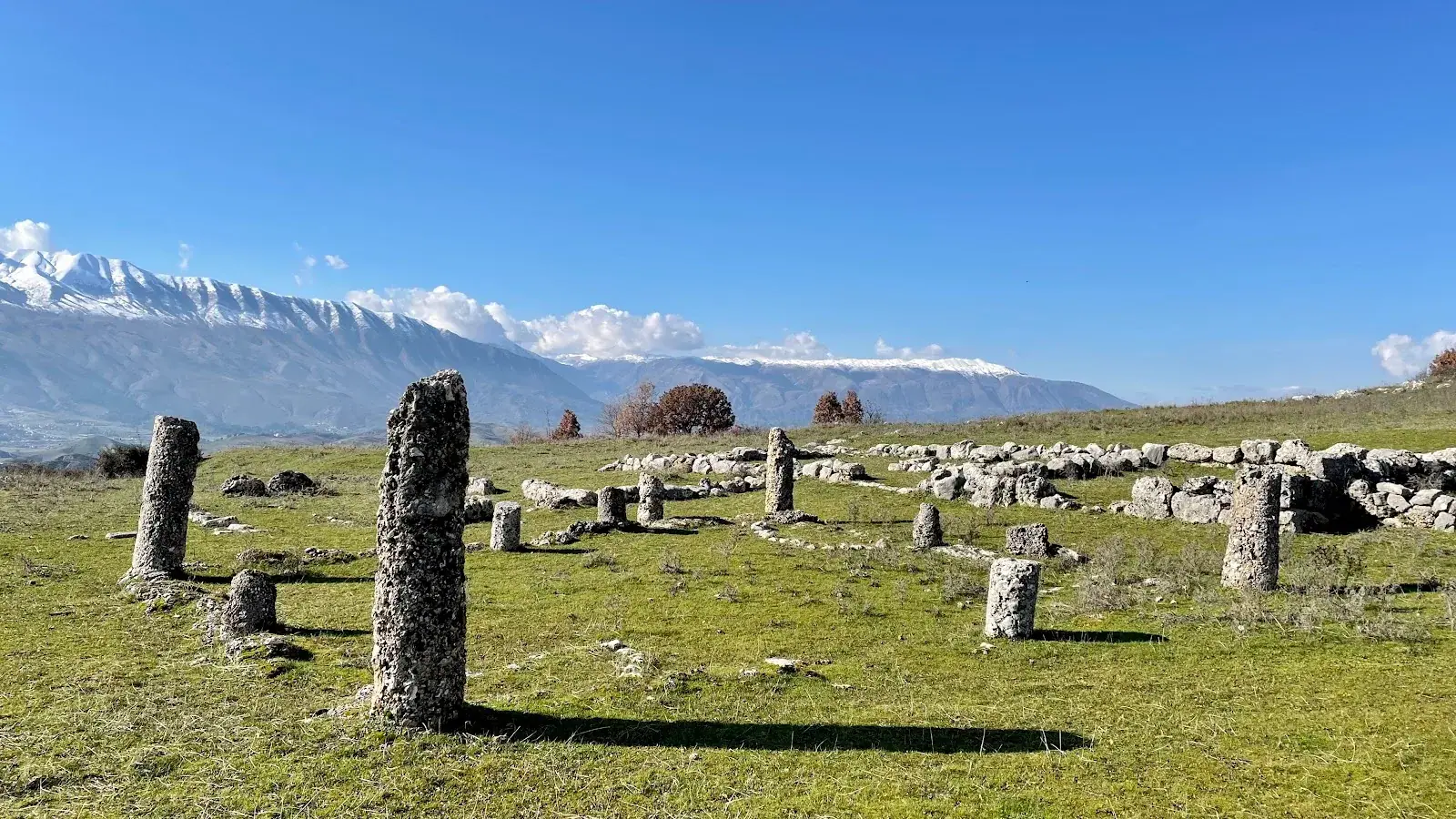
En lo alto de la colina sobre el valle del Drino, ~14 km de Gjirokastër
Antigonea es uno de los yacimientos antiguos más evocadores del sur de Albania, una ciudad helenística fundada hacia el 295 a. C. por el rey Pyrrhus (el de la famosa "victoria pírrica") y bautizada con el nombre de su esposa Antígona. En su día dominaba el valle del Drino desde una larga cresta; hoy es un parque arqueológico de cimientos, murallas y una poderosa sensación de escala, con vistas al valle que recompensan la subida tanto como las ruinas.
Pyrrhus, rey de los molosos (319–272 a. C.), fundó Antigonea hacia el 295 a. C. y la nombró en honor a Antígona, su esposa e hijastra de Ptolomeo de Egipto. La ciudad floreció como bastión epirota antes de que los romanos la destruyeran en el 167 a. C. Lo que sobrevive es la huella de aquella ciudad helenística, murallas defensivas, una estoa y casas con fragmentos de mosaico, extendida por una colina que hace inmediatamente legible la escala antigua.
Murallas de la ciudad helenística que trazan la cresta, la estoa y el centro cívico, cimientos de casas con fragmentos de mosaico y amplias panorámicas del valle del Drino. Es un yacimiento que se lee a partir de sus trazados más que de edificios en pie.
Unos 14 km / 30 minutos en coche desde Gjirokastër (≈1,5 horas desde Saranda por el valle del Drino), por una carretera de acceso hasta el parque en lo alto de la colina. Sin transporte público, conduce o toma una excursión guiada. Combina de forma natural con Hadrianopolis y Gjirokastër.
Mañana fresca o última hora de la tarde; de primavera a otoño para mayor comodidad en la cresta expuesta
Historia, consejos prácticos y notas de ruta en formato extenso, el artículo que profundiza más que esta página.
Antigonea fue fundada hacia el 295 a. C. por el rey Pyrrhus del Epiro, célebre por sus "victorias pírricas" contra Roma —, que nombró la ciudad en honor a su esposa Antígona, hijastra de Ptolomeo de Egipto. Fue una importante ciudad epirota hasta que los romanos la destruyeron en el 167 a. C.
Un parque arqueológico de ruinas helenísticas: murallas que trazan la colina, la estoa y el centro cívico, cimientos de casas con fragmentos de mosaico y amplias vistas del valle del Drino. Es un yacimiento que se lee a partir de sus trazados más que de edificios en pie, evocador, de gran escala y rara vez concurrido.
Está a unos 14 km / 30 minutos en coche desde Gjirokastër, por una carretera de acceso hasta el parque en lo alto de la colina. No hay transporte público al yacimiento, así que conduce o toma una excursión guiada. Combínalo con el teatro romano de Hadrianopolis para una jornada arqueológica completa en el valle del Drino.
Compara precios en vivo de hoteles, apartamentos y casas de huéspedes cerca de Antigonea Archaeological Park en el mapa, filtra por fechas y presupuesto.
¿Falta algo o hay un error? Escríbenos a info@himara.net