01 — The terrace
A wall, a cane roof, and the ground falling away
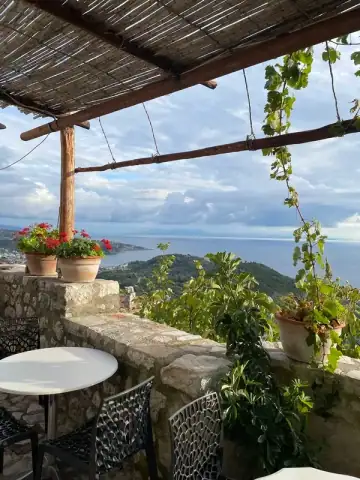
Everything at Café Butterfly is arranged along one line of stone: a parapet, a roof of split cane over it, and the bay a long way below.
The parapet
One wall, and everything is arranged along it
The tables stand in a line against a mortared limestone wall, close enough that the coping does the work of a second table — terracotta pots along it, a chair pulled up to it, the hillside falling away on the far side.
The wall is the same pale rubble as the houses of the old town behind it, laid in rough courses with a wide mortar joint and gone green in the damp corners.
The roof
Split cane on peeled poles, and a vine growing through it
Lengths of split cane are laid across a frame of peeled timber and tied at the crossings. It is a roof that filters rather than covers: the light comes through it in bars and moves across the tables all afternoon.
A grapevine has been trained up one of the posts and along the frame, so parts of the ceiling are leaves.
The drop
The bay, the ridge, and the open water beyond both
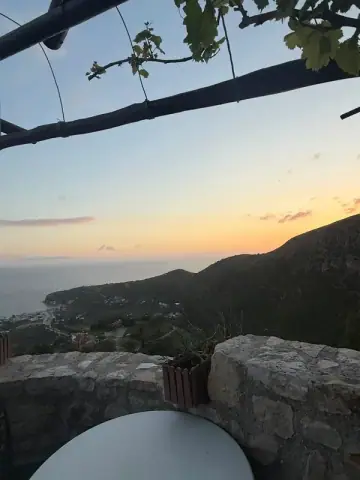
From the parapet the ground goes down in one long green slope. The bay is directly below with the roofs of the town along it, and a wooded ridge runs out to the right and ends in the water.
Late in the day the light behind that ridge turns apricot and the sea below it goes flat and grey.