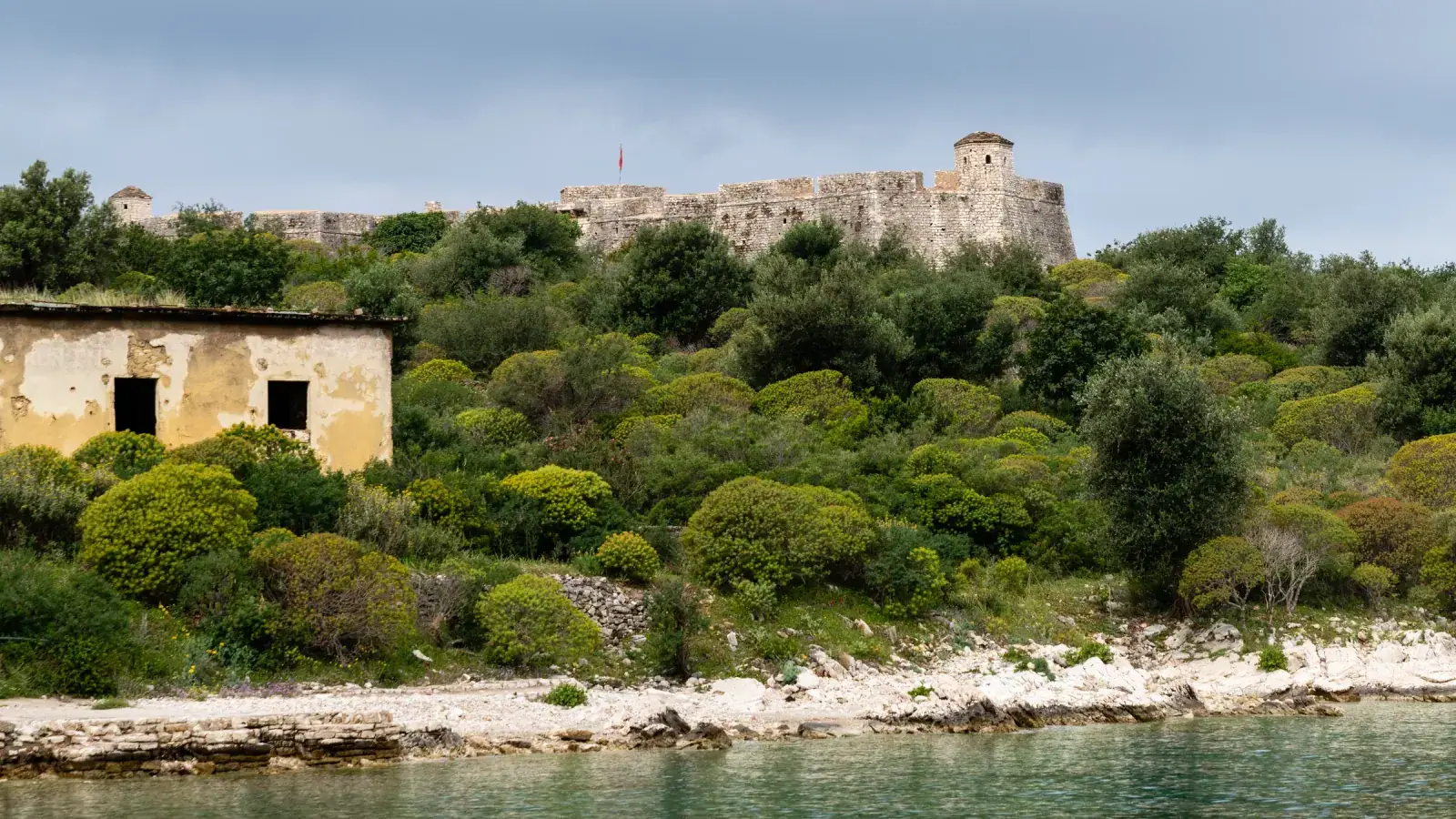
Porto Palermo Castle on its peninsula overlooking the Ionian Sea — one of many landmarks near Himara

Bezienswaardigheden

13 kastelen, kloosters en historische sites binnen handbereik van Himara — van vestingwerken uit de 5e eeuw v.Chr. tot onderzeeërtunnels uit de Koude Oorlog.

Kastelen

Vestingwerken uit de Ottomaanse tijd en eerder, verspreid langs de kust — het geraamte van elk rijk dat dit stuk van Albanië in handen had.

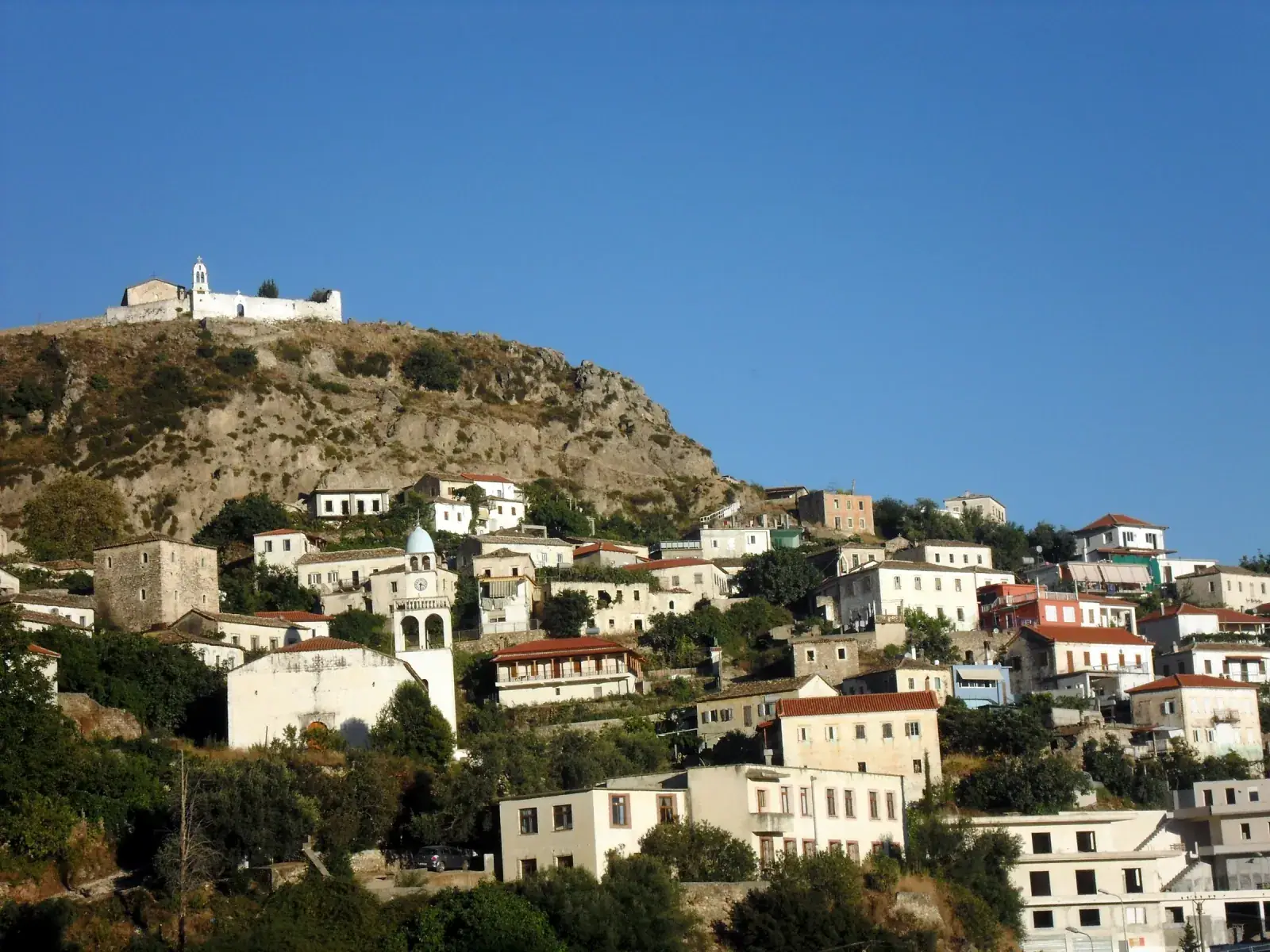
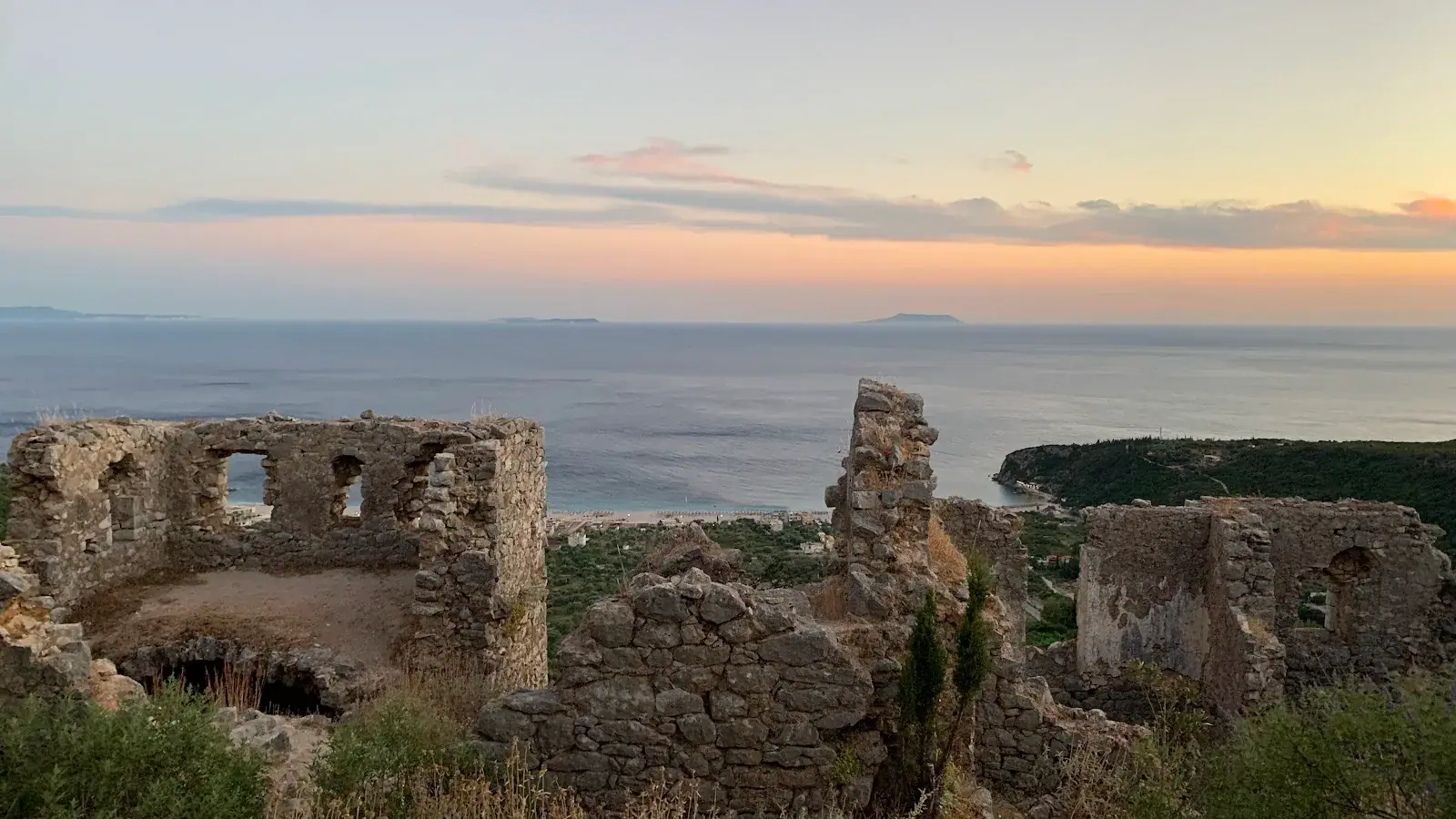
Stone walls and Byzantine church ruins at Himara Castle on Barbaka hill
5th century BC – present

Himara Castle & Old Town

Himara Castle sits on Barbaka hill above the modern town. Fortifications here date to the 5th century BC and have been continuously inhabited since — making the old town, locally called Kastro, the only living medieval village on the Albanian Riviera. Stone houses cling to the hillside between Byzantine church ruins and faded frescoes, with panoramic views stretching across the Ionian Sea to Corfu on a clear day.

In town — 15–20 min walk uphill from the promenade·1–2 hours
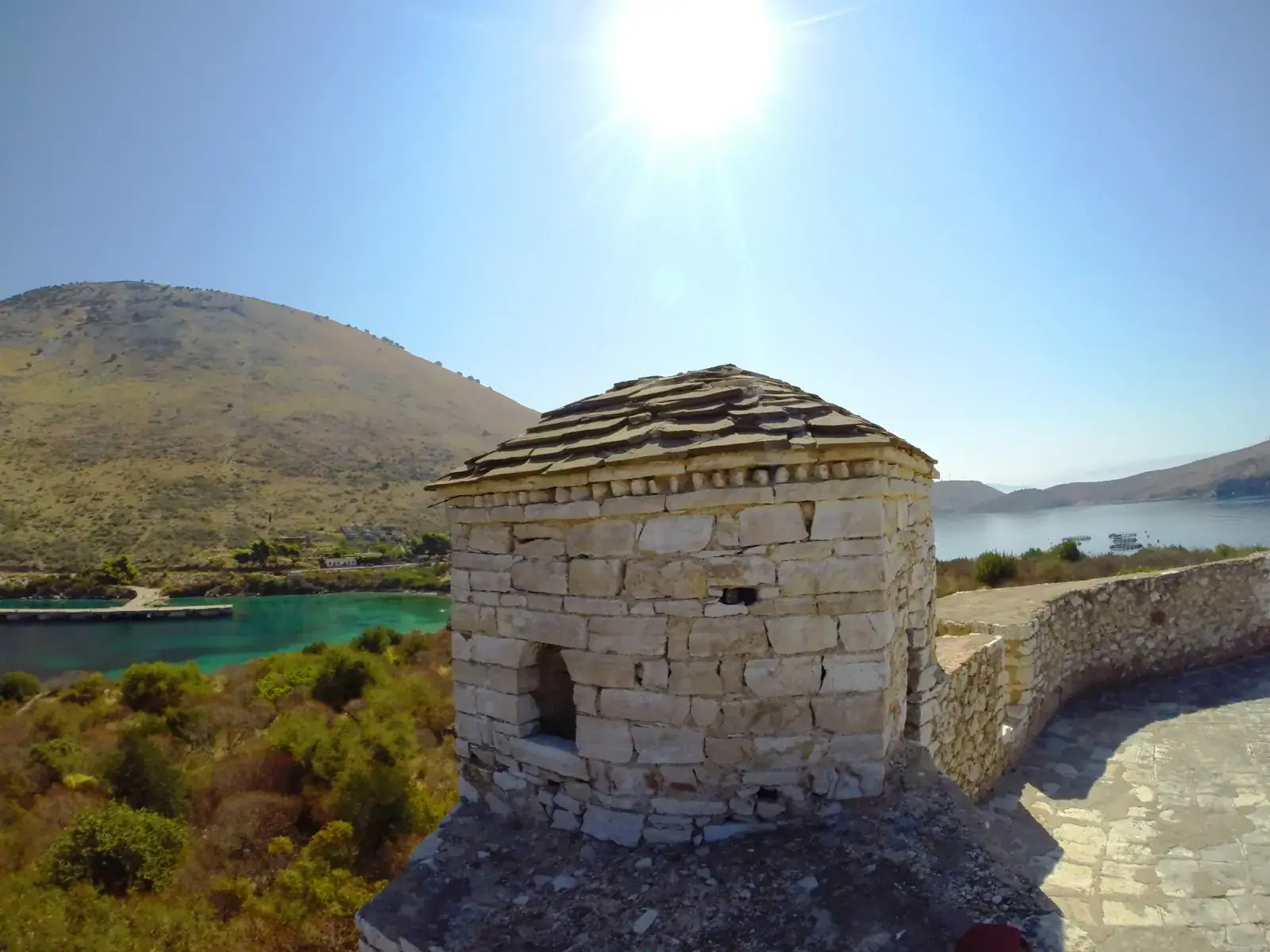
Porto Palermo Castle on its peninsula overlooking the turquoise bay
Early 19th century (c. 1804)

Porto Palermo Castle

Porto Palermo Castle is a triangular Ottoman fortress with three round bastions, built on a narrow peninsula in one of the most photogenic bays on the Albanian Riviera. Commissioned in the early 19th century by Ali Pasha of Ioannina, the castle is the headline landmark of every southbound boat tour from Himara — and the easiest, most rewarding half-day trip from town by car.

~10 km south on SH8 (14–20 min drive)·1–1.5 hours at the castle, 2–3 hours including a swim in the bay
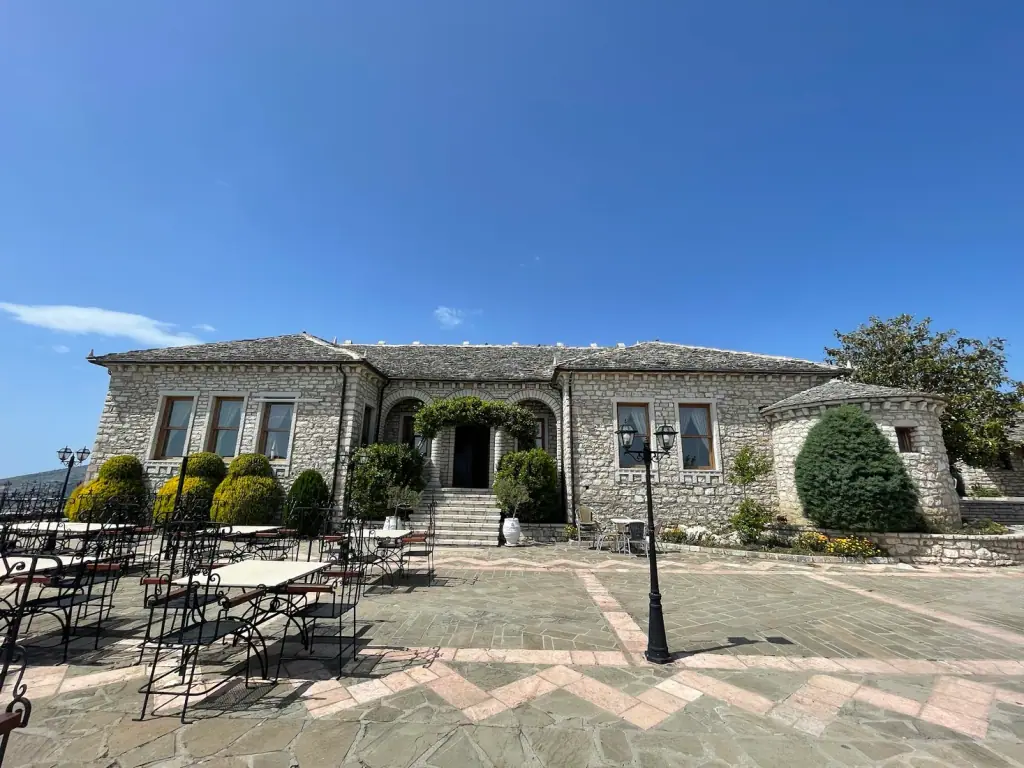
The stone restaurant building and terrace within Lëkurësi Castle on the hill above Saranda
16th century (Ottoman)

Lëkurësi Castle

Lëkurësi Castle is Saranda's viewpoint rather than its monument — a modest 16th-century Ottoman hilltop fort whose real draw is the best panorama on the southern coast. From the ruined towers you look down over Saranda's bay and town, south to the Ksamil islands and the Butrint lagoon, and west across the strait to Corfu. A restaurant built into the walls makes it the town's go-to sunset stop.

Above Saranda — roughly a 1–1.5 hour drive south of Himara·30–60 minutes, or longer for a sunset dinner

Kloosters & kerken

Byzantijnse kerken en kloosters op heuveltoppen die de Ottomaanse periode en de communistische onderdrukking van religie overleefden.

Hilltop above Dhermi where Saint Theodore Monastery overlooks the Ionian coast
14th century (built on ancient Temple of Zeus ruins)

Saint Theodore Monastery

Saint Theodore Monastery (Albanian: Manastiri i Shën Theodhorit, Greek: Μονή Αγίου Θεοδώρου) sits on a hilltop between Dhermi and Gjipe Beach — one of the most historically layered sites on the Albanian Riviera. Built on the ruins of an ancient temple to Zeus, converted into an Orthodox monastery in the 14th century, repurposed as a Soviet navy holiday resort in the 1950s, then an Albanian military post until the late 1980s, and now under restoration. This single hilltop tells the entire story of Albania in compressed form.

~15 km north on SH8 (20 min drive)·1.5–2 hours including the walk up from the parking
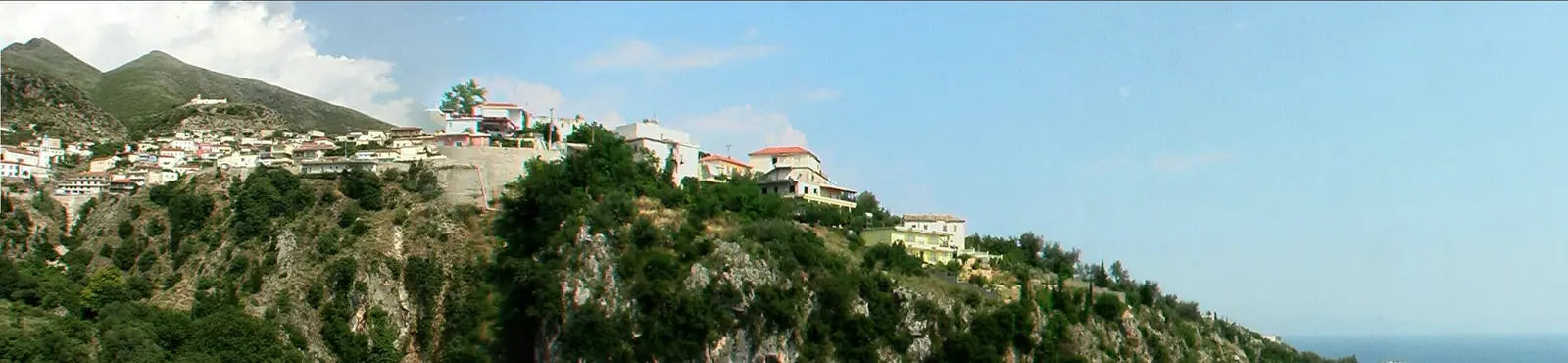
Panoramic view of Himara and the surrounding mountains where Athali Monastery is located
18th century

Athali Monastery

Athali Monastery (Albanian: Manastiri i Athalit, Greek: Μονή Αθαλιού) sits high on Athali Mountain above Himara — a remote 18th-century Byzantine-style pilgrimage site reached only by a 2-hour uphill hike. The monastery is small but significant: a continued site of Orthodox pilgrimage, associated with reports of miraculous healing, and built into one of the most panoramic positions on the Riviera. Most travellers never make the climb, which is exactly why it remains one of the most atmospheric landmarks in the area.

~10 km by trail from Spile Beach (2 hr hike)·3–4 hours round trip including the hike and time at the monastery
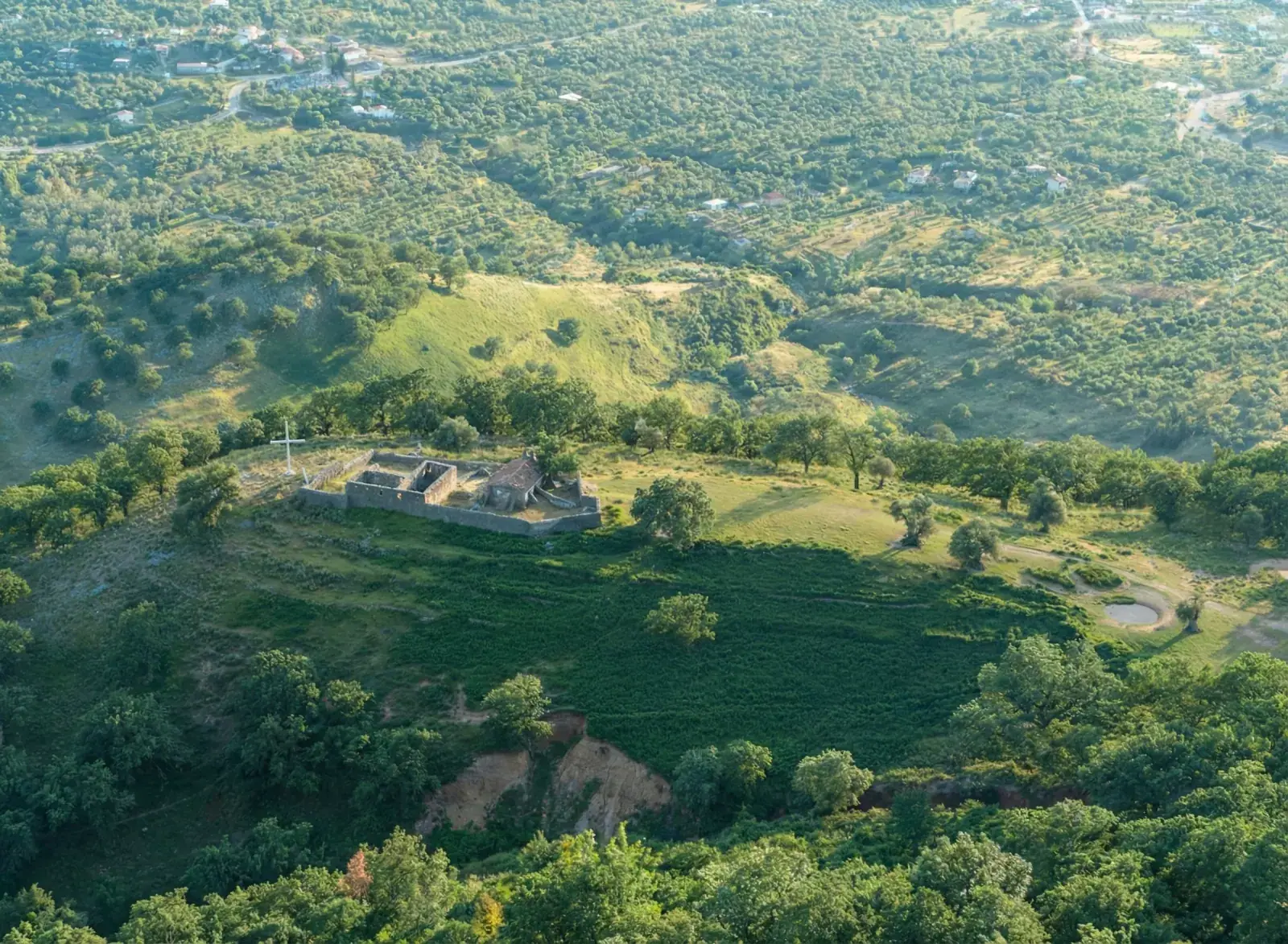
Dhermi village below and the hilltop where Panagia Drymadon monastery overlooks the Ionian coast
13th–14th century

Panagia Drymadon Monastery

Panagia Drymadon Monastery (Albanian: Manastiri i Shën Mërisë, Greek: Παναγία Δρυμάδων) — also called the Monastery of Saint Mary — sits on a hilltop at 257 m elevation above Dhermi village. Built in the 13th–14th century, it is a Cultural Monument of Albania and one of the best-preserved examples of Byzantine-era religious architecture on the Albanian Riviera. The monastery operated continuously for over 600 years — through Byzantine decline, Ottoman rule, and Italian occupation — until 1967, when the communist regime forced the last nun to leave.

~15 km north on SH8 (20 min drive + 15 min walk)·45 minutes – 1 hour
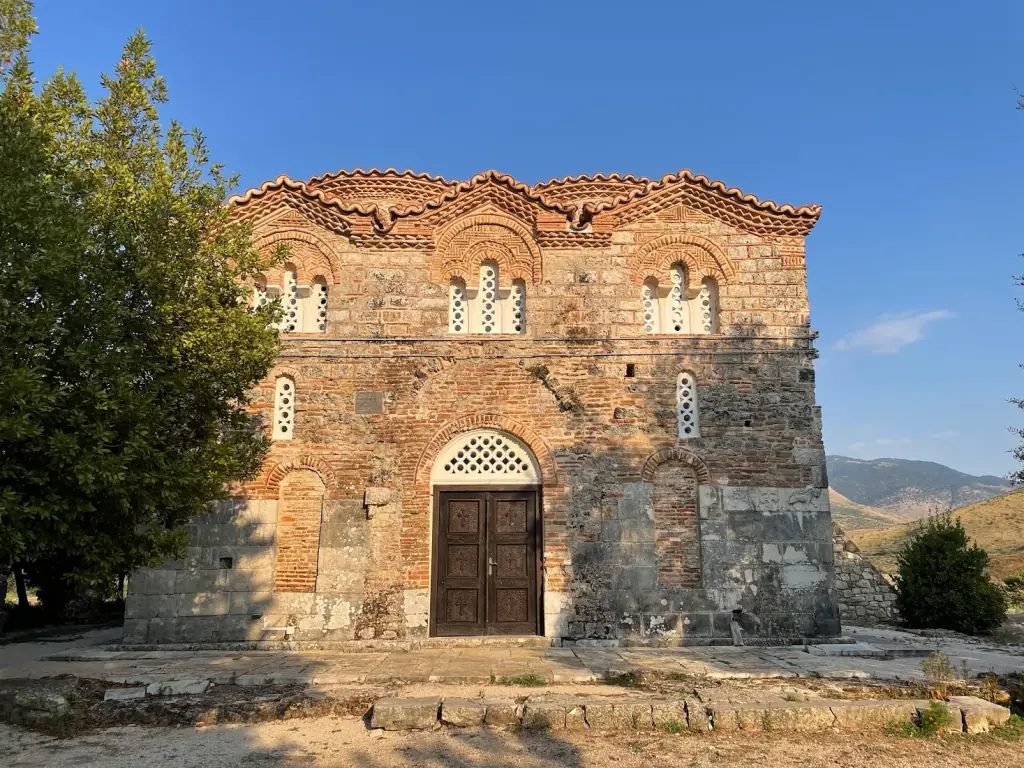
The Byzantine brick-and-stone facade of St. Nicholas Monastery church at Mesopotam near Saranda
~11th century (Byzantine), on a 6th-century site

Mesopotam Monastery (St. Nicholas)

The Monastery of St. Nicholas at Mesopotam is one of southern Albania's great hidden churches — a striking twin-towered Byzantine building, dated in its present form to around the 11th century, that once anchored the largest monastic complex in the country. It carries genuine mysteries: carved relief blocks of an eagle, a lion, a dragon and a stranger creature that may pre-date Christianity, and Byzantine frescoes uncovered beneath later whitewash.

Inland near Saranda — roughly a 1–1.5 hour drive south of Himara·30–45 minutes

Antieke ruïnes

Klassieke en voorchristelijke sites waar de vroegste geschiedenis van de Rivièra nog zichtbaar is.

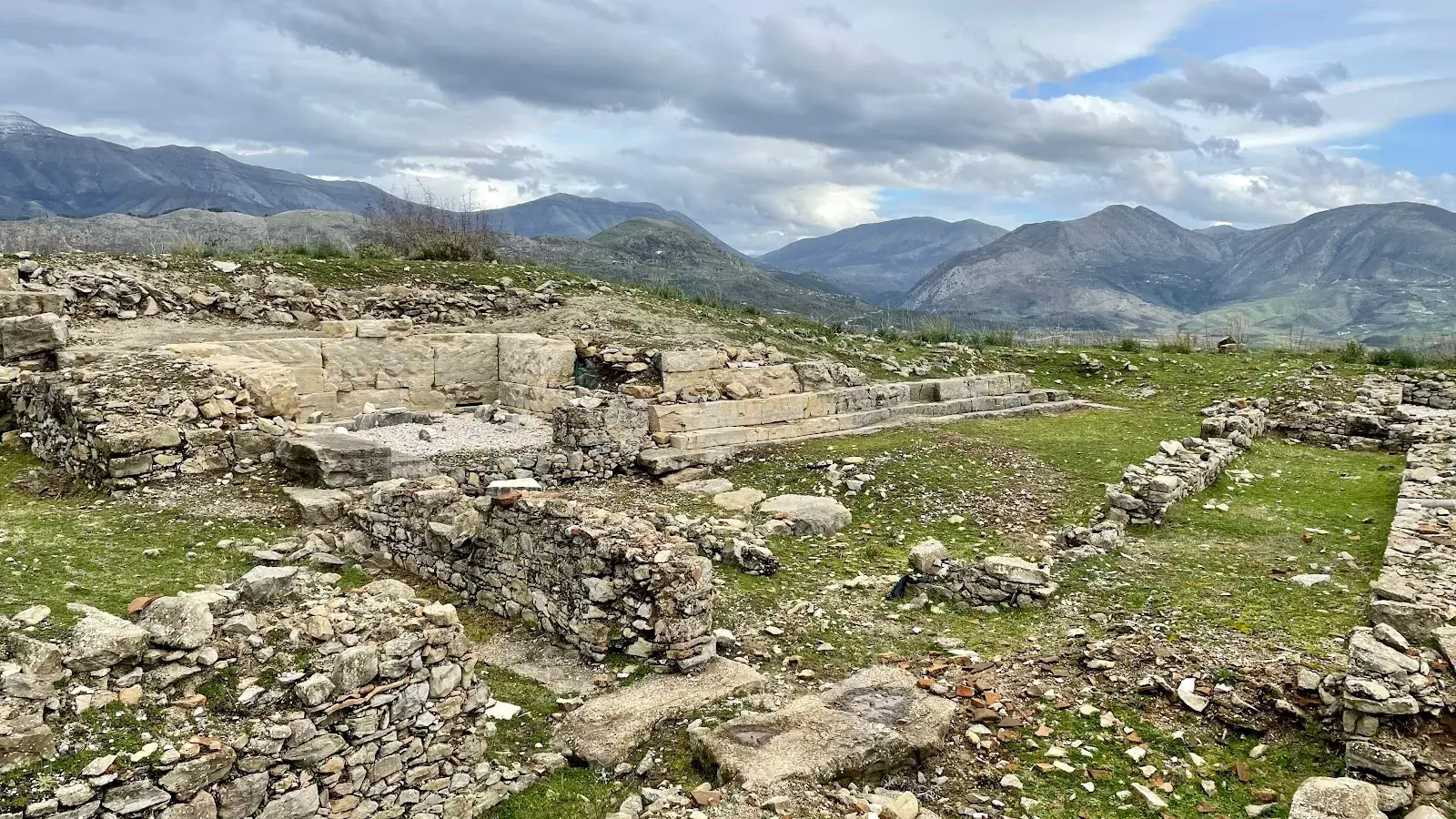
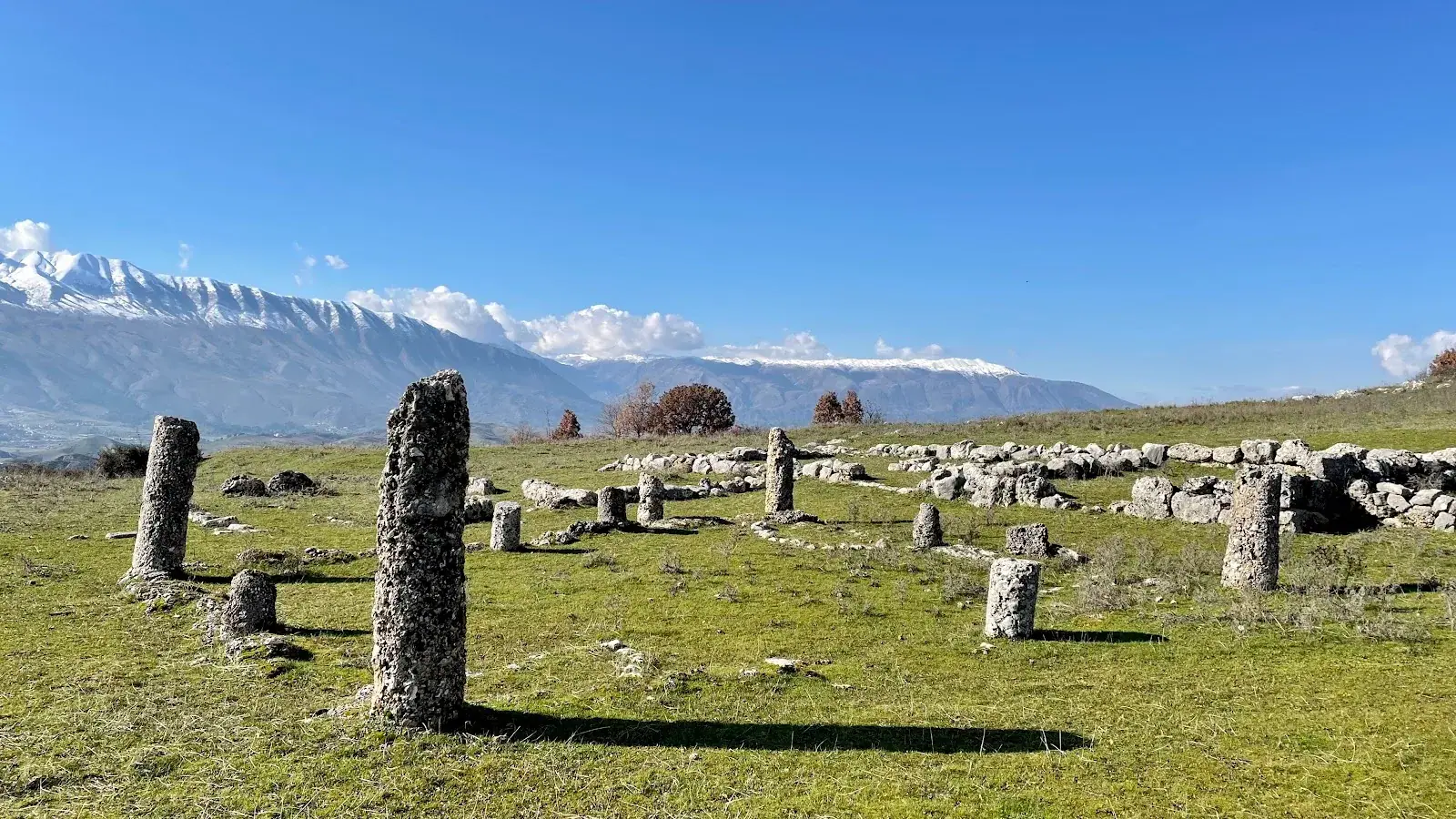
Ancient hilltop ruins and stone walls of Phoenice (Finiq) overlooking a green plain near Saranda
Hellenistic — Chaonian capital; Treaty of Phoenice 205 BC

Phoenice (Finiq)

Phoenice — ancient Φοινίκη, modern Finiq — was once one of the wealthiest cities in Epirus and the capital of the Chaonians. Today it's a quiet hilltop archaeological site above Finiq village, just inland from Saranda, where fortifications, a theatre and the outlines of the ancient city reward the few who venture up — including the spot where the 205 BC Treaty of Phoenice ended the First Macedonian War between Rome and Macedon.

Inland near Saranda — roughly a 1–1.5 hour drive south of Himara·45–60 minutes
Ancient stone foundations of Antigonea on a hilltop overlooking the green Drino valley near Gjirokastër
Hellenistic — founded ~295 BC by King Pyrrhus

Antigonea Archaeological Park

Antigonea is one of southern Albania's most atmospheric ancient sites — a Hellenistic city founded around 295 BC by King Pyrrhus (of "Pyrrhic victory" fame) and named for his wife Antigone. It once commanded the Drino valley from a long hilltop ridge; today it's an archaeological park of foundations, walls and a powerful sense of scale, with valley views that reward the climb as much as the ruins do.

Drino valley near Gjirokastër — roughly a 2–2.5 hour drive east of Himara·1–1.5 hours
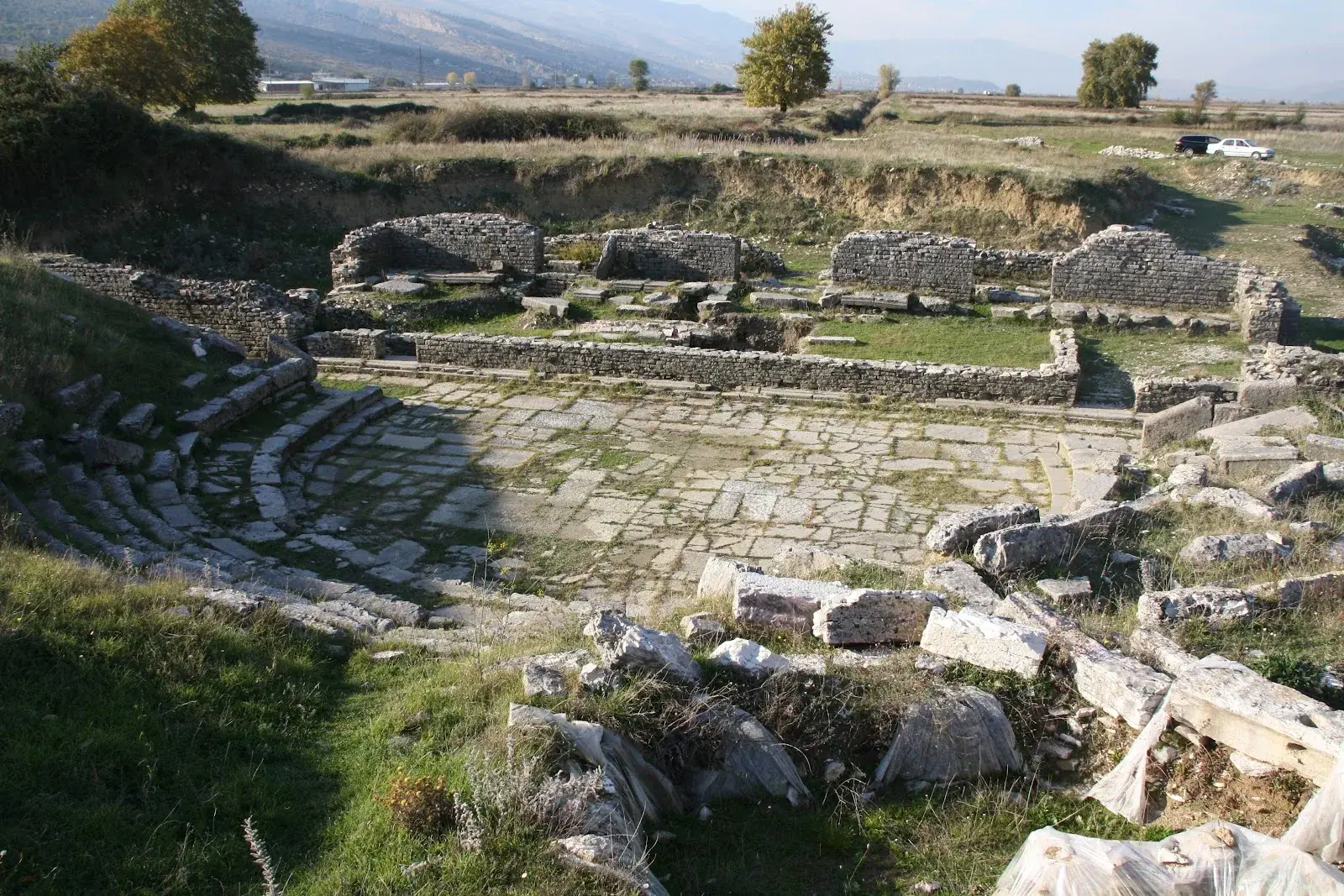
The semicircular ancient Roman stone theatre of Hadrianopolis in a green Drino-valley field with mountains behind
2nd century AD (Roman); later Byzantine under Justinian

Hadrianopolis Roman Theatre

Hadrianopolis is the rare ancient site that reads instantly even without a guide: a compact Roman theatre, its stone seating intact enough to sit where audiences sat 1,800 years ago, set in a quiet green field in the Drino valley. Founded in the 2nd century AD and named for Emperor Hadrian, it's one of southern Albania's most accessible and underrated archaeological stops — a short drive from Gjirokastër, free to wander, and almost always empty.

Drino valley near Gjirokastër — roughly a 2–2.5 hour drive east of Himara·30–45 minutes

Veelgestelde vragen over de bezienswaardigheden van Himara

Welke historische sites kun je rond Himara bezoeken?

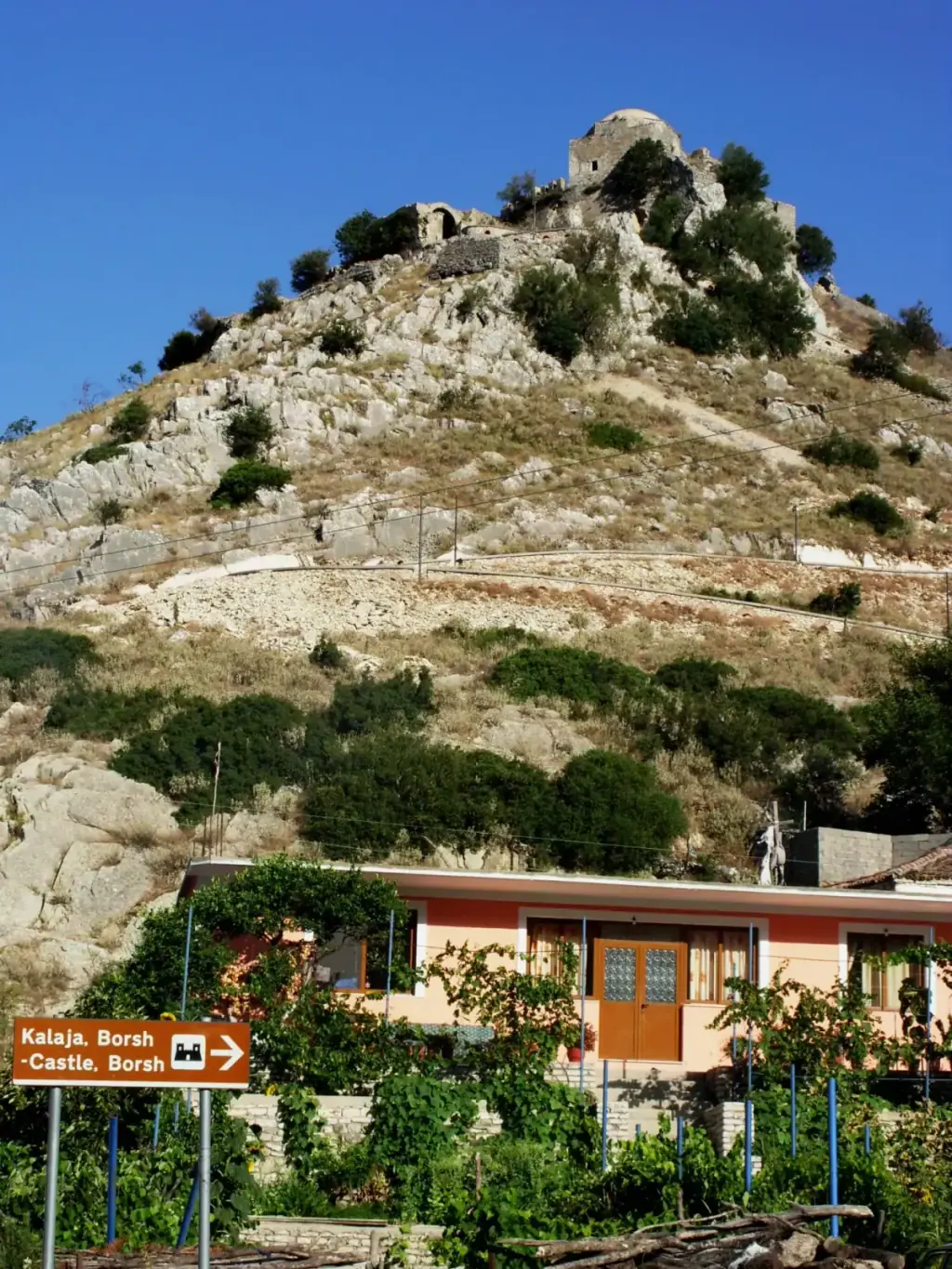
De blikvanger is het kasteel van Himara op de heuvel met zijn oude stad, sinds ongeveer de 5e eeuw v.Chr. versterkt en bewoond. Zuidwaarts langs de kust liggen het kasteel van Porto Palermo — het Ali Pasha-fort op zijn eigen schiereiland (ca. 1804) — en het kasteel van Borsh, plus de onderzeeërtunnel van Porto Palermo uit de Koude Oorlog. In het noorden en landinwaarts liggen orthodoxe kloosters: Sint-Theodorus, Athali en Panagia Drymadon.

Vragen de kastelen en kloosters entree?

De meeste zijn gratis, waaronder de oude stad van het kasteel van Himara, het kasteel van Borsh en de kloosters. De belangrijkste uitzondering is het kasteel van Porto Palermo, dat ongeveer 300 ALL (~€3) kost, alleen te betalen in Albanese lek — dus neem contant geld mee. Een paar sites rekenen een kleine parkeervergoeding van rond de 200–300 ALL.

Hoe oud is het kasteel van Himara?

Heel oud. De plek op de heuvel is sinds ongeveer de 5e eeuw v.Chr. versterkt, met latere Byzantijnse en Ottomaanse lagen, en delen van de oude stad binnen de muren zijn vandaag de dag nog bewoond. Het is een wandeling van 15–20 minuten bergop vanaf de boulevard aan zee.

Hoe bereik je de sites buiten de stad?

De meeste liggen op een korte rit langs de kustweg SH8: het kasteel en de onderzeeërtunnel van Porto Palermo liggen ongeveer 10 km naar het zuiden (15–20 min), het kasteel van Borsh ongeveer 20 km naar het zuiden, en de kloosters Sint-Theodorus en Panagia Drymadon ongeveer 15 km naar het noorden. Het klooster Athali is de uitzondering — dat is een wandeling van ongeveer twee uur landinwaarts vanaf het strand van Spile.

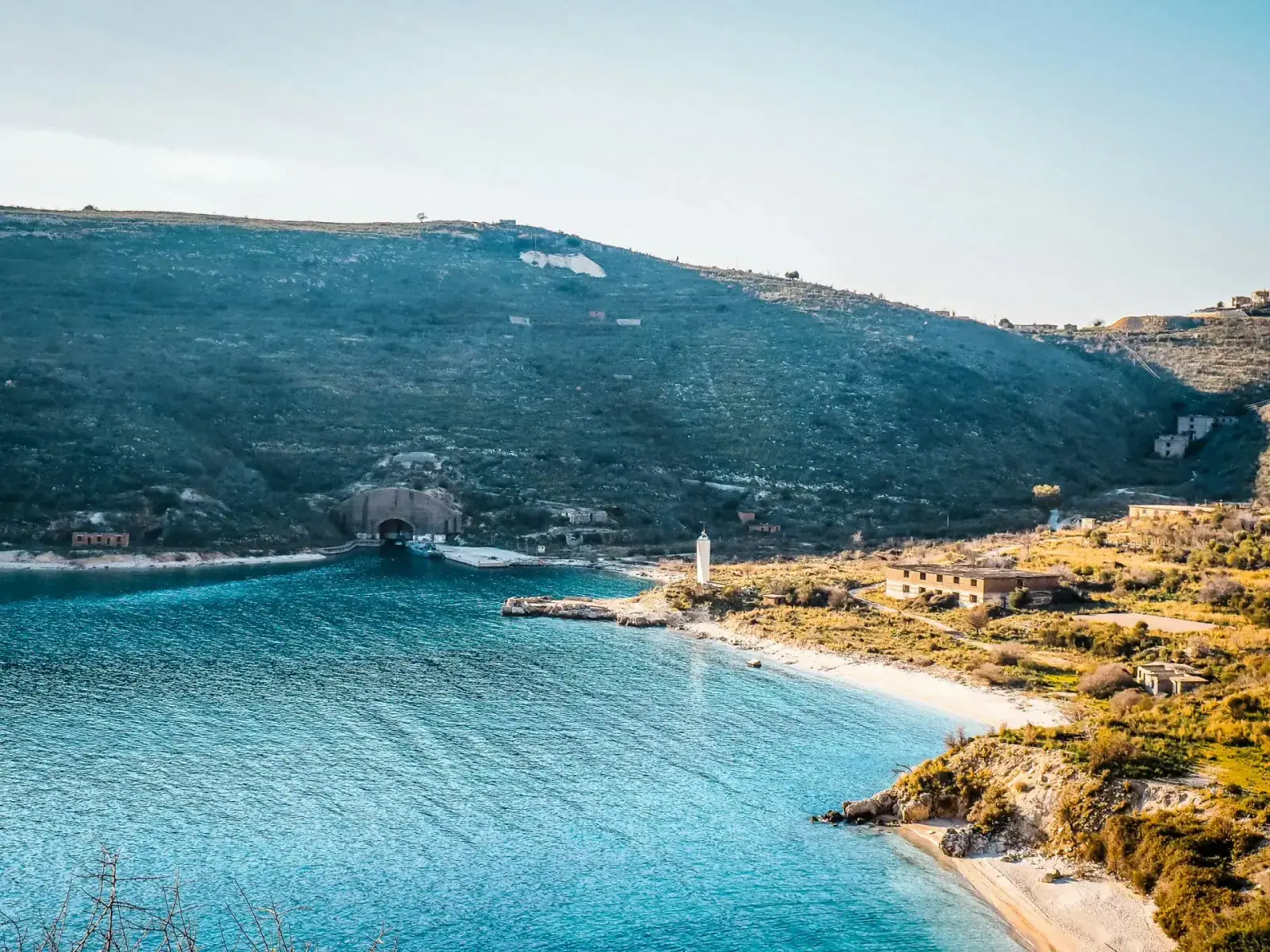
Wat is de onderzeeërtunnel van Porto Palermo?

Een marinebasis uit de Koude Oorlog, gebouwd tussen 1969 en 1988, toen het Albanese leger onderzeeërs verborg in een tunnel die in de landtong bij Porto Palermo was uitgehakt. Je kunt hem gratis bekijken vanaf de weg of vanaf een boottocht; naar binnen gaan is verboden.

Je sightseeingdagen aan het plannen?

Combineer bezienswaardigheden met nabijgelegen stranden, boottochten en de restaurants die de Albanese Rivièra de moeite van het verblijven waard maken.