Porto Palermo Castle
~10 km south on SH8 (14–20 min drive)
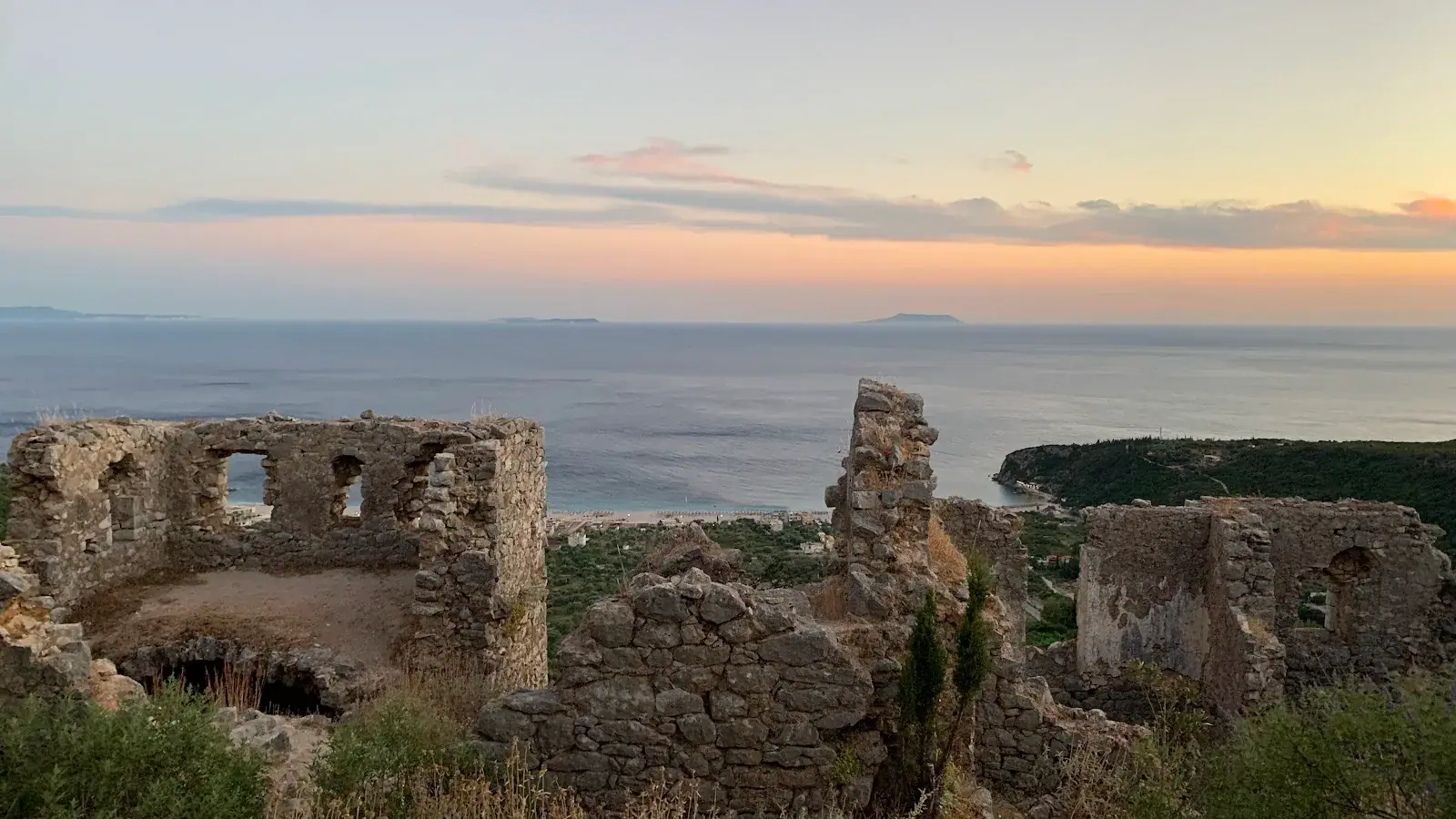
Barbaka-heuvel, boven centraal Himara
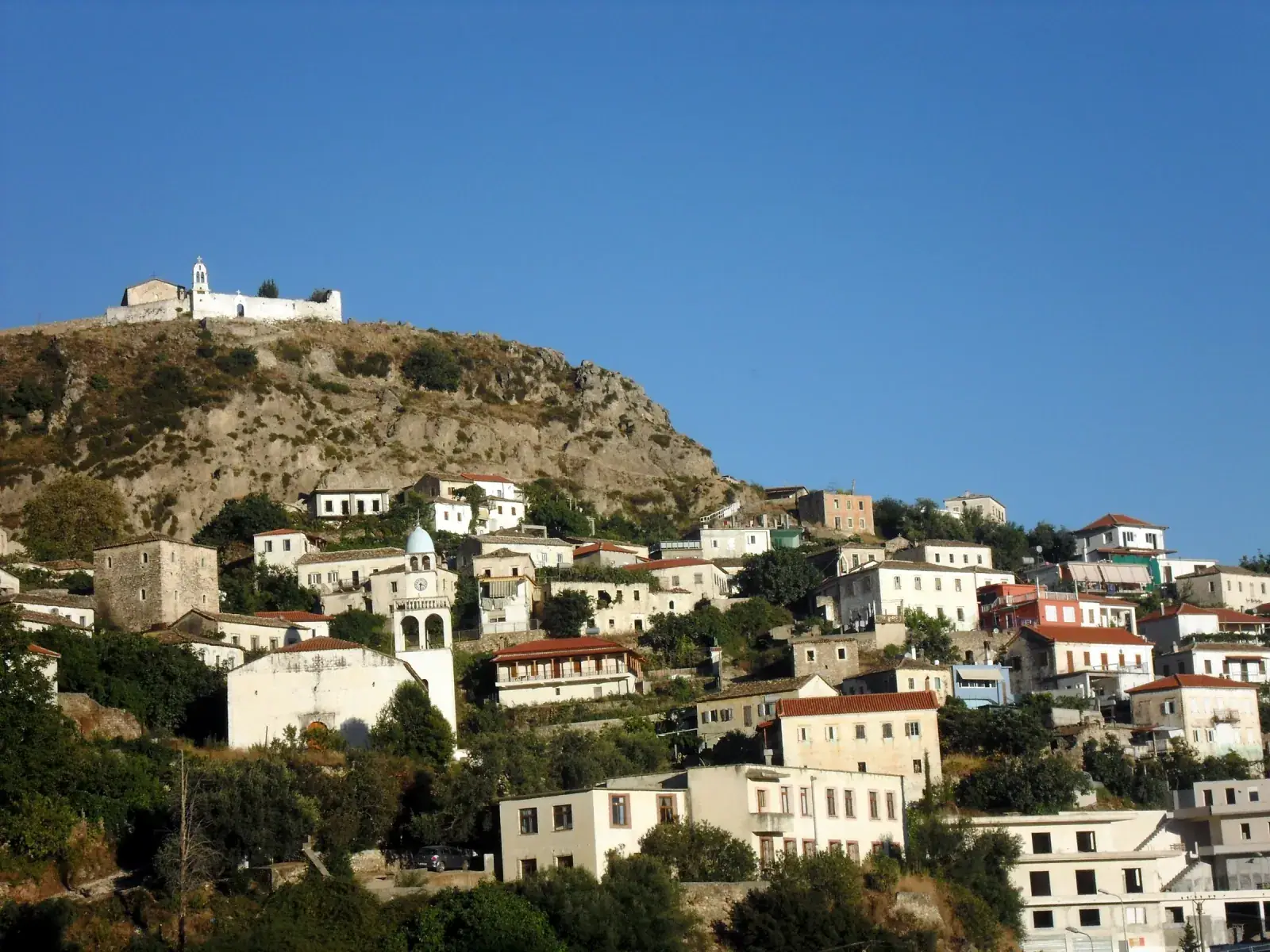
Het kasteel van Himara ligt op de Barbaka-heuvel boven de moderne stad. De versterkingen hier dateren uit de 5e eeuw v.Chr. en zijn sindsdien onafgebroken bewoond, wat de oude stad, lokaal Kastro genoemd, het enige nog bewoonde middeleeuwse dorp aan de Albanese Riviera maakt. Stenen huizen klampen zich aan de heuvel vast tussen Byzantijnse kerkruïnes en vervaagde fresco's, met panoramisch zicht dat zich op een heldere dag over de Ionische Zee tot Corfu uitstrekt.
De oudste muren zijn Chaonisch, gebouwd in de 5e eeuw v.Chr. door de Griekse stam die deze kust beheerste. De plek werd opnieuw versterkt onder de Byzantijnen, die de kerken bouwden waarvan je nog steeds door de ruïnes kunt lopen. De Ottomaanse heerschappij wist Kastro nooit volledig in te lijven, de Himariotische bevolking behield eeuwenlang een feitelijke autonomie, gehoorzaamde Istanboel in naam maar beleed het orthodoxe christendom. De oude stad telde in het begin van de 20e eeuw nog honderden families, voordat ze tijdens het communistische tijdperk ontvolkte. Een handvol woningen is nu het hele jaar bewoond, met enkele die zijn gerestaureerd tot gastenverblijven.
Drie Byzantijnse kerken met gedeeltelijke frescoresten; de hoofdtoegangsboog en bewaard gebleven ringmuren; het panoramaterras waar Cafe Butterfly koffie schenkt met het mooiste uitzicht van Himara; het pad omlaag naar Livadhi Beach dat direct beneden zichtbaar is; op heldere ochtenden Corfu aan de westelijke horizon, ongeveer 70 km verderop.
Loop bergop vanaf de boulevard van Himara, 15-20 minuten over een smalle verharde weg. Met de auto of scooter kun je het grootste deel rijden; parkeer op het aangewezen terrein bij de ingang (gratis, beperkt tot een handvol plekken) en loop het laatste stuk. De weg is smal en bochtig maar goed te doen. De oude stad zelf kun je niet inrijden.
Vroege ochtend (vóór 10 uur) voor koele temperaturen en het beste zicht richting Corfu, of late namiddag (17.00-19.00 uur) voor gouden licht en om het bezoek af te stemmen op de zonsondergang en een drankje bij Cafe Butterfly.
Geschiedenis, praktische tips en routenotities in lange vorm, het artikel dat dieper gaat dan deze pagina.
De natuurlijke wederhelft van de dag. Zand en zee na steen en geschiedenis.
Loop bergop vanaf de boulevard van Himara, het duurt 15-20 minuten over een verharde weg. Met de auto of scooter kun je het grootste deel rijden en parkeren op een klein gratis terrein bij de ingang, om daarna het laatste stuk te lopen. De oude stad zelf kun je niet inrijden.
Door de oude stad wandelen is gratis. Sommige aanbieders heffen in het hoogseizoen mogelijk een kleine symbolische vergoeding bij de poort, controleer dit bij aankomst. De Byzantijnse kerkruïnes en het uitzichtterras zijn allemaal kosteloos toegankelijk.
Vroege ochtend (vóór 10 uur) voor koele temperaturen en de beste kans om Corfu over het water te zien. De late namiddag (17.00-19.00 uur) is het op een na beste moment, gouden licht op het steen, met zonsondergang vanaf het terras bij Cafe Butterfly.
1-2 uur is genoeg om de hoofdpaden te belopen, de kerkruïnes te bezoeken, het panoramische uitzicht te bewonderen en een drankje te drinken bij Cafe Butterfly. Combineer het met Livadhi Beach (10 minuten rijden) voor een halve dag met kasteel en strand.
Ja, op heldere dagen. Corfu ligt ongeveer 70 km naar het westen aan de horizon. Ochtenden, voordat de middagnevel opkomt, bieden doorgaans het beste zicht. Het Griekse eiland is het best zichtbaar vanaf het terras bovenaan de oude stad.
Ontbreekt er iets of klopt iets niet? Mail ons op info@himara.net