Himara Castle & Old Town
In town, 15–20 min walk uphill from the promenade
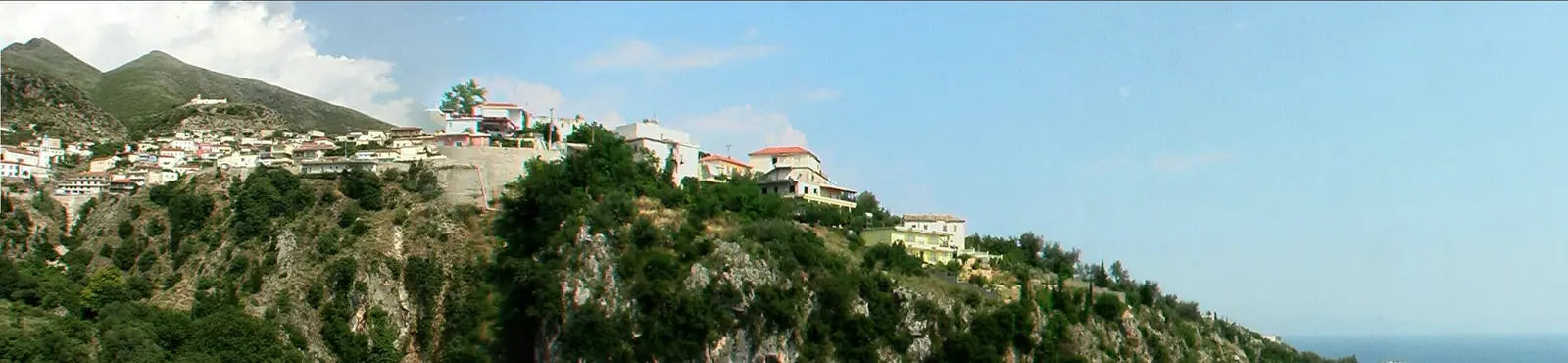
Sommet au-dessus du village de Dhermi, à 257 m d'altitude
Le monastère de Panagia Drymadon (albanais : Manastiri i Shën Mërisë, grec : Παναγία Δρυμάδων), aussi appelé monastère de Sainte-Marie, se dresse sur une colline à 257 m d'altitude au-dessus du village de Dhermi. Construit aux XIIIe–XIVe siècles, c'est un monument culturel d'Albanie et l'un des exemples les mieux préservés d'architecture religieuse d'époque byzantine sur la Riviera albanaise. Le monastère a fonctionné sans interruption pendant plus de 600 ans, à travers le déclin byzantin, la domination ottomane et l'occupation italienne, jusqu'en 1967, lorsque le régime communiste a forcé la dernière religieuse à partir.
La basilique fut fondée aux XIIIe-XIVe siècles, durant la fin de la période byzantine. La population himariote maintint la pratique orthodoxe durant 500 ans de domination ottomane, et Panagia Drymadon resta en activité tout du long. En 1781, l'archevêque de Himara et Delvina commanda un programme de fresques qui subsiste encore à l'intérieur de l'église, l'un des cycles de fresques les mieux conservés de la côte. Le monastère fonctionna sans interruption jusqu'en 1967, lorsque le régime de Hoxha imposa la fermeture de toutes les institutions religieuses d'Albanie. La dernière religieuse fut expulsée. La restauration débuta au début des années 1990.
La basilique des XIIIe-XIVe siècles à la maçonnerie byzantine d'origine ; le programme de fresques de 1781 commandé par l'archevêque de Himara et Delvina, l'un des cycles de fresques les plus complets de la Riviera ; les cellules monastiques subsistantes autour de l'église ; des vues panoramiques sur le village de Dhermi en contrebas, la mer Ionienne à l'ouest, et le littoral s'étendant au nord vers Llogara et au sud vers Himara.
Roulez vers le nord depuis Himara sur la SH8 (~15 km, 20 min) et continuez jusque dans le village de Dhermi. Depuis le haut du village, suivez la Rruga Vlladas ou demandez votre chemin sur place, le monastère est signalé et visible sur le flanc de colline au-dessus. Une courte marche en montée de 10-15 minutes depuis le haut du village mène au monastère. Le chemin est goudronné mais raide par endroits.
En fin de matinée pour la meilleure lumière sur les fresques à l'intérieur de l'église (lorsque les portes sont ouvertes). La position au sommet est exposée ; les visites de l'après-midi l'été peuvent être chaudes. Les grandes fêtes orthodoxes (l'Assomption, le 15 août) attirent les plus grands rassemblements locaux.
Histoire, conseils pratiques et notes d'itinéraire en version longue, l'article qui va plus loin que cette page.
Roulez vers le nord depuis Himara sur la SH8 jusqu'à Dhermi (~15 km, 20 min). Depuis le haut du village, suivez la Rruga Vlladas, le monastère est signalé et visible sur le flanc de colline au-dessus. Une marche en montée de 10-15 minutes depuis le haut du village mène au site. Le chemin est goudronné mais raide par endroits.
Le sommet et l'extérieur de l'église sont accessibles à toute heure de jour. L'intérieur, y compris les fresques de 1781, est généralement fermé en dehors des offices. Renseignez-vous au village, ou planifiez votre visite pour une grande fête orthodoxe (l'Assomption, le 15 août, attire les plus grandes foules et l'église sera ouverte).
Oui, le monastère fut restauré après 1990 et les offices orthodoxes reprennent lors des grandes fêtes. Ce n'est plus une communauté monastique permanente (la dernière religieuse fut chassée en 1967), mais il fonctionne comme église active et lieu de pèlerinage. Les offices et rassemblements ont lieu le plus régulièrement lors de l'Assomption (15 août).
Le programme de fresques date de 1781, commandé par l'archevêque de Himara et Delvina. C'est l'un des cycles de fresques post-byzantins les mieux conservés de la Riviera albanaise. La basilique elle-même est plus ancienne. XIIIe-XIVe siècle, mais les peintures subsistantes à l'intérieur sont la commande de la fin du XVIIIe siècle.
Une information manquante ou incorrecte ? Écrivez-nous à info@himara.net